You hold a small bag of copper-colored fish at the pet store, and you wonder if they’ll flare those red throats in your tank at home. Firemouth cichlids need space—thirty gallons minimum—and they’ll dig, so soft sand matters more than you’d think. They live ten to fifteen years, which feels like a long promise to keep. Picking the wrong tank mate means torn fins and hiding fish, but getting it right brings calm, busy life to your water. There’s more to know before you decide.
At A Glance
- Firemouth Cichlids (*Thorichthys meeki*) reach 6 inches and live 10–15 years with proper care.
- Minimum 30‑gallon tank with soft sand, rocks, caves, and strong filtration required.
- Water temperature 75–86 °F, pH 6.5–8.0, and weekly water changes maintain health.
- Compatible mates include bristlenose plecos, rummy‑nose tetras, cory catfish, and rainbowfish.
- Throat flare indicates territory or courtship; color fading signals stress needing attention.
What Is a Firemouth Cichlid?
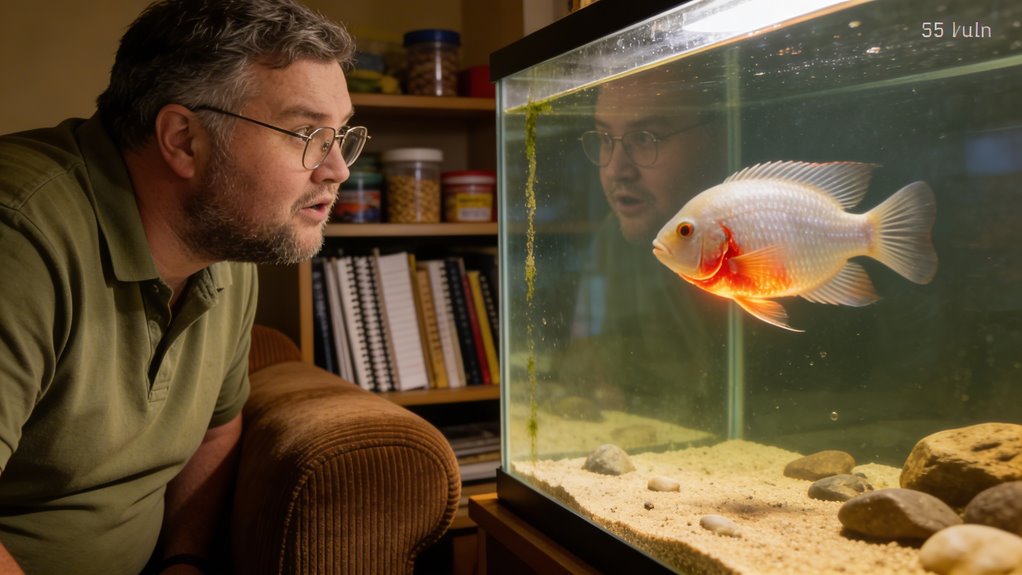
What exactly is a Firemouth Cichlid, and why do so many people keep one in your home aquarium?
Picture a small fish, about six inches long, flashing bright orange-red beneath its throat like a tiny warning light.
You’ll recognize *Thorichthys meeki* by that fiery gill flare, a black spot on its cheek, and gentle bars along its side.
Native to Mexico’s Yucatán Peninsula, Belize, and Guatemala, this fish carries colorultural significance in local communities who’ve watched it thrive in slow-moving waters for generations.
Thriving for generations in the slow-moving waters of Mexico, Belize, and Guatemala, the Firemouth carries deep cultural roots in local communities.
Its aquaculture potential grows yearly, with fish farms breeding them responsibly to reduce wild collection.
You get a peaceful, personable companion living ten to fifteen years.
That longevity invites real connection.
Is a Firemouth Cichlid Right for Your Aquarium?
Perhaps you’re standing in the pet store, watching a small fish flare its throat like a tiny orange lantern, and you’re wondering if it belongs in your living room.
You want a fish that feels like part of your family, not just decoration.
Consider these questions honestly:
- Do you have 30 gallons of water space for one fish, with room for swimming?
- Can you provide soft, sandy substrate compatibility for their natural digging behavior?
- Will you appreciate their bre color patterns, the orange throat that signals mood and health?
- Are you ready for ten years of care, through calm days and territorial moments?
If you nodded yes, this fish chooses you back.
Tank Setup: What Firemouth Cichlids Actually Need
Where does a firemouth cichlid truly feel at home? You provide a 30‑gallon tank, minimum, so your fish has room to swim and claim territory.
You need proper filter filtration, since these fish produce waste that fouls water quickly. Choose a filter rated for tanks larger than yours. Tank filtration keeps ammonia and nitrites at zero, protecting your fish’s gills.
You keep filtration.water: temperature between 75°F and 86°F, pH at 6.5 to 8.0, hardness at 8‑15 dGH. Stability matters more than perfection. You add soft sand, rocks, caves. You change water weekly. You create belonging through consistency.
Which Fish Can Live With Firemouth Cichlids?
A Firemouth Cichlid needs friends who match its pace, just as you choose playmates who don’t push too hard or shrink away. You’re building a community where everyone feels safe.
Your tank mates must share space without crowding, like neighbors who borrow sugar but don’t overstay. Color compatibility matters—these fish communicate through bright signals, so companions with calm, complementary hues keep peace.
Good neighbors share space without crowding; calm colors keep the peace when fish talk in bright signals.
Seek mid-sized friends:
- Bristlenose Pleco: stays small, cleans quietly
- Rummy Nose Tetra: swims in schools, shows peaceful energy
- Cory Catfish: digs gently, keeps to itself
- Rainbowfish: matches activity, avoids fights
You’ll know it’s right when all swim freely, fins relaxed, no one hiding.
Firemouth Cichlid Behavior: Territorial Displays and Stress Signals
When you peer into your tank and see that sudden flash of orange-red, you’re watching your firemouth speak without words.
That bright throat flare means court aggression, a warning to tankmates that this space belongs to him. You’ll notice he pushes his gills forward, like a tiny red balloon swelling beneath his chin. This keeps peace, mostly, since fish read the signal and retreat.
But watch for color fading, when that brilliant patch turns pale and dull. This means stress, sometimes from another fish bullying, sometimes from water that’s too warm or too crowded. You’re seeing fear, friend, and it’s your cue to check conditions, add hiding spots, or rearrange the rocks. Your firemouth trusts you to notice.
What to Feed Your Firemouth Cichlid
Your firemouth’s colors already told you how he’s feeling, but his stomach speaks quieter.
You feed him twice daily, like a small ritual between friends.
Build a *Nutrient balance* that keeps his orange throat bright and his energy steady.
- Offer high-quality flakes or pellets as his foundation, like reliable friendship.
- Add brine shrimp or bloodworms—protein treats that make him feel at home.
- Include occasional vegetables, keeping his digestion calm and complete.
- Watch him eat for two minutes, then stop; leftover food harms Tank aestheticsand water alike.
How to Breed Firemouth Cichlids
Breeding firemouth cichlids starts with a flat rock, something smooth and wide, about the size of your palm, since this is where the female will lay her eggs. You’ll need water at 79°F, soft current, and darkness at the tank’s rear so she feels hidden, like you feel under a blanket with a flashlight.
Master breeding techniques through patience: the male flares his red throat, moves rhythmically, clears debris with his fins. She deposits 100–500 eggs; he fertilizes them immediately. You watch. You wait. You belong to this moment of creation together, breath held.
| Breeding Stage | Your Action Timeline | Fry Survival Factor |
|---|---|---|
| Egg laying | Days 1–3: Leave parents undisturbed | Parental guarding increases hatching success |
| Hatching | Days 4–7: Expect wigglers attached to rock | Stable temperature prevents fungal infection |
| Free-swimming | Day 8: Feed infusoria first, then baby brine shrimp | First food size determines fry survival rates |
Remove fry at two weeks if parents grow restless. You have done this small, hard thing well.
Raising Firemouth Cichlid Fry
Why do the tiniest lives demand the steadiest hands?
You’re now a guardian, and that matters. Firemouth fry, no larger than eyelashes, need your steady rhythm. You’ve inherited brethmouth genetics—the hidden code inside each fish—and you shape what thrives.
- Feed infusoria or vinegar eels for the first three days, then graduate to baby brine shrimp
- Maintain water at 80-82°F, changing ten percent daily with gentle siphoning
- Separate by size weekly; big siblings eat small ones without malice
- Track fry nutrition obsessively; protein builds the jaw strength they’ll need
You’re building a lineage. That’s belonging.
Why Is My Firemouth Cichlid Losing Color?
Those fragile fry you tended, measuring daily growth against a ruler’s edge, grow into adults that carry their inheritance on their skin.
You notice the orange throat fading, like a sunset losing its fire.
Color stress often hides in plain water. Check your thermometer first—temperature below 75°F dulls their brilliance, just as you feel sluggish in a cold room. Test pH weekly; swings above 8.0 strip their confidence, not merely their hue.
Diet fluctuations starve more than hunger. Without brine shrimp or bloodworms twice weekly, they cannot manufacture red pigments. Feed varied meals, watch them glow again.
Firemouth Cichlid Mistakes Beginners Make
Your tank sits heavy with good intentions, doesn’t it?
Good intentions sink slow in glass walls—heavier than water, lighter than wisdom.
You wanted a thriving aquarium habitat, but missteps happen.
- You skip the test kit, guessing water chemistry like a coin toss, and your fish flutter in cloudy stress.
- You believe breeding myths—thinking they’ll just pair up peacefully—then watch fins tear over territory.
- You crowd the space, forgetting the 30-gallon minimum, and aggression blooms like mold.
- You feed once, heavily, letting flakes sink and rot, poisoning the home you built.
Slow down. Measure twice. These fish aren’t forgiving of rushed love, but they’ll reward your patience with color, with life.
How Long Do Firemouth Cichlids Live?
A decade sits in your hand when you bring home a firemouth cichlid, small enough to hide beneath a lily pad in the pet store tank, yet carrying the quiet promise of years.
You hold something ancient, a fish whose normal lifespan stretches ten years, sometimes reaching fifteen with steady care. Each breeding cycle, every flare of throat and fan of fin, shortens them slightly. The energy they pour into guarding eggs and fry, into driving rivals from rocky territories, it costs them.
| Age Range | Breeding Activity | Expected Health |
|---|---|---|
| 0-2 years | First cycles, learning | Peak essential |
| 3-5 years | Prime breeding, frequent | Strong, colorful |
| 6-8 years | Slowing cycles, selective | Steady, mature |
| 9-12 years | Rare breeding, restful | Gentle aging |
| 13-15 years | Ceased cycles | Quiet dignity |
You’re not just keeping a fish. You’re building a home where another being counts on you, morning after morning, for thousands of days.
Frequently Asked Questions
Can Firemouth Cichlids Tolerate Mild Brackish Water Conditions?
Yes, your firemouth handles mild brackish water, but freshwater keeps him happiest. His brack tolerance reaches about ten percent salinity, though his body works extra hard then. You’ll want steady tank filtration managing that salt, plus water hardness between eight and fifteen dGH for comfort. His salt tolerance exists as backup, not preference. Stick to clean freshwater, warm at seventy-five to eighty-six degrees, and he’ll reward you with bright colors and calm confidence.
Do Firemouth Cichlids Eat Freshwater Snails or Shrimp?
You’ll want to keep freshwater snails and shrimp away from your firemouth cichlid, since they’ll likely become snacks. Their snail diet includes common types like nerite and assassin snails, and their shrimp preference means cherry shrimp won’t last long either. These protein-rich treats trigger their natural hunting instincts, making peaceful cohabitation impossible. Stick to safer tank mates instead.
How Fast Do Firemouth Cichlids Grow to Adult Size?
Your firemouth cichlid’s growth rate depends heavily on tank size and water quality.
With proper care—meaning a 30-gallon tank or larger, stable warmth between 75-86°F, and clean water—you’ll watch your fish reach adult size quickly, usually within 8 to 12 months.
Males grow to about 6 inches, females slightly smaller at 5 inches.
Crowded tanks slow this down, so give them room to thrive.
Why Do Male Firemouth Cichlids Flare Their Gills?
You see that bright red throat, don’t you? The male flares his gill covers to show off his colors, a warning to other fish. It’s territorial displays, like holding up a stop sign. Hormonal triggers, chemicals inside his body, make him do this when he’s ready to breed or feels crowded. He’s saying, “This space is mine,” hoping others back down without a fight.
Can Firemouth Cichlids Live With Zebra Danios or Odessa Barbs?
You can keep firemouth cichlids with zebra danios or odessa barbs, but you’ll need to plan carefully. Your tank size matters more than you’d think—firemouths need thirty gallons minimum, and you’ll want extra space for these active swimmers. Territorial behavior flares up during breeding, so you’ll watch for sudden aggression, and you’ll provide hiding spots like caves or plants where smaller fish can retreat when tensions rise.
Rounding Up
Your firemouth cichlid needs a 30‑gallon tank, soft sand, hiding spots, and steady water between 75–86 °F. You’ll watch confidence grow as colors brighten with care, patience, and compatible tank mates like cory catfish. Mistakes happen—test water weekly, feed varied meals, and you’ll share ten to fifteen years together. Consistency builds trust, in tanks and in friendships.