Your apple snail sits inside its shell, a door called an operculum sealing tight like a drawn curtain, waiting for water that feels right—neither too cold nor too hot, between 68 and 84 degrees. You watch it glide, and you wonder what keeps this small creature alive for one year, maybe three, when so many fade sooner. The answer hides in plain things: a pinch of calcium, a leaf of lettuce, air it can reach. You’ll need to know which details matter, and which ones fool you.
At A Glance
- Maintain alkaline water (pH 7.6–8.4, 12–18 dKH) to prevent cracked shells and support calcium absorption.
- Feed algae, blanched vegetables, and calcium supplements twice weekly for optimal shell health.
- Females lay pastel egg clutches above waterline; eggs hatch in two weeks after dark spots appear.
- Lifespan reaches one to three years when stable water parameters and proper calcium levels are maintained.
- Minimum five-gallon tanks with soft substrate and open lids prevent stunted growth and ensure air exchange.
What Are Apple Snails? Origins, Size, and Species Basics
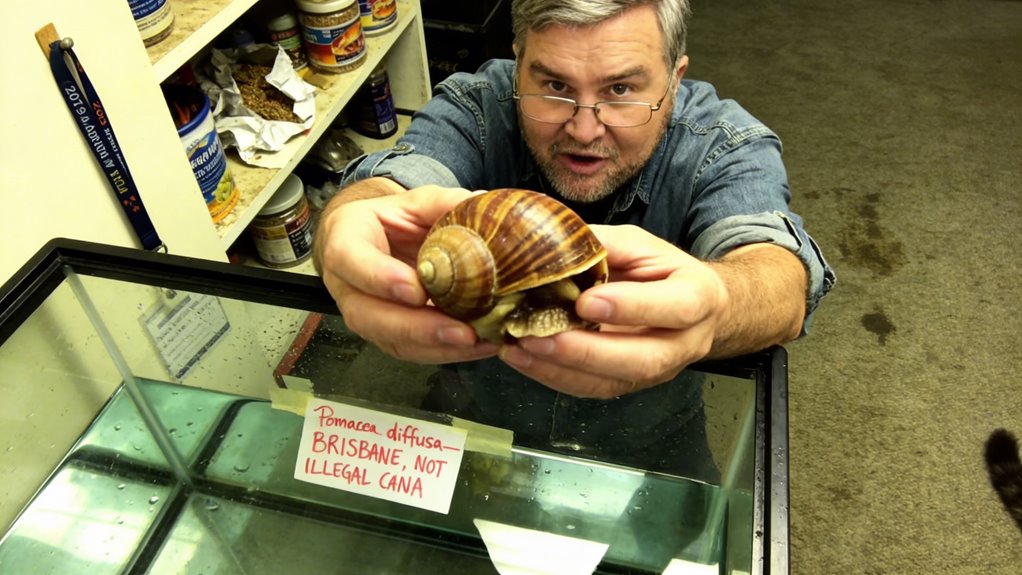
When you lift the smooth, golden curve of an apple snail’s shell, you’re holding a creature that traveled from South America to live beside you.
Your apple snail, *Pomacea bridgesii*, carries body parts that matter to its survival. The operculum acts like a trapdoor, sealing the snail anatomy when danger approaches. You’ll notice shell coloration varies widely—golden, pink, blue, or striped patterns mark different individuals.
They grow to about two inches across, though poor care stunts them smaller. With clean water and proper food, your companion lives roughly one year, occasionally three. You’re joining a community that values these quiet, deliberate beings.
Water Conditions Apple Snails Need (and Can’t Tolerate)
The shell your snail carries needs more than your careful touch; it needs water that holds steady, day after day. You keep the temperature between 68°F and 84°F, never letting it swing wild. You watch the pH climb to 7.6–8.4, giving your snail the alkaline comfort it craves.
Picture your tank:
- The warm, steady current that flows like a familiar river back home.
- The hard water, 12–18 dKH, that builds strong, spiral shells.
- The putrient balance you maintain, keeping algae tolerance in check so green life thrives without choking.
You test weekly. You belong here.
Tank Setup: Space, Substrate, and Plants That Survive
Since your snail’s whole world fits inside the glass walls you choose, you pick a tank that gives room to roam.
You select soft substrate texture, like fine gravel or sand, so your snail’s soft foot glides without scraping.
You add hardy plants that forgive beginner mistakes.
You balance plant lighting carefully, enough for growth but not so bright it fuels uncontrollable algae.
You create a space where your snail belongs.
| What You Choose | Why It Matters |
|---|---|
| 5+ gallon tank | Prevents stunted growth, matches your snail’s dignity |
| Soft, fine substrate | Protects the foot you cannot see hurting |
| Java moss, Anubias, Hornwort | Survives nibbling, grows in spite of you |
| Moderate plant lighting | Feeds plants, honors your snail’s night-and-day rhythm |
| Open lid | Lets air move, welcomes you to watch |
You build slowly, and your snail trusts you for it.
What to Feed Apple Snails: Algae, Vegetables, and Supplements
Some afternoons you watch your snail glide across the glass, and you wonder what hunger feels like for a creature with no face to read.
You’ll feed your apple snail a simple, steady menu.
- Algae varieties—green fuzz on rocks, brown film on glass, the soft stuff you scrape but they savor.
- Blanched vegetables—zucchini coins, spinach leaves, cucumber slices, softened in hot water until tender.
- Sinking pellets with Vitamin B‑complex, the invisible help that keeps nerves working, appetite steady.
You’re not just filling a tank. You’re building trust, bite by bite, with a small being who knows you now.
Calcium for Strong Shells: Foods, Supplements, and Warning Signs
Where does a snail keep its bones? Nowhere, friend. Your apple snail wears its skeleton on the outside, building it from calcium in the water and food.
You want a sturdy shell, so you check your water first. pH buffering keeps things steady between 7.6 and 8.4, letting calcium dissolve properly. Without this balance, the shell grows thin and sad.
Drop in shellcium tablets twice weekly, or offer blanched kale and spinach. Watch for white, chalky patches or cracks—those are warning signs your snail feels vulnerable.
You belong here, learning to protect something small. That care builds your own strength too.
Apple Snail Behavior Explained: Floating, Hiding, and Speed Bursts
Why does your apple snail suddenly shoot to the water’s surface, or stay tucked in its shell for hours? You’re witnessing normal oper biology, the hidden machinery that keeps your snail alive.
Your snail’s operculum, a hard trapdoor attached to its foot, seals the shell opening when danger nears. This protective habit can last hours, even days, during stress or poor water conditions. Watch for these moments:
A hard trapdoor on its foot seals the shell when danger nears—hours or days of protection during stress.
- A snail gliding, then freezing, antennae retracted like tiny periscopes folding down
- The operculum clicking shut, a small sound in quiet water
- Speed bursts across glass, faster than you’d expect from something so round
These bursts happen when your snail smells food or seeks better spots. You’re not alone in wondering; every apple snail keeper notices this surprising quickness.
Why Is My Apple Snail Floating? Good Reasons vs. Health Problems
A bubble in your snail’s belly looks like trouble, but it often isn’t.
Your apple snail gulps air on purpose, filling its pocket like a tiny balloon to reach the surface for creamier food, or simply for fun. This harmless floating drifts alongside shell coloration changes, natural as leaves turning. Some breeding myths claim floaters carry eggs, but that’s not how these river wanderers work. You belong to a circle of careful watchers now, spotting the difference. When your snail loafs on the glass, belly-up and dreamy, trust the calm. Trouble hides in stillness, not bubbles.
Tank Mate Compatibility: Fish, Shrimp, and Other Snails
Your apple snail doesn’t need much space to itself, but it does need peace. You’re building a little community, and that feels good. Choose friends carefully.
Peace matters most when building your apple snail’s community.
- Small tetras dart like confetti through your tank decoration, never nipping.
- Cherry shrimp pick at algae beside your snail, sharing meals quietly.
- Nerite snails become sturdy neighbors, no competition for breeding territory.
You don’t want bullies. Avoid cichlids or loaches that pester soft bodies. Breeding apple snails happens easier when everyone’s calm, no chasing, no stress. You’ve got this. Water stays steady, tempers stay cool, and your snail family grows together. That’s the belonging you wanted.
Sick Snail Warning Signs: Shell Damage, Inactivity, and Death
When you peer into the tank each morning, your eyes learn to read what’s normal, so you’ll notice when something shifts.
Your snail’s shell tells stories you’re learning to translate. Shell discoloration—white patches, dark spots, or chalky edges—signals trouble with water chemistry or calcium deficiency. You’re checking for cracks, holes, or thinning that expose tender body underneath.
Mucus excess coats the glass or clings to your snail’s foot like thick, stringy worry. This slime protects against irritation, but too much means stress, poor water, or invisible parasites attacking.
Inactivity breaks your heart gently. A healthy snail examines, cleans, climbs. When yours stays sealed for days, floats motionless, or won’t smell food, you’re witnessing fear or illness. You’re timing this: two days closed demands attention, four suggests grave concern.
You’re lifting gently, checking the operculum—that trapdoor must seal firmly. Loss means death approaches.
You’ll feel sad, and that’s okay. You’re not failing; you’re observing, learning, belonging to those who care deeply about small, quiet lives.
Will Your Apple Snails Breed? Requirements and Realities
If you’ve watched your snail glide along the glass with that single tentacle tasting the water, you’ve probably wondered about babies.
First, let’s clear up some breeding myths. You can’t just add two snails and expect nests by Tuesday. These creatures need specific signals: warm water above 78°F, plenty of calcium, and that mysterious something we call readiness.
The egg-cage dynamics matter too. Females climb out to lay pastel clutches above the waterline, like tiny bubblegum helmets stuck to your lid. No dry surface means no eggs, even when everything else lines up.
- Picture the climb: one slow journey up the glass at midnight, leaving a silver trail behind.
- Imagine the pause: she holds still for hours, building her pink fortress with eighty perfect pearls.
- Feel the wait: two weeks of watching, wondering, before dark spots appear and tiny snails chew free.
You’re not failing if it doesn’t happen. You’re learning patience alongside your tank.
Care Mistakes That Shorten Apple Snail Lifespan
Look at the shell in your hand, that striped spiral no bigger than a coin, and you’ll see years compressed into calcium layers, each one a record of water chemistry and meals taken.
Years compressed into calcium, each layer a record of water and meals.
You hurt them when you skip water changes, letting ammonia spike like a fever they cannot sweat out.
You shorten their days with soft water, robbing calcium until shells crack like old pottery.
You crowd them for breeding, thinking more snails means more joy, but pollution builds faster than algae control can manage.
You forget they’re not just cleaners, not just algae control with shells.
They’re living records, and you’re holding the pen.
Frequently Asked Questions
Do Apple Snails Need a Filter in Their Tank?
You don’t need a powerful filter, but filter importance matters for your apple snail’s health. A gentle sponge filter works perfectly.
Water flow should stay low and calm. These snails prefer slow currents, not rushing streams.
A filter removes waste and keeps ammonia low, protecting your snail’s delicate gills. You’re building a safe home where your snail belongs, and clean water shows you care. Test weekly, adjust gently, and watch your snail thrive.
Can Apple Snails Live Out of Water Temporarily?
You shouldn’t leave your apple snail out of water, though brief terrestrial survival happens by accident. Their bodies need dampness; dry desiccation kills within hours. If one’s climbing, you’ve got maybe 15-30 minutes before real damage starts. Keep that lid tight, check your tank edges each evening. They’ll feel safer, you’ll feel calmer, and nobody loses a friend to a windowsill.
How Often Should I Clean My Apple Snail’s Shell?
You don’t need to scrub your snail’s shell yourself. Shell growth happens naturally when water chemistry stays right—keep pH between 7.6 and 8.4, and hardness at 12-18 dKH. Your snail cleans its own shell as it moves, scraping algae with its foot. You simply keep the tank tidy, test weekly, and watch for cracks. Clean water does the real work.
Do Apple Snails Recognize Their Owners?
You notice your snail’s tentacles follow your movement near the glass during feeding timing, not true recognition but learned owner behavior. Their small brain, no bigger than a pinhead, links your shadow to food, not friendship. Shell color stays constant, yet their predator response softens with routine. They cannot know you, but you belong to their world anyway, and that quiet connection matters.
Is It Safe to Handle Apple Snails With Bare Hands?
You can handle them briefly, but you’ll risk handborne diseases except you wash after. Wet your hands first, pick gently near the shell’s opening, and avoid sudden moves. Their shell coloration, those bright swirls you love, stays safe if you’re careful. Rinse well, dry your hands, and watch them glide. Short contact keeps you both healthy, so enjoy your quiet moment together.
Rounding Up
That glass tank on your counter holds more than water—it holds a lesson in patience. Your apple snail moves slowly, grows slowly, and needs you to match that pace. Check the thermometer weekly, drop in those calcium tablets every Tuesday and Friday, and you’ll feel proud when that one-year life stretches to three. Small, steady care wins. You’ve got this.