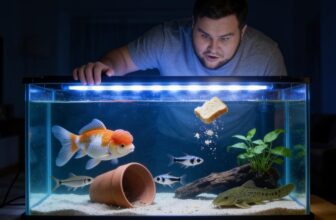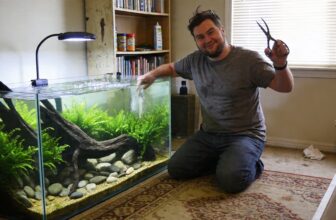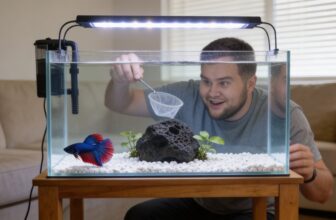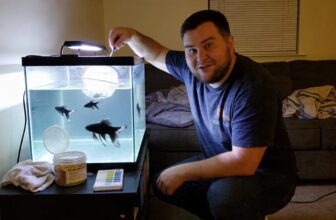
You hold a small, silver fish in your palm, its bright red eye catching the light like a tiny warning signal. Red Eye Tetras need exact care: 79°F water, soft sand, and dark corners where they feel safe enough to flash their colors. You’ll learn which tank mates survive their quick chase, and how to spot illness before it spreads. But first, you need to know what healthy looks like.
At A Glance
- Maintain a 20‑gallon minimum tank with dark sand, dim lighting, and gentle water flow.
- Keep temperature at 72‑84°F, pH near 7.0, and carbonate hardness at 4‑8 dKH.
- Feed twice daily with flakes, blanched spinach, and frozen bloodworms.
- House in schools of six or more with compatible short‑finned tank mates only.
- Quarantine sick fish; raise temperature to 86°F and medicate for Ich or fin rot.
Red Eye Tetra Identification: Color, Size, and Sex Differences

Take a close look at your tank, and you’ll spot the red eye tetra right away.
You’ll notice their signature red eyes first, like little warning lights on a dashboard, with the top iris bright crimson and the rest soft gray.
Their bodies shimmer, oval-shaped, about 2.75 inches long from nose to tail tip, with a faint yellow glow near the gills and see-through fins catching light like soap bubbles.
Watch their community dynamics carefully, and you’ll see why they need friends. They school together, six or more, dancing through plants in the middle water.
Come breeding time, you’ll tell males from females easily. Males brighten up, flashing bolder colors to impress, while females grow slightly larger, carrying eggs.
How to Pick Healthy Red Eye Tetras at the Fish Store
Walk past the tanks in your local fish store, and you’ll start seeing red eye tetras with fresh eyes—literally.
You’re looking for bright red irises, not cloudy or sunken ones. Check their scales; they should shimmer like tiny mirrors, not flake off or look dull. Watch them swim—healthy tetras dart together in loose groups, not hide in corners or gasp at the surface.
| Good Signs | Warning Signs |
|---|---|
| Eyes clear and vivid red | Eyes cloudy or bulging |
| Fins intact, no tears | Fins clamped or rotting |
| Active, mid-water schooling | Lethargic, isolated, or floating |
Store selection matters more than price comparison alone. A healthy fish saves you heartache, and money, later.
Red Eye Tetra Tank Size: Minimum 20 Gallons Explained
When you’re setting up a home for red eye tetras, you’ll need a tank that holds at least 20 gallons of water.
This tank habitat gives your little fish room to swim together, since they feel safest in schools of six or more.
You’ll see them dart and shimmer, their red eyes catching light like tiny signals between friends.
- Your fish trust you more when they have space to investigate together.
- Watching them school brings a quiet joy, like belonging to something gentle.
- Breeding behavior emerges naturally when pairs feel secure in roomy corners.
- You become part of their peaceful world, not just an observer.
Water Parameters Red Eye Tetras Need to Survive
Once your twenty-gallon tank sits steady on its stand, filled with dark gravel and driftwood, you’ll need to look closer at what you cannot see—the water itself.
Your red eye tetras feel safe when temperature holds steady between 72 and 84 degrees, with 79 to 80 feeling just right.
pH should rest near 7.0, though they’ll tolerate 5.5 to 8.5 without complaint.
Water hardness matters too—keep carbonate hardness at 4 to 8 KH, soft enough to recall their home streams.
Watch your filter’s flow rate. These fish come from slow rivers, so gentle currents let them school gracefully without exhaustion.
Build a Red Eye Tetra Biotope: Plants, Substrate, and Lighting
Silence lives at the bottom of a well-planned tank, and you’re about to build it piece by piece.
You’ll choose dark river sand, maybe two inches deep, so roots anchor and waste hides. Your lighting stays soft and dim, like morning sun through forest canopy, since harsh beams stress these shy swimmers.
Plant Amazon swords and floating water lettuce to create your bi niche—a living room where every fish finds their spot.
- Feel the calm when driftwood releases gentle tannins
- Watch your school weave through green shadows as one body
- Sense safety in the dappled half-light you’ve given them
- Know you belong here too, building homes for small lives
Red Eye Tetra Diet: Daily Feeding Schedule and Best Foods
A small flake of food drifts through the water like a leaf on a stream, and your tetra’s eye catches it since you’ve learned when they’re ready to eat.
You practice *feedingutrient timing*, offering meals when they’re most active, usually dawn and dusk.
Your *feeding frequency* lands at twice daily, small portions they finish in three minutes.
| Morning Flake | Noon Vegetable | Evening Treat |
|---|---|---|
| Crushed high-quality flakes | Blanched spinach leaf | Frozen bloodworms thawed |
| Floats like scattered sunlight | Sinks slowly, softening | Drift downward, wriggling |
| School rushes up together | Pecking sounds through glass | Competition brings red eyes flashing |
You watch them gather, and you belong to this rhythm.
Stop when bellies gently round, never bulging.
Your consistency builds trust, theirs and yours.
Red Eye Tetra Diseases: Ich, Fin Rot, and Fungal Infections
How does a speck of white, no bigger than a grain of sand, suddenly appear on your tetra’s fin?
That’s Ich, a parasite that sneaks into your d tank when temperature fluctuations weaken your fish. Fin rot melts those beautiful transparent edges into tattered silk. Fungus grows like cotton wads on wounds. These invaders thrive when disease prevention slips, when you skip water changes or overfeed. You’re not alone in this worry. Every aquarist faces these moments.
- Your fish depends on you to notice the first sign of trouble.
- Clean water means you’re keeping your promise to care.
- Early action gives hope when things look darkest.
- Together, we learn to heal and protect our underwater family.
Treatment options include raising heat slowly to 86°F for Ich, plus specific medicines from your local store. quarantine sick fish immediately.
Which Fish Can Live With Red Eye Tetras?
When you watch your red eye tetras dart through the water, their silver sides flashing like tiny mirrors, you’ll notice they stick close together.
You’ll want companions who match their energy.
Barbs, rainbowfish, danios, and larger rasboras swim well alongside them.
Peaceful bottom-dwellers like Corydoras catfish complete your community without conflict.
This compatible compatibility brings harmony to your tank, letting every fish feel secure.
For breeding tips, keep twelve red eyes together so females feel safe enough to spawn.
Avoid slow fish or those with flowing fins, as your tetras may chase them.
Choose active tank mates, and you’ll build a thriving underwater family where everyone belongs.
Do Red Eye Tetras Nip Fins?
Look closely at your tetra’s mouth, and you’ll notice a tiny set of scissors tucked behind those silver lips. Yes, your red eye tetras nip fins, especially when bored or crowded. You’ll see torn flowing fins on slow tankmates, and that hurts your heart.
- You feel guilty finding ragged fins on your betta you loved
- You watch your school scatter nervously, and you feel their stress as your own
- You remember the pride of building a community, now cracked like broken glass
- You fear you’re failing creatures who depend on you completely
Stop this. Use these fin breeding tips: choose fast, short-finned companions. Master water flow control—gentle currents, 4-8 KH hardness, calm zones with driftwood—so your tetras investigate instead of attacking. You’re creating peace, not just a tank.
How to Breed Red Eye Tetras at Home
That empty ten-gallon tank in your garage, the one you cleaned last spring, holds more promise than you think.
You’ll need a dimly lit breeding setup, soft water near 80 degrees, and thick java moss for eggs to hide. Separate males and females for one week, then reunite them at dusk. By morning, you’ll find tiny pearl-like eggs clinging to plants.
| Task | Timeline | Purpose |
|---|---|---|
| Condition adults | 7 days | Build strength for spawning |
| Breeding setup | Same day | Shade eggs, prevent fungus |
| Fry feeding | Day 3 onward | Infusoria, then powdered food |
Remove adults immediately after spawning, or they’ll snack on their own offspring. Within forty-eight hours, you’ll witness something remarkable: translucent fry, barely visible, hanging motionless. Start fry feeding with infusoria or liquid fry food, their mouths too small for anything else. Gradually introduce baby brine shrimp as they grow. You belong here, in this quiet observation, connecting life to life.
Red Eye Tetra Lifespan: How Long Do They Live?
A small glass tank on your kitchen counter can hold a secret life that stretches across half a decade, if you tend it well.
You’re inviting these fish into your daily rhythm, your quiet moments.
Their brere behavior—quick, darting movements when frightened—reveals sensitive creatures who trust slowly.
Genetic variation means some live three years, others seven, depending on their origins and your care.
- You notice each morning who swims hungry, who hides, and you belong to their world now.
- Five years becomes seventy in fish time, so you’re their elder, their witness.
- Your tank holds generations of genetic stories, swimming.
- Tenderness, measured in steady water changes, rewards you with living color.
Frequently Asked Questions
Can Red Eye Tetras Jump Out of Tanks?
Yes, your red eye tetras can jump out of tanks, so you’ll need a lid.
These fish are active swimmers, reaching up to 2.75 inches, and their breeding behavior makes them skittish.
When startled during courtship, they’ll leap toward light.
Your tank compatibility plans matter here: tight-fitting glass covers prevent escapes without blocking air, keeping your community safe and your school together.
Do Red Eye Tetras Need a Heater?
Yes, you’ll need a heater for your red eye tetras.
These fish feel most comfortable when temperature regulation keeps their water between 72 and 84 degrees Fahrenheit, with 79 to 80 degrees being just right. Without steady warmth, they grow sluggish and vulnerable to sickness.
A 20-gallon tank size, the minimum for a small group, loses heat quickly in cool rooms. Your heater acts like a blanket, wrapping the water in reliable comfort.
Their diet preferences stay steady when they’re warm—active fish eat better. Even their breeding behavior depends on it, since slightly warmer water, around 80 degrees, signals spawning time.
You’ll want a reliable submersible heater with a thermostat, sized appropriately for your tank’s volume. Check it weekly with a separate thermometer, as broken heaters hurt fish fast.
Are Red Eye Tetras Sensitive to Water Changes?
You’ll find red eye tetras handle water changes well when you’re steady about it.
They’re not delicate, but sudden shifts in temperature or water hardness above 8 KH stress them. You’ll keep them calm by matching new water to tank conditions, changing 10-15 percent weekly. Their diet preferences don’t affect this, yet good nutrition builds resilience. You’re being a careful keeper when you test first, adjust slowly, and watch them glide easy afterward. They trust your patience.
Can Red Eye Tetras Recognize Their Owners?
Red eye tetras show limited owner recognition compared to smarter fish like cichlids, but they’ll learn your routines. When you approach the tank, they gather at the glass, linking your shape with food and safety. Tank decoration helps them feel secure, so bold interactions happen more often. With patience, you’ll notice them swimming eagerly toward you, a small, warm connection between watcher and watched.
Do Red Eye Tetras Sleep With Eyes Open?
Fish eyelids don’t close, so you’ll notice your red eye tetras rest with eyes appearing open, even during sleep patterns. They drift motionless near tank bottom or plants, slowing their breathing. Good eye health means they’re alert and responsive when awake. Dim aquarium lights at night help them rest properly, reducing stress that could harm their bright red irises. You’ll learn their quiet, still posture means peaceful sleep.
Rounding Up
A twenty-gallon tank, soft water, and dim light give your red eye tetras comfort, like a cozy blanket fort gives you safety. You feed them flakes and frozen treats, watch for white-spot disease, and choose fast friends, not slow swimmers with flowing fins. Breed them in moss, raise the babies on tiny foods, and they’ll stay with you five, maybe six years. You’ve got this—steady hands, patient heart, clear water. They’ll thrive.