Mystery snail eggs can turn a clean glass wall into a dotted mess overnight. These pink, grape-like clutches above the waterline might look charming at first, but most aquarists need them gone fast.
Finger removal works for fresh clutches – just roll them gently without crushing. Still stuck? A credit card lifts older eggs cleanly without scratching your silicone seals.

Stainless steel edge lifts tough clutches without scratching glass.

Soft bristles sweep away large clusters safely and quickly.
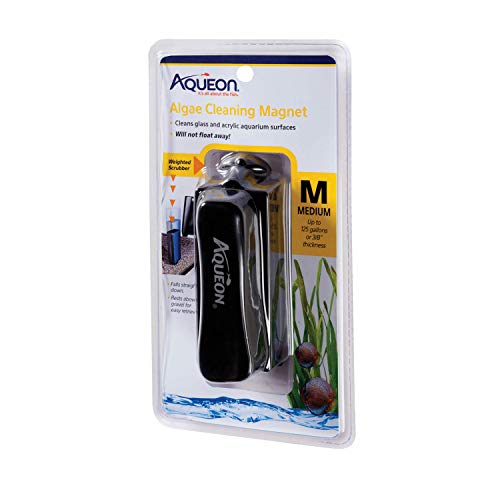
Strong magnet reaches stubborn eggs on thick glass with ease.
Check discounted items inAquarium Cleaning Tools
Razor blades tackle stubborn residue on glass, though patience prevents scratches. For scattered cleanup, a toothbrush scrubs multiple surfaces quickly, while packing tape grabs tiny fragments in one pull.
Heavy infestations need stronger solutions: aquarium vacuums suck debris and eggs alike, and dedicated nursery tanks actually boost survival rates if breeding interests you.
Ready to reclaim your tank walls?
At A Glance
- Finger removal works best for small, fresh egg clusters without gear.
- Credit card prying lifts clusters intact without crushing or fouling water.
- Razor blade scraping cuts through tough clutches without scratching glass.
- Tape peeling quickly sticks eggs away from glass for easy disposal.
- Nursery tank transfer maximizes hatch rate in a cycled 5-gallon tank.
Remove Mystery Snail Eggs With Your Fingers
Sometimes the simplest solution is the best, and using your fingers to remove mystery snail eggs is about as simple as it gets.
Your finger sensitivity lets you feel the egg freshness, ensuring you only remove viable clutches.
Your finger sensitivity lets you feel the egg freshness, ensuring you only remove viable clutches.
Gently push until they pop off the glass.
It’s quick, free, and requires zero gear.
Perfect for small, fresh clusters.
No scraping, no fuss.
Just you, the eggs, and a satisfying little pop.
For tiny batches, this method is a no-brainer.
It’s the low-effort, high-reward move for any tank owner who wants to keep things simple.
This hands-on approach lets you avoid using any tools, unlike products that require DIY trimming or separate frame kits for installation.
For those who prefer a tool, a magnetic glass scraper like the DaToo Mini can handle larger, stubborn clutches with its 140 N pull force.
Slide a Credit Card Under Stubborn Egg Clusters
When fingers fail – and they will, especially with larger or older clutches – a credit card becomes an unlikely hero. Slide the thin edge beneath the egg cluster and push upward, gently prying the sticky mass free.
This protects tank hygiene by avoiding crushed eggs, which can foul the water. For patient egg handling, it’s the perfect middle ground – firmer than fingers, safer than a blade.
You’ll feel that satisfying pop of release, a small victory. Just scrape clean after; leftover gel invites algae. Your community will thank you, plus it’s free.
No special tool required, just an old card and steady hands.
For added protection, pairing this method with fine pore density pads can capture any microscopic debris that floats free during the process. A 100-micron filter pad is ideal for trapping particles smaller than a speck of dust during this cleanup.
Use a Razor Blade for Eggs Stuck to the Glass
A razor blade cuts through the toughest egg clusters like a hot knife through butter – just be careful not to scratch the glass.
For the truly stuck ones, this tool is your best friend.
Slide the blade gently under the gel sac, lifting upward.
Prioritize razor safety over speed; a steady hand avoids gouging the tank.
This method excels at egg preservation, keeping the cluster intact for relocation.
Simply transfer the eggs to a waiting container.
It’s precise, effective, and satisfying.
Just go slow, breathe, and you’ll feel like a pro.
This razor method is similar to magnetic aquarium cleaners that use scrapers for glass-safe removal.
The bottom line: for stubborn clutches, the razor wins every time.
For those with delicate invertebrates, a copper‑free gel formula ensures safe handling of eggs and tank inhabitants.
Brush Away Large Clusters With a Toothbrush
If you are facing a stubborn cluster of mystery snail eggs that seems to have multiplied overnight, a toothbrush offers a surprisingly effective solution without the risk of scratching the glass.
For large clusters, gently brushing dislodges them without aggression patterns or fuss.
Gently brushing large clusters dislodges them without aggression or fuss.
This method respects natural incubation by letting you decide the eggs’ fate.
It’s ideal for clutch management when you want to remove many at once.
Just grab a spare, clean brush – old ones work fine – and sweep carefully.
A sand spatula, often included in multi-tool kits like Hygger’s 4-tool set, can assist in scraping any stuck residue after brushing.
No razor blades needed.
It’s simple, safe, and gets the job done without drama.
Rubber-cushioned tips on aquarium tongs can help lift any remaining egg fragments from tight corners.Perfect for the peaceful aquarium community.
Suck up Mystery Snail Eggs With an Aquarium Vacuum
Vacuuming up mystery snail eggs might sound like overkill – and honestly, it kind of is – but for large clusters or eggs stuck awkwardly on tank glass, an aquarium vacuum gets the job done with minimal mess. Models with three‑stage filtration effectively trap eggs in the collection cup without clogging the motor.
This vacuum technique is perfect when you’ve got a big, stubborn mass. Just place the nozzle directly over the eggs and switch on. The eggs get sucked into the collection cup, making egg disposal a breeze – no scraping, no drama.
A basic gravel vac (around $10) works fine, though a battery‑powered one like the Python Pro‑Clean (about $50) handles clingier eggs better. It’s overkill for a few eggs, but for big jobs, it’s your friend.
For electric-sensitive setups or power-out scenarios, a model with a manual air‑push button offers a reliable alternative without needing batteries or electricity.
Peel Eggs off With Tape for Quick Removal
That vacuum method works great for big, stubborn clusters, but sometimes you just need a faster, lower‑tech fix. Scotch tape – the clear office kind – becomes your friend here. Cut a piece larger than the egg cluster, press it firmly over the eggs, then peel it off in one smooth motion. Eggs stick to tape, not glass. This works for dozens of small eggs in seconds. For proper eggs disposal, just wrap the tape and toss it. Remember, snails diet includes these eggs naturally, so removal prevents snacking.
| Method | Best For |
|---|---|
| Scotch Tape | Small, scattered egg clusters |
| Duct Tape | Large, stubborn patches |
| Packaging Tape | Medium, clustered eggs |
| Masking Tape | Delicate, newly laid eggs |
Move Mystery Snail Eggs to a Nursery Tank for Hatching
Moving mystery snail eggs to a nursery tank is like giving them their own little Airbnb – minus the cleaning fee.
Careful tank selection matters: a small, cycled 5-gallon with a sponge filter works best. For a nursery tank, a hang-on overflow box ensures consistent water movement without taking up interior space.
This prevents the mother’s snail behavior from turning eggs into snacks.
You gently remove the clutch, placing it on a floating breeder box or near a gentle current.
Keep water parameters identical to the main tank, with temperatures around 78°F.
Baby snails hatch in two to three weeks, fully formed at dime size.
This method gives the highest hatch rate, no questions asked.
Frequently Asked Questions
Can I Eat Mystery Snail Eggs?
No, eating mystery snail eggs is not recommended. Snail egg toxicity is unconfirmed but risky; accidental ingestion could cause stomach upset.
These eggs are laid in gel sacs on tank glass, not meant for human consumption. They contain bacteria from aquarium water.
Stick to feeding them to fish or discarding. If you crave caviar, buy real fish roe – it’s safer and tastier.
Bottom line: admire the eggs, don’t eat them.
How Do I Stop Snails From Laying Eggs?
Stopping snail egg-laying requires adjusting snail diet control and water parameters. These creatures respond to their environment, so reducing food and slightly cooling the water can discourage reproduction.
It’s not foolproof – snails will be snails – but consistency helps. No single method works for every tank.
For reliable results, join a community of aquarists who swear by these tweaks. You’ll feel less alone when your snails still surprise you.
Do Mystery Snail Eggs Smell Bad?
No, mystery snail eggs do not smell bad. That’s a relief, right? The eggs smell like nothing detectable – just a harmless, odorless gel sac stuck to the glass.
If you ever notice a funky stench, it means the eggs have died, likely from poor water quality or lack of nutrients. Dead eggs can rot, so scoop them out fast with a spoon.
Otherwise, leave the live ones alone. They won’t stink up your tank.
What Happens if Eggs Fall Into Substrate?
If mystery snail eggs fall into the substrate, two things happen: they start substrate decomposition and face egg viability loss.
The eggs, designed to stay on hard surfaces, rot in gravel.
Decomposition messes with water quality, and the gel sac gets crushed, killing embryos.
So, don’t let them drop; scoop them out fast.
Save yourself the mess – tank maintenance is less fun than watching a snail fail physics.
How Long Can Eggs Survive Out of Water?
Eggs can survive up to a week out of water, though this timeframe is a tightrope walk for viability.
Their gel sac offers modest desiccation resistance, but drying quickly kills them.
A damp, humid environment extends survival slightly, but don’t push it – think of it as a countdown timer.
For best results, move them to a tank setup with stable wetness within days.
No water? No future.
Bottom line: air is a temporary, risky refuge.
Handle fast or lose them.
Rounding Up
Choosing the right method depends on your tank setup and tolerance for snail drama. Interestingly, a single mystery snail can lay a clutch every week for months, producing over 200 eggs at a time. That is a lot of future mouths to feed. For most keepers, the credit card trick works best. It is cheap, safe, and saves your glass from scratches. Bottom line: keep an extra card handy, scrape first, ask questions never.

Siphons eggs and debris directly into collection cup for easy disposal.
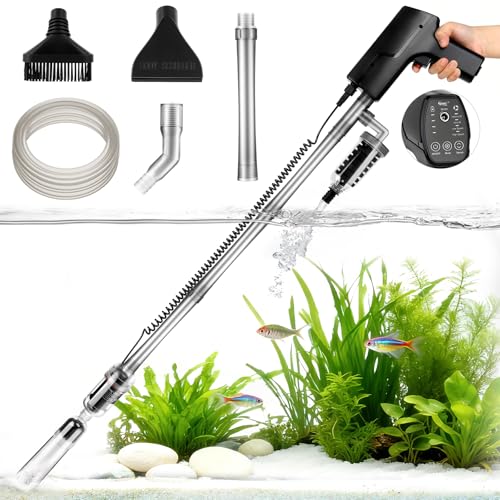
Cordless design makes egg removal fast and hassle-free.
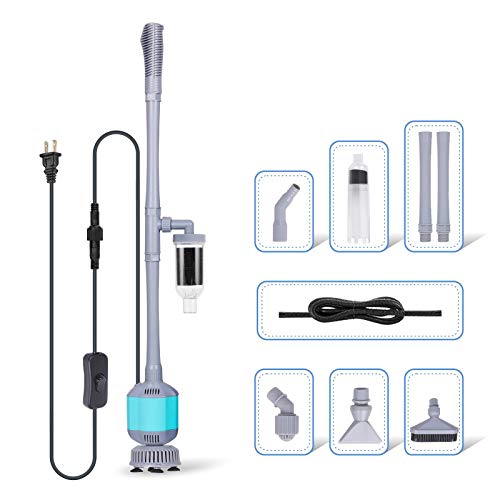
Three-stage filtration traps eggs without clogging your pump.
Browse discountedAquarium Vacuumson Amazon