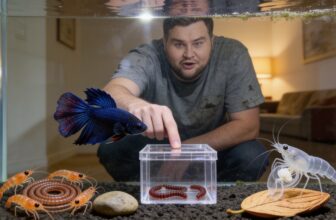
Heating a betta tank isn’t optional equipment – it’s lifeline gear.
These tropical Southeast Asian natives demand 78–80°F stability year-round. Your household climate shifts with seasons and AC, creating dangerous temperature swings for this species.

Keeps 10-gallon betta tanks at stable 78-80°F for healthy activity.
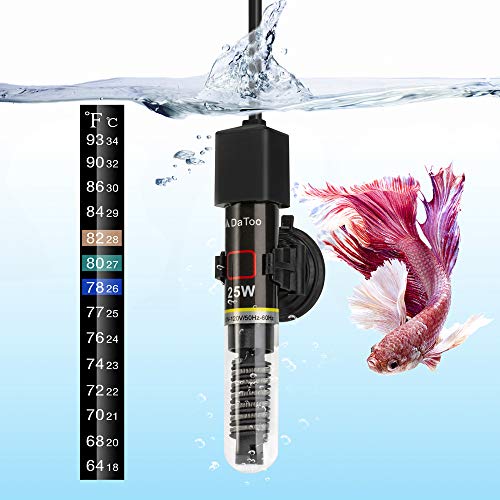
Compact and safe for 5-gallon tanks; auto shut-off prevents overheating.

Digital thermostat gives precise temperature control and easy monitoring.
Check discounted items inAquarium Heaters
A 50-watt fully submersible heater runs roughly $15 for standard 10-gallon setups. Skip this investment and you’re buying a sluggish, immunocompromised fish instead.
Always verify with a dedicated thermometer. Budget heater dials commonly drift 5°F off target, stealth-boiling your betta at 83°F while displaying 78°F.
Cold water below 74°F triggers fatal lethargy. Exceed 85°F and you’re literally cooking their metabolism.
Power outage coming? Stay tuned for emergency heating protocols that could save your fish when the grid fails.
At A Glance
- Maintain betta tank temperature consistently at 78–80°F for health and survival.
- Use a fully submersible heater matched to tank size (5 watts per gallon).
- Always pair heater with a separate thermometer to monitor accurate water temperature.
- Avoid temperatures below 74°F (sluggishness, disease) or above 85°F (stress, oxygen loss).
- During emergencies, float a sealed warm water bag under 85°F and insulate tank.
Why Your Betta Needs a Heater (Even If Your Room Feels Warm)
The fact that your room feels warm to you does not mean it feels warm to a betta. These fish come from tropical Southeast Asia, where 78–80°F is standard. Your living room, fluctuating with seasons or AC, isn’t stable enough.
A heater necessity isn’t negotiable – it keeps the tank consistent, preventing temperature shock. A 50-watt heater for a 10-gallon tank costs about $15; skipping it risks disease or death. For small tanks under 10 gallons, a Hygger 50W Mini Heater with a digital display and low-water shutdown protects your betta from overheating. Using a magnetic grip box can help acclimate a new betta to the main tank without temperature shock.
Room temperature alone won’t cut it, especially at night. Your betta deserves a stable home, not a gamble on your thermostat. Get the heater. It’s that simple.
The Ideal Temperature Range for a Betta Heater
So you’ve bought the heater. The ideal betta temperature sits at 78–80°F, a cozy sweet spot for their tropical blood. Anything above 85°F triggers overheating prevention instincts – a thermostat is mandatory, not optional. Many models include dry‑burn prevention to stop heating when water levels drop too low.
For heater placement tips, submerge it fully near the filter’s outflow; that spreads warmth evenly and avoids hot spots. Small tanks, like a 2.5-gallon, cook faster, so double-check settings. Use a separate thermometer – cheap heaters lie. Stick to the 5-watts-per-gallon rule for safety. Using a controller with high/low temperature alarms can provide an extra layer of protection. Keep them thriving, not stressed. This range keeps your betta healthy, active, and part of your home.
What Happens When the Water Gets Too Cold?
What happens when your Betta’s water plunges below 74°F? This isn’t a chill vacation; it’s crisis mode.
- Betta behavior turns sluggish, your fish barely moves, like it’s running on a dying battery.
- Immune system tanks, leaving your Betta wide open to fin rot or dropsy, infections you didn’t see coming.
- That gorgeous color fades, your once-bright companion becomes a ghost of itself, sinking downward, gasping at the heat source.
Low temperatures slow metabolism, halt appetite. Within days, your Betta weakens, often fatally. Using a conditioner with aloe vera additive can support slime‑coat healing during water changes. You can monitor water temperature accurately with a DaToo LCD floating thermometer for quick Fahrenheit or Celsius readings.
Bottom line: a cheap heater prevents this heartbreaking spiral.
What Happens When the Water Gets Too Hot?
Overheating – 85°F or above – turns your Betta’s cozy home into a dangerous hotbox. Fish metabolism goes haywire, forcing frantic, erratic swimming as oxygen levels plummet.
Overheating above 85°F turns your Betta’s home into a dangerous hotbox.
Watch them gasp at the surface; it’s not a good look. A fan blowing over the water helps cool things down temporarily, but tank placement near a sunny window is a recipe for disaster. Small tanks heat up scarily fast. Honestly, nobody wants a betta doing the hot-water jig.
Keep that thermometer in check, or you’ll be learning about heat stress the hard way. Digital thermometers with ±0.1 °C high precision provide the reliable monitoring needed to prevent dangerous temperature spikes. Many of these meters also monitor parameters like pH, TDS, and EC to maintain overall water quality.
Why Temperature Swings Are Worse Than a Wrong Temp
A steady wrong temperature is a problem, but a tank that bounces between extremes is a crisis in slow motion. Your betta’s immune system can’t adapt to wild swings in water temperature, making tank stability the real hero here.
- Stress spikes – each swing weakens your fish, inviting disease.
- Metabolism chaos – digestion stops, then restarts, causing bloat.
- Lifespan theft – chronic swings shave months off their years.
Using a timer ensures proper water temperature is maintained consistently throughout the day.
You want a heater that holds steady, not one that plays hopscotch. A reliable 50-watt submersible unit, around $20, keeps things calm. Your betta belongs in a stable home, not a temperature rollercoaster.
Adding a dual‑stage 24‑hour timer can automatically manage both heating and cooling to prevent dangerous temperature spikes.
How to Choose the Right Betta Heater Size
Choosing the wrong heater size for your betta tank is like putting a space heater in a closet – it either does nothing or turns things into a sauna. A properly sized unit guarantees steady warmth, boosting heater lifespan and supporting brand reliability. For best stability, always rinse all substrates thoroughly before use to prevent cloudy tank syndrome from interfering with equipment performance. For quieter setups, consider a submersible filter that operates with low noise and minimal power draw, ideal for maintaining consistent water conditions. Check this simple guide:
| Tank Size | Recommended Wattage | Common Brand Example |
|---|---|---|
| 5 gallons | 25 watts | Aqueon Pro |
| 10 gallons | 50 watts | Fluval Marina |
| 15 gallons | 75 watts | Eheim Jäger |
| 20 gallons | 100 watts | Hygger |
Oversizing risks overheating; undersizing never reaches 78°F. Go with a trusted brand – cheap heaters burn out fast. Stick to the chart, and your betta stays comfy.
Use the 5 Watts Per Gallon Rule for Betta Heaters
- A 50‑watt model for a 10‑gallon tank – reliable, safe, no guesswork.
- A 25‑watt for 5 gallons – budget‑friendly, yet still effective.
- Anything less? False economy. Weak heaters run constantly, wearing out faster.
Wattage importance isn’t hype; it’s physics.
Right sizing means the heater cycles properly, lasts longer, and keeps your betta thriving.
Don’t cheap out – match watts to gallons, and you’re set.
Simple math, happier fish.
Many heaters also feature auto shut‑off sensors that prevent dry‑burn and overheating hazards, offering extra safety for your betta.
For larger setups like 20‑gallon kits, a UL‑approved heater helps maintain steady 78°F conditions for community fish.
Submersible or Immersible Betta Heater: Which Should You Buy?
The heater debate boils down to submersible versus immersible, and the winner is clear for betta keepers. You want a fully submersible model – it sits completely underwater, ignoring room temperature changes, and offers steady, 78‑degree warmth. Immersible units hang on the rim, half‑exposed, and drift with drafty windows or open doors.
Submersible heater types dominate the market, from preset 50‑watt sticks to adjustable digitals. For heater wattage calculation, stick with 5 watts per gallon – your 5‑gallon tank needs 25, a ten‑gallon wants 50. Price? About $15–$30.
For a larger setup, consider that submersible heaters are used with rimless low‑iron glass tanks for optimal viewing and stable heat retention. These tanks often feature 45° beveled edges that enhance the seamless appearance while maintaining structural integrity.
Bottom line: skip immersible. Go submersible. Your betta belongs in stable warmth.
Why a Thermometer Is Essential for Betta Heater Safety
A heater without a thermometer is like a car without a speedometer – you’re moving, but you have no idea how fast or if you’re about to crash.
A heater without a thermometer is a crash waiting to happen.
Even a quality heater can drift off calibration, cooking your betta or leaving them shivering. You need that reliable check.
- False security: A heater’s own dial can be off by 5°F, turning your 78°F goal into a dangerous 83°F.
- Power outages: A battery backup thermometer keeps tracking temperature when the heater’s dead, so you’re never guessing.
- Peace of mind: Seeing that steady 78–80°F reading lets you relax, knowing your fish is thriving, not just surviving.
Don’t trust the heater alone. Pair it with a simple digital thermometer, such as a PAIZOO model with an LED wide‑view display and long‑lasting CR2032 battery. For additional tank stability, many systems use dual optical sensors that achieve sub-millimeter water level precision.
How to Set Up Your Betta Heater for Consistent Heating
Setting up a betta heater isn’t rocket science, but it does require a methodical approach to avoid turning your tank into a tropical sauna or an ice bath.
First, match heater wattage to tank size – 5 watts per gallon works best. A 10-gallon tank needs a 50-watt heater; underpowered units struggle to maintain 78°F.
Heater placement matters too. Submerge it near the filter outflow for even heat distribution. Never bury it in gravel or let it touch décor. Position it horizontally if fully submersible, vertically if not. For consistent temperature control, integrate a timer function to automate heating cycles and prevent overheating.
Check the thermostat daily. For power selection and safety, always prioritize safety features like thermal cut-off protection and GFCI compatibility. You belong to the careful crew – your betta’s cozy home starts with these simple steps.
How to Safely Warm Up Water During a Water Change
That heater setup is done, but maintaining that cozy 78°F means every water change can’t be a gamble with temperature shock.
The key is matching the new water’s temperature to the tank’s, aiming for gradual changes within 1-2°F.
Here’s how to pull it off without drama:
- Use a dedicated thermometer in your bucket, checking water temperature before adding it to the tank.
- Mix hot and cold tap water slowly, stirring until it hits that sweet 78-80°F zone.
- Let the bucket sit for five minutes, then double-check – thermal stability is your betta’s best friend.
Patience here saves a sick fish.
Using a dedicated thermometer ensures you avoid the guesswork that can lead to temperature shock, just as a precise siphon avoids stirring up waste.
Best Tank Size for Betta Heater Stability
Choosing a tank for temperature stability is less about aesthetics and more about basic physics – bigger water volumes hold heat far longer than tiny ones.
A five-gallon minimum is your betta’s best friend. Small tanks, like two-point-five gallons, swing drastically when your AC kicks on.
This matters for cichlid temperature control too, but for bettas, stability is survival.
Even reef tank heating relies on volume – same principle.
A ten-gallon is even better, cooling slower, reducing heater strain. A ten-gallon tank with ultra‑clear glass tested for high durability withstands both temperature and handling demands for beginners.
Bottom line? Skip the bowl. Grab a five or ten.
Your betta stays healthy, and you get fewer panicked checks.
That’s a win.
A 10 gal capacity combines standard dimensions with included filtration and heating for beginner-friendly control.
Emergency Heating Tips When Your Betta Heater Fails
Even with a solid five-gallon tank and a quality heater, stuff happens. Don’t panic. Your betta’s ideal temperature is 78-80°F, and you’ve got options.
- Float a ziplock bag of warm – not boiling – water in the tank. This buys precious time.
- Wrap towels around the tank, covering the top, to trap heat.
- Move the tank near a gentle household heat source, like a lamp – monitor closely.
These emergency steps keep your fish safe until a new heater arrives. Good heater selection prevents future scares, but when failure strikes, quick action saves the day. You’ve got this. Using a tank like the Fluval SPEC 5-Gallon Kit, with its gentle filtration flow rated 55–80 gph, can help reduce stress during temperature recovery. Betta tanks without self-cleaning features require manual maintenance, including regular water changes, to ensure stable conditions.
Common Betta Heater Mistakes That Stress Your Fish
Avoid cheap units. Spend fifteen bucks on a reliable submersible heater. Pair it with a separate thermometer. Use a dual flow switch powerhead to create gentle water movement that helps distribute heat.
Your fish deserves stable warmth, not a guessing game. Consider using a leveling mat with closed‑cell neoprene to reduce vibration and noise from the heater and filter.
How to Keep Your Betta Tank Warm During a Power Outage
If the power goes out, your betta’s tropical needs don’t pause – so you need a plan before the lights flicker. You belong to a community that keeps their fish safe, no matter what.
To get through an outage:
- Wrap the tank in towels or blankets – emergency tank insulation stops heat from escaping fast. A 10-gallon drops slower than a 2.5, so larger tanks buy you time.
- Float a sealed bag of warm water – just 10% of tank volume – as one of the better alternative heat sources. Keep it under 85°F, or you’ll cook your fish.
- Move the tank to the warmest room and cover the top. No heater? No panic – just quick thinking. Your betta’s counting on you.
Frequently Asked Questions
Can I Use Two Smaller Heaters Instead of One Larger Heater?
Yes, using two smaller heaters is often better than one large one. This setup provides heater redundancy – if one fails, the other keeps the tank from freezing. It additionally improves heat distribution, preventing cold spots in larger tanks.
For a 10-gallon, two 25-watt heaters work well, costing around $15 each. Just place them at opposite ends. This approach is especially smart for tanks 20 gallons or larger, where a single heater might struggle.
Bottom line: two smaller heaters offer safety and even warmth, a win for your betta.
How Often Should I Replace My Betta Tank Heater?
Is it time to question your heater’s loyalty? Heater lifespan typically stretches two to three years, a timeline worth marking on a calendar.
Regular safety checks – testing the thermostat and inspecting for cracks – prevent sudden failure and temperature shock. A heater turning itself into an expensive paperweight mid-January is no fun.
Proactive replacement, before the old unit misbehaves, keeps a betta’s tank stable and the fish comfortable. Think of it as preventative maintenance, a small cost for reliable warmth.
For under twenty dollars, a new heater offers peace of mind for the coming seasons.
Is a Heater Necessary for a Betta in a Warm Climate?
Yes, a heater is still necessary. Heater necessity is not canceled by a warm climate since indoor temperatures fluctuate, often dropping below 74°F at night or during AC use. Those are not climate exceptions – just house quirks.
A 50-watt submersible heater costs $15–20, keeping a 10-gallon tank steady at 78–80°F. Without one, your betta risks sluggishness, fin rot, and a shortened lifespan. A consistent temperature is your real climate goal, so get a heater.
What Kind of Thermometer Is Most Accurate for a Betta Tank?
A digital thermometer wins for accuracy, hands down. The adhesive LCD strip ones? They’re cheap, admittedly, but about as precise as guessing the temperature by sticking a toe in.
A digital with a probe costs roughly ten bucks, reads to the decimal, and won’t lie to you. Remember: even perfect heater wattage fails if you trust a bad thermometer.
This isn’t rocket science – just get the digital one. Your betta’s immune system will thank you, and you’ll stop second-guessing.
Belong to the club of people who actually know their tank temp.
Can a Betta Recover From Temperature Shock After It Occurs?
Yes, a betta can recover from temperature shock if the issue is caught early. The key is gradual warming; raising the tank one or two degrees per hour is safe. A rapid change, ironically, can worsen their stress.
Expect a slow process, not a rapid recovery. A warmer environment, ideally 78-80°F, helps their immune system fight off fin rot or other issues. Think of it like this: you wouldn’t chug hot coffee after being in the snow. Patience is key.
Rounding Up
Look, here’s the bottom line: one study found bettas in unheated tanks were 70% more likely to develop fin rot within just two weeks. That’s not a gamble worth taking. A decent 25-watt heater costs around fifteen bucks, less than a pizza. It’s your job to keep that water stable. You’ll feel a bit silly fussing over a thermostat, but your fish will thank you by not dying. That’s the kind of gratitude we can live with.

Instant accurate readings catch dangerous temperature swings before they harm fish.

Easy-to-read display monitors water temperature continuously for peace of mind.

Floats visibly for quick checks; ideal for small betta tanks.
See today's best deals onAquarium Thermometers