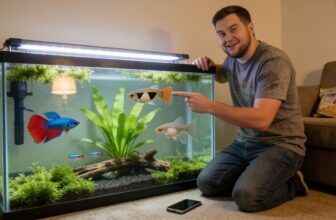
Female Betta Fish Care: Behavior, Tank Mates & Setup Essentials
A single female betta needs a properly cycled tank (4–6 weeks, ammonia and nitrites at zero), heated to 78°F, filtered – five gallons minimum with a lid, because they jump.
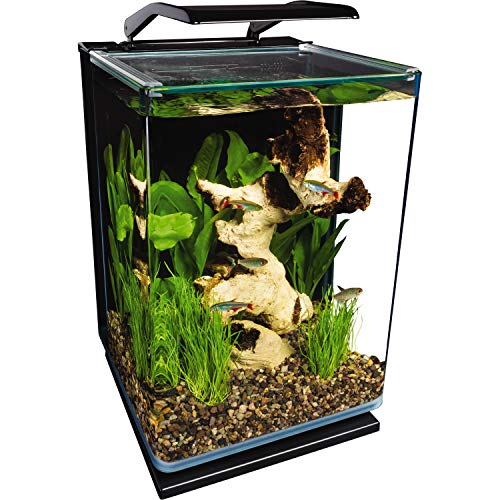
Spacious 5-gallon home with secure lid, perfect for a single betta.

Keeps water at stable 78°F, essential for betta health and activity.

Gentle filtration mimics calm waters, protects delicate fins.
Check discounted items inAquarium Supplies
They are carnivores; two pellets twice daily plus live daphnia works well.
Sororities (groups of four or more) require a heavily planted 20-gallon with broken sightlines, or fights erupt over territory, hierarchy, or stress.
Tank mates? Peaceful, fast fish like corydoras or snails work; avoid flashy guppies.
Patience and dense plants make the difference.
At A Glance
- Female bettas are less aggressive than males but establish a clear pecking order.
- A sorority requires a minimum 20-gallon tank with at least four females.
- Tank mates must be peaceful, like corydoras catfish, snails, or ghost shrimp.
- Stable water parameters: 78°F, pH 7.0, and zero ammonia after cycling.
- Dense plants and hiding spots prevent stress and reduce territorial fighting.
How to Tell a Female Betta From a Male (Colors, Size, and Fins)
To tell a female betta from a male, start by looking at color, size, and fins – the differences are so consistent that you can confidently sex most fish from across the tank. Males flaunt flashier Betta color morphs, like vivid reds or metallic blues. A female is shorter, broader, and her fins are far less dramatic.
That tail? Maybe an inch, whereas a male’s can triple that. This matters if you’re building a sorority hierarchy. You need females to keep pecking-order peace. Picking one is easy: smaller, duller, and less flowing means girl. Simple rules, better community. Using gentle water flow filtration helps protect their fins from stress. Proper filtration also requires monthly cartridge changes to maintain water clarity.
What to Look for When Buying a Healthy Female Betta
A healthy female betta should look active, curious, and alert – not sluggish or hiding in the corner. When selecting quality specimens, watch for bright, clear eyes and fins that spread fully without tears. A good betta swims smoothly, exploring her surroundings with interest. Identifying health indicators early saves you headaches later.
- Clear, unclouded eyes without film
- Smooth, undamaged fins, not clamped to the body
- Steady swimming, not listing or zigzagging
- Lively, even color without pale patches
- Active response to movement outside the tank
Get one that checks all these boxes. Your new friend deserves a strong start, and you deserve a fish that won’t make you worry from day one. A quiet, well-filtered tank with 3‑in‑1 filtration supports these health indicators by maintaining stable water conditions. Gentle filtration options like sponge filters prevent stress from strong currents during recovery and acclimation.
Tank Essentials: Size, Filter, Hiding Spots, and Plants
Once you’ve found a healthy female betta with bright eyes and a lively swim, it’s time to set up a home that won’t drive her – or you – crazy.
Betta origins are shallow, calm waters, so a 5-gallon tank is the minimum.
A gentle filter is essential; strong currents stress her out. Some compact filters include a quiet motor ≤40 dB to ensure the flow remains gentle and the environment stress-free.
Add plenty of hiding spots – caves or dense plants like java fern – so she feels secure.
A consistent lighting schedule (8–10 hours daily) keeps her circadian rhythm happy and plants growing.
Without a lid, she’ll jump; trust me, you don’t want that.
Simple setup, happy fish.
For a gentle flow, consider a tank with adjustable flow knobs to tailor the current strength to her needs.
How to Set Up the Perfect 5-Gallon Habitat for One Female Betta
Setting up a single female betta’s 5-gallon home is less about making it fancy and more about not accidentally turning it into a stress chamber. Think calm sanctuary.
Setting up a betta’s home is about creating a calm sanctuary, not a stress chamber.
- Tank Decor: Use smooth gravel or sand; avoid sharp edges. Add silk or live plants like Anubias – soft leaves won’t tear her fins.
- Lighting Cycle: Run lights 8–10 hours daily. A timer ($15) keeps it consistent, preventing algae blooms and giving her a natural day-night rhythm. Using lights with predictable light rhythms reduces fish stress and improves schooling behavior.
- Hiding Spots: Place a small cave or mug on its side. Females need privacy to feel secure; it reduces territorial stress.
- Gentle Filter: Choose a sponge filter ($10–$20). Strong currents exhaust bettas; slow flow mimics their calm rice paddy origins.
- Secure Lid: Bettas jump. A tight-fitting lid saves her from a dry floor surprise – you’ll thank yourself later.
Ideal Water Temperature, pH, and Hardness for Female Bettas
Keep that thermometer handy, since female bettas are picky about their water – think of them as tiny, aquatic Goldilocks. They demand a stable temperature around 78°F, ranging 75–80°F. Too cold? They slow down. Too hot? Stress.
For pH, aim for ideal pH near neutral – they tolerate 6.5 to 8.5, but 7.0 keeps them happiest. Water hardness? 5 to 35 dGH works fine. These parameters aren’t optional; they prevent disease and aggression. A simple heater and test kit cost under $30.
Bottom line: dial it in exactly – your betta will reward you with vivid colors and calm behavior.
Why Your Female Betta Needs a Lid (She Will Jump)
Now that the temperature and pH are dialed in, there is another detail that is easy to overlook: the lid. Female bettas are natural jumpers, especially when startled or exploring. Jumping prevention isn’t optional; it’s critical for their safety.
Lid reasons go beyond simple containment – they protect your fish from injury, dehydration, and escape.
- Startle response: Sudden movements or bright lights trigger jumps
- Water quality issues: Poor conditions stress them, encouraging leaps
- Tank size stress: Small tanks feel cramped, increasing escape attempts
- Territorial disputes: Aggressive tank mates cause flight reactions
- Curiosity: Active, explorative nature leads them to seek new horizons
A secure lid costs $10–20 and prevents tragic accidents. You’re building a home, not a prison – just one they can’t leave. Trust us, a lid beats a dried-out betta on the floor.
Many available options, such as cut‑to‑size magnetic nets, allow you to fit a lid securely even on odd‑shaped or curved tanks. For a more rigid solution, consider high-density plastic panels that resist warping and can be cut for custom shapes.
What to Feed Your Female Betta: Pellets, Live Food, and Portions
A female betta is a picky little carnivore with a short digestive tract and high protein demands. Her mouth is tiny, so portions matter. One or two pellets twice daily, eaten within 90 seconds, prevents bloat. Vary her Betta diet with live or frozen daphnia, mosquito larvae, or brine shrimp – excellent Protein sources. The high insect protein in options like Fluval Bug Bites provides an excellent sustainable alternative for tropical carnivores like bettas. For long-term care, an automatic feeder with precision portion control can ensure consistent, measured feedings when you are away.
| Food Type | Frequency | Portion Size |
|---|---|---|
| Pellets (high-protein) | Twice daily | 1–2 pellets |
| Live daphnia | 2–3 times weekly | 2–3 larvae |
| Frozen bloodworms | Once weekly | 2–3 worms |
| Brine shrimp (live) | Occasional treat | 2–3 shrimp |
Skip dried bloodworms; they cause constipation. Your female will thrive on variety.
Are Female Bettas Aggressive? Territorial vs. Mean-Natured
Female bettas are not mean by nature, but they undoubtedly can act like it when their personal space gets invaded. Their aggression is territorial, not spiteful – they’re defending their home, not picking a fight for fun.
- Sorority hierarchy forms naturally; chasing is just ranking, not bullying.
- Space requirements matter: a 5‑gallon minimum for one, 10‑plus for groups.
- Bullying happens when territories overlap or space is too tight.
- Stress from poor water or lack of hides triggers aggressive behavior.
- They calm down once everyone knows their place and has room to breathe.
A 10‑gallon rimless glass cube design provides ample vertical swimming space and panoramic views, helping to establish clear territories in a sorority setup.
Understand the difference between territorial and mean-natured, and you’ll keep the peace. Frequent recalibration of pH meters ensures reliable water monitoring to reduce stress triggers.
Why Female Bettas Fight: and How to Stop It
Three main reasons fuel female betta fights: territory, hierarchy, and stress. They’re not mean, just wired that way. When a fish invades her personal space, she defends it – chasing, nipping, establishing order. Some have genetic aggression, making them more prone to bullying patterns.
You’ll see relentless chasing. That’s hierarchy formation. It’s normal, except it turns into continuous harassment.
To stop fights, give them enough room – 10 gallons minimum – and tons of plants. Anubias or java moss work. Better hiding spots mean fewer confrontations. Remove any fish that’s causing constant, serious injuries. Simple. Adding fast-growing floating plants like Water Spangles can create natural shade and visual barriers to reduce aggression. Utilizing slow‑water driftwood pieces provides additional natural hiding spots that break sight lines and encourage calm behavior.
How to Build a Peaceful Betta Sorority (Min. 4 Fish)
Start with at least four females, all similar size and age. Use a heavily planted 20‑gallon tank, creating broken sightlines. Add fish simultaneously to prevent any one claiming dominance first. Monitor for the first 48 hours; chasing is normal, but separate any relentless attacker. Feed multiple small meals daily so food scarcity doesn’t trigger squabbles. A three‑tier design saves floor space while the stand’s high load capacity safely supports a 20‑gallon setup. Ensure the stand’s six non‑slip leveling feet accommodate uneven floors to prevent wobbling in high‑traffic areas.
A sorority isn’t a guarantee, but with enough space and cover, they’ll likely settle into a calm hierarchy.
Best Tank Mates for Female Bettas (and Which Fish to Avoid)
Since you’re setting up a female betta tank, choosing the right roommates is about 80% of the success. Pick peaceful, fast-moving fish like corydoras catfish or kuhli loaches – they ignore bettas entirely. Snails and ghost shrimp likewise work fine. You can also boost the cleanup crew by adding Tisbe copepods to help ingest waste and invasive algae.
Avoid flashy, long-finned fish that trigger aggression. In particular, skip guppies or male bettas with Koi patterns – those colors scream “rival.” Likewise avoid any fish with Marble genetics that might resemble a male’s bold look. No goldfish, angelfish, or red tail sharks. For a safe, low-maintenance alternative, consider Cryptocoryne Parva as a foreground plant that thrives in low light without triggering aggression.
Bottom line: roommates that stay out of her space keep the peace. Separate immediately if she nips.
Can a Male and Female Betta Live Together? (Only for Breeding)
The short answer is no – keeping a male and female betta together long-term is a recipe for disaster. They are wired for aggression, not romance. Long term cohabitation is impossible; permanent pairing means constant stress and likely death.
- Males see females as threats, not partners, so they attack on sight.
- Females, although calmer, will fight back if cornered, leading to torn fins.
- Even brief breeding sessions require close supervision to prevent injury.
- The tank must be set up exclusively for spawning, then separated immediately.
- Think of it like a blind date in a boxing ring; it rarely ends well.
Never attempt this except you’re prepared for strict, temporary breeding.
How to Breed Female Bettas (Step-by-Step Essentials)
| Stage | Key Action | Emotional Note |
|---|---|---|
| Conditioning | Feed protein-rich foods | Hope builds, like waiting for a text back |
| Introduction | Watch for bonding | Nervous excitement, like a first date |
| Spawning | Remove female fast | Relief mixed with panic |
| Fry care | Separate male | Pride in tiny lives, but don’t get attached yet |
Ensure your breeding setup includes reliable aeration equipment, as air stones break air into fine bubbles for better oxygenation during fry development. For optimal oxygen transfer, select models producing bubbles within the 300‑500 µm range to avoid wasting pump power.
Stressed or Sick Female Betta? Signs and Quick Fixes
- Check temp – 78°F ideal; cold water crashes immunity.
- Test water – ammonia or nitrite spikes; 25% water change fixes it.
- Add hides – dense plants like Java fern reduce rivalry, fast.
- Review diet – overfeeding bloats; hungry bettas get nippy.
- Watch fins – clamped or torn fins mean stress, not injury.
- Boost resilience with Crystalpro Betta Minerals to enhance fin health and color after water changes.
- Use a reliable test kit to ensure ammonia and nitrite levels stay at zero after the water change.
Listen, a calm tank equals a calm fish.
A calm tank equals a calm fish.
She’s telling you loud – you’ve got this.
Common Beginner Mistakes With Female Bettas (and How to Avoid Them)
Starting a female betta sorority with a five‑gallon tank and two fish sounds logical, but it’s a setup for disaster. You need at least four to six females in a heavily planted 20‑gallon minimum. Without that, they’ll fight for territory, leading to nipped fins and stress. A 20‑gallon kit like the GloFish curved system provides the space and filtration necessary for a stable sorority.
| Mistake | How to Avoid |
|---|---|
| Skipping tank cycling | Wait 4–6 weeks, testing ammonia and nitrites to zero before adding fish. |
| Ignoring illness signs | Watch for clamped fins or lethargy; treat immediately with clean water. |
| Too few fish | Keep four or more to spread aggression across the group. |
| Bare tank | Dense plants like java fern give each fish hiding spots. |
For an ailing betta, a dedicated quarantine tank prevents spreading disease to the sorority while providing easy observation and treatment.
Bottom line: more space, more plants, and patience keep your sorority peaceful.
Frequently Asked Questions
Can Female Bettas Recognize Their Owners?
Can female bettas recognize their owners? Yes – but not like a puppy. They’ve got short memory capacity, yet they learn to connect your approach with food. That fluttery fin-wiggle at the tank’s top? That’s them knowing you’re the snack-bringer.
- Owner recognition works through routine: they spot your face shape or movement over time
- Memory capacity lasts a few weeks; an inconsistent schedule resets their clock
Don’t expect a name response. But that eager swim-up is real. It’s not love – it’s dinner anticipation.
Bottom line: feed them daily, and you’ll be their favorite human-like object.
Do Female Bettas Need a Heater in Warm Rooms?
Yes, female bettas still need a heater in warm rooms. Ambient temperature fluctuation can drop water temp several degrees, stressing them.
This impacts metabolic rate, meaning digestion slows and immunity weakens. A steady 78°F keeps them healthy, active, and less prone to illness.
Even in a warm room, an adjustable heater like the 50W Aqueon ($18) guarantees consistency. Bottom line: don’t skip the heater – your betta’s comfort depends on stable warmth, not guesswork.
How Long Do Female Bettas Typically Live?
Female bettas typically live around two to three years, though some push four if you don’t mess it up.
A cramped tank shrinks lifespan like a bad haircut – stress from small spaces invites male aggression? Not exactly, but it amps up their own territorial squabbles.
Proper tank size, say five gallons minimum, plus stable warmth and clean water, buys them time.
They’re hardy but not immortal.
Want them around longer? Give them room to roam and a boring routine to avoid.
Why Is My Female Betta Making a Bubble Nest?
No, your female betta isn’t confused or impersonating a male. Bubble nests are rare but possible for females, driven by strong mating behavior and breeding instincts that kick in regardless of gender.
Even without a male around, her body says “time to nest,” so she builds one. It’s like an unexplainable urge – totally normal, nothing to worry about.
Just keep her tank clean and calm. If she’s alone, she’ll likely abandon it soon. No drama needed.
Can I Keep Female Bettas With Snails or Shrimp?
Yes, female bettas can typically live with snails and shrimp. Shrimp safety is high with larger species like ghost or amano shrimp, but tiny babies might get nipped. Snail compatibility is excellent – mystery or nerite snails are calm, armored roommates.
Watch out: a hungry betta might test a shrimp’s escape speed. Provide plenty of plants for hiding spots, and keep the tank at least 10 gallons. It’s like hosting a peace treaty; everyone gets space, no drama. Bottom line: go for it, but supervise introductions.
Rounding Up
So, you’ve learned that female bettas aren’t just dull versions of males. They’re sassy, stubborn little fish who need a proper setup, not a teacup. A five‑gallon tank with a heater and a filter isn’t optional; it’s the bare minimum for preventing depression and fin‑niping. Stick to the sorority rules or just keep one. Ignore the advice, and you’ll learn why they call it a “betta” but you’ll call it a $15 mistake. Bottom line: give them respect, or they’ll give you guilt.

High-protein insect diet for carnivorous bettas, enhances color and vitality.
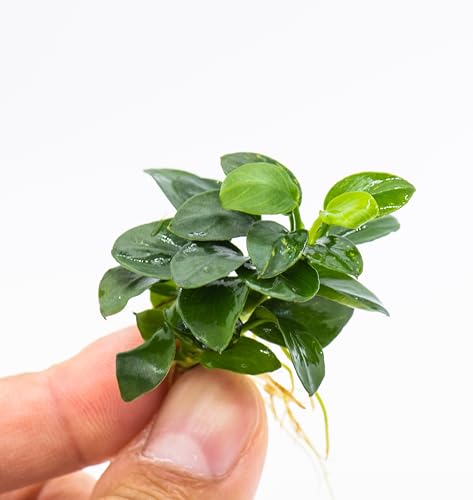
Hardy, low-light plant provides hiding spots and soft leaves.

Gives resting spot near surface, reduces stress and adds comfort.
See today's best deals onBetta Fish Accessories