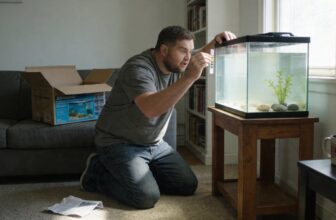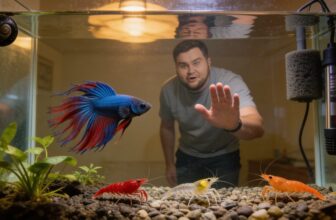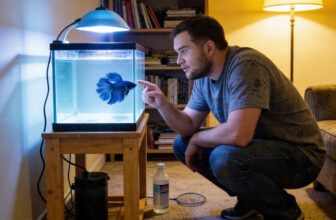
What eats fish poop in an aquarium? Nothing—despite what you’ve read online. Shrimp, snails, plecos, and crabs all pass it by. Fish waste has zero nutritional value; it just decomposes into toxic ammonia that burns gills and clouds your water.
The real solution is elbow grease. Weekly gravel vacuuming during 20-30% water changes removes the bulk, while a cheap sponge pre-filter traps solids before they break down. Overfeeding and overstocking only multiply the mess.
Plants help with nitrates, but they won’t touch the raw stuff. No critter exists that views fish poop as a snack. You are the cleanup crew—full stop. Want to know why this myth persists and which “cleaner” animals actually help your tank?
At A Glance
- Nothing in an aquarium eats fish poop; this is a persistent myth.
- Plants absorb waste nutrients as fertilizer but do not consume solid poop.
- Shrimp, snails, and plecos ignore fish waste, eating only algae or leftover food.
- Manual gravel vacuuming is the only reliable method to remove fish waste.
- Biological filtration breaks down ammonia from waste but leaves solid poop untouched.
The Honest Truth: Nothing in Your Aquarium Eats Fish Poop
Though it would make aquarium maintenance far simpler, the honest truth is that nothing in your tank actually eats fish poop. In spite of popular aquarium myths, no shrimp, snail, or pleco touches waste processing that way. They ignore it entirely, focusing instead on algae or uneaten food. That pile of debris? It sits there, breaking down into ammonia. No workaround exists. Plants do use the nutrients, but they don’t consume the solid. So, the job falls to you—and your gravel vacuum. Many products feature a two‑year warranty for reliable performance. Manual removal remains the only reliable method, period. Accept it; belong to the club of hands-on aquarists who know better. For effective waste removal, a 36 W electric model with a three‑stage filter cup can make the task easier.
Why Fish Waste Has No Nutritional Value
Since fish poop has no nutritional value—it’s fundamentally the leftovers after digestion strips out everything useful—nothing in your aquarium bothers eating it.
What remains is mostly indigestible fiber, bacteria, and traces of ammonia. That’s where waste decomposition kicks in, feeding beneficial bacteria that run the tank nitrogen cycle. Testing ammonia levels at least twice weekly is recommended to ensure they stay within a safe range of below 0.25 parts per million for freshwater setups.
You see, fish waste is like a stale, empty wrapper; nobody wants the trash.
- Shrimp, snails, even plecos—they all pass it over.
- The real work happens invisibly, as bacteria convert ammonia to nitrites, then nitrates. Using a product like Seachem Prime can temporarily detoxify ammonia during this process.
What Happens When Fish Poop Builds Up in Your Tank
So if nothing eats fish poop, what happens when you let it pile up? It quietly disrupts your tank’s biological cycle.
The waste decomposes, silently burdening your silent filtration system until you intervene.
- Ammonia spikes – Decaying poop releases ammonia, poisoning water faster than you’d guess.
- Weak immune systems – Fish grow stressed, more prone to illness.
- Cloudy water – A murky mess signals waste overload.
- Foul odors – Your tank starts smelling like a swamp.
You belong to a community that keeps things tidy. Weekly gravel vacuuming is your ticket to a happy, healthy tank. Using a 7-in-1 test kit like the ones in the knowledge can help monitor ammonia and nitrite levels during this cleanup. Test strips can provide lab-accurate results with a 60‑second result time for rapid water quality checks.
How Rising Ammonia and Cloudy Water Harm Your Fish
After ammonia spikes from decomposing fish poop, your tank turns toxic fast. Ammonia toxicity burns fish gills and damages organs, leading to lethargy and gasping at the surface.
Cloudy water isn’t just unsightly—it signals rising waste and poor waste filtration. Without proper waste filtration, ammonia accumulates, weakening immune systems. Adding a beneficial bacteria supplement can boost biological filtration to break down waste faster.
Your fish become more susceptible to disease, stress, and illness. Keeping ammonia at 0ppm is critical for their health. No creature in the aquarium eats fish poop; only plants use it as fertilizer. Using a ±5% lab‑grade liquid reagent kit helps catch rising ammonia before it harms your fish.
Manual removal and regular water changes are necessary. Ignoring this invites foul odors and sick fish.
Prevent Fish Poop With Water Changes and Gravel Vacuums
A gravel vacuum is the closest thing to a poop-removal superhero for your aquarium. Regular partial water changes—20-30% weekly—dilute toxins whilst vacuuming substrate yanks out trapped debris. This prevents ammonia spikes and cloudy water. For efficient gravel cleaning, use a Tetra Gravel Siphon with a priming bulb for quick, mess-free flow.
- Weekly 20-30% water changes remove dissolved waste, supporting aquarium waste management and biological filtration benefits.
- Gravel vacuum all substrate during changes; gently stir sand or gravel to release hidden debris.
- Clean filter media monthly per manual; a dirty filter crashes biological filtration benefits.
- Sponge-filter intake catches particles between changes, reducing workload.
Bottom line: Nothing eats poop, so you must remove it yourself. Stay disciplined, and your fish stay healthy. For efficient removal, leaktite 744456 1-gallon pails are ideal for mixing dechlorinator or holding recycled water during small water changes.
Why Overfeeding and Overstocking Worsen Poop Buildup
Overfeeding and overstocking turn your aquarium into a poop factory, plain and simple.
Overfeeding consequences mean fish eat more than needed, producing extra waste since their bodies process excess food inefficiently.
Overstocking effects crowd your tank, boosting waste output beyond what filtration can handle.
You’re not alone in this trap—many beginners add too many fish, or drop flakes like confetti.
- More fish equals more poop, creating ammonia spikes.
- Uneaten food rots, compounding the muck.
Stick to the one-inch-per-gallon rule, and feed only what they devour in two minutes.
Your community tank thrives with restraint, not surplus.
Using Tetra Goldfish Variety Pellets helps reduce waste because their bite-size pellets prevent over-feeding compared to messy flakes.
Choose the Right Substrate for Easier Fish Poop Cleanup
If you do not enjoy wrestling a gravel vacuum against poop wedged between pebbles, substrate choice directly determines cleanup difficulty. Go with sand—its smooth surface lets waste sit on top, not sink deep. But watch substrate depth: too much, and poop settles where you cannot reach. Sand compaction helps keep waste visible, not buried.
- Sand—poop stays on top for easy vacuuming, but depth over 1.5 inches creates dead zones.
- Gravel—traps poop between stones; requires aggressive vacuuming or you miss half.
- Fine gravel (1-2mm)—compromises, but still hides waste.
- Bare bottom—zero hiding places; just siphon straight off glass.
For stress-free cleanup, choose shallow sand. Your vacuum handle will thank you. Many fine sands are also pre-washed and kiln-dried, reducing dust storms during tank setup. Selecting a natural stone substrate like Aqua Natural Midnight Pearl can help support beneficial bacteria while keeping waste visible.
How Filter Additions and Sponges Capture Waste
Sand is great at keeping poop on the surface, but it does not remove the stuff from the water. That’s where filter additions and sponges step in.
A simple sponge pre-filter, costing around $5, slips onto your intake tube. It traps solid waste before it breaks down, making sponge cleaning a quick, weekly rinse in old tank water. This design works well because 40 PPI sponges trap fine debris for superior water clarity. Many pre-filters use high-light-transmission mesh materials similar to those in cut‑to‑size aquarium lids.
This boosts waste filtration without harming your beneficial bacteria. You’ll see clearer water and fewer ammonia spikes. It’s a cheap, low-effort upgrade that keeps your tank community healthier.
For most setups, a sponge pre-filter is a no-brainer addition.
Why You Still Have to Clean the Tank Yourself
Why, then, does all that clever gear still leave you scrubbing the glass on a Saturday morning? Since fish poop doesn’t decompose fast enough on its own. Natural biological filtration breaks down ammonia, but the solid waste—the visible stuff—just sits there, waiting for you. Even the best self-cleaning filter can’t remove waste trapped in gravel. Overfeeding creates extra poop, overwhelming even automated robotic cleaners. No animal eats it (as you learned), so manual removal is the only cure. That Saturday scrub keeps ammonia low, and your fish healthy—it’s your membership card to the clean-tank club. App-controlled models with advanced filtration systems still rely on you to siphon debris from the substrate.
The Truth About Shrimp and Fish Poop
A persistent myth claims shrimp are the cleanup crew for fish poop, but that’s wishful thinking dressed up as aquarium lore.
Shrimp diets consist of algae, leftover food, and dead critters—not waste. Cherry, ghost, and Amano shrimp simply ignore fish poop.
So, no, they’re not your poop patrol. Waste consumption myths lead many newbies to overstock shrimp, hoping for magic.
It’s a setup for cloudy water and ammonia spikes. You still have to gravel-vac and change water weekly.
Shrimp are awesome, certainly, but they’re not janitors. Keep expectations grounded, and your tank stays healthy. That’s the real bottom line.
Do Snails Eat Fish Poop? The Real Answer
Snails are often hailed as the cleanup crew of the aquarium, the truth about their diet is a lot less glamorous—they do not eat fish poop.
What they actually eat keeps your tank tidy in other ways.
- Snails eat algae, especially the slimy kind coating your glass and decorations.
- They consume decaying plant matter, like old leaves breaking down on the substrate.
- Leftover fish food is a snail diet staple, preventing it from rotting and spiking ammonia.
- Carnivorous snails eat other snails, but that’s crab behavior, not waste cleanup—different critters entirely.
They handle leftovers, not waste.
You still need a gravel vacuum.
For an additional natural cleanup boost, you can add floating plants like Water Hyacinth, which act as a bio-filter to absorb excess nutrients from the water. Some aquarists instead use refugium lighting to grow macroalgae, which naturally consumes fish waste compounds.
Why Plecos and Crabs Avoid Fish Waste
Although plecos and crabs are often marketed as natural tank cleaners, they avoid fish poop entirely.
Pleco digestion is built for algae and plant matter—not waste. Their mouths are suction tools for scraping surfaces, not sifting debris.
Crab anatomy, with its claws and gills, targets meat and detritus, not feces.
Fish poop contains no nutrients, so no creature bothers. You might see a pleco near a pile, but it’s hunting biofilm nearby. Crabs scuttle past, focused on leftover food.
Don’t trust the marketing hype. These cleaners skip poop, leaving you to grab the gravel vacuum. It’s that simple.
For truly effective pest removal on prized corals, consider a product like Fritz Bug Out Pro, which targets flatworms and nudibranchs without relying on fish waste consumption.
Instead, use a fine nylon mesh net to gently skim uneaten food and debris from the water surface before it settles.
How Live Plants Use Fish Poop as Fertilizer
While no critter in your tank will touch fish poop as a snack, your live plants absolutely will, treating it like a free fertilizer delivery service.
They absorb the broken-down waste through their roots, turning a problem into growth.
This is nutrient cycling in action—plants convert ammonia from poop into leaves, not toxins.
- Root uptake: Plants pull nutrients directly from waste in the substrate.
- Ammonia conversion: They transform harmful ammonia into plant tissue.
- Natural filtration: This plant filtration keeps water clearer, longer.
- Faster growth: Expect lush, lively leaves without extra fertilizers.
Your plants are doing the dirty work, quietly.
For an even bigger boost, add a slow-release root tab near root-feeders like crypts or swords to supplement the natural waste breakdown.
Maintenance Is the Only Reliable Fish Poop Remover
| Overhyped Myth | Harsh Reality |
|---|---|
| “Cleaner fish” eat waste | They don’t; most ignore poop. |
| Snails are janitors | They eat algae, not poop. |
| Shrimp clean everything | They scavenge food, not feces. |
| “Self-cleaning tanks” exist | They don’t; you do. |
Grab a gravel vacuum weekly, stir sand, and siphon. It’s boring but bulletproof. Your hands? The only reliable poop remover, ever. Even the best biological filter media like ceramic rings or bio balls only process dissolved waste, not the solid poop itself.
High-quality biological filtration via ceramic beads and bio‑sponge will convert ammonia from waste into safer nitrates, but it still cannot remove the solid feces itself.
Frequently Asked Questions
Can Fish Poop Kill My Fish?
Yes, fish poop can kill fish. As waste decomposition releases ammonia, fish toxicity rises, directly weakening immune systems and causing disease.
Dirty water, cloudy from buildup, stresses fish into lethargy or gasping.
Though plants help process waste, they cannot replace human intervention. Regular gravel vacuuming and 20-30% weekly water changes keep ammonia at 0ppm, preventing lethal spikes.
No shortcut avoids this chore—it’s the cost of belonging to the fishkeeping community.
Bottom line: clean regularly or risk losing stock.
How Often Should I Gravel Vacuum?
Gravel vacuum weekly—it’s the cleanest confession of aquarium life.
Vacuum depth should reach the bottom, stirring trapped debris without uprooting plants.
A consistent cleaning schedule, like every Saturday, prevents ammonia spikes and cloudy water.
Miss a week? No big deal, but fish get dramatic.
It’s not glamorous, but you’re basically the waste removal squad—your tank’s just one big group project nobody signed up for.
Bottom line: stick to weekly, and your fish will thank you by not dying.
Does a Filter Remove Fish Poop?
A filter does not truly remove fish
Will Adding More Plants Eliminate Fish Waste?
Adding more plants won’t eliminate fish waste—fish poop is solid and must be physically removed.
Plant benefits are real, though: they absorb dissolved nutrients through biological filtration and nutrient cycling, turning ammonia into growth.
But they can’t break down visible waste.
You’ll still need a gravel vacuum and water changes.
Think of plants as helpers, not miracle workers—they’ll clean the water, not the substrate.
Keep your hands in the tank; your filter and plants can’t do it alone.
Is Cloudy Water Always From Fish Poop?
Cloudy water is not always from fish poop. It often signals a bacterial bloom, where helpful bacteria multiply rapidly after a tank disturbance.
Cloudy algae, a green haze, likewise causes murkiness from excess light or nutrients. Both are normal, temporary phases for new or overcleaned tanks.
Think of them like teenagers—overly reactive but in the end harmless with patience. Test water first, panic later.
Ammonia spikes from poop are one possibility, but cloudiness usually fades without frantic gravel vacuuming.
Rounding Up
Bottom line: Nature doesn’t have a fish‑poop eating janitor. Snails, shrimp, and plecos ignore it like teenagers ignoring chores. The stuff just sits there, silently gunking up your water. Plants will grab the ammonia—that’s fish‑waste tea—but they leave the solids. So don’t hunt for a cleanup crew. Spend $20 on a gravel vacuum instead.
- Do weekly water changes.
- Use a siphon on the substrate.
- Feed less. Simple, boring, but it works.
Bottom‑line recommendation: Your hands, not a critter, are the poop‑removal tool you actually need.