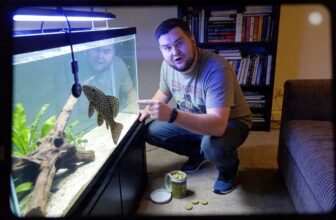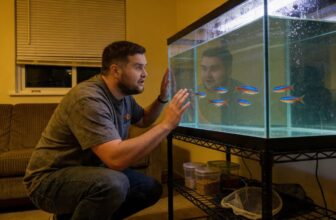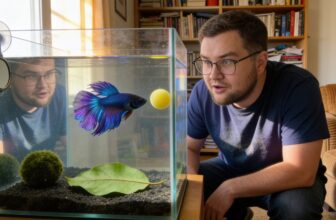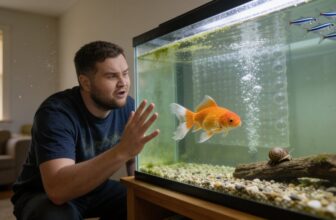
The 15 easiest fish to care for aren’t demanding divas—they forgive missed water changes, eat standard flakes, and rarely bother their tank mates.
Guppies top the list with vivid colors and simple care that beginners love. Zebra danios are practically indestructible, mapping tank layouts with surprising intelligence.
Platies breed like clockwork, offering free fish for years. Mollies need two females per male to keep pushy behavior in check, so plan your stock carefully.
Dwarf gouramis stay skittish but accept basic flakes without fuss. Bottom-dwellers like common corydoras scavenge leftovers in groups, whereas bristlenose plecos graze algae for up to 15 years.
Want the full breakdown? Each pick has hidden quirks that separate thriving tanks from disaster.
At A Glance
- Livebearers like guppies and platies are hardy, breed easily, and tolerate beginner mistakes.
- Danios, especially zebra danios, are nearly indestructible and forgive missed water changes.
- White Cloud Mountain minnows thrive in unheated tanks and handle temperature fluctuations well.
- Bottom-dwellers like corydoras and bristlenose plecos eat leftovers and need minimal special care.
- Hardy schooling fish, such as neon tetras, require established tanks but stay peaceful in groups.
Guppies: The Easiest Fish for Beginners
If you’re looking for a fish that practically sells itself, the guppy is your winner. These social butterflies flaunt striking hues thanks to complex color genetics—think of them as living art projects.
Beautiful fins are a target for fin nipping, so keep them with peaceful tankmates. Pair two females per male to curb aggression, and they’ll breed like it’s their job. They perform best in a quiet, low-flow environment with gentle filtration to prevent stress.
They’re not picky eaters, thriving on quality flakes with occasional live food. For a beginner wanting instant color and community, guppies deliver effortlessly. Supplement their diet with TetraColor Tropical Fish Food Flakes for immune health and enhanced vibrancy. They make you feel like you’ve already got this hobby down.
What Makes a Fish Really Easy to Care For?
Before you can pick the perfect beginner fish, you need to know what “easy” actually means in aquarium terms. It’s not just about surviving—it’s about thriving with minimal fuss. Here’s what that looks like:
- Hardiness & Water stability: Easy fish can handle your beginner wobbles—forgetting a water change or a slight temperature swing—without keeling over. They’re like a forgiving friend who doesn’t hold grudges. Consistency in nitrate testing ensures your tank stays stable enough for forgiving fish.
- Low maintenance feeding: They eat standard fish flakes or pellets, no fancy live-food chef required. This cuts your daily chore list in half, making you feel like a pro without the effort.
- Peaceful, non-aggressive nature: They won’t terrorize tankmates or need constant referee duty. You get a calm community vibe, so you can relax and just enjoy watching them do their thing. Using lab-accurate test strips makes monitoring water conditions quick and reliable.
Zebra Danios: The Hardiest Easiest Fish Option
The toughest fish in the shop, Zebra Danios are pretty much indestructible. These energetic speedsters handle beginner mistakes like a champ, forgiving missed water changes with ease.
Zebra Danios are nearly indestructible, forgiving beginner mistakes like missed water changes with ease.
Their behavioral intelligence means they’re smarter than you’d expect, capable of spatial mapping to navigate three-dimensional tank layouts. They’ll zoom around, creating mental maps of every nook and cranny. Proper weight distribution across a metal-framed stand ensures the tank remains stable even as they dart about.
- Tied for second in our poll
- Thrive in temps 64-78°F
- Happy in 10 gallons or bigger
- Eat standard fish flakes
You want a fish that survives your learning curve? Zebra Danios are your go‑to. It’s like having a buddy who never complains about bad directions.
Bottom line: these hardy swimmers let you make mistakes, and they’ll still be swimming. For a tank that matches their durability, pair them with a sturdy aquarium stand that supports up to 220 pounds.
Platies: Highly Adaptable and Easy to Care For
Platies tied for second place in the poll, and they earned that spot. Their playful, easygoing nature fits right in with any beginner’s community tank.
- Breeding Rates: These livebearers breed prolifically, so expect fry often. It’s basically free fish.
- Color Morphs: From sunset red to neon blue, their endless color varieties mean you’ll never get bored.
- Water Adaptability: They handle pH from 6.8 to 8.5, a forgiving range few fish match.
Bottom line: Platies are the welcome wagon of the aquarium world—adaptable, colorful, and low-fuss. Grab a group of three or more in a 10‑gallon tank, and you’ve got a charming colony. For a slightly larger setup, consider pairing them with a 20‑gallon aquarium starter kit that includes reliable filtration and a heater for stable water conditions. To support this larger tank, choose a stand rated at 660 lb for long-term stability and peace of mind.
Mollies: Easy to Breed but Need Female-to-Male Ratios
If mollies were a friend, they’d be the one who always shows up to the party with a surprise plus‑one. They breed like it’s a hobby, so fish handling becomes routine.
The catch? Ratio importance. Keep two females for every male, or the boys get pushy.
The catch? Keep two females per male, or the boys get pushy.
Mollies need groups of three or more, with lots of hiding spots. They’re not picky eaters and handle beginner mistakes well. Just watch the tank—they’ll fill it fast.
Adding lots of hiding spots like driftwood or dense plants helps reduce stress and gives fry a safe refuge. The substrate you choose, such as Aqua Natural Midnight Pearl, supports beneficial bacteria and plant root stability.
Bottom line: low fuss, high fry count, but only if you mind the numbers.
Endlers Livebearers: Tiny, Easy, and Prolific Breeders
Endlers Livebearers are like guppies’ smaller, scrappier cousins who ate their vegetables. They’re tiny, tough, and breed like clockwork—so Breeding Control is a must, or you’ll have a tankful in no time. Avoid Guppy Hybridization by keeping them separate, or you’ll lose their unique traits. For a safe habitat, choose a tank with gentle flow to avoid overwhelming these small swimmers. A filter with an adjustable bubble dial can help create the perfect water movement for them.
- Hardy & Adaptable: They thrive in 68–82°F water, pH 6.5–8.5, and eat basic flakes.
- Prolific Breeders: Expect fry every month; separate sexes to manage numbers.
- Small & Active: Perfect for 10-gallon tanks, adding nonstop color.
Bottom line: low effort, high reward—if you manage the babies.
Neon Tetras: An Easy Fish for Established Aquariums
But here’s the catch: they’re sensitive to new tank syndrome. That’s why they only fit aquariums that have cycled properly for weeks. Watch for neon tetra disease, a fatal parasite. Stick to reputable sellers, and you’ll get that vivid, shimmering school you see in stores. For a smaller alternative, consider a 2.5‑gallon nano tank that supports shrimp or betta. A setup with low‑flow filtration prevents stress on delicate fins and supports healthy bacterial colonies.
Bottom line: skip neons if your tank is brand new. They’re easy only after you’ve proven your setup works.
Cardinal Tetras: Beautiful, but Need Bigger Tanks
Cardinal Tetras are like neon tetras’ taller, more colorful cousin—the one who insists on a bigger apartment. Their tank requirements demand a minimum 20 gallons, not the cramped 10-gallon starter kits.
Here’s what beginner suitability looks like for these stunners:
- Size matters: They hit 2 inches, needing swimming room in a longer tank—think 20 long, not a cube.
- Water fussiness: Keep pH steady near 6.0 and temps at 78°F; they’re less forgiving than guppies. Using a controller with 0.1°F accuracy helps maintain this stable temperature.
- Group dynamics: Schools of six or more reduce stress but likewise add bioload.
If you’ve got the space, these red-and-blue gems reward careful owners. Otherwise, start with easier fish first. A fluval E 300W heater offers precise digital temperature control with ±1°F accuracy for maintaining their required 78°F water.
White Cloud Mountain Minnows: The Easiest Cold Water Fish
Flexibility is the secret weapon of the White Cloud Mountain minnow. It thrives on cold water care, handling temperature fluctuations that would send tropical fish into a tailspin. At 64-72°F, they’re happiest unheated—perfect for drafty dorms or forgetful heaters. When selecting a tank, glass resists scratches and maintains its clarity for decades, ensuring long-term viewing pleasure. These 1.5-inch charmers live 5-7 years, eat any flake, and stay peaceful in 10-gallon groups, though they could also thrive in a spacious setup like a 5-gallon plastic tank if space is limited. They’re like the friend who’s fine with leftovers and erratic AC. You won’t stress over water changes; they’re that forgiving. So, for an easy, chill companion that rolls with the punches, this minnow is your cold-water pal. Solid choice.
Swordtails: Easy-Going Fish With a Unique Look
Swordtails are the easy-going fish with a built-in party trick: a long, sword-like tail fin that makes them look like tiny, aquatic fencers.
Their swordtail origins trace to Central America, where they evolved that flashy blade for show, not aggression. They’re peaceful, active swimmers that thrive in a 20-gallon tank. To maintain optimal water quality, a filter with minimum 80 GPH is recommended. A filter with an adjustable flow valve can help reduce stress during acclimation for these calm fish.
- Swordtail tank mates should be calm—platies, mollies, or corydoras work well; avoid fin-nippers.
- They eat flakes, pellets, and veggies, no fuss.
- Keep one male per two females to reduce chasing.
Bottom line: a hardy, unique fish that fits right in.
Cherry Barbs: Easy Schooling Fish for Beginners
Cherry barbs. These schooling fish offer beginner-friendly color and activity, but they need room. Cherry barb size reaches just two inches, so groups of six or more thrive in a 20-gallon tank—not a tiny desk bowl.
Cherry barb water should be slow-moving and clean, with pH between 6.0 and 8.0. They bring calm energy, not drama, to a community tank. Keep more males than females to boost their red hues.
Low-maintenance, yes, but skipping water changes invites trouble. For new aquarists wanting a peaceful school without fuss, these barbs deliver. Bottom line: buy a proper tank first.
For targeting a stable pH in the upper range, aquarists can use a non‑phosphate formula like those found in general pH buffers. Consistent dosing of a carbonate buffer system ensures repeatable results for coral health and water stability.
Dwarf Gouramis: Peaceful and Easy for Small Tanks
Dwarf gouramis are a solid pick for small tanks, plain and simple. These little guys bring big color without the drama, making you feel like you’ve got this fish thing figured out.
- Unique breeding behavior: Males build bubble nests at the surface, a fascinating show that’s easy to spot in a 10-gallon.
- Sexing and ratios: Keep one male with two females to curb his bossy streak; males are brighter, females plumper.
- Easy diet: They’ll chow down on basic flakes, no fancy chef skills needed.
They’re skittish in loud rooms, so give them calm vibes. Bottom line: a peaceful, low‑fuss starter that fits your tank and your life.
To support their health and color, a reliable light like the Hygger 24/7 Aquarium LED can provide full-day simulation with a built-in timer. For a budget-friendly alternative, the Pawfly 11 W clip-on offers respectable PAR for low-demand plants at half the price.
Common Corydoras: Easy Bottom Feeders That Scavenge
Since bottom dwellers rarely get the spotlight, common corydoras prove that the real workhorses of a tank are often the ones sifting through the sand.
These armored catfish are predator driven evolution’s gift, built tough and peaceful. They constantly scavenge leftovers, providing natural fin nipping prevention by cleaning up messy food that might trigger aggression.
- Diet: Easy omnivores, accepting sinking wafers or flakes.
- Tank size: 10 gallons minimum, groups of four or more.
- Temperament: Docile, great for community setups.
They tie the tank together. Use a fine mesh net to safely transfer these delicate bottom feeders during tank maintenance.
For a low‑maintenance crew that minds its own business, common corydoras are a bottom‑line win.
Choosing a soft, smooth sand like Carib Sea Moonlight Sand reduces the risk of barbel damage for these bottom feeders.
Kuhli Loaches: Fun and Easy in Groups
Eel-shaped noodles with fins. Kuhli Loaches are a blast for those who appreciate a bit of mystery in their tank.
Eel-shaped noodles with fins, Kuhli Loaches bring a blast of underwater mystery.
Their secretive, nocturnal behavior means you will rarely see them lounging in the open, but that is part of the fun.
- For best results, keep them in groups of four to six for more confidence and visible group hiding among the plants.
- They are bottom-dwelling omnivores, happily eating sinking pellets and even the occasional snail.
- With a lifespan up to ten years and a 20-gallon minimum, they are a long-term, low-drama commitment.
They are ideal for a peaceful community that enjoys a hidden gem.
Adding Jungle Vallisneria as a tall background plant can provide excellent cover for their secretive behavior.
Bristlenose Plecos: Easy Algae Control for Large Tanks
If you have a tank that is twenty‑nine gallons or bigger and wish someone would just handle the algae for you, the Bristlenose Pleco is worth a hard look.
These hardy, armored janitors graze constantly on wood grazing surfaces, which helps their digestion. They need breeding caves to feel secure, and they appreciate a current. This species thrives with a gentle bubble flow from an air-powered sponge filter to avoid stress. For cleaning the glass, consider using a strong magnetic cleaner rated for 0.2‑0.4 inch glass to keep viewing panes clear without disturbing the pleco.
With a 15‑year lifespan, they are a long‑term friend. Supplement with algae wafers when the glass is clean.
They hold their own with tougher tank mates, too. Think of them as a peaceful, efficient roommate who never complains—just eats and hides.
Frequently Asked Questions
Can Different Easiest Fish Species Live Together?
Yes, many easiest fish species are compatible tank mates. Guppies, platies, and zebra danios share peaceful temperaments and similar water needs—pH 6.8-7.8, temps 70-78°F.
Aggression level assessment is key: avoid fin-nippers with guppies’ fancy tails. Stick to community tanks with these three, plus corydoras for cleanup. They’re like a low-drama friend group—easygoing, no fuss.
Just keep ratios right (two females per male) and a 10-gallon minimum. Bottom line: mix them, but watch personalities.
How Often Should I Feed My Easy Care Fish?
Feed them once daily, no more. Finicky feeding frequency? Not for these fish—portion control is key: a pinch they finish in two minutes. Overfeed and you’ll foul the water, fast.
Guppies, danios, platies—they’re not greedy, just grateful. A little flake, a little life. Stick to the schedule, and they’ll thrive without drama. Simple, right? Even a forgetful fish keeper can manage that.
Bottom line: less is more, every day.
What Tank Size Is Best for a Beginner?
For beginners, 10 to 20 gallons is the sweet spot—big enough to forgive mistakes but small enough to fit a desk.
Nano tank pros: cheap and cute, but they need weekly water changes since tiny volumes crash fast.
A 20-gallon long tank gives stable water, room for a community (like guppies or danios), and less frequent maintenance.
It’s the Goldilocks size: not too big, not too small, just right for feeling like part of the aquarium club.
Do I Need a Heater for All Easy Fish?
No, you don’t always need a heater, but it’s a bit like choosing between a tropical vacation and a mountain cabin—each fish has a preference.
Guppies, platies, and mollies thrive in warm 74–82°F water, meaning a heater’s almost non‑negotiable; a 50‑watt model for a 10‑gallon tank runs about $15.
White Cloud Mountain Minnows, nevertheless, laugh at the cold (64–72°F) and tolerate unheated rooms.
The real secret? Tropical vs cold isn’t about wattage vs size alone—matching the fish’s native climate matters more.
Bottom line: Pick fish that match your home’s temp range, then add a heater if needed. It’s cheaper than a fish funeral.
How Do I Prevent Overbreeding in Livebearers?
Preventing overbreeding in livebearers comes down to two things: sexing livebearers early or controlling fry population. Separate males from females before they mature—guppies can breed at three months.
As another option, let them breed but add a hungry predator, like a small cichlid, to eat the fry. It’s not cruel; it’s population control.
For a hands-off approach, keep only one sex. That stops the baby boom entirely, no guilt required.
Rounding Up
So, there you have it. Guppies are the cream of the crop for beginners, no contest. They’re forgiving, colorful, and won’t bite the hand that feeds them—literally. Zebra danios and platies tie for second, tough as nails in a ten‑gallon tank. Pick any of these, and you’re not just throwing money down the drain. Start with a small school, keep the filter clean, and you’ll be swimming smoothly. Bottom line: don’t overthink it.