You’ll want Amazon Swords, Java Ferns, and Anubias—they’re basically unkillable.
Swords cost $5-$8, soak up nitrates like nobody’s business, and give your angelfish actual neighborhoods to patrol.
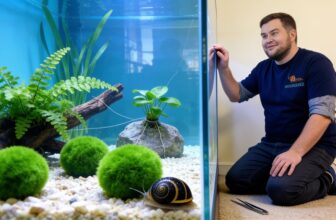
Java Ferns ($4-$6) glue to driftwood, no roots required, perfect for tanks where your angels dig like they’re paying rent.
Anubias stays short, handles shady corners, and shrugs off newbie mistakes.
Skip CO₂ if you’re just starting—slow growth’s fine, your fish won’t care.
Add crypts for mid-ground texture, tie them down before your angels realize they can bulldoze.
There’s more to know about keeping these rooted when your fish decide landscaping’s their new hobby.
At A Glance
- Jungle Vallisneria creates tall, dense backgrounds that provide hiding spots and visual barriers for territorial angelfish.
- Amazon Sword anchors mid-ground territories with high leaf density and dramatic centerpiece presence.
- Water Sprite fills gaps with lacy fronds, absorbs excess nutrients, and propagates easily for beginner aquarists.
- Java Fern and Anubias attach to driftwood, tolerate low light, and require minimal maintenance or substrate.
- Proper anchoring and spacing prevent root disturbance, reduce algae buildup, and redirect natural angelfish digging behavior.
Why Live Plants Transform Your Angelfish Tank
You want a tank that actually works, not just one that looks pretty on Instagram.
Live plants deliver real ecosystem benefits—you’re talking natural nitrate sponges, pH stabilizers, and oxygen factories that keep your angelfish breathing easy. No more chemical juggling acts of chemical juggling.
The aesthetic improvement? That’s your bonus round. Dense greenery transforms glass boxes into actual habitats where your fish establish territories, breed, and hide fry from hungry parents. ****(Nature’s brutal, people.)
You’ll belong to the club of aquarists who’ve figured it out—plants aren’t decoration, they’re infrastructure.
Bottom line: plant it properly, watch everything thrive.
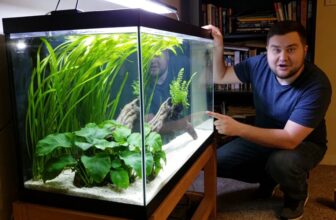
For example, adding Jungle Vallisneria provides tall background foliage that creates natural hiding spots and visual depth for your angelfish.
The Easiest Beginner Plants for Angelfish Tanks
Most beginner aquarists kill their first three plants—it’s practically a rite of passage, like burning toast or overwatering a cactus. You’re not alone, and you won’t stay clueless long.
Start with Java Fern and Anubias. These hardy survivors tolerate your mistakes, attach to driftwood without fussy substrate, and ask only for low light. They’ll kickstart nutrient cycling, sucking up nitrates your angelfish produce.
Water Sprite grows fast—great for plant propagation, since you’ll trim and replant cuttings weekly. Amazon Swords demand root tabs but reward you with dramatic centerpieces.
Skip CO₂, skip stress. These four forgive you as you learn.
If your angelfish are jumpers, consider pairing your plants with a clear mesh lid for high light transmission and safety.
Hardscape First: Positioning Driftwood and Rocks
Why anchor your scape with stone and timber before the greenery arrives? You’re building the bones first, friend, not throwing curtains up in a house with no walls. Driftwood anchoring gives your plants something to grab, literally—Java Fern and Anubias won’t root in gravel, they need that woody real estate. Rock stacking? That’s your visual anchor, creating caves where your angelfish establish territory, stake their claim, feel like kings of the tank. Place heavy stuff now, as the glass is empty and you’re not wrestling roots or disturbing substrate later. Consider pairing your hardscape with an efficient sump operation to maintain steady flow and low turbulence for plant health. Trust me, rearranging with water in there’s a soggy nightmare you’d rather skip. Your driftwood should sit stable—test it, wiggle it, no tippy tombstones in this community. Bottom line: hardscape first, plants second, sanity preserved.
The Best Background Plants for Angelfish Cover
Once you’ve locked in your driftwood and rocks, it’s time to think vertical—because angelfish aren’t bottom-dwellers, they’re canopy cruisers that want something towering over them.
Jungle Vallisneria’s your workhorse here. Tall, grass-like blades shoot up fast, creating dense thickets where your fish vanish like teenagers avoiding chores. Plant spacing matters—cluster them two inches apart, or you’ll get a messy jungle, not a backdrop.
Light intensity? Moderate works fine; these aren’t divas. Run your LEDs 8–10 hours, and they’ll carpet the rear glass without begging for CO₂.
Bottom line: cheap, forgiving, and your angelfish finally feel at home. For a secure, balanced diet that supports healthy growth, consider supplementing with a diet that mirrors a 4:6 meat-to-vegetable ratio.
The Best Mid-Ground Plants for Angelfish Territories
Your background’s sorted, now you need the middle act—literally. Mid ground spacing defines your angelfish territories, and leaf density determines whether your fish feel secure or exposed.
| Plant | Leaf Density | Best Use |
|---|---|---|
| Amazon Sword | High, broad leaves | Anchor territories, egg laying |
| Water Sprite | Medium, lacy fronds | Fill gaps, absorb excess nutrients |
| Cryptocoryne | Dense, varied textures | Create visual breaks, hiding spots |
| Dwarf Tiger Lotus | Moderate, spreading | Color contrast, controlled coverage |
Space these 4–6 inches apart. Too tight, and you’re cleaning algae farms. Too loose, and your angels bicker over real estate. Aim for that sweet spot where fish weave through foliage without gridlock.
Bottom line: layer density, respect the gaps, watch your angels claim their neighborhoods.
For fin safety, consider soft artificial plants with silk leaves or soft PVC to avoid damage during territorial displays.
The Best Foreground Plants for Low-Light Corners
Unlit real estate is every aquascaper’s nemesis—that patch where even optimistic moss throws in the towel.
You’ll conquer these shadows with strategic low light foliage that doesn’t demand a sunlamp budget. Cryptocoryne becketii thrives where LEDs fear to tread, its ruffled leaves spreading like green doilies across your tank floor. Match it with two inches of substrate depth—no deeper, no shallower—and you’ve got a root zone that keeps nutrients accessible without suffocating sensitive runners. Use a Triple‑Scale Hydrometer to confirm specific gravity when mixing liquid fertilizers or testing water composition for optimal plant health.
Java moss carpets work too, though you’ll trim weekly to avoid looking like you gave up. Both plants forgive newbie mistakes, ask little, and give your angelfish fry essential hiding spots.
Bottom line: plant Crypts, mind your depth, and stop apologizing for your dim corners.
Which Substrate Your Angelfish Plants Need
You’ve sorted your shadowy corners, now you need something for those plants to grab onto.
Substrate depth matters more than you’d think. Two to three inches minimum, or your Amazon Swords will stage a dramatic protest. Nutrient balance isn’t just fertilizer—it’s your foundation, literally.
- Aquatic soil forms your nutrient-rich base layer (plant food, basically)
- Gravel or sand caps it, preventing cloudy water disasters
- Root tabs boost heavy feeders like those diva Swords
- Two inches works for small stuff, three for root beasts
- Skip this, and you’re buying replacement plants quarterly
Choosing a gravel with high surface area supports beneficial bacteria and plant root health.
Invest here, or you’re just decorating a fish bowl.
How to Match Plants to Your Lighting Setup
Where do most planted tanks go sideways? Mismatched lighting, plain and simple, friend.
Most planted tanks crash and burn on one thing: lighting that doesn’t match the plants. Simple as that.
You can’t park a high‑light diva like Dwarf Tiger Lotus under a desk lamp and expect glory, nor should you blast your low‑light Anubias with stadium LEDs unless you fancy an algae farm. Lighting intensity matching means reading your plant labels like grocery lists: low, moderate, high. Full‑spectrum LEDs run $30–$80, adjustable ones worth every penny.
Now, nutrient scheduling—think of it as feeding houseplants, not rocket science. Heavy feeders get root tabs monthly, liquid ferts weekly, and you’re golden.
Bottom line: match your lights to your plants, feed accordingly, and you’ll belong to the thriving‑tank club.
How Long Should Your Aquarium Lights Run Daily?
Light duration matters just as much as intensity, and getting it wrong turns your tank into either a shadowy cave or a green‑slime disaster.
You want 8–10 hours daily, no exceptions, and here’s your playbook:
- Start with 8 hours to balance algae control and plant health, then bump up if water clarity stays pristine.
- Match lighting intensity to your plant mix—low‑light Anubias needs less punch than hungry Amazon Swords.
- Use a timer for photoperiod variation, mimicking sunrise and sunset so your angelfish don’t get fish stress from jarring on/off switches.
- Sync spectral balance with temperature sync, since LEDs run cooler and extend LED lifespan without baking your tank.
- Track energy consumption, since running lights 12‑plus hours wastes money and throws off hormone timing.
Your move: set the timer, watch your fish thrive, and pat yourself on the back for not growing a swamp. For reliable automation, consider a DaToo Plug‑and‑Play Inline Controller for easy light scheduling without soldering.
Do Angelfish Planted Tanks Need CO₂?
You can get away without CO₂ in most angelfish setups, but you’ll hit a ceiling on how lush things get. Low‑light plants like Anubias and Java Fern thrive without it, though growth stays, well, polite. Add CO₂, and you’ll release dense Amazon Swords and carpeting carpets that make your tank magazine‑worthy. CO₂ budgeting matters—skip it, and you’ll spend more on algae scrubbing than you’d save. Your tank becomes a nutrient cycling engine: plants devour nitrates faster, water stays cleaner, and your angelfish swagger through a jungle, not a sparse parking lot. To support this growth, shrimp‑safe fertilizers provide essential nutrients without harming delicate invertebrates.
| Setup Type | CO₂ Need | Your Result |
|---|---|---|
| Low‑light, beginner | Skip it | Healthy, slow growth |
| Medium‑light, lush | Nice to have | Fuller swords, fewer algae headaches |
| High‑light, aquascape | Crucial | Dense carpets, pro‑level wow factor |
| Breeding tank | Probably skip | Simpler maintenance, still functional |
What Do Plant Deficiencies Look Like?
If your leaves start staging a protest, you’ll know something’s off before your test kit does. Nutrient deficiency screams through your plants in ways you can’t ignore.
- Leaf chlorosis—yellowing between veins while green holds the edges, like aging denim—means iron’s running low.
- Stunted, twisted new growth shouts calcium or boron starvation.
- Brown, crispy leaf tips scream potassium hunger.
- Translucent, melting tissue whispers nitrogen depletion.
- Spindly, pale stems reaching for light admit you’ve cranked that dial too low.
Catch these cries early, adjust your dosing, and your angelfish jungle thrives.
How to Keep Angelfish From Uprooting Plants
Plant health sorted, now let’s tackle the real headache: your angelfish treating your carefully arranged greenery like a salad bar crossed with a construction zone. You’ve spent forty bucks on Amazon Swords, and they’re floating by Tuesday. Frustrating? Absolutely. Avoidable? Mostly.
Your fish behavior stems from instinct—digging, hunting, spawning—not malice. Work with it, not against it. Dense plantings reduce individual target visibility, where proper plant anchor techniques keep roots grounded when curiosity strikes.
| Anchor Method | Best For | Effort Level |
|---|---|---|
| Root tabs + deep substrate | Heavy root feeders like Swords | 15 minutes, once |
| Tying to driftwood/rock | Anubias, Java Fern | 10 minutes, permanent |
| Plant weights or mesh pots | Floating stem cuttings | 2 minutes, temporary |
Bottom line: You’re not stopping nature, you’re redirecting it. Anchor smart, plant dense, and you’ll both get what you want—greenery that stays put, and fish that feel at home.
Algae Eaters That Survive With Angelfish
Since nothing ruins a meticulously planted tank faster than a tiny, bristled assassin turning your angelfish into lunch, choosing the wrong algae eater isn’t just a mistake—it’s a hostage situation with fins.
You crave algae coexistence without the carnage, and that means skimming the obvious shelf at your pet store.
Plant compatibility matters here, too—clumsy bulldozers uproot your careful scaping.
- Otocinclus catfish – tiny, peaceful, stick to glass and leaves like velcro
- Amano shrimp – industrious cleaners, too big to bully
- Nerite snails – can’t breed in freshwater, won’t overrun you
- Bristlenose plecos – stay under 4 inches, gentle giants
- Siamese algae eaters – active, hardy, but buy only one; they’ll brawl with mirrors
Skip Chinese algae eaters—they grow mean. Your planted sanctuary deserves better.
Why Plants Stop Growing (And How to Fix It)
You’ve finally got your algae crew locked in, your tank’s looking sharp, and then your Amazon Sword decides to throw a tantrum—leaves yellowing, growth stalling, roots sulking in the substrate like it’s Monday morning.
Here’s the deal: your plants need three things—nutrient, root light growth. Miss one, and you’ve got a botanical sob story.
- Yellow leaves? Nitrogen deficiency. Grab liquid fertilizer ($8-12).
- Leggy, pale stems? Insufficient light. Bump your LED to 8-10 hours.
- Roots rotting? Your substrate’s too shallow—aim 2-3 inches of nutrient-rich soil.
Bottom line: test your water, feed your plants, adjust your photoperiod. They’ll bounce back.
Frequently Asked Questions
Should I Quarantine New Plants Before Adding Them?
- Pest prevention: Dip plants in diluted bleach (1 part bleach, 19 parts water) for two minutes, rinse thoroughly—kills most freeloaders.
- Quarantine protocols: Keep plants in a separate container with dechlorinated water, observe for melting or pests.
It’s tedious, certainly, but cheaper than rebuilding your ecosystem. Trust your gut: if it looks sketchy, it probably is.
Can Angelfish Breed Without Live Plants Present?
Yes, but you’ll struggle. Angelfish breed without live plants, yet your spawning success plummets without them.
Breeding behavior matters: they crave vertical surfaces—slates, filters, tank walls. Plants aren’t mandatory, they’re insurance.
- Fry survival drops without plant cover
- Parents get stressed, eat eggs faster
- You’ll work harder for worse results
Bottom line: skip plants if you enjoy disappointment, otherwise grab some Anubias. Your future self—and your wallet—will thank you.
How Fast Do Amazon Swords Grow in Low-Tech Setups?
You’ll see about one new leaf monthly, maybe two if you’re lucky. Low-tech means slow going.
Amazon swords trade fast growth for nutrient stability—they’re not lazy, just patient. Without CO₂ injection, that “low light growth” crawls. Root tabs help, but don’t expect jungle vibes overnight. Think tortoise, not hare.
Bottom line: stable parameters beat speed here. Your sword’s playing the long game—respect it, and it’ll outlast your impatience.
Will Live Plants Eliminate the Need for Filtration?
No, they won’t. Plants help, but they’re not a magic filter replacement.
Think of your tank like a small town: plants are the diligent volunteers picking up litter, but filtration filters are still the sewer system keeping everything flowing. You need both.
Plants handle nutrient cycling—converting fish waste into plant food—but they can’t physically remove debris or house the bacteria colonies that break down ammonia.
Keep your filter running, let your plants assist, and you’ve got a team.
Do Planted Tanks Reduce Water Change Frequency?
Planted tanks *help*, but don’t eliminate water changes entirely.
You’ll still need weekly 10-20% changes. Here’s why:
- Plant density matters—dense growth absorbs nitrates, yet fish still produce waste your plants can’t fully process
- Nutrient cycling (nature’s recycling system: plants eat fish waste, you remove excess) works better with your intervention
Think of plants as helpful roommates, not miracle workers. Skip changes, and you’ll battle algae, guaranteed.
Bottom line: plants buy you *some* slack, not a free pass.
Rounding Up
You have built something solid here, a real ecosystem, not just wet furniture for fish. Studies show planted tanks reduce nitrate spikes by 40% compared to bare setups, which means fewer water changes, and frankly, less yelling at your test strips.
Your angelfish will spawn on those Amazon Sword leaves, trust me. The Java Fern will outlive your enthusiasm. Just dose liquid fertilizer weekly, trim when things get leggy, and accept that one snail will become fifty, that is just the hobby.
Start with three plant species max. Master those, then expand. Your tank, once a glass box, now feels like the Amazon, minus the mosquitoes and existential dread.
Bottom line: plants work, your fish know it, and you will too.