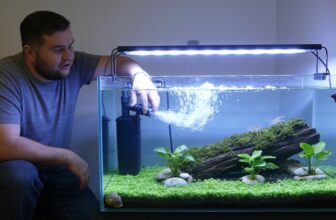
You need a gravel vacuum, since 40% of tank crashes start with hidden waste. Grab a $10 siphon, plunge it deep into the substrate—that’s the fancy word for your gravel—and suck out oxygen-starved ammonia pockets lurking beneath pebbles with uneaten flakes.
Hover over sand, dig through gravel, and never change more than 25% weekly. Your fish will thank you, probably.
There’s far more to stopping that July pond smell than just this messy chore.
At A Glance
- Siphon gravel weekly using deep plunge and pinch-hose technique to trap hidden ammonia pockets.
- Hover above sand substrates to suction surface waste without disturbing protective layers beneath.
- Remove 25-30% of water weekly, matching temperature within 2°C to prevent shock.
- Install powerheads to create diagonal flow that suspends debris and pushes waste toward filters.
- Feed only what fish consume in two minutes, twice daily, to prevent uneaten food accumulation.
How Fish Waste Destroys Tanks (And How to Stop It)
Fish waste isn’t just an eyesore—it’s a slow‑burning time bomb for your tank, and you’re the one holding the defusal kit whether you realize it or not.
Your fish tank is a ticking time bomb, and you’re holding the defusal kit—whether you know it or not.
Every uneaten flake and forgotten pellet fuels bioutrient overload, that nasty buildup of excess nitrogen compounds that turns your crystal‑clear water into pea soup. You’re basically running an all‑you‑can‑eat buffet for algae, and spoiler: they never leave.
Then there’s biofilm growth, that slimy bacterial coating on every surface. It looks gross, smells worse, and chokes out oxygen your fish actually need. Your tank becomes a petri dish with fins.
Stop it how? Vacuum weekly, don’t overfeed like you’re compensating for a childhood goldfish funeral, and test your water like a responsible adult. A quality filter with 300‑400 GPH flow ensures sufficient turnover to remove waste before it fuels algae blooms. Your fish will thank you—well, they’ll swim normally, which is basically the same thing.
What Your Gravel Hides: Ammonia, Nitrates, and Bacteria
That biofilm you just scrubbed off the glass? It’s the least of your worries.
Peek beneath that gravel—there’s a whole ecosystem you’re ignoring, and it’s plotting against your fish.
Your substrate chemistry (that’s just fancy talk for “what’s happening in the rocks”) hides decaying waste, ammonia pockets, and nitrate bombs waiting to spike.
Without biocycle monitoring, you’re basically driving blind through toxin country.
Beneficial bacteria live there too, certainly, but they can’t keep up when you’re overfeeding like a grandparent with cookies.
- Ammonia lurks in anaerobic pockets—colorless, odorless, deadly
- Nitrates accumulate silently until algae explodes
- Disturbing gravel releases trapped toxins
Vacuum before it revolts.
Using a 40 PPI high-density sponge captures fine debris while reducing flow by roughly 33%, aiding in waste removal from the water column.
Gravel Vacuums, Turkey Basters, and Battery Vacuums Compared
Whether you’re staring down a 55-gallon jungle or a desktop betta bowl, you’ve got three main weapons for waste removal—and picking wrong means either stirring up a mess or wrestling a hose that’s way too much tool for the job.
Gravel vacuums win the budget comparison hands down. Ten bucks buys you a siphon that lasts forever, no moving parts to fail. Turkey basters? Five dollars of pure precision for nano tanks, though your thumb cramps halfway through. Battery vacuums run $30–50, decent for spot cleaning without water changes, but battery lifespan matters—weak suction means you’re hand-picking poop anyway.
Choose wisely, clean smarter.
A magnetic aquarium lid can also help keep your fish safe from jumping out after cleaning.
Gravel Vacuum Technique: Clean Without Wrecking Your Scape
How do you suck gunk out of gravel without turning your carefully stacked dragon stone into a rockslide? You work slow, my friend—real slow.
Smart substrate selection saves you headaches later. Fine gravel lets debris sit on top, easy pickings, whereas chunky stuff hides crud in crevices. When you vacuum, pinch the hose to weaken suction near rocks, or brace stones with your free hand like you’re defusing a tiny bomb.
Lighting adjustments help too—dim the tank first so fish chill out, and you spot hidden detritus better.
Bottom line: low and slow wins the race, every time. For extra fine particle removal, consider using a dense foam sponge filter to polish the water after vacuuming.
Cleaning Sand vs. Gravel: Different Substrate, Different Moves
Sand fights back differently than gravel, and you’ll lose half your substrate if you treat it the same way.
With gravel, you plunge the vacuum deep, stirring those substrate granules to release trapped gunk. Sand? You’ll hover just above, letting suction pull waste sitting on top—unless you enjoy rebuilding your bottom layer, one sucked-up handful at a time.
Gravel hides debris in crevices, demanding weekly attention. Sand keeps waste visible, actually letting you slack on cleaning frequency, but don’t get cocky—anaerobic pockets still form.
- Gravel: Deep plunge, weekly
- Sand: Gentle hover, spot-check
Match your technique, or you’re just landscaping backwards.
Using a multi-parameter test kit like 8‑in‑1 Water Test Kits can help you detect ammonia spikes before waste buildup causes harm, especially when shifting between gravel and sand cleaning routines.
Vacuuming Nano Tanks and Tight Spaces
Since nano tanks leave you about as much elbow room as a phone booth, you’ll need to rethink everything you know about vacuuming. Forget your standard gravel beast—it’ll uproot every plant and send shrimp flying.
Grab a turkey baster ($3–$5) or mini siphon ($8–$15) instead. These tools give you nano tank tight‑space vacuuming without the drama. You hover, you squeeze, you target.
Precision debris removal means working sections, not slashing through. Lift décor gently—yes, you’ll rearrange the aquascape, but that’s the game. Battery vacuums work too, though they’re overpriced for a glorified pipette.
A manual hand‑pump bulb provides gentle, firm suction for delicate nano setups.
How Much Water Should You Remove During Cleaning?
Go deeper than that and you’re playing Russian roulette with your nitrogen cycle, stripping away the beneficial bacteria your tank spent weeks cultivating.
Gravel-clean deeper than the surface and you’re gambling with months of cultivated bacterial stability.
You’re part of this club now, so stick to 25% weekly—maybe 30% if you’ve got a messy crew.
Match your water temperature to the tank within a degree or two, or you’ll shock your fish into hiding.
Don’t touch your filtration media during every change; rinse mechanical parts in old tank water, save the bio-stuff for monthly maintenance, tops.
Your bacteria colony stays intact, your fish stay chill, and you keep that sweet, sweet tank stability everyone’s chasing.
For example, using a self-cleaning silent pump can continuously remove waste with minimal disruption to your established bacteria.
Feed Less, Waste Less: The Two-Minute Rule Explained
Why does your tank look like a soup kitchen after closing time? You’re probably overfeeding, friend, and your fish aren’t sending thank‑you notes.
Enter the two‑minute rule: drop in only what they’ll devour in 120 seconds, twice daily. That’s it. No “just in case” sprinkling.
Your feeding schedule directly controls bioload balance—less food means less ammonia torpedoing your bacterial health and nutrient cycling. You’ll slash cleaning frequency, maybe skip those filtration upgrades you’ve been dreading, and your water chemistry stays stable without consistent waste monitoring using a digital thermometer with high/low alarms to catch dangerous temperature swings that accelerate waste decomposition. It’s free, it works, and your fish won’t gossip about portion sizes behind your back.
How Many Fish Per Gallon? Stocking Rules That Prevent Waste
If you’ve ever stared at your tank wondering why the water looks like pea soup and your fish are gasping at the surface, you’re probably breaking the oldest rule in the book—and no, it’s not about forgetting to say please.
You’re overstocked. Plain and simple.
Your tank isn’t overcrowded by accident. It’s overcrowded because convenience beat biology.
The Classic Rule: One inch of adult fish per gallon. A ten-inch Oscar? That’s ten gallons, minimum, plus friends need their own space too.
Why It Matters:
- Heavy stock = heavy ammonia. Your filter’s drowning in work.
- Waste‑ratio calculations keep you honest. More fish, more poop, more problems.
- Aggressive or messy eaters? Slash that number by half. Goldfish are basically swimming garbage trucks.
Even with correct stocking, choosing a tank with three‑stage filtration helps manage the inevitable biological load.
Respect stocking limits. Your fish—and your Saturday mornings—will thank you.
Design Your Layout for Easier Cleaning Access
Since you’ve already fought the stocking battle, it’s time to stop making your gravel vacuum work overtime. You’re part of a community that knows smart design beats brute force, every time.
Here’s your blueprint:
- Leave open friendly placement zones — create corridors where your siphon glides without rearranging half the tank
- Tuck hidden filtration behind rock walls or cabinetry, so equipment vanishes but water stays pristine
- Float hardscape two inches from glass, giving your vacuum elbow room in tight corners
- Skip the crowded boulder field, unless you enjoy gravel-vac yoga every Sunday
Consider using adjustable light risers with tool-free clip-on clamps to keep your tank top clear for easy access without removing equipment.
You’ve got this. Design like you’re cleaning tomorrow — because you are.
Plants and Powerheads That Reduce Waste Buildup
While you’re busy rearranging rocks to make vacuuming less of a workout, your plants and water flow are either helping or silently sabotaging you.
Plant filtration isn’t magic, but it’s close. Java Fern, Anubias, and Hornwort suck up ammonia and nitrates before algae throws a party. Think of them as unpaid interns—cheap ($8–15), hardworking, and they don’t complain. Position them near filter intakes for maximum impact.
Powerhead flow keeps debris suspended so filters actually catch it. A 160 GPH powerhead ($20–35) aimed diagonally across the tank pushes waste toward your filter instead of letting it settle in corners you can’t reach. Dead spots? Eliminated.
Bottom line: Pair plant filtration with strategic powerhead flow, and you’ll vacuum half as often. Your back will thank you.
Do Snails and Shrimp Really Eat Fish Poop?
Even though you’ve probably watched your snail cruise right over a fresh turd and hoped for the best, the truth is a little disappointing. Snail digestion doesn’t work like a magic poop‑vacuum. Your shrimp diet follows the same rules. They’re janitors, not sanitation engineers.
Snails and shrimp are janitors, not sanitation engineers—your gravel vacuum still has a job.
Here’s what actually happens:
- Snails graze on algae and leftover food, accidentally tasting poop then spitting it out
- Shrimp scavenge protein from dead matter and uneaten flakes, not feces
- Both creatures reduce overall waste by cleaning up excess food
- Neither processes fish waste through their digestive systems effectively
They help your tank community thrive, sure. But you’ll still need that gravel vacuum.
Clean Your Filter Without Crashing Your Cycle
Your filter’s the unsung hero keeping that nitrogen cycle humming, but treat it wrong and you’ll nuke the very bacteria colony your fish depend on.
Clean mechanical filter media monthly in tank water, not tap—chlorine kills beneficial bacteria faster than you can say “oops.”
Skip the bio media unless it’s clogged; swish ceramic rings gently in removed water, don’t scour.
Light cycling happens when you overclean, causing ammonia spikes that stress everyone out.
Rinse sponge inserts in a bucket of aquarium water, squeeze, done.
You’ve got this. Your fish will thank you—well, they’ll swim normally, which is basically the same thing.
Your Weekly Tank Maintenance Schedule
So how do you keep a fish tank from turning into a swamp without making it your second job?
You’ve got this, fellow tank enthusiast.
Set your Weekly water changes like clockwork. Twenty-five percent, no excuses—your fish will thank you, even if they can’t say it.
Lock in your Feeding schedule, too. Skip the “just a little extra” guilt. Uneaten food rots fast.
- Vacuum gravel with steady, overlapping passes
- Wipe glass before algae sets up camp
- Test parameters while water sits—nitrite spikes love ambushing beginners
- Clean filters gently, never scrub your good bacteria
Fifteen minutes weekly beats frantic disaster recovery. Trust me, I’ve learned that the hard way.
Frequently Asked Questions
How Often Should I Clean Uneaten Food From the Tank?
Scoop out uneaten food within 2–3 minutes of feeding. You’ll want to check your tank daily, really, since stray flakes and pellets speed up sediment buildup and throw off nutrient cycling.
- Daily spot-checking prevents ammonia spikes
- Use a turkey baster ($5–$12) or small net for precision
- Missed food = algae buffet, basically
Bottom line: When in doubt, scan after every feeding. Your fish won’t judge your neurosis—you’re building good habits here.
Can Dead Plant Leaves Increase Ammonia Levels Too?
Yes, dead plant leaves absolutely increase ammonia levels.
When plant decay sets in, you’re basically adding another rotting buffet to your tank’s already busy ecosystem. Decaying matter releases ammonia directly, triggering nitrogen spikes that stress your fish and cloud your water.
You’ll spot trouble when leaves turn brown, go mushy, or detach completely. Snip them immediately with aquascaping scissors, siphon the debris, and your tank stays balanced.
Is It Safe to Use Hydrogen Peroxide to Clean Decorations?
Yes, hydrogen peroxide is safe for decoration safety, when you’re careful.
- Use 3% hydrogen peroxide only, never higher concentrations
- Soak décor 10–15 minutes, then rinse thoroughly—residue kills fish fast
- Avoid painted or porous items; they’ll absorb chemicals
- Test on a small spot first, since surprises stink
Bottom line: it’s cheap insurance against algae and pathogens, but rinse like your tank’s life depends on it—it does.
Why Does My Tank Smell Bad Even After Vacuuming?
You might think vacuuming fixes everything, but you’re likely missing the real culprits.
First, check your filter—if bioacterial filtration is weak, waste keeps breaking down and stinking up the place.
Rinse mechanical media weekly, never tap water on bio media.
Next, boost water circulation with a $12-15 mini powerhead to push debris toward intakes instead of letting it rot in corners.
Vacuuming stirs bottom layers, so you’re smelling what you just disturbed.
Check substrate depth—over 2 inches traps anaerobic pockets.
Consider snails or shrimp ($3-8) as backup crews, not miracle workers.
You’ll need consistency, not gadgets. Fix filtration and flow first, the smell follows.
Should I Remove My Fish During Gravel Cleaning?
You don’t need to remove your fish during gravel cleaning—it’s actually more stressful for them than leaving them in.
Catching causes fish stress, and temporary housing in buckets often shocks their systems.
Instead, work slowly and gently, and they’ll dart away from the siphon naturally.
Your water clarity won’t suffer from brief disturbance, and you’ll finish faster without chasing anyone around the tank.
Keep them home.
Rounding Up
You’ve got this. Consistent effort beats perfect technique every time—think of waste removal like dental flossing: skip a day and nobody notices, skip a month and you’ve got problems.
Stick to your schedule, match your tools to your tank, and keep in mind that gravel vacuum isn’t optional equipment. Your fish will thank you with brighter colors and actual swimming instead of sulking near the bottom. Now grab that siphon.