You can’t. Zero fish, period.
A 2.5‑gallon tank barely supports one betta, let alone a roommate—ammonia spikes hit lethal levels in about 48 hours, and there’s nowhere to swim, hide, or escape aggression.
Even a divider splits that cramped space into 1.25 gallons per fish, which is like sharing a broom closet with someone you hate.
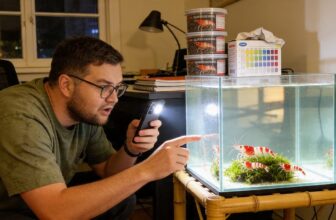
Shrimp? Now you’re talking—cherry shrimp run $2–4 each, need no heater upgrade, and clean up algae without adding meaningful waste.
Nerite snails ($3–5) work too, though they’ll lay tiny white eggs you’ll never scrub off.
Anything with fins—tetras, guppies, corydoras—needs 10+ gallons, soft water, and schools of six or more.
Your tank’s bioload ceiling is basically a handful of invertebrates and some moss.
Stick to shrimp, upgrade when you can, and your future self—and your fish—will thank you for what comes next.
At A Glance
- No fish can safely live with a betta in a 2.5-gallon tank due to insufficient space and toxic water conditions.
- Cherry shrimp are the only suitable tank mates, offering low bioload and zero aggression in 2.5 gallons.
- A divider splits the tank into two 1.25-gallon sections, which remains dangerously small for any betta.
- Neon tetras, guppies, corydoras, and otocinclus all require minimum ten-gallon tanks and cannot survive here.
- Upgrading to at least five gallons per betta is necessary before considering any compatible companions.
Why Your 2.5‑Gallon Tank Can’t House Any Fish
Since you’re staring at that 2.5‑gallon tank and wondering if your betta needs a buddy, let me save you some heartbreak: it doesn’t, and it can’t have one.
You’re dealing with two brutal facts: space and poison. Two bettas means two territories, and that’s 1.25 gallons each—barely room to turn, let alone escape. The real killer’s water quality. Tank cycling (that’s establishing helpful bacteria to eat toxic ammonia) can’t keep up with double the poop. Betta nutrition means squat if they’re swimming in their own waste.
Two bettas in 2.5 gallons means 1.25 gallons each—barely room to turn, let alone escape the poison.
Your filter’s working overtime, ammonia spikes overnight, and suddenly you’ve got two stressed fish with shredded fins and burned gills. No divider fixes this—same water, same toxins, half the swimming room each.
Save the 2.5‑gallon for Bamboo Shrimp. Seriously.
Can You Use a Divider for Two Bettas in 2.5 Gallons?
You’re slicing that 2.5 gallons into two coffin-sized chunks, 1.25 gallons each, which sounds like math but feels like cruelty.
Divider design won’t save you here. Even the slickest mesh barrier, the kind with tiny holes and suction cups that run you maybe eight bucks online, still traps two bettas in puddles too small to turn around in.
Tank cycling? Forget it. Two fish in 1.25 gallons each crashes that fragile ecosystem weekly; you’re doing water changes like it’s a part-time job, and ammonia still spikes between shifts.
Your fish suffer. You suffer. Nobody wins.
Save the divider for a proper ten-gallon someday. Even epoxy putty cannot make 1.25 gallons habitable for a betta.
The Real Reason Bettas Need 5 Gallons Minimum
Since your living room has more square footage than a 2.5‑gallon tank, yet we expect a fish with flowing fins and a Napoleon complex to thrive there anyway.
Your living room dwarfs a 2.5‑gallon tank, yet we expect a fish with flowing fins and a Napoleon complex to thrive there anyway.
Here’s the deal: you can’t outsmart Betta temperament with a shoebox full of water.
That little 2.5‑gallon? It’s a recipe for stress, aggression, and shortened lifespan. Tank cycling becomes nearly impossible—you’re fighting ammonia spikes weekly instead of watching your fish investigate.
Five gallons changes everything. Your betta gets stable water, actual swimming room, and the mental space to build bubble nests like a proper gentleman. A 5‑gallon tank like the Fluval SPEC provides gentle flow suitable for betta fins and stable filtration.
Upgrade. You’ll belong to the group that knows better.
What Happens to Water Quality in a 2.5‑Gallon Betta Tank?
Water doesn’t stay water for long when you’re cramming a living creature into a volume smaller than your coffee maker.
You’re basically running a chemistry experiment where the chemicals go bad—fast.
Water cycling barely exists here; there’s zero buffer against disaster.
Your betta’s waste hits like a freight train.
Nitrogen spikes skyrocket within days, not weeks.
Ammonia burns gills, nitrite starves blood of oxygen, and you’ve got maybe 48 hours before the tank becomes toxic soup.
Test strips don’t lie, and your fish can’t hold their breath forever. Using a meter with auto-calibration reduces user error and ensures accurate pH readings. Skip the fancy filter—you’re propping up a failing equation.
Why Neon Tetras Die in 2.5‑Gallon Betta Setups
Neon tetras look like living jewelry, all shimmering blue and red stripes catching the light, so it’s no surprise you’d want them gliding beside your betta—until you realize you’ve signed their death warrant in a tank barely bigger than a shoebox.
Here’s the hard truth. Neon tetras need soft acidic water with a pH of 5.0–6.5 to stay healthy, but a 2.5-gallon tank cannot maintain stable parameters. Neon mortality spikes since you’re forcing schooling fish into solitary confinement. They need six-plus buddies and ten-plus gallons to feel safe, not this sardine can. In 2.5 gallons, ammonia burns their gills, stress shatters their immune system, and your betta claims every inch as personal property.
- No room to school = panic attacks, basically
- Surface tension breaks down when you cramp too many bodies, oxygen crashes
- One territorial swipe, nowhere to hide—game over
You wanted a community, you got a tiny graveyard. Bottom line: keep 2.5 gallons for shrimp, add tetras only after you’ve upgraded to twenty gallons and done your assignment.
Why Guppies and Bettas Fight in Small Tanks
Since guppies flash those flowing, rainbow fins like they’re asking for trouble, you’ll soon learn you’ve basically moved a decorated target into your betta’s studio apartment. Those long tails? Classic fin aggression triggers—your betta sees them as flashy intruders, not friends.
In a 2.5-gallon tank, there’s nowhere to hide, no “time out” corner, just one stressed fish chasing another in circles. Water stress piles on fast—ammonia spikes, wasted energy, shredded fins. You’re watching a slow-motion disaster, not a community tank. Even if you tried using an anti-jump mesh cover to prevent escape, the cramped space guarantees conflict.
Bottom line: Skip guppies completely, or upgrade to 10+ gallons.
Why Corydoras and Otocinclus Need More Than 2.5 Gallons
Since corydoras and otocinclus are bottom-feeding scavengers—not decorations—you’ll quickly realize that shoving them into a 2.5-gallon tank is like parking a moving truck in a closet. Corydoras bioload hits hard. These little vacuum cleaners poop constantly, and in 2.5 gallons, ammonia spikes before you finish your morning coffee. They need groups of six-plus, too—lonely corydoras stress, hide, and waste away. Otocinclus waste compounds the nightmare. These algae-eating specialists demand pristine water; your tiny tank swings wild, starving, or suffocating them. Additionally, both species require a minimum 10 gal for stable water parameters and proper group sizes. You’ll watch your betta flare, your cleanup crew suffer, and your water tests turn toxic green. Nobody wins. Skip it. Shrimp only.
When 10 Gallons Becomes Your Minimum for Betta Tank Mates
Once you’ve seen your betta flare at his own reflection for the forty-seventh time, you’ll understand why cramming him with roommates into anything under ten gallons is a recipe for underwater warfare.
Here’s the deal: any tank buddy arrangement demands breathing room. You’re looking at $40-60 for a basic 10-gallon setup—peanuts compared to replacing dead fish.
Why 10 gallons changes everything:
- Two distinct territory zones, minimum
- Stable water parameters (ammonia dilutes 4x better than 2.5 gallons)
- Actual habitat compatibility for small groups—ember tetras, shrimp, or a cory trio
A 5-gallon works for your betta alone. Add friends? You need that extra five gallons, full stop. Even a self-cleaning nano tank with high‑clarity glass offers only limited space for a single betta.
Starting Over: Cherry Shrimp as Your 2.5‑Gallon Betta Alternative
Three neon tetras in a bathtub would have more elbow room than a betta gets in your 2.5‑gallon shoebox, and that’s your first hint you’ve been holding the wrong end of the stick. You’re not giving up, you’re pivoting smart.
Cherry shrimp own this space. Low bioload, zero aggression, and you’ve finally got room to breathe.
- Shrimp feeding is dirt‑simple: algae wafers, blanched zucchini, microscopic leftovers they graze all day
- Substrate choice matters—dark gravel or sand makes their red pop like fireworks
- Plants? Java moss turns into a shrimp nursery, basically free real estate
Even with shrimp, you should use dark, soft sand substrate to prevent injury and help their colors stand out.
You’ve joined the reformed‑tank‑keeper club. Welcome.
Bottom line: 2.5 gallons works for shrimp, not fish.
Nerite or Mystery Snail: Which Fits Your 2.5‑Gallon Tank?
If you’re dead-set on a single snail for your 2.5-gallon, Nerite wins by a nose, though honestly you’re splitting hairs between two creatures that won’t complain about tight quarters.
Nerites deliver heavyweight algae control in a tiny package, scrubbing glass like obsessive little window washers. Their striped or dotted snail shell fits postcard-sized tanks without cramping your style.
Mystery snails? Charming, but they bioload heavier and grow baseball-sized. That’s like parking an SUV in a studio apartment. A Nerite snail’s need for saltwater compatibility makes it less adaptable if you ever switch tank types.
- Nerite: compact, algae-obliterating, zero drama
- Mystery: needs 5+ gallons, eventual space hog
Bottom line: pick the Nerite, upgrade later if you catch snail fever.
Plant Pairings That Keep Shrimp Colonies Thriving
What separates a shrimp graveyard from a lively colony? Plants, plain and simple.
You’ll want a moss carpet—think java moss or christmas moss—spread across your substrate. Shrimp graze on biofilm, hide from stress, and breed like tiny rabbits in that green tangle. Pair it with floatingter floating plants like salvinia or frogbit; they dim harsh lights, suck up nitrates, and make your shrimp feel less exposed, like curtains in a fishbowl studio apartment.
Skip stem plants that need CO2 injections and high light. You’re running a 2.5‑gallon, not NASA.
Bottom line: moss below, floaters above, happy shrimp everywhere.
What Filter and Heater Work for 2.5‑Gallon Invertebrate Tanks?
Once you’ve got your moss carpet and floaters locked in, you’re left with a new puzzle: keeping two things alive that shrimp and snails absolutely won’t survive without. Temperature and filtration—nerdy stuff, but your colony’s lifeline.
Moss carpet, floaters locked in—now the real puzzle begins. Temperature and filtration: nerdy stuff, but your colony’s lifeline.
Sponge filter: grab a small corner model ($8–$12). It runs on gentle air, won’t suck up baby shrimp, and bacteria clings to the foam like it’s paying rent. No current buffet, either.
LED heater: pick a 25‑watt preset unit, roughly $15. It keeps water steady at 78°F, hides behind plants, and won’t cook your inverts like cheap glass tubes might.
Bottom line: spend $25, sleep better.
5 Warning Signs Your 2.5‑Gallon Tank Is Overloaded
Your tank’s trying to tell you something, and it’s not “thanks for the snacks.” Micro‑environments turn toxic fast, since there’s barely enough water volume to dilute a sneeze, let alone a full bioload—you’ve maybe got ten cups of actual swimming room once substrate and decor settle in.
Watch these overload indicators closely:
- Ammonia readings above 0 ppm, meaning your filtration limits are tapped out
- Fish gasping at the surface, desperate for oxygen that isn’t there
- Cloudy water or algae explosions, nature’s “help, I’m drowning in waste” billboard
You’re not failing—you’re learning. Small tanks humble everyone.
Upgrade Paths: From 2.5 Gallons to 5, 10, or 20 Gallons
A 2.5-gallon tank teaches hard lessons fast, but it doesn’t have to be your final exam. You’re ready to grow, and the hobby welcomes that energy.
5 gallons: Your betta’s studio apartment. Add budget tank filtration (sponge filter, $8-12), soft plants, breathing room. That’s it. One fish, dignity intact.
10 gallons: Now we’re talking companions—shrimp, maybe snails. You’ll tackle substrate cycling (bacteria colonizing your gravel bed, basically) with actual test kits.
20 gallons long: Territorial lines emerge. You research, you plan, you win.
Stop apologizing for small starts. Just don’t stay there.
Frequently Asked Questions
Can I Keep a Single Betta in a 2.5-Gallon Tank?
You *can*, but you’re pushing your luck.
A 2.5‑gallon tank cramps your betta’s style—his betta temperament (basically, his grumpy, territorial nature) needs room to stretch, or he’ll stress himself sick.
Tank filtration? You’re wrestling with weak options that create currents too strong or barely clean at all.
Ammonia spikes hit fast.
Upgrading to 5 gallons costs maybe $30‑50, saves you grief, and your fish actually thrives.
shrimpless06I used to think small tanks meant less work—nope, just more water changes.
Grab a 5‑gallon kit, toss in a gentle sponge filter (about $15), and you’ll sleep better.
Your fish will too.
Should I Do More Water Changes in Small Tanks?
Yes, you’ll change water more often. Small tanks crash fast.
- 2.5 gallons: 30-50% twice weekly minimum
- You’re the filtration (sponge filters help, but you’re doing the heavy lifting)
Think of it like a crowded elevator—someone’s gonna smell bad, and fast.
Optimization means testing with cheap liquid kits ($8-12), not guessing, since ammonia spikes while you’re sleeping.
Bottom line: more buckets, more testing, or upgrade. Your back will thank you.
Will a 2.5-Gallon Tank Fit on My Desk?
Yes, you’ll squeeze it on most desks—it’s roughly 12″ × 6″ × 8″.
- Fits tight corners, won’t dominate desk aesthetics
- Maintenance routine’s a pain: twice‑weekly water changes, no skipping
- 5–10 lbs loaded, so weak shelves groan
It’s doable. It’s just not *smart* for fish. Shrimp? Certainly. A betta? You’re sentencing a pet to stress city, population: one grumpy fish. Upgrade to 5+ gallons.
How Long Do Bettas Live in Small Tanks?
Small tanks aren’t death sentences, but they’re rough on your betta lifespan. You’re looking at maybe two years instead of five, maybe less, since tank size effects stack up fast—ammonia burns, stress hormones, fin rot sneaking in like an unwelcome guest.
Your fish won’t thank you, mostly since, well, no vocal cords, but you’ll see dull colors, clamped fins, that sad corner-hiding thing.
- Ammonia spikes: zero margin for error
- Temperature swings: bettas hate rollercoasters
- No exercise room: fish couch potato syndrome
Five gallons minimum, ten if you want companions. It’s not fancy, it’s survival. Upgrade your tank, not your funeral budget.
Can I Use a Bowl Instead of a 2.5-Gallon Tank?
No, you can’t use a bowl instead.
Bowl alternatives fail your fish. A 2.5‑gallon tank is already pushing it—bowls are worse. No filtration, no heater space, stagnant water. Your betta’s fins rot, he gasps at the surface, and you’re doing daily water changes like a chump. Tank size matters more than aesthetics. Bowls belong to 1970s dorm rooms, not living pets.
Bottom line: skip the bowl, upgrade to 5+ gallons.
Rounding Up
You now know the brutal truth: a 2.5‑gallon betta tank is a solo studio apartment, not a roommate situation. Adding any fish — neon tetras, corydoras, even a snail buddy — turns your tank into a toxic waste dump where ammonia spikes within 24 hours and your betta’s stress hormones go absolutely haywire. You’re not being cruel by keeping him alone; you’re being merciful. Stick with plants, maybe some shrimp if you’re feeling wild, and start saving $40–$60 for a proper 10‑gallon community upgrade. Your betta will forgive you for the small tank, but he won’t survive your bad decisions. Single life never looked so good, right?