Your betta’s surface-hugging usually means ammonia burns, oxygen starvation, temperature swings, bullies, swim bladder trouble, hunger, or just a cozy nap spot.

Reveals ammonia, nitrite, and pH so you can spot water-quality problems fast.

Detoxifies ammonia and nitrite while conditioning tap water for safer weekly changes.

Helps reduce stress and supports healing when your betta shows signs of illness.
Browse current deals onAquarium Water Care
Test with a $25 freshwater kit – zero ammonia is non-negotiable – and swap 50% of the water if it’s toxic.
Add an air stone for gasping fish, keep temps at 76–82°F with a glass thermometer, and ditch fin-nipping tank mates.
Skip the flakes, try daphnia for floaters, and you’ll spot the real culprit below.
At A Glance
- Ammonia toxicity burns gills and causes gasping; perform 50% water change and apply Ammo‑Lock.
- Low dissolved oxygen from stagnant water suffocates; add air stones or increase surface agitation.
- Temperature instability outside 76–82 °F drives surface seeking; verify with glass thermometer and stabilize heater placement.
- Aggressive tank mates induce stress leaping; remove fin‑nippers or switch to solitary setup with secure lid.
- Swim bladder dysfunction from overfeeding prevents diving; fast for 24–48 hours and offer daphnia or Epsom salt bath.
Ammonia Poisoning Is Making Your Betta Gasp at the Surface
If you’re staring at your betta hanging out at the surface like it’s monitoring a tiny fish buffet line that never opens, ammonia poisoning might be the culprit – and yeah, it’s as nasty as it sounds.
Your fish isn’t being dramatic. Ammonia spikes burn gills, triggering gasping distress as your betta struggles to breathe in its own waste soup. It’s basically fish asthma, miserable and fixable.
Grab that API Freshwater Master Test Kit ($25–35), check your levels – should read zero, period. Elevated? Perform a 50% water change, stat. Toss in ammonia neutralizer like Ammo-Lock if you’re in crisis mode. Upgrade to a 5+ gallon tank, maintain your filter, and you’re back in the clear. Proper storage (cool, dark) preserves the accuracy of your test kit reagents.
Low Oxygen Is Suffocating Your Betta
When surface surface diffusion stalls, your fish camps at the top like it’s claiming the last life raft. Here’s what’s choking the vibe:
- Still water traps CO₂, turning your tank into a soup
- Surface algae forms an oily film, blocking gas exchange completely
- Overstocked tanks burn oxygen faster than a campfire consumes kindling
- Warm water holds less O₂, leaving your betta literally breathless
Crack that water surface. Add an air stone for ten bucks, trim the surface algae with a paper towel, or position your filter output to ripple the top. Using a filter with a gentle flow, such as the Fluval SPEC’s 55–80 gph pump, ensures adequate surface agitation without stressing your betta’s delicate fins. Your fish will thank you – well, they’d send a card if they’d thumbs.
Your Water Temperature Is Too Hot or Too Cold
While your betta might look peaceful drifting up there, the real culprit could be your thermometer telling fibs – bettas are tropical fish, not goldfish, and they need that sweet spot of 76–82°F (about 24–28°C for the metric crowd).
When temperature fluctuations hit, your fish, your fish heads surface‑side seeking stability, since water‑temperature gradients create zones of relative comfort up top.
Quick fixes:
- Relocate that heater dead‑center, $15–$25 for decent models, or add a second unit in tanks 10+ gallons
- Buffer against water fluctuations – drafty windowsills are basically torture devices, trust me
- Verify with a glass thermometer; those adhesive strips lie like rugs
- For reliable readings, use a digital model with ±0.1°C high precision to catch subtle shifts before your betta suffers.
Bottom line: stable temperature means a stable betta, no drama needed.
Aggressive Tank Mates Are Driving Your Betta Upward
Your betta’s stuck at the surface since someone’s downstairs is being a jerk – bettas are solitary brawlers at heart, not community pacifists, and even peaceful-looking tankmates can turn your fish into a stressed-out wallflower hugging the oxygen-rich top layer. Recognizing tank aggression early saves your fish from chronic surface stress.
- Fin-nipping tetras chase your betta upward daily
- Curious corydoras corner him at feeding time
- Flashy guppies trigger his territorial glare reflex
- Your “harmless” snail gets bullied, escalating tension
Remove the troublemakers. For tanks with aggressive tank mates, an aquarium anti-jump cover can prevent your betta from leaping out during these stressful encounters. Your betta belongs solo, or with carefully chosen, slow-moving roommates – think peaceful, dull-colored species only.
Swim Bladder Disorder Is Causing Buoyancy Problems
Since your betta’s bobbing like a cork at the surface, refusing to submerge, you’ve probably got a swim bladder throwing a tantrum – basically, the gas‑filled organ that helps fish control their buoyancy is clogged, infected, or just plain confused. It happens. Could be constipation, that fancy genetic mutation some fancy breeds carry, or even a hormonal imbalance gone sideways. You’re not alone in this – swim bladder issues plague plenty of betta parents.
| What’s Wrong | What You See |
|---|---|
| Overfeeding | Bloated belly, trouble diving down |
| Constipation | Strained swimming, stringy waste |
| Infection | Clamped fins, lethargy, weird posture |
| Genetic mutation | Chronic floating, often in fancy strains |
| Hormonal imbalance | Breeding‑related swelling, erratic buoyancy |
Fast your fish 2–3 days. Still floating? Try an Epsom salt bath – 1 tablespoon per half‑gallon, 10–15 minutes. Feed daphnia, that natural laxative. Switch to high‑quality pellets, skip the Tetra flakes from 1997. Adding a high‑flow pond filter can improve water quality and reduce stress on your fish’s immune system.
Bottom line: swim bladder’s fixable, usually. Persistent cases need a vet, stat.
Your Betta Is Simply Hungry and Food-Seeking
a genuinely hungry betta patrols the surface with purpose, tracking movement, flaring those fins in greeting – or what looks like greeting, anyway. You’re witnessing classic food-seeking behavior, not distress. Your fish has simply mastered the art of manipulation, and honestly? You’ve trained them well.
Watch for these hunger cues:
- Darting eyes following your every move like a tiny aquatic stalker
- Excited surface wiggling when you approach the tank
- Aggressive glass-surfing at feeding times
- That unmistakable “hey, you” flare demanding attention
Check your feeding schedule. Most bettas need 1-2 pellets twice daily. Tweak portions if their feeding appetite persists – they’re tiny metabolisms with big opinions, after all. If you automate feedings, ensure the feeder uses precision portion control to avoid overfeeding while you are away.
Some Bettas Naturally Rest at the Surface
When it might look like your betta’s gasping for air, sometimes they’re just being a lazy little couch potato with fins.
You’ve probably got a natural preference surfacing here. Some bettas simply adore the surface surface, floating there like tiny, dramatic boats. It’s their natural behavior, not panic.
Watch them – if they’re breathing easy, colors vivid, fins flared, you’ve got nothing to fix.
You’re not failing; you’re just parent to a quirky roommate. Add a betta leaf hammock near the top, and boom, you’ve upgraded their lounge spot. Consider pairing this setup with a gradual sunrise simulation for a smooth morning transition.
Trust your instincts, fish keeper. Sometimes weird is just wonderful.
Frequently Asked Questions
Why Does My Betta Build Bubble Nests at the Surface?
Your betta’s just being a dad – sort of.
Male bettas build bubble nests when they’re feeling healthy and frisky, ready to impress potential mates or claim territory. It’s instinct, not desperation.
You’ve got a content fish, actually, doing a little surface grooming with his own spit bubbles. No action needed, though a plant near the surface? Chef’s kiss, he’ll love that.
Can Medications Cause My Betta to Stay at the Top?
Yes, medications can cause your betta to stay at the top. Like a fog rolling in, medication side effects can cloud your fish’s behavior, making surface stress unavoidable as treatments run their course.
- Copper-based meds and antibiotics often reduce oxygen levels, forcing gasping at the surface
- Some treatments damage the maze organ, your betta’s backup lung
- Dosage miscalculations – easier than you’d think – intensify these effects
Check your med’s oxygen warnings, increase aeration during treatment, and never double-dose. Your betta’s just trying to breathe easier as chemicals do their job.
Is My Betta Sleeping or Sick When Floating Motionless?
Your betta’s probably just sleeping, buddy. These little drama queens often nap motionless near the surface, especially in dim light.
Surfaceless stress isn’t a thing – surface gasping, though, that’s the red flag you’ll notice: rapid mouth movement, gulping air. Check for that.
If he’s just floating peacefully, breathing normally, you’re likely fine.
When in doubt, tap the glass gently; a healthy betta flares up, grumpy at being woken. Classic.
Does Tank Lighting Affect My Betta’s Surface Behavior?
Yes, tank lighting absolutely shapes your betta’s surface behavior.
Bettas experience stress under intense light intensity, which drives them toward calmer zones – often the shaded surface where reduced light meets water’s skin-like surface tension, that invisible elastic barrier holding the water’s top together.
You’ll notice your fish hovering there, breathing easy, dodging that harsh overhead glare like it’s Monday morning.
Dim your lights, add floating plants, and watch your betta reclaim the whole tank.
How Long Can a Betta Survive Breathing Only at the Surface?
Your betta needs oxygen surface oxygen, and **survival duration** depends on water temps – cooler water holds more dissolved O₂, so you’re maybe looking at hours, not days.
Here’s the breakdown:
- 80°F+ water: oxygen crashes fast, maybe 4–6 hours before serious stress
- Room temp (72°F): double that, roughly 8–12 hours
- Maze organ (their built-in snorkel) buys time, but it’s a backup, not a lifestyle
You’ll see gasping, then listlessness, then trouble.
Fix it now: add an air bubbler ($8–15), break that water surface, test parameters. Your fish isn’t being dramatic – it’s drowning slowly. Don’t wait.
Bottom line: treat surface-breathing as a 24-hour emergency, max.
Rounding Up
You’ve diagnosed the drift, now steer the ship. Your betta surface-gazes like a bored teenager at a family dinner – attention-seeking, or genuinely struggling. Check ammonia (aim for 0 ppm), nudge temperature to 78–80°F, and test that filter’s not blasting like a fire hose. Hunger? They’re Pavlov’s fish, simple as that.
- Test strips: $8–12, API Freshwater Master Kit $25 – skip the strips, honestly
- Adjustable heater: $15–30 for 25W nano tanks
Bottom line: fix water first, panic later. Your fish will thank you by, y’know, swimming normally.
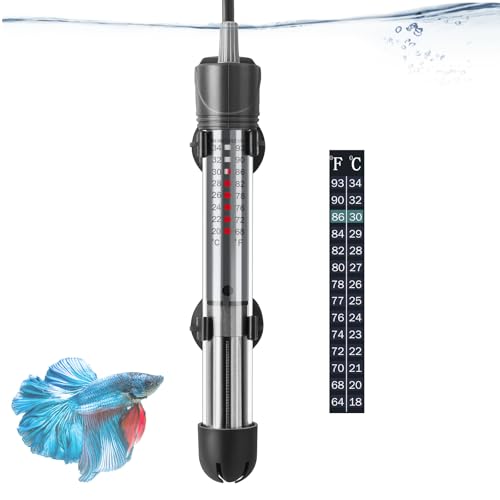
Holds a warm, stable temperature so your betta stays active and comfortable.

Gives your betta a resting spot near the surface, where labyrinth fish naturally breathe.

Release natural tannins that can reduce stress and support a healthier aquatic environment.
Find top-ratedFish Tank Suppliestoday