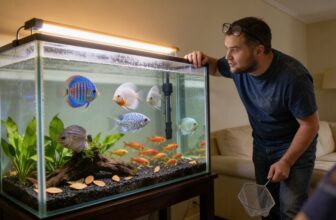
You hold a small glass tank, maybe ten gallons, and watch two fish glide past each other. One is sunset orange, the other moss green with a speckled tail. These are platies, and they are about to surprise you. They breed constantly, change color across generations, and live longer than you might expect for such a tiny creature, but only if you understand their water, their temper, and the strange chase that happens when males outnumber females. The reasons why one fish turns red while its sibling stays gold, why some mothers eat their own young, and why a five-year lifespan is possible yet rarely achieved, these are not secrets. They are patterns you can learn to see.
At A Glance
- Small triangle‑headed livebearers thrive 3–5 years in stable 65–80 °F water with gentle filtration and live plants.
- Minimum 10‑gallon tank suits small groups; keep one male per two to three females to reduce harassment.
- Diverse color varieties include Red Wag, Green Lantern, and Mickey Mouse; offspring often display unexpected hues.
- Feed flakes twice daily, supplemented weekly with protein; maintain health through regular water changes and ich prevention.
- Fry require sponge filters, dense moss cover, and powdered food; remove mother promptly after live birth to prevent predation.
What Are Platy Fish? Origins and Species Overview
What makes a small fish so popular with beginners and experts alike?
You hold a platy fish, feeling its compact, triangle-headed body press gently against the bag.
You’re welcoming *Xiphophorus*, a livebearer from Central America’s winding streams and coastal rivers. Their habitat range stretches from Mexico’s warm shallows down through Belize and Honduras, where generations adapted to flowing freshwater and gentle estuaries.
Xiphophorus arrives from winding Central American streams, where generations learned to thrive in flowing shallows and gentle estuaries.
Their platy genetics tell a complicated story. Southern platies and variable platies interbred so extensively that boundaries blurred completely, like neighbors whose families married across fence lines for centuries.
You’ll find peace in keeping them. They’re hardy, forgiving, and thrive alongside others, asking only clean water and company.
Platy Fish Colors: 8 Popular Varieties to Consider
Your net dips into the tank, and a flash of scarlet darts between the java moss. You’ve spotted a Red Wag, one of eight popular platy varieties worth knowing.
Color genetics fascinates hobbyists since these fish carry hidden traits. When you mix a Sunburst with a Dalmatian, the fry surprise you—patterns emerge from combined genes you didn’t expect. Breeding lets you join this quiet experiment, watching inheritance unfold in each generation.
Your selection matters. Choose healthy parents with strong fins and bright pigment. The Green Lantern‘s blue-green shimmer, the Mickey Mouse‘s spotted tail—each variety reflects choices made by keepers before you.
Welcome to this patient craft.
How Big Do Platies Get? Size and Lifespan Guide
Mickey’s scarlet fins ripple past the glass, bright and full-grown, but you’ve wondered how long he’ll stay that size.
Most platies reach two to three inches from nose to tail, with females slightly larger than males. Your fish’s final length depends heavily on platy genetics—some strains carry compact bodies, others stretch longer. Aquarium lighting plays a role too; dim tanks slow growth, whereas proper brightness supports healthy development. Expect three to five years of companionship when you feed well and keep water clean. Genetics set the frame, but your care colors in the years.
Best Platy Fish Tank Size and Setup
A ten-gallon tank serves as your starting point, the smallest home where a small group of platies can stretch their fins and feel at ease.
You’ll want to choose gentle Platy filtration types, like a sponge filter or hang-on-back with adjustable flow, since these fish prefer calm waters where they can glide without struggle.
For Platy tank lighting, pick a soft LED that mimics daylight, about eight to ten hours daily, so their colors glow without stress.
Add java moss and a few smooth rocks, leaving open space for swimming.
You’re building a community where every fish belongs.
Water Parameters and Testing for Platy Health
Since platies come from warm Central American waters, you’ll need to keep their tank between 65 and 80 degrees Fahrenheit, though some types tolerate up to 82 degrees. Temperature stability matters more than hitting one perfect number.
Stable warmth keeps platies thriving—aim for 65–80°F, with flexibility up to 82°F for some varieties.
Your fish feel safe when things stay steady. Buy a liquid test kit for hardness testing, and check your p hardness weekly.
Platies like their water slightly alkaline, pH 6.8 to 8.0. Remember pH calibration—those test strips lie when they’re old. Calibrate your meter monthly, like resetting a clock.
Hard water, 10-28 dGH, suits them fine. You’re building a home where they belong.
Platy Fish Diet: What and How Often to Feed
Once your water stays steady and your platies swim with easy, loose fins, you’ll notice them begin to search the surface and midwater for food.
You’ll want to feed them twice daily, morning and evening, matching their natural rhythm. This feeding frequency keeps them active and content. Offer flakes or spirulina-rich pellets first, then watch closely. They should finish within two minutes—no more.
Your flavor timing matters too. Once weekly, you’ll add protein: bloodworms or brine shrimp. They’ll dart and shimmer with excitement.
| What You Give | What You See | What You Feel |
|---|---|---|
| Spirulina flakes | Blue-green shimmer in light | Pride in their health |
| Frozen brine shrimp | Quick, joyful chasing | Connection to their wildness |
| Blanched zucchini | Peaceful nibbling at leaves | Calm, shared routine |
You’ll belong here, in this rhythm of care.
Water Change Schedule and Tank Maintenance
Your siphon tube rests against the glass, and you feel the weight of responsibility settle in your chest—this is how you keep them alive.
You change twenty-five percent of the water every two weeks, no excuses. This removes waste your filter filtration cannot catch. You test the water with a kit, watching for shifts in pH and hardness, since platies need steady homes. Your filtration routine matters: you rinse mechanical media in old tank water monthly, preserving good bacteria. You wipe algae gently, check the heater, and observe your fish closely. This care builds trust between you and your living tank.
Common Platy Fish Diseases: Prevention and Treatment
The small white spot on a platy’s fin is your first warning, like a crack in a window before the cold gets in. Ich spreads fast in warm water, and you lose fish you love.
Stay ahead with ichthyophthirius spot prevention: test water weekly, keep temperatures steady at 72-78°F, and quarantine newcomers for two weeks. When sickness strikes, disease treatment begins with isolation. Raise tank temperature gradually to 86°F, add aquarium salt at one teaspoon per gallon, and use commercial ich medication exactly as labeled.
- Quarantine new fish before adding them to your community
- Inspect fins daily for tears, fuzz, or color loss
- Keep a separate hospital tank ready, even a simple five-gallon bucket works
Are Platy Fish Aggressive? Understanding Their Behavior
A single platy in a glass bowl swims in tight circles, nose pressed to its own reflection, and you might wonder if it wants company or if company brings trouble.
You’ll find platy aggression rare, but not impossible. Male platies establish a gentle social hierarchy through small displays, not violence. They flare fins, chase briefly, then settle.
| What You See | What It Means |
|---|---|
| Two males circling | Establishing who’s first, not fighting |
| One fish hiding alone | Feeling left out, needs more friends |
| Everyone swimming together | Your group has found its balance |
Keep one male with two or three females, and you’ll see peace. You’re building a tiny neighborhood where everyone belongs.
Why Male Platies Chase Females (And How to Manage It)
Since spring arrives whether we welcome it or not, a male platy will chase a female through the water with the same steady urgency. You witness this courting, relentless but normal, rooted in livebearer mating strategies where males compete through visual signaling—flashing fins, shimmying bodies—to win her attention. Too much pursuit exhausts females, so you step in with simple balance.
A male platy chases with steady urgency, flashing fins and shimmying bodies to win her attention.
- Keep two or three females for every male, spreading his focus
- Add thick plants where she rests out of sight
- Watch closely; remove relentless bullies to spare her stress
Your tank becomes calmer, fairer, a place where every fish belongs.
Breeding Platies: Gestation, Birth, and Fry Care
Once you have spread the chasing across several females, you might notice a female’s belly growing round and square, like a tiny box tucked beneath her fins. She carries live young, not eggs, for twenty-four to thirty days. You will see a dark spot near her tail, the gravid spot, growing darker as birth nears.
Set up a gentle tank with sponge filters and thick moss for hiding. Platy genetics surprise you—parents of one color may produce wildly different babies.
Remove the mother after she finishes. Your attention to plants and tiny food, like powdered flakes, decides fry survival.
Compatible Tank Mates for Platy Fish Communities
Three small fish swim past your platy’s nose, and nobody flares fins or hides in the plants. You’ve built harmony, and it feels right.
Your substrate choice matters—soft, dark gravel keeps everyone calm and shows colors beautifully. Arrange your platy tank décor with caves and plants, so shy fish find refuge.
- Choose tetras, rasboras, or gentle Corydoras catfish for peaceful company.
- Avoid fin-nippers like tiger barbs; they bully and spread stress.
- Add a few mystery snails to clean algae without crowding the space.
You belong here, watching your community thrive together.
Frequently Asked Questions
Do Platy Fish Need a Heater in Their Aquarium?
You’ll need a heater if your room drops below 65°F.
Platies thrive in a temperature range of 65–80°F, though they tolerate up to 82°F. Heater options include adjustable submersible models, sized by wattage per gallon. A 50-watt heater suits your 10-gallon tank. Stable warmth keeps your fish active, colorful, and less prone to illness. Check your thermometer daily. You’re building a safe home, and consistency matters more than perfection.
Can Platy Fish Live With Snails Successfully?
Yes, you’ll find snail compatibility with platies works beautifully in your community tank. These peaceful fish ignore snails completely, making them ideal tank mates. Your platies swim through open water while snails clean algae below, each doing their own important job. You’ll feel calm watching this quiet partnership, like neighbors sharing a garden without fuss. Just make sure your tank holds at least ten gallons, so everyone has room to thrive together.
How Can I Tell if My Platy Is Pregnant?
You’ll notice pregnancy detection by watching her belly grow round and dark, like a tiny balloon filling with water.
Gestation signs include a swollen, boxy shape near her tail, and you’ll spot a dark gravid spot—her babies’ eyes showing through.
She’ll eat more, hide often, and move slower.
In 24 to 30 days, she’ll give birth to up to 80 tiny fry.
Do Platies Prefer Light or Dark Tanks?
Your platies don’t pick light or dark, they pick *balance*—that’s their tank preference. Bright tank lighting shows off their colors, certainly, but they’ll need plant shadows to duck into when they feel exposed, like you needing a cozy corner after a loud day. Give them eight to ten hours of light, plenty of java moss, and open swimming space. You’ll watch them thrive when they control their own brightness.
Why Is My Platy Fish Hiding Constantly?
Your platy hides since stress, water chemistry, or fear drives them to shelter.
Check your tank’s water chemistry first—grab a test kit, and measure ammonia, nitrite, and pH right now. Unsafe levels, like ammonia above 0 ppm, poison your fish and force hiding.
Look for bullies too. One aggressive tankmate creates constant stress, making your platy cower behind plants or decorations.
Add more hiding spots, like java moss or small caves, so your fish feels safe exploring when ready.
Rounding Up
Small plastic nets, resting beside your tank, remind you that keeping platies means embracing gentle surprise. You’ll watch colors shift in newborns, like inheriting your grandmother’s laugh instead of her eyes. Stay steady with water tests, keep temperatures calm, and these little fish will stay with you three, maybe five years. You’re not just maintaining a tank—you’re practicing patience, learning that care builds beauty slowly, one water change at a time.