You pick up a twist‑tied bundle of bright green stalks at the pet store, and the label calls it “aquarium bamboo.” Your fingers feel the smooth, jointed stems, each node a pale ring like a bracelet around bamboo’s wrist. This plant isn’t bamboo at all. It’s Dracaena sanderiana, a houseplant from West Africa that can adapt to wet feet. You wonder if your tank’s water will welcome it, or slowly drown it. The answer depends on choices you’ll make before the first root touches gravel.
At A Glance
- *Dracaena sanderiana* thrives in aquariums with roots-only, semi-submerged, or fully underwater placement.
- Keep water slightly acidic (pH 6.0–6.5), soft (0–8 dGH), and temperatures between 59–80°F.
- Provide low to moderate light for 10–12 hours daily to prevent yellowing leaves.
- Bury bases 4 inches deep and position near corners or behind decor for stability.
- Maintain weekly water changes and monthly deep cleaning to ensure healthy nutrient cycling.
What Lucky Bamboo Actually Is (and Why “Aquarium Bamboo” Is Misleading)
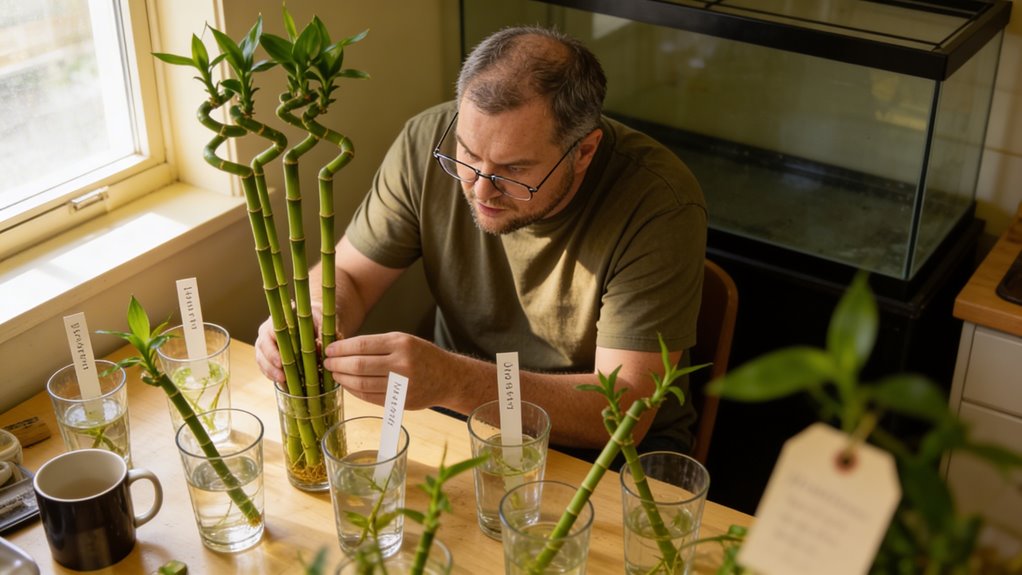
When you walk into a pet store and spot those curly green stalks standing in water, you might think you’ve found true bamboo for your tank, but you’ve actually met *Dracaena sanderiana*, a plant from Cameroon in Central Africa that isn’t bamboo at all.
You’re not alone in feeling confused. Bamboo taxonomy separates true bamboos, which are grasses, from this lily family member. That misleading naming runs deep. Shops call it Lucky Bamboo, Friendship Bamboo, even Chinese Water Bamboo, though it never grew in Asia.
The name comforts you, like calling a familiar face by the wrong name feels easier than learning the truth.
Fish, Turtles, and Tank Mates: Will It Survive Your Stocking List?
Its waxy, slightly tough leaves don’t taste good to fish, who usually swim past without a bite. You can relax knowing your tetras, guppies, and bettas won’t destroy your green decoration.
Tank density matters here. In crowded aquariums, fish bump stalks constantly, so you bury bases four inches deep, anchoring against tugging fins. This protects roots and prevents floating chaos.
In dense tanks, bury bases four inches deep—roots stay protected and chaos stays underwater.
Turtles present trickier companions. They push, climb, and sometimes nibble. Your growth strategies adapt: place stalks behind rocks, creating barriers gentle shells can’t cross.
You belong to a community that solves problems together. Lucky bamboo rewards your patience with steady, quiet presence.
Tank Size Minimums and Where to Place Your Stalks
A single stalk of lucky bamboo needs at least five gallons of water to stand tall, stretch its roots, and breathe easy—that’s the smallest home where it’ll truly thrive, not merely survive.
Your tank placement matters deeply. Nestle stalks near corners or behind driftwood, where shy fish dart for comfort and you feel the calm of a shared space.
| What You Give | What You Receive |
|---|---|
| Five gallons of room | A plant that stands proud beside you |
| Gentle, filtered light | Leaves that stay green, not burned |
| Four inches buried deep | Roots that hold fast, unshaken |
| A corner spot, soft and steady | A living thing that grows with you |
Optimal depth means burying four inches of stalk, anchoring roots so burrowing fish won’t tug them loose. You’re building trust, inch by inch, between living things.
Hardness, pH, and Temperature: Water That Won’t Kill It
Water holds memory, they say, and your bamboo remembers every degree, every mineral, every shift toward acid or base. Your job is keeping that memory gentle.
pH stability means holding between 6.0 and 6.5, slightly acidic, like rainwater. Water hardness stays soft, 0-8 dGH, so minerals don’t crust the roots. Temperature control keeps things cozy, 59°F to 80°F, avoiding shocks that yellow leaves.
- Test weekly with strips; water testing prevents surprises before leaves droop.
- Match filtration needs to low flow; bamboo breathes easy without current battering stalks.
- Watch nutrient balance during tank cycling; new tanks fluctuate, stressing tender shoots.
Algae prevention comes from balanced light and clean chemistry. You’re building a home, not just filling glass.
Three Planting Methods: Roots-Only, Semi-Submerged, or Fully Underwater?
When you hold a stalk of lucky bamboo in your hands, you’re really holding three different plants at once, depending on how much water you give it.
You can plant roots-only, letting thin white roots dangle into 2–3 inches of water while the stalk breathes air.
You can go semi-submerged, burying the base about 4 inches deep in coarse gravel, creating clean soil aesthetics without rot risks.
Or you can grow fully underwater, which demands soft water (0–8 dGH) and lets nutrient cycling happen right through those fleshy stalks.
Each method connects you to a community that values patience, precision, and living things that adapt when you give them exactly what they need.
Lighting Bright Enough to Grow, Dim Enough to Prevent Yellowing
Once you’ve settled your stalk into water or gravel, you’ll notice the leaves tilt slightly, like they’re asking a question.
They’re seeking light—not too much, not too little. You want light intensity low to moderate, about 10–12 hours daily. Too bright, and you’ll watch green turn to sick yellow. That’s leaf burn prevention in action, friend.
- Place your tank near a window with sheer curtains, or use a dim LED strip
- Watch for pale leaves—that means pull back the brightness
- Rotate the plant weekly so every side shares the glow
You’ve got this balance down.
How to Trim for Height and When to Start
Your stalk will keep climbing, inch by inch, until it bumps the glass or blocks your view.
You’ll want to grab your scissors when stems grow past four feet, or when leaves crowd your fish. Pr timing means watching spring growth spurts, starting seasonal pruning in March or April, before summer heat kicks in.
| Height to Check | Season to Act | What You’ll Do |
|---|---|---|
| 3 ft, touching lid | Early spring | Cut 1 inch above node |
| 4 ft, blocking light | Mid-spring | Remove top, shape sides |
| 6 in new growth | After flowering | Trim to redirect energy |
Cut clean, just above a node—that’s the ring on the stem. Your plant heals better, stays with your community.
Propagating New Stalks From Node Cuttings
A clean pair of scissors, sharp enough to slice paper without tearing, sits ready on your counter since new stalks wait inside every ring on your plant.
You will cut just above a swollen joint, that bump where roots want to emerge.
- Slice at a 45-degree angle, exposing more surface for drinking
- Skip soil selection entirely; your aquarium water feeds roots cleaner than any potting mix
- Wait for shoots half as thick as the mother stalk before node pruning
Place cuttings in the same tank, four inches deep, where familiar water wraps them like belonging.
Nitrate Reduction: Real Data or Marketing Claim?
Those cuttings you tucked into the gravel are already drinking, and you might wonder what else they do down there besides growing tall.
You’ve probably seen “miracle filter” promises on plant labels. Let’s look closer.
| What the plant actually does | What some sellers claim |
|---|---|
| Absorbs small amounts of nitrate through roots | “Eliminates all tank maintenance forever” |
| Adds gentle oxygen during daylight hours | “Replaces your entire filtration system” |
| Offers modest, steady help to water quality | “Instant crystal-clear water, guaranteed” |
Nitrate uptake happens, yes. Dracaena sanderiana pulls nitrogen from water, but slowly. Your test kit still matters. Calling it a cure-all? That’s the marketing myth we need to leave behind, together.
Yellow Leaves, Soft Stalks, and Root Rot: Diagnosis Flowchart
How do you know when your green friend needs help before it’s too late?
You watch for yellow leaves first. They droop like tired hands, signaling nutrient deficiency or bright light burning tender tissue.
Feel the stalk next. Soft spots mean rot has started eating inside, turning firm stems to mush. This hurts since you tried to help.
Check your roots weekly:
- White, firm threads mean health
- Brown, slimy strands mean start over
- Black, collapsed sections mean you’re not alone in this learning
Soil causes most aquarium failures. Gravel anchors without suffocating. You’re building a home together, one careful choice at a time.
Weekly and Monthly Maintenance Checklist
Once you’ve learned to spot trouble in the leaves and stalks, you’re ready to build habits that keep trouble away.
| Task | Weekly | Monthly |
|---|---|---|
| Water change | Replace 25% of tank water | Deep clean gravel, check filter |
| Testing | Check temperature, pH with strips | Full test: hardness, nitrates, ammonia |
| Plant check | Inspect roots for rot, trim yellow leaves | Evaluate nutrient cycling, remove soil growth attempts |
You pull out your test kit each Sunday morning, knowing your fish depend on this rhythm. Nutrient cycling means good bacteria turn waste into plant food, and you’re helping them work. When you see white roots spreading, you feel proud, calm, connected to this quiet underwater world you’ve built together.
Frequently Asked Questions
Can Lucky Bamboo Survive in a Bare Tank With No Substrate at All?
Yes, you’re looking at a plant that grows happily with nothing but water.
You’ll submerge the stalk about four inches deep, letting the roots hang free. Clean water becomes your substrate alternative—no gravel needed. Keep lighting requirements gentle, ten to twelve hours daily, so leaves stay green without burning. Change the water every week or two, and you’ll feel the quiet pride of watching something thrive in simplicity.
Does Lucky Bamboo Release Toxins Harmful to Fish or Invertebrates?
You won’t hurt your fish with *Dracaena sanderiana*, it’s not truly toxic. Your toxicity assessment confirms this plant doesn’t release poisons into aquariums. Watch your water chemistry instead, as decaying leaves can spike ammonia. Keep roots clean, change water weekly, and you’ll feel calm knowing everyone’s safe. Your careful attention builds trust between you and your tankmates.
How Long Can Lucky Bamboo Live Fully Submerged Underwater?
The thick green stalks in your tank stay strong for years, even decades, when you keep them happy.
You’ll see underwater growth rate depends on light and water softness. The growth cover lifespan stretches ten years or more with clean, stable conditions.
You trim above nodes once yearly, watching new shoots emerge. Roots drink steadily, never gasping dry.
You belong here, creating slow, patient green life.
Why Are My Lucky Bamboo Roots Turning Black or Slimy?
Your lucky bamboo roots turn black or slimy since root rot has set in, usually from poor water quality or stagnant conditions. You need to act quickly. Trim away the damaged roots with clean scissors, then replace the water with fresh, distilled or filtered water. Check your water quality regularly, changing it every one to two weeks. Keep the roots submerged but not crowded, and you’ll see healthy, white new growth soon.
Can I Transplant Lucky Bamboo From Soil Directly Into My Aquarium?
You can’t transplant lucky bamboo directly from soil into your aquarium.
Rinse every bit of dirt from the roots first, or you’ll invite rot.
Use your softest brush under running water, checking each root until it’s clean. Soil care starts with total removal, not gentle washing.
Then adjust your lighting slowly. Sudden bright light shocks the plant, just like sudden change unsettles you. Keep it moderate, patient, steady.
Rounding Up
Your lucky bamboo, that green twist of stems you chose, asks only for soft water, gentle light, and a little patience.
You’ve learned to test your pH, to prune above the node—that knobby joint where new roots wake—and to rotate your stalks like a slow glide with the sun.
These small acts, done weekly, build a quiet trust between you and your plant.
You feel capable now, and that steadiness is worth more than any perfect leaf.