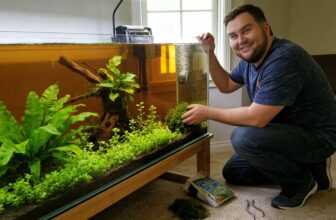
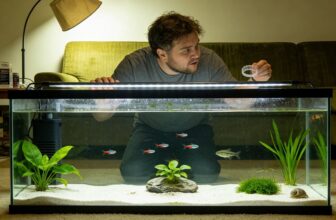
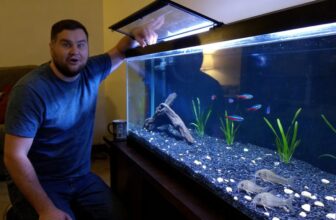
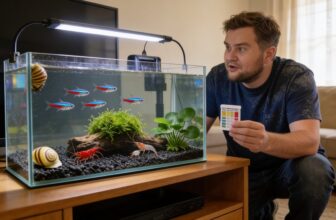
You can absolutely grow a thriving planted tank in plain old sand, though you’ll need to cheat a little—think root tabs ($8–12 per 10‑pack), liquid ferts, and plants that don’t give a damn about substrate quality.
Amazon Swords and Vallisneria anchor deep and spread like gossip, whereas Java Fern and Anubias skip the dirt entirely—just tie ’em to driftwood and call it a day.
Cryptocoryne and Dwarf Sagittaria handle shallow sand beds fine with a little tab love, and if you’re lazy (no shame), Hornwort and Anacharis float around sucking up nitrates with zero effort.
Ludwigia repens adds red pop if you’ve got the light.
Sand’s not ideal, but these nine make it work—pick your fighters based on how much elbow grease you’re willing to spend, and there’s more dirt on each contender just ahead.
At A Glance
- Amazon Sword thrives in sand with deep-placed root tabs and moderate-to-high lighting.
- Vallisneria spreads rapidly in sand without CO₂, tolerating low light and wide pH ranges.
- Java Fern and Anubias attach to hardscape, needing exposed rhizomes and no substrate burying.
- Cryptocoryne and Dwarf Sagittaria suit sand with shallow roots, root tabs, and stable water parameters.
- Hornwort and Anacharis grow effortlessly in sand, offering fast nutrient uptake and minimal maintenance.
Why Plants Struggle in Sand (And How to Fix It)
Sand looks great in your tank, but your plants might disagree—at least at first.
Sand’s compact nature blocks oxygen from reaching roots, and it doesn’t hold nutrients worth a darn. You’re basically serving your plants an empty plate.
- Nutrient deficiency hits fast—roots starve without supplementation, so you’ll need root tabs ($8-12 per 10-pack) or liquid fertilizers.
- Algae control becomes trickier—stressed plants leak nutrients into the water, feeding algae blooms that’ll turn your tank green faster than your neighbor’s lawn.
The fix? Feed your plants deliberately, don’t overlight (6-8 hours max), and choose species that laugh at lean substrates. For consistent results, consider using a consistent dosing of a buffer like Brightwell Aquatics KH Supplement yields repeatable pH stability.
How to Prepare Sand for Planting: Rinse, Shape, and Fill
You can’t just dump bagged sand in your tank and pray—you’ll turn your living room into a dust bowl and your fish into temporary astronauts.
First, rinse that sand until water clarity stops looking like chocolate milk. Five minutes of agitation saves five hours of regret.
Next, shape your sand texture into gentle slopes, not flat pancakes—roots need gradients to grab.
Finally, fill slowly. Place a plate on top, pour water against it, and watch the magic happen without clouds.
Your plants will thank you, your fish won’t file complaints, and you’ll actually belong in the club of aquascapers who got it right the first time.
For fish like corydoras, choose sand with a smooth soft texture to reduce barbel damage.
Amazon Swords: Deep Roots That Anchor Tight in Sand
Since sand feels more like a shifty beach than firm dirt, you’d expect a twenty‑inch leafy giant to flop over like a sleepy toddler.
Surprise: Amazon Swords grab that sand substrate like they’re hugging an old friend.
You push root tabs deep, watch those thick roots spiral outward, and suddenly you’ve got something that’ll outlast your tank’s first three failed experiments.
That leaf texture—broad, crinkled, almost waxy—catches light like a satellite dish for your underwater living room.
Your checklist:
- Bury root tabs 2 inches deep, right under the crown
- Keep lighting moderate‑to‑high (think sunny windowsill, not desert noon)
- Maintain 72‑82°F water—your heater’s probably already there
- Let the root mass spread before adding dig-happy fish
You’re building a backdrop that says “I know what I’m doing.” Even when you’re guessing.
Just make sure you cut the mesh net to size around the tank lip if you’re adding a cover, since those leaves can push past small gaps.
Vallisneria: Tall Grass That Spreads Fast in Low Light
Three feet of green ribbon can take over your tank faster than your uncle’s opinion at Thanksgiving dinner. Vallisneria spiralis brings that energy—you plant one bunch, blink twice, and suddenly you’ve got a jungle.
Why you’ll want in:
- Low light tolerance means your cheap LED strip won’t let you down
- Rapid spread fills background gaps without begging for CO₂
- Roots grab loose sand like it’s nothing, no anchoring needed
- 68-82°F, pH 6.5-8.0—basically whatever you’re already running
The catch? Runners go everywhere. You’ll trim weekly or surrender your scape to the blade.
Bottom line: Plant Vallisneria when you want instant privacy screening and don’t mind playing referee.
This hardy plant experiences initial melt‑back normal during transition, with new blades reaching up to two feet.
Java Fern and Anubias: Skip Substrate Entirely
There’s something almost rebellious about plants that thumb their noses at your carefully chosen substrate. Java Fern and Anubias plants reject roots entirely, preferring a floating attachment to driftwood or rocks instead. You’re basically off the hook for substrate worries with these two survivors.
- Rhizome rule: Don’t bury that thick horizontal stem, you’ll kill it.
- Anubias stays compact at six inches; Java Fern stretches taller for flexible placement.
- Low light suits them perfectly— fewer algae control headaches.
- Tie them with fishing line, ignore for weeks, watch them thrive.
A curved wave‑shaped blade grips stems gently and reduces bruising during trimming of these attached plants.
Your sand bed remains pristine, and you look like a genius.
Cryptocoryne: Compact Color for Shallow Sandy Beds
Cryptocoryne plants settle right into sandy beds like they were born there, which, technically, they sort of were—you’ll find them creeping along riverbanks across Southeast Asia.
You want compact hue in your aquascape? This is your plant.
Cryptocoryne plants settle right into sandy beds like they were born there, which, technically, they sort of were—you’ll find them creeping along riverbanks across Southeast Asia.
You want compact hue in your aquascape? This is your plant.
Cryptos top out around 8 inches, perfect for mid-ground cozy corners. Their roots grip shallow substrate like it’s old news—no deep digging required. You’ll want root tabs though; sand’s nutrient-poor, and these slow-growers need their snacks.
Lighting? Keep it low to moderate. Too bright, and they’ll melt like your resolve on a diet. For consistent, gentle illumination, pair them with a light that includes predictable light rhythms to reduce stress and support steady growth.
- Height: 4–8 inches
- Temp: 72–82°F, pH 6.0–7.5
- Bonus: They spread into colonies, making your tank feel lived-in
Bottom line: Cryptocoryne turns sandy emptiness into something you’d actually want to show your friends.
Dwarf Sagittaria: Carpet Your Sand Without Soil
Dwarf Sagittaria is your cheat code for a carpeted look without the hassle of fancy aquasoils or CO₂ injection rigs that cost more than your first car.
Your shallow soil sand bed becomes a green meadow, no compaction nightmares here. You’re basically winning.
- Shallow roots dodge substrate compaction while you maintain nutrient cycling with root tabs
- Moderate water flow spreads CO₂ diffusion and prevents algae prevention headaches
- Even light distribution keeps growth consistent across your carpet
- Stable temperature stability and pH buffering support active fish behavior below
You’ll feel like you belong in the aquascaping club without the membership fees. To support goldfish health in this setup, ensure the tank is at least 20 gallons per goldfish to accommodate their heavy bioload and growth.
Hornwort and Anacharis: Floating Nutrient Filters
When your sand substrate feels more like a desert than a planted tank, hornwort and anacharis offer you a literal lifeline—they don’t give a single care about what’s happening below them. You get free-floating nutrient filters (technical term: plants sucking nitrogen right out of your water column), which means algae suppression without lifting a finger. Toss them in, let them drift, you’re done. They thrive in any light, cost maybe five bucks a bunch, and multiply like aquarium rabbits. Perfect for beginners, perfect for sand—perfect for you. For tank decorators seeking a similar no-effort aesthetic, silk leaf compact plants with weighted resin bases provide fin-friendly structure without any substrate rooting.
| Feature | Hornwort | Anacharis |
|---|---|---|
| Growth habit | Free-floating or anchored | Floats or roots loosely |
| Nutrient filter strength | High nitrate uptake | Very high phosphate absorption |
| Algae suppression | Shades competitors | Outcompetes algae fast |
| Best placement | Surface drift | Mid-water or surface |
| Your effort level | Basically zero | Even less than that |
Ludwigia Repens: Red Accents for High-Light Sand Tanks
If you’re tired of staring at a sea of green, Ludwigia repens is your ticket to actual color in that sand tank of yours. This stem plant hits 20 inches, punching red and orange hues when you give it what it wants.
Escape the green monotony—Ludwigia repens delivers real color when you actually commit.
- Light hunger: Moderate-to-high, no exceptions, or you’re stuck with green stems pretending to be exciting.
- CO₂ dosing: Optional but honestly, skip it and you’ll watch your reds fade like old jeans.
- Substrate pH sweet spot: 6.0–7.5 keeps roots happy; sand inertness means you steer that number.
- Root tabs mandatory: Sand’s nutrient-poor, so feed those roots or don’t bother planting.
Bottom line: commit to the light, check your substrate pH, and you’ll finally join the club of aquascapers who don’t settle for boring.
For precise readings, use a reliable pH meter calibrated weekly to maintain accuracy.
Frequently Asked Questions
Can I Use Black Sand for Planted Aquariums?
Yes, you can use black sand for planted aquariums.
You’ll want to rinse it thoroughly first—substrate cycling matters here, since fresh sand lacks the beneficial bacteria that keep your tank stable.
Black sand looks sleek, shows off green plants beautifully, and works fine for root-feeders if you add root tabs.
Just avoid ultra-fine grades that compact, and you’re golden.
It’s not magic, but it’s perfectly doable.
How Often Should I Replace Sand Substrate?
You rarely replace sand, you maintain it. Sand cleaning during water changes keeps it fresh, not replacement cycling.
Vacuum weekly, stir gently to prevent anaerobic pockets—those nasty gas bubbles that smell like bad decisions.
Good sand lasts years. You’ll know it’s done when water stays cloudy in spite of cleaning, or crusty patches refuse to budge.
Most tanks? Five-plus years easy. Save your money, buy fish food instead.
Do Shrimp Help Maintain Sand-Bed Plants?
Yes, they do, and you’ll appreciate their quiet hustle.
- Shrimp algae control — They graze film, debris, and yes, algae off leaves and sand, keeping plants cleaner than you’d manage alone.
- Shrimp waste — It sounds gross, but their tiny droppings fertilize roots naturally; free nutrients, basically.
They’re not miracle workers—supplement with root tabs still—but they reduce your workload noticeably. Cheap labor, good company, zero complaints.
Add them. Your sand-bed setup runs smoother with shrimp on cleanup crew.
Can Sand Tanks Use Under-Gravel Filters?
You can use under-gravel filters in sand tanks, but it’s a double-edged sword like bringing a spoon to a steak dinner.
Verdict: doable, yet tricky.
- Your filterre filter (that’s the gravel-tube-and-plate system) risks clogging with fine sand particles, choking water flow until you’ve got a stagnant swamp where plants once grew.
- Substrate cleaning becomes a weekly chore, since waste settles *into* the sand, not on top.
- Plant roots may tangle in the plate slots, making rescues necessary.
Bottom line: skip it, or go sponge filter instead.
What Sand Depth Prevents Anaerobic Pockets?
Sand deeper than three inches traps gunk, and that’s where sand compaction creates nasty anaerobic pockets—basically oxygen‑dead zones where bacteria produce toxic gases. You want water flow, not sludge city.
Shallow layers let debris sit on top where you’ll siphon it away, preventing nitrate buildup before it festers. Think of it like lazy river versus swamp—you’d rather float, yeah?
- 2″ = sweet spot for root growth, no stink bombs
- 3″+ = risk zone, stir weekly or skip it
- Fine sand compacts worse, so grab coarser grains if you’re a “more is more” type
You’re balancing plant anchoring against your future self’s sanity. Too deep, you’ll be poking substrate with chopsticks like a weirdo—ask me how I know.
Bottom line: Stick to two inches, stir occasionally, vacuum like you mean it. Your fish won’t write thank‑you notes, but they’ll also won’t belly‑up from invisible poison gas.
Rounding Up
Sand beds aren’t plant prisons, they’re just picky landlords demanding the right tenants. You’ve got nine proven options now, from root-heavy workhorses to clever epiphytes that laugh at substrate entirely. Match your lighting, pop in root tabs like fertilizer doughnuts, and your sandy tank will sing. No soil snobbery required. Just plants that work, plain and simple. Go build something green.