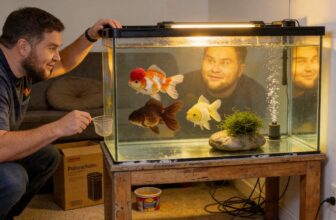
Fantail goldfish, those egg-bodied swimmers with four-lobed tails, need 30 gallons minimum—20 if you’re feeling stingy, but they’ll thank you for the extra legroom.
They’ll hit 6–8 inches and live 5–10 years when the water’s clean and the filter’s working overtime.
Tank mates? Other fancies, weather loaches, or white clouds. Skip the cichlids; they’ll turn your luck charm into lunch.
Feed sinking pellets, watch the temps, and there’s plenty more where this came from.
At A Glance
- Fantails require 20–30 gallons minimum per fish, with an extra 10 gallons for each additional tankmate.
- Optimal water parameters include pH 6.0–8.0, hardness 4–20 dKH, and stable temperature near 73–74°F.
- Feed high-quality sinking pellets twice daily, supplemented with fiber-rich vegetables to prevent constipation.
- Compatible companions include other fancy goldfish, weather loaches, and white cloud minnows; avoid aggressive or fast swimmers.
- With proper filtration, water changes, and nutrition, fantails commonly live 5–10 years and reach 6–8 inches in length.
What Is a Fantail Goldfish?
What Is a Fantail Goldfish?
What exactly is a fantail goldfish, anyway? It’s a fancy goldfish, certainly, but there’s more to the story.
Now, these fish carry real goldfish symbolism—luck, prosperity, surplus—especially in East Asian traditions where serious hobbyists keep them in courtyard ponds. Breeding genetics shaped everything you see: that egg-shaped body, the double caudal fin splitting into four distinct lobes, fanning out like a hand through water. They’ve got metallic or nacreous scales in orange, calico, even metallic blue, plus a tall dorsated dorsal fin that arcs across their back. And they’ll reach maximum maturity without becoming massive, which we’ll tackle elsewhere.
Given their size and waste production, these fish are not suited for small desktop tanks under 10 gallons and require significantly larger aquariums or outdoor ponds to thrive.
How Big Do Fantail Goldfish Get?
Now, there’s wiggle room here—some fish from ethical breeders push toward that upper margin, whereas cramped quarters or neglected water quality can stunt growth, leaving them smaller than genetics intended. Most fantails settle between six and eight inches, nose to fluttering tail tip, though that measurement includes those dramatic fins. Their compact, egg-shaped bodies actually fit in your palm. Breeding etiquette matters here, too—responsible pairings for color genetics keep lines healthy and sizes robust. Neglect either, and you’ll watch potential shrink. For aquarists managing water quality and flow dynamics, acrylic baffle kits similar to those used in reef sumps can help maintain stable conditions that allow fantails to reach their full genetic potential in community setups.
| Factor | Impact on Size | Owner Control |
|---|---|---|
| Breeding etiquette | Sets genetic ceiling | Choose ethical sources |
| Color genetics | Links to line vitality | Research breeder reputation |
| Water quality | Allows full expression | Test weekly, no excuses |
| Tank dimensions | Allows or restricts growth | Plan ahead, upgrade willingly |
Tank Size for Fantail Goldfish: Minimum vs. Ideal
Size matters, but context matters more, and that’s where tank recommendations start getting messy. Breeders push breeding myths about miniature varieties that supposedly thrive in bowls. They don’t. Decoration trends favor cramped, aesthetic setups over swimming room. Skip that.
Size matters, but context matters more—and that’s where tank recommendations start getting messy.
Now, the numbers: 20 gallons minimum keeps one fish alive. 30 gallons ideal lets it actually thrive. Add 10 gallons per extra fish.
Filtration matters too—double the tank’s volume hourly. No exceptions.
Small tanks poison fish with their own waste. Give them space, and they’ll belong in your life for years. Larger tanks improve swimming, color vibrancy, and lifespan, making the extra investment worthwhile from day one.
How Long Do Fantail Goldfish Live?
Since nothing stings quite like watching a pet clock out early, knowing it could’ve stuck around longer, most people want the straight answer: five to ten years, give or take, with the upper end reserved for keepers who actually read the fine print on water quality.
Now, lifespan expectations aren’t random lottery tickets. They’re earned through deliberate choices.
- Tank setup matters—cramped quarters shave years off genail goldfish
- Water chemistry stable, not spiking
- Feeding schedule consistent, measured, not “whenever”
- Disease prevention through observation, not panic
- Compatible species reduce stress
- Aquarium décor functional, not hazardous
Breeding tips aside, goldfish health reflects dedication. Do the work, keep the friend. Unlike betta fish that can thrive in compact setups with low-flow filtration as small as 2.5 gallons, fantail goldfish demand significantly more swimming space and robust biological filtration to reach their full lifespan potential.
Water Parameters That Keep Fantail Goldfish Healthy
What actually separates a fantail that thrives from one’s merely surviving? Water chemistry, honestly. These fish tolerate range, but stability’s where belonging starts.
| Parameter | Ideal Range | Why It Matters |
|---|---|---|
| pH | 6.0–8.0 | Sudden swings stress organs, invite disease |
| Water hardness | 4–20 dKH | Minerals support fin development, osmotic balance |
| Temperature | 73–74°F | Too warm, metabolism races; too cold, immunity lags |
Test weekly. Adjust gradually—think degrees per day, not dumps. Fancy goldfish push boundaries, but their compact bodies can’t compensate for sloppy chemistry. I mean, they’ll *live* through worse. But thriving? That’s a club with a membership fee, and it’s paid in consistency, strips, and the occasional eye-roll when the pH drifts again.
One-dip, 30-second read time test strips make this routine painless, so you’re more likely to stick with regular monitoring rather than putting it off.
Sand, Plants, and Safe Tank Decorations
Now, the grain matters—pool filter sand, play sand, something fine enough they can’t choke but coarse enough it doesn’t compact into cement. A soft sand substrate lets them dig, forage, display natural behaviors without torn fins or bruised bellies. For added biological filtration and a touch of greenery, consider introducing sterile tissue culture plants that start clean and pest-free, avoiding the hitchhikers that often come with traditional aquarium plants.
Decorative driftwood works, mostly. Smooth-edged pieces, no sharp points—they’ll bump into everything, it’s inevitable. Anubias, Java fern, hornwort: plants that tolerate their clumsy swimming, their occasional uprooting attempts.
Avoid gravel, painted plastics, anything with rough textures. They’ll thank you, probably. Hard to tell with fish.
Setup matters. It’s their whole world, after all.
How Often Should You Change the Water?
They’ve got their soft sand and their tough little plants, their world built from scratch, and that’s all well and good—but water’s the real character here, isn’t it?
Now, filter filtration helps, indeed, but it doesn’t replace elbow grease.
- Change 25–30% weekly for a single fish
- Bump to 50% for crowded tanks
- Test for nitrates; keep them under 20 ppm
Nitrate cycling means bacteria convert waste to less toxic forms, but they don’t vanish it. You’re the cleanup crew, and that’s the deal. I mean, nobody joins this hobby to lug buckets, but here we are.
Consider a water-pressure powered system with a long hose and two-valve operation to eliminate the bucket brigade entirely.
What Should You Feed Your Fantail Goldfish?
Since fantails are opportunistic omnivores with delicate digestive systems, you’ve got to think strategically about what goes in their mouths.
High-quality sinking pellets form the foundation—flakes float, and gulping air at the surface invites trouble.
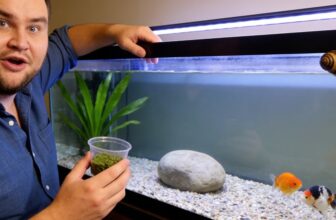
Supplement with blanched peas, zucchini, and leafy greens for fiber that keeps things moving.
Live or frozen treats like brine shrimp and bloodworms bring out their natural foraging instincts, and yes, they’ll root through your substrate choice to find every last morsel.
A varied diet doesn’t just prevent problems; it improves goldfish coloration, bringing out those oranges, reds, and metallic blues that make these fish worth the effort.
Feed small amounts twice daily, two minutes max.
Consider full-spectrum lighting to enhance their vibrant colors, as proper illumination can bring out the reds, oranges, and metallic blues in your fantail’s scales much like it does for aquatic plants.
How Diet Prevents Swim Bladder Problems
Why do fantails float belly-up at the water’s surface, looking more like bath toys than living fish? Usually, they’ve got constipation. That egg-shaped body packs organs tight, so when food sits, the swim bladder gets squished.
Now, here’s where a fiber diet saves the day. Greens like blanched peas and zucchini keep things moving, literally. Fiber pushes waste through, boosts gut motility, stops blockages before they start.
Avoid cheap flakes that expand in water. They’ll clog a fish up fast. Instead, feed small amounts twice daily—two minutes, done. Your fantail stays upright, dignified, and swimming with the crew.
For optimal results, consider floating pellets that are sized appropriately for your fantail and designed to prevent over-feeding, as these maintain water quality while providing complete nutrition with immune-supporting ingredients like omega-3 and vitamin C.
Common Fantail Goldfish Diseases and Treatments
When a fantail starts acting more like a trembling leaf than its usual buoyant self, something’s probably gone wrong in the water—or the works.
Disease identification starts with watching: clamped fins, white specks, or that telltale shimmy mean ich, bacteria, or fungus has moved in.
Swim bladder trouble’s the big one, that egg-shaped body crowding organs, and it’s usually diet—too much, too dry, too fast.
Treatment protocols? Quarantine first, always, then salt baths for parasites, antibiotics for rot, and peas, always peas, for constipation.
Test water weekly, catch things early, and your fish’ll forgive your mistakes. Probably.
Installing a submersible water fountain pump with adjustable flow control helps maintain stable water circulation and oxygenation, reducing stress that can trigger disease outbreaks in sensitive fantails.
Which Fish Can Live With Fantail Goldfish?
Compatible Tank Mates for Fantail Goldfish
So, who’s actually compatible with a fish that’s basically a swimming dinner roll with fins? Fantails need companions who’ll respect their mellow vibe, not competitors who’ll outpace or harass them.
Now, breeding behavior matters here—during spawning season, even peaceful tank mates might get caught in the chaos of a 74-degree goldfish romance, so you’ll want fish who won’t stress easily.
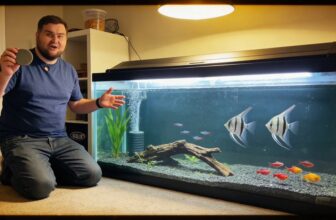
Good options include other fancy goldfish varieties, whose coloration genetics create gorgeous mixed displays—think calico patterns alongside metallic oranges. Weather loaches, small bristlenose plecos, and white cloud minnows work too.
They’re not fin-nippers, they’re not speed demons, and they won’t treat your fantail like an all-you-can-eat buffet. I mean, that’s the baseline, right?
Avoid anything that views those flowing fins as snack material. Stick with the slow and steady crowd, provide enough swimming room—roughly 30 gallons per fish—and everyone’s quirks sort themselves out.
It’s not about finding perfect fish. It’s about finding fish perfect for each other.
Which Tank Mates Should You Avoid?
Tank Mates to Avoid
Not every fish plays nice, and knowing who to exclude matters just as much as picking the right crowd.
Fast swimmers stress these mellow beauties, nipping fins and hogging meals, whereas aggressive cichlids, bettas, and barbs turn a peaceful tank into a war zone.
Skip common plecos too—they’ll rasp that precious breeding color right off.
Now, poor tank filtration can’t handle the waste load aggressive fish add, and that’s just trouble nobody needs.
Bottom line: stick with the gentle crowd, and everyone’s happier, healthier, and actually belongs together.
How to Breed Fantail Goldfish: Setup and Spawning
Fantail Goldfish Breeding Setup and Spawning
Since fantails breed like aquatic rabbits once conditions align, setting up a proper spawning operation isn’t just helpful—it’s practically mandatory if you don’t want fry in your community tank filter. Breeders, let’s build your spawning sanctuary.
- A dedicated 20-gallon breeding tank with fine-leaf plants or spawning mops gives eggs somewhere safe to land
- Drop the temperature to 65°F, then raise it slowly—maybe 2°F daily, stopping around 74°F—to trigger the magic
- Study breeding genetics so you know which color patterns and fin shapes you’re actually aiming for
- Pull the parents immediately after; they’ll snack on their own eggs without a second thought
- Master egg‑incubation techniques like gentle aeration and methylene blue drops to beat fungus
Five to six days later, you’ve got wrigglers. Not bad for a weekend project, right?
What Do Baby Goldfish Eat in Their First Weeks?
Baby Goldfish First Foods
Once those fry go free-swimming—they’ll hang out on the glass for a day or two first, looking like tiny, confused commas—they’re ready to eat, and “ready” means “right now, or they start snacking on each other.”
Free-swimming fry look like tiny confused commas on the glass—and once they start moving, they’re hungry enough to eat each other.
Baby fantails hatch with yolk sacs that keep them fed for maybe 48 hours tops, so the clock’s ticking.
Now, here’s the thing: tank nutrition isn’t optional, it’s survival.
First foods that actually work:
- Powdered fry food (crushed flakes work in a pinch, I mean, they’re not fancy)
- Infusoria—think microscopic soup, easy to culture at home
- Newly hatched brine shrimp (the gold standard, honestly)
- Liquid fry food from reputable brands
Feed them constantly, like every two hours during daylight. Their stomachs? Basically pinpricks. Fry development stalls fast without steady fuel, and stunted fry rarely recover. Keep that water pristine—they’re fragile, dramatic little things.
Frequently Asked Questions
Can Fantail Goldfish Recognize Their Owner?
Fantail goldfish actually don’t recognize their owner through facial features, but they’ve got solid behavioral conditioning down pat.
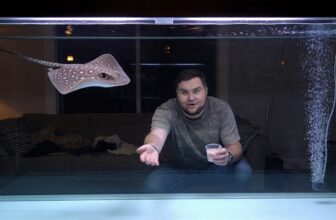
They’ll swarm the glass, fins fluttering, when a familiar human approaches, since they’ve learned food follows that big blobby shape.
It’s associative memory, not affection—think Pavlov’s fish, not man’s best friend.
Still, there’s something charming about a recognition system built entirely on stomach expectations.
They know, sort of, who’s got the goods.
Do Fantail Goldfish Need Light at Night?
They don’t need nighturnal lighting, no. Fish bodies run on rhythms, same as ours, and darkness triggers rest.
Now, here’s the thing about night‑time feeding—skip it. Their digestion slows after dark, and uneaten food rots, so you’re basically inviting ammonia spikes. I mean, who wants that?
Give them 8–12 hours of daytime light, then let the tank go black. They’ll sleep, you’ll save electricity, everybody wins.
Can Fantail Goldfish Live in a Bowl Temporarily?
Now, a temporary habitat works only for emergencies—transport, tank cleaning, maybe a few hours—and even then, they’ll need frequent water changes since bowls lack filtration.
I mean, they won’t die overnight, but ammonia builds fast in small spaces. Ideally, it’s hours, not days.
Better safe than sorry.
Why Do Fantail Goldfish Change Color With Age?
Fantail goldfish change color with age because shifting genetics and diet impact on pigment development. Juveniles often display muted tones—orange, brown, or gray—that intensify or transform as melanin and carotenoid production kicks in, usually after six months.
Diet impact plays a role too: foods rich in beta-carotene boost reds and oranges. Genetics determine whether they’ll go calico, metallic, or stay subtle, and some even develop telescoping eyes, which sellers treat as a rebrand.
Is It Normal for Fantail Goldfish to Sleep Upside Down?
No, it’s not normal—it’s a red flag. Sleep behavior in healthy fantails means resting near bottom, upright, fins gently swaying. Upside-down floating signals buoyancy issues, usually from swim bladder disorder or constipation. They’re built like awkward balloons, after all.
So check:
- Recent diet? Overfeeding’s the usual culprit.
- Water temp stable? Cold snaps stress organs.
- Fins clamped, bloated? Time to fast, then feed peas.
Act fast—they’ll thank you, probably.