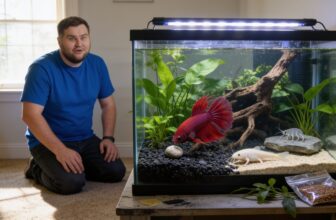
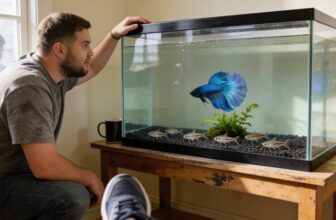
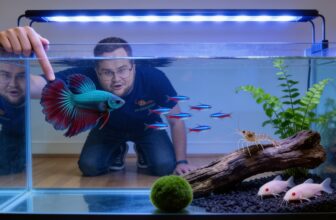
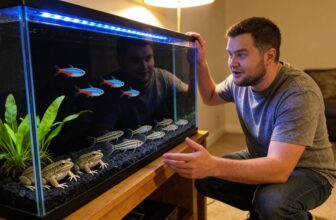
Every 2 sentences of text there is a new line.
You’ll need at least five zebra danios, each about two inches long, to see them swim confidently in a tight group instead of hiding. A ten-gallon tank works, but twenty gallons lets them really move.
Keep the water between 64 and 82 degrees, closer to 76, and change about a quarter weekly. They’ll live two to five years, maybe six, if you skip slow, long-finned tank mates like bettas—those flowing tails look like toys to chase.
Match them with corydoras, small tetras, or honey gouramis instead. Feed tiny flakes twice daily, and you’ll notice them brighten up when you near the glass.
There’s more to know about keeping them healthy and happy.
At A Glance
- Keep five or more Zebra Danios together to ensure confident schooling behavior and vibrant stripe display.
- Minimum ten-gallon tank required; twenty gallons recommended with dark gravel and moderate lighting.
- Maintain 64°F–82°F temperature, 6.5–7.5 pH, and gentle current for optimal health.
- Compatible tank mates include Corydoras, Neon Tetras, and Honey Gouramis; avoid long-finned species.
- Feed twice daily with quality flakes; lifespan reaches 2–5 years, up to 6 years with proper care.
What Is a Zebra Danio and Why Keep One?
What draws your eye to a small fish that darts like a silver arrow through sunlit water?
You notice five bluish-purple stripes, sharp as crayon marks, running from gill to tail on a silver-gold body barely two inches long.
Native to India and Bangladesh, this fish fits your hand like a pebble you’ve carried home.
You find peace watching them, a calm that spreads through your chest like warm soup on tough days.
Current hobbyist trends favor nano tanks, and you’ll appreciate how little space they demand.
Bre care suits beginners and experts alike; they’ll forgive your early mistakes as you learn.
Unlike bettas that require gentle filtration to protect their delicate fins, Zebra Danios thrive with standard flow.
That’s the Zebra Danio.
How Many Zebra Danios Do You Need for a Healthy Shoal?
A single Zebra Danio in your tank looks lost, like one sock without its pair, pressing against the glass, searching for shadows that never arrive.
You need at least five for proper shoal dynamics. They’ll dart together, mirror each other’s moves, and feel safe enough to show their true silver-blue stripes. Color morphs—Leopard spots, long fins, golden albinos—swirl together like confetti when grouped.
| Group Size | Behavior You See |
|---|---|
| 1-2 fish | Hiding, stress, faded colors |
| 3-4 fish | Some schooling, still nervous |
| 5-6 fish | Confident swimming, full stripes |
| 7-10 fish | Tight shoals, playful chasing |
| 12+ fish | Stunning synchronized waves |
More bodies mean bolder fish. You’ll watch them weave through plants as one living ribbon. Zebra danios appreciate tanks with copper‑free plant fertilizers to keep their aquatic environment safe and stimulating.
Tank Size: The Minimum for Active, Stress-Free Fish
Since a Zebra Danio needs room to sprint, you’ll want to picture your tank as a swimming track rather than a bathtub.
You’ll need at least ten gallons for a small group, though twenty gallons gives them real freedom. That’s like moving from a hallway to a backyard.
Think about your substrate options carefully. Dark gravel makes them feel hidden and safe, like wearing comfortable shoes. Sand works too, though they’ll scatter it slightly when they dash.
Your lighting schemes matter more than you’d expect. Moderate light, not too bright, keeps them calm and lets their stripes shimmer without causing stress. Dimmer corners mean happier fish.
For long-term success, consider investing in low-iron glass tanks that provide crystal-clear viewing of these fast-moving fish, as material durability and visibility become increasingly important when housing active species in smaller footprints.
Water Parameters That Keep Zebra Danios Thriving
Your tank’s water is like the air you breathe—you don’t see it, but it touches every part of your fish’s life.
Zebra danios feel safe when gen chemistry stays steady, like a familiar room you know by heart. Keep temperature between 64°F and 82°F, aiming near 76°F where they shine brightest. Test pH weekly, holding 6.5 to 7.5, neither sharp nor flat. Hardness at 8-12 KH gives their bodies strength without strain.
Water flow matters too. These fish come from moving streams, so gentle current lets them play, rest, and feel at home. A spray bar flow distribution system can help create that gentle, rain-like water movement they prefer without causing stressful turbulence.
Plants and Hardscape: Creating Security and Swimming Space
Beneath the glass, your zebra danios need places to dart behind and open lanes to race through, just like you need corners to feel snug and hallways to run wild.
Live plant placement matters deeply. You should cluster Java Fern and Amazon Sword at the back and sides, leaving the center open for their frantic sprints. This mirrors how bushes line a playground fence, making you feel safe while you play tag.
Substrate texture shapes behavior too. Dark gravel, two to three millimeters deep, grounds them visually and encourages bolder movement. It feels steady under their bodies, like a carpet you trust beneath bare feet. For optimal results, choose kiln-dried and triple-washed gravel to ensure stable cycling and clear water from day one.
How Big Do Zebra Danios Get? Size by Gender and Age
Those plants you have tucked into the corners now hold fish who are still growing, and you might wonder how much bigger they’ll get. You have brought home slender swimmers with sharp color markings patterns, and you’ll watch them unfold like a story with pages still unwritten.
- Typical adults reach two to two-and-a-half inches, with rare ones touching three.
- Males stay slimmer and more streamlined; females grow fuller and rounder in the belly.
- Life growth rate is quick at first, slowing after month six when maturity sets their final frame.
You have time, still, to recognize who your fish will become.
Plan for their future by ensuring tank size matches their active nature, as zebra danios thrive in groups of six or more and need adequate swimming space to display their schooling behavior.
How Long Do Zebra Danios Live? Extending Their Lifespan
The small clock ticking inside each fish starts the moment you lift the bag from the pet store counter, and you’ll want to know how many years that ticking will last.
You’ll typically get two to five years, though some stretch toward six. That range is your fish’s lifespan ****(the years it lives), and you can push it higher with care.
Start with space: ten gallons is your floor, not your ceiling. Bigger tanks dilute toxins, and toxins age fish prematurely.
Add environmental enrichment—plants, driftwood, gentle currents—to keep their minds busy. Bored fish stress, and stress steals months.
Check your water weekly. Ammonia burns gills you can’t see.
School them in fives or more. Lonely danios fade faster.
For optimal filtration that keeps ammonia levels low without disturbing their active swimming, consider a QuietFlow filter designed for low-noise operation in community tanks.
What Should You Feed Zebra Danios? Diet Basics and Treats
What does a zebra danio actually want on its plate? You’ll feed these little omnivores twice daily, offering only what they’ll finish in two minutes.
- Quality flakes or tiny pellets form their everyday meal, keeping them healthy between seasonal breeding bursts.
- Frozen treats like bloodworms or brine shrimp give protein boosts, much like snacks fuel your own busy afternoons.
- Occasional live mosquito larvae spark natural hunting instincts, reminding you that good care mirrors a working DIY filtration system—both need steady attention, not overload.
Skip overfeeding; extra food harms water quality and their gentle, darting spirits.
For an alternative protein-rich option, slow-sinking micro-granules with insect-based formulas can enhance color and immune support while reducing waste in your tank.
Are Zebra Danios Peaceful or Aggressive With Tank Mates?
A well-chosen fish friend brings steady calm to your tank, much like a reliable nightlight keeps a bedroom cozy without fuss.
You’ll find Zebra Danios peaceful companions, their bright coloration patterns signaling friendly intent throughout your aquarium.
These active swimmers display curious behavior, darting playfully between plants without bullying neighbors.
Playful explorers of the tank, darting between leaves with gentle curiosity, never troubling their neighbors.
They live happily with Honey Gouramis, Ember Tetras, Corydoras catfish, and Neon Tetras, creating gentle movement in middle and top waters.
You can trust them as “dither fish,” encouraging shy tank mates to emerge from hiding.
Keep them in groups of five or more, and you’ll watch their stripes shimmer as maintaining community harmony.
Maintaining stable water parameters supports their active swimming behavior, similar to how consistent dosing ensures repeatable results in any aquatic environment.
Fin-Nipping: Which Tank Mates to Avoid
Since their quick, darting bodies carry a nipping instinct, you’ll need to pause before adding any fish with flowing, delicate fins.
Your Zebra Danios chase movement, you see, and long fins look like food or toys to them. This creates fin nipping risks that stress your other fish, leaving torn tails and open wounds. Some incompatible species simply don’t belong in their tank.
- Betta fish — their flowing, colorful tails tempt nippers constantly.
- Guppies — especially fancy males with long, trailing fins.
- Angelfish — their tall, graceful fins prove irresistible targets.
You’ll want gentler companions instead. Maintaining stable water parameters with automatic temperature control helps reduce stress-induced aggression in community tanks.
Best Community Fish to Pair With Zebra Danios
Best Tank Mates for Active Communities
Build a bustling underwater neighborhood where active fish thrive in colorful harmony together.
If you pick the right neighbors, your tank becomes a busy street where everyone waves hello.
You want fish that match your danios’ energy without inviting trouble. Corydoras catfish work beautifully—they’re peaceful bottom-dwellers who won’t compete for space. Honey Gouramis add calm color, their rounded fins avoiding the nipping your danios sometimes try. Ember Tetras bring warm orange glows, and Celestial Pearl Danios offer shimmering spots that complement your fish’s stripes.
You’ll notice how color morphs in these species create living art, each hue flowing together. When you observe successful pairings, you’re learning community dynamics useful in breeding techniques later—watching how groups establish harmony teaches patience.
How to Breed Zebra Danios: Spawning Triggers and Fry Care
Spawning Triggers and Fry Care
Pairs form tight bonds, you’ll notice, once you’ve watched your community tank settle into its rhythm. You can encourage spawning by raising the temperature to about 78°F, a key part of breeding cues that signal spring flooding in their native waters.
- Set up a separate breeding tank with gravel or marbles to shield eggs from hungry parents.
- Watch for females growing round with eggs, then introduce your bonded pair at dawn.
- Remove adults immediately after spawning; fry nutrition starts with powdered food and infusoria.
Tiny fry hatch in roughly two days. You’ll feel quiet pride watching them grow.
Common Zebra Danio Diseases: Symptoms and Treatments
Signs and Treatments for Zebra Danios
Even the hardiest swimmers can fall ill when conditions slip, so you’ll want to keep a careful eye on your danios as they dart through the water.
Ich shows up like tiny white grains of salt, clinging to fins and bodies. You’ll spot fish rubbing against gravel, trying to scratch that itch. Raise your tank temperature to 82°F for three days, add aquarium salt at one tablespoon per five gallons, and the parasites can’t reproduce.
Ich looks like salt sprinkles, makes fish itch against gravel—treat with heat and salt to stop the parasites.
Fuzzy cotton patches mean fungal infection. You’ll need antifungal drops from your pet store, following the label exactly.
Disease diagnostics start with watching behavior. Treatment protocols work best when you catch problems early, so check your fish each morning.
Is a Zebra Danio Right for Your Aquarium?
Wet Nets and Second Thoughts
Your net hangs by the tank, still dripping from medicating a sick fish, and now you’re wondering if these striped swimmers fit your life at all.
You’re feeling cautious, and that’s smart.
Before you decide, weigh three things:
- Time for upkeep — these active fish need clean water, which means weekly partial changes of roughly 25%.
- Space for movement — a 10‑gallon tank holds five; anything smaller causes stress you can see in frantic, corner‑hugging behavior.
- Breeding viability — they’re prolific spawners, so you’ll need a plan for fry or separate tanks.
Zebra Danios suit current aquarium trends toward hardy, beginner‑friendly species.
Frequently Asked Questions
Do Zebra Danios Need a Filter and Air Pump?
You’ll need a filter for waste management, though filter necessity depends on tank size and stocking; aeration options include air pumps or filter outflow since these active swimmers don’t require extra bubbling if surface movement suffices.
Can Zebra Danios Live in a Bowl Without a Heater?
You can’t keep zebra danios in a bowl; they’ll suffer without proper space and stable conditions. If bowl temperature stays between 64°F–82°F, they’ll survive, but heater alternatives like room heating won’t guarantee the consistent warmth they need to thrive.
Do Zebra Danios Sleep, and Do They Need Darkness?
Yes, they sleep, and you’ll want to give them darkness. Their sleep cycles require rest periods, so you’ll manage light dependence by turning lights off nightly—without it, you’ll stress them and disrupt health.
Why Do My Zebra Danios Keep Jumping Out of the Tank?
Your zebra danios jump when stress stress overwhelms them—poor water quality, aggressive tankmates, or excessive water flow all trigger escape attempts. You’ll reduce jumping by calming the environment, checking parameters, and lowering that current.
Can Zebra Danios Change Color or Lose Their Stripes?
Yes, your zebra danios can lose or fade their stripes because of stress bleaching from poor water conditions, aggression, or illness. Their genetics determine baseline coloration, but environmental factors directly trigger dramatic temporary changes you’ll notice quickly.
Rounding Up
Those five blue-black stripes will flash through your tank for years if you give these fish clean water, open swimming room, and six or more friends. You’ve learned what makes Zebra Danios tick: their need for speed, their peaceable nature, their hardiness across temperatures from 65 to 77 degrees Fahrenheit. Trust your own judgment now. If you want constant motion without constant fuss, you’ll find honest satisfaction here. The fish won’t disappoint you.