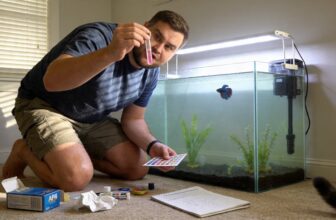
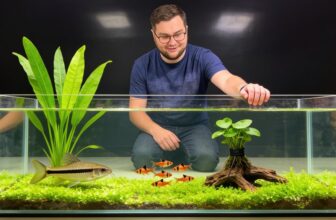
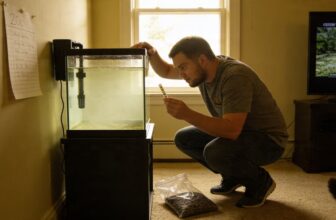
You hold a small, wrinkled leaf in your palm, its dark green ridges like folded ribbon, and you wonder why this humble plant survives when others wilt. Java fern asks so little—light gentle enough to read by, water between 68 and 82 degrees Fahrenheit, a place to rest its rhizome against rock or wood without burying it in sand. Rhizome means root-stem, that thick horizontal base where new life pushes outward. You feel calm watching something grow slowly, steadily, without demand. But the real trick comes later, when brown spots on dying leaves transform into babies you can place elsewhere. That part is strange, almost like the plant whispers secrets you haven’t learned yet. You’ll want to know how.
At A Glance
- Anchor Java Fern to lava rock or driftwood, keeping the rhizome exposed above substrate to prevent rot.
- Grow in low-moderate light (1.5 W/g, 5000-7500K) and shade to avoid algae and leaf melt.
- Propagate via leaf spots that develop into plantlets or by dividing healthy rhizome sections.
- Maintain 68-82°F temperature, 6.0-7.5 pH, and 2-15 dKH hardness for optimal growth.
- Trim damaged leaves at the base and perform regular water changes to prevent nutrient buildup.
What Makes Java Fern the Perfect Beginner Plant?
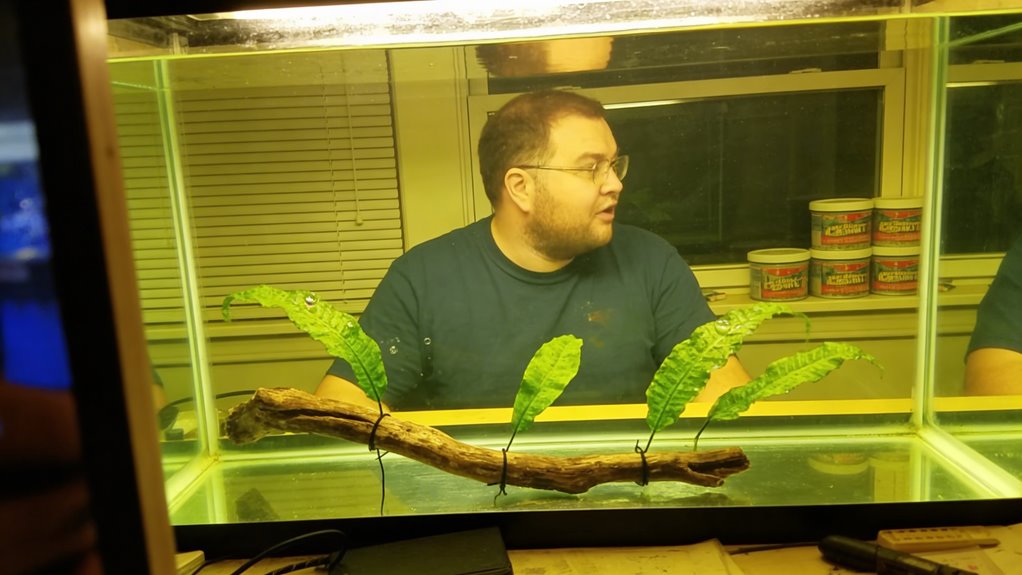
When you stand before your first empty aquarium, that glass box waiting on your counter, the Java Fern sits ready like a patient friend who asks for almost nothing.
You don’t need special soil or expensive lights.
This plant anchors to rocks or driftwood, drinking nutrients through its leaves, not roots you might bury wrong.
Its slow, budgetient growth means you won’t watch it overrun your tank overnight.
You’ll find calm in its steady green spread, six to eight inches across, up to thirteen inches tall.
Water-hardness tolerance lets it forgive your tap water, thriving from 2 to 15 dKH.
You belong here.
How to Tell If Your Java Fern Is Healthy or Dying
The patience you brought to your first planting now meets its reward, or its warning.
Notice your fern’s leaf color first. Deep green means you’re doing right. Yellowing edges or brown spreading patches signal leaf discoloration, often from too much light or missing nutrients. Lift the rhizome gently. It should feel firm, almost like a green finger. Mushy brown means root rot, and that spreads fast if the rhizome sits buried in gravel.
| What You See | What You Feel |
|---|---|
| Bright green, waxy leaves | Pride, calm, belonging |
| Spotted brown with black veins | Curiosity, hope, patience |
| Yellow, slimy, falling apart | Worry, urgency, care |
Trim damaged leaves near the base. You’re learning together.
Best Tank Size and Water Parameters for Java Fern
A ten-gallon glass box marks your starting line, though you’ll find more room to breathe with twenty or thirty gallons when your fern spreads its wings.
You want water between 68 and 82 degrees, with the sweet spot sitting near 75.
pH stays happy from 6.0 to 7.5, and hardness can wander from 2 to 15 dKH without worry.
Java ferns forgive soilimate fluctuations better than most plants, which makes you feel capable, even when life gets busy.
You won’t need soil at all, since substrate alternatives like lava rock or driftwood hold your fern’s rhizome tight.
The plant drinks through its leaves, not its feet.
Where Should You Place Java Fern?
Once your water is steady and your tank sits ready, you face a quieter question: where does this leafy green thing actually belong?
You want your Java Fern to feel at home, so you choose spots where it can anchor without being buried. Think of the rhizome—that knobby green stem—as its hands, gripping rough surfaces like lava rock or driftwood. You tuck it into crevices, letting leaves fan outward like a small umbrella.
Co placement matters here. You nestle it beside other plants, creating layers of tank décor that feel like a neighborhood, not a crowd.
You keep it away from bright, direct light, which burns its leaves like too much sun on pale skin. Instead, you seek the gentle shadows, the in-between spaces where fish dart and rest.
You feel satisfied when you find that right corner, that perfect balance. Your fern belongs there, and so do you.
How to Attach Java Fern to Hardscape
Secure the rhizome— that sturdy green stem— and you’re halfway home.
You welcome Java Fern into your tank family by matching hardscape textures to its needs. Choose lava rock, driftwood, or mineral slabs with rough, grainy surfaces the stem can grip.
Spread your attachment methods like tools on a workbench. Try fishing wire, soft rubber bands, or small zip ties. Wrap gently around the rhizome and rock, tight enough to hold, loose enough to let it breathe.
Wait three to four weeks. You’ll feel patience rewarded when you spot tiny root fingers clinging on their own. Then snip the ties free.
You’ve given your plant a forever home.
Why Burying the Rhizome Kills Your Plant
You’ve settled the rhizome, that thick green stem, onto its rough new home.
Now you’re tempted to tuck it into gravel, thinking roots want darkness. But Java Fern doesn’t anchor through soilod nutrient uptake. Instead, it pulls food through its leaves, like hands reaching up for rain. Substrate anchoring traps the rhizome, suffocating it slowly.
- You’re joining a community that learns from loss
- Each mistake teaches patience, yours and ours
- Growth happens in open air, not hidden places
- We share what we’ve buried, so you don’t
- Belonging means knowing when to let things rest exposed
Leave that green stem visible. You’re one of us now.
What Lighting Prevents Algae and Melting?
How does a plant tell you it’s had too much sun?
Your Java Fern turns pale, then transparent, then melts into goo. You’ve pushed the LED intensity too high, friend.
Push your LEDs too hard and your Java Fern will melt into a pale, transparent puddle before your eyes.
Keep your light low to moderate, about 1.5 watts per gallon, in the 5,000-7,500 Kelvin range. That’s warm, not harsh, like morning light through kitchen curtains.
Algae control starts here. Bright light feeds algae faster than your fern can eat. You want balance, not a race.
Watch your plant’s color. Deep green means you’ve found the sweet spot, and you’re both at home.
How to Trim Java Fern Without Killing It
Pair of scissors in your hand now, and you’re looking at that bushy green clump wondering where to cut.
You’re part of something here, this underwater world you’ve built.
Master leafutrient timing—trim when growth slows, usually once yearly in late spring.
Your clean blade, your steady hand, these matter.
- Cut dead leaves at the rhizome, that long stem anchoring everything
- Skip leaves with dark green veins, they’re still working hard
- Learn leaf spot identification—brown with dark edges means dying, black dots often mean babies coming
- Leave yellowing leaves until they loosen on their own
- Rinse cuttings in tank water, not tap, before composting
You’ve got this.
How to Propagate Java Fern From Leaf Spots
Look at the undersides of your Java Fern’s leaves, and you’ll notice tiny dark bumps forming in neat rows—these are plantlets waiting to hatch, not damage to worry over.
| Leaf Spot Timing | What You’ll See |
|---|---|
| Week 1-2 | Tiny brown dots appear, barely raised |
| Week 3-4 | Bumps darken, miniature leaves emerge |
| Week 5-6 | Root threads dangle like fine hairs |
| Week 7-8 | Plantlets reach ½ inch, ready to release |
| Harvest Day | Snip with clean scissors, attach to rock |
Leaf identification takes patience. You’ll learn to spot the difference between baby plants and dying tissue. The brown stays contained in rows when it’s reproduction spreading. Wait until roots reach half an inch before harvesting, or the plantlet starves without its leaf lifeline. You’ve got this.
Can You Split Java Fern Rhizomes? (Faster but Riskier)
You can speed things up by cutting the rhizome itself, though you’re trading patience for a gamble.
Rhizome division demands a steady hand. You’ll slice the thick, green stem where leaves sprout, making each piece carries roots and foliage. Use clean scissors or a sharp blade rinsed in peroxide. Attach both halves to lava rock with rubber bands, then wait two to four weeks for healing. Propagation risk lives here—infection, rot, or stunted recovery threaten your division.
- Use scissors wiped with alcohol, not tap water alone
- Cut only mature rhizomes wider than your thumb
- Leave at least two leaves on each section
- Secure cuttings loosely so air reaches wounds
- Watch for brown mush at cuts, your signal to trim again
Trust the slower method if your heart sinks seeing damage. You’re learning alongside generations of aquarists who’ve lost cuttings, too.
Which Fish Are Safe With Java Fern?
Wondering which fish won’t turn your Java Fern into lunch feels like a real concern, especially after you’ve spent time tying those fuzzy rhizomes to driftwood with such care.
You’re building a compatible community, and Java Fern’s tough, leather-like leaves protect it from most nibblers.
| Fish Type | Benefit to Your Tank | Java Fern Interaction |
|---|---|---|
| Tetras, Guppies | Safe companions, gentle movement | Hide among leaves, aid algae control |
| Corydoras, Loaches | Bottom cleaners, peaceful neighbors | Ignore plant, focus on substrate |
| Snails, Shrimp | Tiny allies, detailed workers | Assist in leaf spot harvesting |
Even Oscar fish and goldfish rarely destroy established plants. Give new transplants two weeks to anchor before adding boisterous tank mates, and you’ll feel the quiet pride of a thriving, balanced home.
Frequently Asked Questions
Does Java Fern Need CO2 Injection?
You don’t need CO₂ injection for Java Fern, though it can help. This plant thrives with low to moderate lighting intensity, around 1.5 watts per gallon. It pulls nutrients through its leaves, making extra CO₂ optional, not indispensable. You’ll see steady, slow growth without it. Focus on stable water parameters and gentle attachment to rocks or wood, and your Java Fern will flourish for years.
Can Java Fern Grow Emersed Above Water?
You absolutely can grow it emersed above water, and many growers prefer this method for lush, rapid growth. The plant’s natural habitat includes stream banks and waterfall edges, so emersed growth feels like home to it. You’ll notice leaf buoyancy changes when submerged versus aerial, but the rhizome adjusts quickly. Keep humidity high, mist regularly, and watch the thick, green leaves multiply faster than underwater. It’s forgiving, steady, and thrives with simple attention.
Why Are My Java Fern Leaves Transparent?
Your transparent leaves signal a nutrient deficiency, often iron or nitrogen, which causes leaf discoloration and cell collapse. You’re seeing the plant’s food supply run low, like when you feel weak skipping meals. Check your water parameters, guarantee you’re dosing liquid fertilizer, and verify your lighting sits at that low-to-moderate range, about 1.5 watts per gallon. Java ferns absorb nutrients through their leaves, so they’re telling you they’re hungry.
How Long Until Java Fern Attaches on Its Own?
Your Java Fern will complete root attachment in three to four weeks, sometimes stretching to eight weeks if your growth rate stays slow. You’ll notice tiny, fuzzy anchors gripping the rock or wood first, then spreading. Don’t rush it. The plant needs patience, just like you do when learning something new. Keep water stable, and those rhizomes will hold tight without your help.
Is Java Fern Safe for a Betta Fish Tank?
You’ll find Java ferns offer excellent aquarium compatibility for betta habitats. These plants create gentle, shaded hiding spots that calm your fish, reducing stress and encouraging natural behavior. For tank aesthetics, their broad, leafy fronds form perfect resting platforms near the surface where your betta can lounge. The plant’s slow growth and minimal care needs mean you’re building a stable home together, sharing space without demanding constant attention.
Rounding Up
Java fern asks little and gives much. You’ve learned to read its leaves, anchor its rhizome, and wait for those tiny brown bumps to become new plants. That patience, three to four weeks of watching, builds trust between you and your tank. Keep the rhizome free, the light gentle, and your hands slow when trimming. Your fish will weave through those green fronds, and you’ll feel calm, proud, connected to something growing.