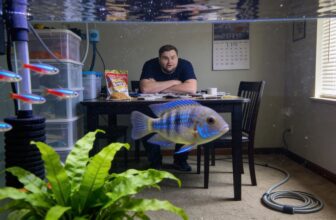
You stand before a glass aquarium, 100 gallons minimum for one fish, 180 for a pair, and you feel the weight of that water pressing against your plans. The Jaguar Cichlid does not forgive small spaces. Its jagged black spots mirror the jungle cat, bold and restless, and you sense this fish will test you. Proper filtration, hard water at 10–15 dGH, smooth rocks for digging—these are not suggestions. They are doors you must *open* before the fish arrives. You wonder if you are ready. The answer waits in what you do next.
At A Glance
- Jaguar Cichlids reach 14–16 inches and live up to 15 years with proper care.
- Minimum 70 gallons required; 100–125 gallons recommended for adult comfort.
- Need hard water (10–15 dGH), pH 7.0–8.7, and temperatures of 73–82°F.
- Extremely aggressive temperament demands solitary housing or 180-gallon breeding pairs.
- Require soft sand substrate, smooth caves, and strong filtration doubling tank volume.
Jaguar Cichlid Facts: Size, Lifespan, and Temperament (Read This First)
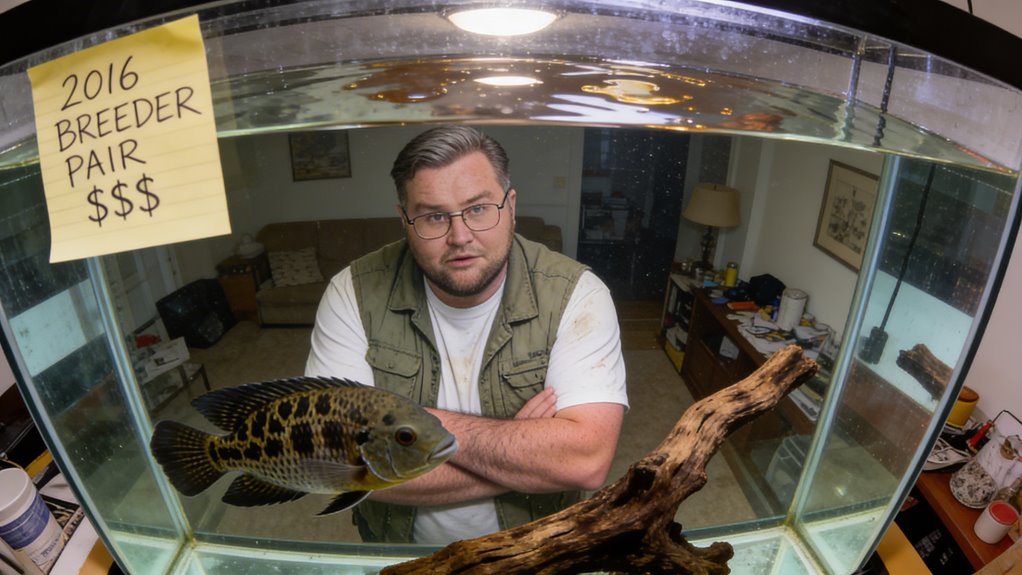
Why would a fish need the name of a jungle cat?
You see the answer when your Jaguar Cichlid grows up. Those black spots on gold, that powerful jaw—they mirror the big cat’s power.
This fish, *Parachromis managuensis*, lives fifteen years if you care well. Adults reach fourteen to sixteen inches, sometimes two feet in their wild home. Males grow larger, with longer fins and bigger heads.
Their breeding behavior demands space. A pair needs 180 gallons minimum. They’re very aggressive, especially when spawning. You’ll feel proud keeping such a creature, but don’t start here if you’re new.
How They Compare: Jaguar Cichlid vs Oscar, Green Terror, and Red Devil
A fifty-five-gallon tank, the kind you carried home from the pet store last summer, shrinks small when these fish finish growing.
You’ll notice bre behavior trends differ among these four cichlids.
The Oscar stays friendlier, following your hand like a puppy, as the Green Terror flashes emerald aggression earlier.
Red Devils develop mean streaks fastest, often attacking decorations.
Jaguars hold middle ground—watchful, calculating, patient before striking.
Breeding genetics separate them further.
Jaguars form tighter pair bonds, working together to guard fry, as Oscars and Red Devils scatter eggs more carelessly.
Green Terrors fall between, sometimes abandoning nests to stress.
You belong here when you respect these differences.
Minimum and Optimal Tank Sizes for Jaguar Cichlids
Before you bring home that spotted fry swimming in the store tank, you’ll need to know exactly how much water this fish will command as it grows.
That tiny fish becomes a sixteen-inch adult, sometimes two feet in the wild, so you’ll start with seventy gallons minimum for one Jaguar Cichlid.
You’ll feel more confident with one hundred to twenty-five gallons, giving your fish room to swim, dig, and claim territory without constant stress.
If you’re exploring breeding genetics, you’ll need one hundred eighty gallons for a pair, because two adults sharing space triggers aggression you must manage carefully.
You’ll find bre design options open up with larger tanks, letting you place rocks, caves, and driftwood around the edges while keeping the center open for movement.
You’ll avoid the thirty-gallon starter trap some sellers suggest, knowing that’s only a brief holding space for juveniles under six months old.
You’ll choose size first, then build your community, because cramped Jaguars become bullies, and you’ll want peace in your living room water world.
Water Parameters That Keep Jaguar Cichlids Healthy
Since these fish evolved in warm, hard lakes, you’ll need to match their home water exactly, or their bodies will struggle like you’d struggle breathing thin mountain air.
Evolved for warm, hard lakes—these fish need water as exact as mountain air is thin, or their bodies simply struggle.
You’ll keep the thermometer steady between 73 and 82 degrees Fahrenheit, with 75 to 77 feeling just right.
Water hardness matters more than you’d guess. Aim for 10 to 15 dGH, the dissolved minerals that let their gills work properly. Too soft, and their bodies can’t balance themselves.
pH stability saves lives. Keep it between 7.0 and 8.7, targeting 7.7. Sudden swings shock their systems, so test weekly.
Your fish trust you to hold these numbers steady.
Best Substrate, Rocks, and Caves for Digging Jaguar Cichlids
Once your water tests read steady, you’ll turn your hands to the bottom of the tank, where these fish really live.
Jaguar cichlids dig, that’s what they do, so you need soft substrate texture, thick sand three inches deep, not gravel that cuts their mouths or gets swallowed.
Cave placement matters too, you’ll put rocks and caves around the edges, leaving the middle open for swimming, since they need territory to claim and feel safe.
| What You Need | Why It Helps |
|---|---|
| Soft sand, 3 inches | Protects their mouths, lets them dig naturally |
| Smooth river rocks | Creates caves without sharp edges that hurt |
| PVC pipes or clay pots | Cheap caves they can hide inside |
| Edge placement only | Keeps center open, reduces fighting |
You’re building them a home where they belong.
Filtration That Handles Jaguar Cichlid Waste and Mess
Why does your tank still look cloudy two days after you cleaned it? Your Jaguar Cichlid produces heavy waste, and weak filtration cannot keep pace. You need robust cober filtration, meaning a canister system rated for double your tank’s volume, pushing 500 gallons per hour through a 75-gallon setup. Choose your bio-media selection carefully: ceramic rings and sintered glass provide homes for bacteria that eat ammonia, the invisible poison that burns your fish’s gills. Clean mechanical sponges monthly, but never tap water—chlorine kills your bacterial colony. Your patience builds a healthy home where your fierce companion thrives, calm and seen.
High-Protein Foods Jaguar Cichlids Will Actually Eat
What does your Jaguar Cichlid see when it looks at a flake of food drifting down?
Chances are, not much of a meal. These fish need meat, plain and simple.
You’ll want a food diet enrichment plan that starts with high-protein pellets, ones made for large cichlids with 40% protein or more. Add frozen brine shrimp, bloodworms, and the occasional cricket. Live foods wake up their hunting instincts—think of it like giving a cat a toy mouse instead of kibble.
Your feeding schedule should land at twice daily, morning and evening. Portion small, watch them eat, then stop. Overfeeding fouls the water fast. You’re building trust here, one bite at a time.
Tank Mate Risks: When Jaguar Cichlid Aggression Wins
The glass wall you press your nose against can trick you into thinking you know what lives inside.
The glass promises understanding, but distance distorts every living thing behind it.
You introduce a companion fish. Bre aggression wakes up. Your tank size shrinks in the Jaguar’s mind. Borders tighten.
You watch the wrapper, that beautiful predator you chose, patrol its shrinking kingdom. Fins tear. Colors fade in the victim you hoped would belong.
You feel regret. You should have known.
Tank size cannot cure instinct. Seventy gallons becomes a closet when territory ignites.
You learn: some beauties live alone. You accept this. You protect what works.
How to Sex and Breed Jaguar Cichlid Pairs
Look at the fish long enough, and you’ll notice small differences that matter.
Males grow larger, reaching sixteen inches, with longer dorsal and anal fins that trail like ribbons. Their heads look blockier, jaws heavier. Females stay smaller, rounder, fins shorter. You’ll spot this by age six months if you’re patient.
Your breeding setup needs one hundred eighty gallons minimum, flat rocks for egg-laying, and territory boundaries they can defend together. Water stays warm, seventy-five to seventy-seven degrees, clean and steady.
They’ll lay hundreds of eggs. Both parents guard them fiercely.
Fry development moves fast—free-swimming in five days, eating baby brine shrimp by day seven. You’re watching life begin.
Health Problems in Jaguar Cichlids and Prevention Tips
A water test kit sits on your counter, and you’ll need it every single week since these fish don’t show sickness until it’s already serious. You’re part of a community that keeps these beauties thriving, so stick to these basics:
- Disease prevention starts with quarantining new fish for two weeks, keeping nitrates below 20 ppm, and feeding varied protein.
- Stress reduction means stable water at 75-77°F, caves for hiding, and never overcrowding their space.
- Watch for white spots (ich) or torn fins, and treat early with Metronidazole.
Your vigilance keeps your fish family whole.
Keeping Jaguar Cichlids Healthy Through 15+ Years
You’ve already built habits that stop sickness before it starts, and that’s the foundation for what comes next.
A mature Jaguar Cichlid, fourteen inches of spotted muscle, needs your steady hand for fifteen years or more. Think of aquarium lighting like morning sun through a window: twelve hours daily, not too bright, lets your fish sense proper time. You rotate foods, watch fins for tears, test water weekly. When you study breeding techniques—stone cleaning, temperature nudges—you join a quiet fellowship of caretakers who outlast quick hobbies. Your patience builds trust. The fish knows you.
Jaguar Cichlid Readiness: Final Checklist Before You Buy
Before you lift that bag from the pet store shelf, run your eyes down a checklist you wrote yourself, maybe last Tuesday with coffee cooling on the desk.
This fish needs space to become itself.
- bre tank setup: You have 125 gallons ready, filtration strong enough for a small river, sand soft enough for digging jaws.
- breeding timeline: You’ve mapped 12–18 months before pairing attempts, time to let juveniles grow into their confidence.
- Emergency plan: You know which vet answers midnight calls, which friend holds your spare heater.
You’re not buying a decoration.
You’re committing to witness a life, fifteen years of watching spots darken into jaguars.
Frequently Asked Questions
Can Jaguar Cichlids Recognize Their Owners?
Yes, your Jaguar Cichlid can recognize you. Owner recognition builds through daily owner interaction, especially around feeding time when visual memory links your face with food. Feeding response strengthens as scent learning kicks in, your hands carrying food smells. Bonding cues emerge slowly—you’ll notice less stress signals, like frantic darting, as environmental awareness grows. Their territorial behavior softens toward you, though social hierarchy stays fierce with tankmates. Patient, you feel quietly seen.
Do Jaguar Cichlids Need Tank Lighting Schedules?
Yes, you’ll want a steady lighting photoperiod, roughly 8–10 hours daily, to keep your Jaguar Cichlid’s rhythm calm and steady.
Moderate phot intensity suits them fine, nothing harsh, since they naturally lurk in shaded Nicaraguan waters. You’ll balance this with your filtration media cleaning, done gently, so you don’t crash the good bacteria. Think of substrate cycling like tending garden soil, keeping the tank’s hidden world healthy. Simple, right?
Are Jaguar Cichlids Legal in All US States?
No, they aren’t legal everywhere.
You’ll need to check your state’s rules, since some places ban *Parachromis managuensis* as an invasive species. State enforcement regulations vary widely—Florida, for example, restricts them because they could harm local waters. Regional permits might be required where ownership is allowed, but restricted. Call your local fish and wildlife office before you buy, so you don’t face fines or confiscation later.
How Often Should I Rearrange Tank Decorations?
You shouldn’t rearrange decorations often, as this stresses your fish and disrupts their established territory.
Do it only during substrate cleaning, which you perform every two weeks, or when plant pruning becomes necessary. Your Jaguar Cichlid digs and claims spaces, so sudden changes spark anxiety and aggression. When you must move items, change just one corner at a time. This keeps your fish feeling safe, like keeping your own bedroom familiar after a long day.
Can Jaguar Cichlids Jump Out of Open Tanks?
Yes, your Jaguar cichlid can jump, and the escape risk grows when you feed at the surface or during sudden frights. Their jumping behavior comes from hunting instincts in the wild, where they chase prey upward. You’ll want a tight-fitting lid, leaving no gaps wider than half an inch. Check clips weekly, since a determined fish pushes hard. Better safe than soggy carpet.
Rounding Up
A 100‑gallon tank, soft sand, and steady 75‑77 °F water form the foundation you’ll need. You’ll feed high‑protein meals, watch for ich, and respect their fierce territorial nature, which mirrors how we all need safe boundaries to thrive. With patience and care, your jaguar cichlid companion may brighten your home for 15 years. Check your setup twice, then welcome this living artwork into your life.