The ProStar Rimless 200-gallon runs $4,000 with low-iron glass and adjustable legs, but you’ll drop another grand on lights and plumbing.
Standard braced tanks cut that to $1,200–$1,500 if you’re handy with DIY.
You’ll need a steel X-braced stand rated for 1,100+ pounds, and yeah, your floor matters—1,600 pounds of water tests joists you didn’t know you had.
Glass beats acrylic for clarity and scratches; acrylic fights earthquakes better.
Either way, dual canister filters and split heaters (600–1,000 watts total) keep things alive.
Skip the structural check, lose your security deposit—fun stuff.
Annual juice hits $600–$1,200, long-term substrates like granite last decades, painted gravel dies in three years.
Quarantine everything two weeks minimum, or you’re buying $500 fish twice.
Worth it? If you’ve got the floor, the patience, and the wallet.
The numbers—and the headaches—get bigger from here.
At A Glance
- Rimless glass tanks cost $2,000–$3,500 but require steel-frame stands rated for ≥1,100 lb and possible floor reinforcement.
- Tempered glass offers clarity and permanence, while acrylic costs 30 % more but resists impacts and earthquakes.
- Stock 10–20 fish using the one-inch-per-two-gallons rule, with mandatory 4–6 week cycling before adding sensitive species.
- Install dual canister filters, dual heaters, and plan 20–30 gallon water changes biweekly for stable chemistry.
- Project 10-year costs of $8,000–$15,000 including electricity, replacements, and salt or plant supplies.
Is a 200 Gallon Tank Worth the Cost? (Full Price Breakdown)
If you’re seriously eyeing a 200‑gallon tank, you’re probably wondering whether your wallet will survive the experience.
Here’s the straight answer: it’s pricey, but you’re buying a centerpiece, not just a box of water. Tank aesthetics matter—you’re showing this beast off. Rimless glass runs $2,000–$3,500 all‑in, but standard braced tanks dip closer to $1,200. Lighting options? Budget $300–$800 for LEDs that actually grow plants (photosynthesis, basically). Skip the bargain‑bin fixtures; you’ll replace them twice. To support the weight, choose a stand with steel‑frame X‑bracing rated for at least 1,100 lb.
Worth it? If you crave that community‑tank swagger, absolutely. Your living room becomes the hangout spot. Just brace your budget first.
Will Your Floor Hold 1,600 Pounds? Space and Load Requirements
Once you’ve accepted the sticker shock, you’ve got a bigger problem—literally. A full 200‑gallon tank hits 1,600 pounds—that’s a small car parked in your living room.
Most residential floors handle 40 pounds per square foot, but you’re pushing limits here. Grab a structural assessment before you buy. Seriously, call a pro—it beats explaining to your landlord why your aquarium’s now in the basement.
Need floor reinforcement? Budget $500–$2,000 for joist sistering or a load‑bearing wall adjustment. Skip this step, and you’re joining the “my tank ate my security deposit” club. Welcome, friend.
For a tank this heavy, proper distribution of weight is critical for structural integrity.
Glass vs. Acrylic: Which Survives 200 Gallons?
Acrylic scratches if you sneeze too hard, but glass cracks if you look at it wrong—so pick your poison.
You want glass durability? Tempered glass laughs at 200 gallons of water pressure, staying crystal clear for decades. It won’t yellow, and you can scrape algae without crying. But it’s heavy—300 pounds empty—and one bad bump during your buddy’s “helpful” move, and you’ve got a flooded living room.
Tempered glass laughs at pressure, stays clear for decades—but 300 pounds of “oops” floods your living room.
Acrylic impact resistance saves you here. It flexes, it forgives, it travels lighter. But you’ll polish scratches monthly, and your wallet feels it—acrylic costs 30% more upfront.
Glass wins for permanence. Acrylic wins for peace of mind during earthquakes or toddler attacks. Either way, ensure your tank sits on a stand with a 1,100 lb weight capacity to handle the massive water volume safely. Choose your battle scars.
ProStar Rimless Review: Is This $4,000 Tank Worth It?
Glass might survive the bumps, but you’re still staring at chunky black frames and dated trim—so you’re eyeing the ProStar Rimless, that sleek $4,000 package promising museum‑grade views and a turnkey setup.
Verdict: You’re paying for convenience, not perfection.
The tank design design delivers—rimless low‑iron glass, internal overflow, adjustable‑leg stand in black or white. It’s tall, though, so water changes become arm‑day at the gym. Lighting options? Not included, buddy—that’s extra. Plumbing may need swapping within months, and escape artists like snails? Forget it. For comparison, many smaller tanks use low‑iron glass to achieve 91% light transmission with reduced color distortion.
Bottom line: If you’ve got the cash and crave that clean aesthetic, you’ll fit right in with the rimless crowd. Otherwise, build your own and save a grand.
What Fits in 200 Gallons? The Stocking Formula That Works
Before you start tossing fish into a tank the size of a small sofa, let’s talk about the math that keeps you from turning that water into a toilet.
You’re working with roughly 200 gallons—give or take by brand—and you’ve got to account for lighting filtration needs before a single fin hits the water. Skip the step, you’ll fight algae control wars you can’t win.
Follow the one-inch-per-two-gallons rule: ten adult fish, maybe twenty if they’re modest. That’s your ceiling. Period.
Overstock, and you’ll join the club nobody wants—weekly water changes, sick fish, regret.
Don’t be that person.
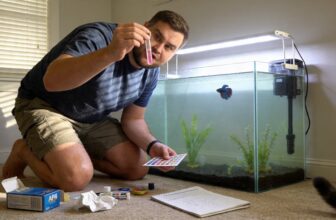
Regularly testing your water with lab-accurate test kits ensures you catch dangerous ammonia spikes before they harm your stock.
Best Freshwater Fish for 200 Gallon Tanks
Three freshwater giants stand out when you’ve got this much water to work with, and choosing between them comes down to whether you want drama, personality, or something that looks like it swam out of a dinosaur documentary.
Frontosa Cichlids deliver vertical stripes and colony living—think synchronized swimmers with attitude. Fire Red Eels slither through driftwood like living lava lamps, weird and wonderful. Clown Knife Fish? They’re your prehistoric option, hunting at night, growing to two feet.
You’ll need patience during aquarium cycling—beneficial bacteria build over 4–6 weeks, converting toxic ammonia to safer nitrates. Stable water chemistry matters here, large tanks can still suffer from ammonia spikes if filtration is inadequate and testing is skipped.
You’ll need patience during aquarium cycling—beneficial bacteria build over 4–6 weeks, converting toxic ammonia to safer nitrates. Stable water chemistry matters here, big tanks forgive small mistakes, but not lazy ones.
Saltwater Options for 200 Gallons (Minus the Reef Traps)
Since a full reef tank can drain your wallet faster than a teenager with a stolen credit card, going fish‑only with live rock (FOWLR, for those keeping score) lets you skip the coral mortgage and still keep animals that look like they belong in a National Geographic spread.
Your 200 gallons houses yellow tangs, foxface rabbitfish, and schooling cardinals—fish with personality, minus the fragility of coral.
You’ll need marine lighting, but nothing crazy—standard LEDs work fine without the coral‑intensity rigs.
Algae control stays manageable with protein skimmers, water changes, and maybe a cleanup crew of snails (if your tank allows).
Join the club: stunning saltwater, reasonable budget.
For these setups, a bulk salt mix like Instant Ocean Reef Crystals can provide consistent, clean chemistry without the premium coral-specific additives.
Pick Substrate, Plants, and Hardscape That Last 10+ Years
If you’re gonna drop serious cash on a 200‑gallon tank, you might as well build it to outlast your mortgage—because ripping everything out in year five is the kind of regret that keeps you up at night, staring at cloudy water and wondering where it all went wrong.
Pick long term substrate like gravel or sand, not the cheap stuff that crumbles, and choose durable hardscape—real rock, not resin castles that fade. To prevent early cloudiness, choose a natural stone like the aqua natural midnight pearl, which supports stable cycling and prevents cloudy tank syndrome after proper rinsing.
| Element | Material Type | Lifespan |
|---|---|---|
| Substrate | Gravel/Pool Filter Sand | 15+ years |
| Hardscape | Granite, Slate, Driftwood | 20+ years |
| Plants | Java Fern, Anubias, Moss | Decades with care |
| Wood Decor | Mopani, Malaysian Driftwood | 10–15 years |
| Avoid | Painted gravel, Plastic plants | 2–3 years, tops |
You’ll thank yourself later. Seriously.
Quarantine New Fish Before They Destroy Your Tank
You’ve locked down the bones of a tank that’ll outlive your patience for home improvement shows, but even the toughest substrate won’t save you from one rookie mistake—dumping new fish straight into your display like you’re tossing fries at a seagull.
Quarantine timing matters. You need 2–4 weeks in a separate tank, bare bones, heater and filter running. Disease prevention isn’t paranoia—it’s insurance. One ich outbreak wipes out your $200 Regal Angelfish and your street cred.
Watch for white spots, clamped fins, weird swimming. Treat what you see, wait what you don’t. Your main tank stays pristine, your fish club stays impressed.
Bottom line: quarantine or regret it.
For effective isolation, use a setup with crystal‑clear plastic walls for easy monitoring of sick fish without added stress.
200 Gallon Water Changes: Easier Than You Think
Water changes on a 200‑gallon tank sound like a back‑breaking chore, but they’re actually the lazy aquarist’s secret weapon—less frequent, more stable, and weirdly satisfying once you stop overthinking them.
You’re swapping 20–30 gallons every two weeks, not the whole shebang. That volume buffers ammonia spikes, keeps DIY filtration humming with minimal fuss, and starves algae before it throws a green party across your glass.
Models like the GADFISH offer a 50‑ft hose and a two‑valve system for silent, spill‑free operation, making long‑distance setups easy.
Use a Python hose, drain, refill, done—thirty minutes, tops. The rest of the week? You just watch fish glide like you planned this all along, you humble genius.
Filter and Heating Setup for Stable Water Parameters
Since a 200‑gallon tank holds enough water to fill a small hot tub, your filter and heater aren’t just accessories—they’re the difference between a thriving ecosystem and an expensive mistake you’ll explain to your spouse.
Filter redundancy saves you when one pump clogs at 2 a.m. Run two canisters, or a sump plus backup. Heater placement matters—warm water rises, so position units near return flow, mid‑tank, not buried in substrate. Aim for 3–5 watts per gallon; you’ll need 600–1000 watts total, split between two heaters. Trust me, redundancy isn’t paranoia, it’s insurance.
| Setup Choice | Why It Works |
|---|---|
| Dual canister filters | Backup when one fails, double juice |
| Two heaters, opposite ends | Even heat, no cold pockets |
| Sump + return pump | Massive filtration, hides gear |
Check temps daily. Stable water means happy fish, and you sleep sound.
200 Gallon Mistakes That Kill $500 Fish in the First Month
How exactly does a fish that costs more than your monthly car payment end up belly-up before you’ve even memorized its Latin name?
You’re rushing the cycle. That budget tank bargain feels smart until your nitrites spike, and suddenly your Regal Angelfish is doing the back-float waltz.
You skip the quarantine, dump everyone in together—classic rookie herd mentality, desperate to belong to the “fully stocked” club overnight. Then you blast lights 14 hours daily, ignore your lighting schedule, wonder why algae control becomes your second job, and forget plant pruning until your Java moss chokes everything.
Your $500 fish deserves better than your learning curve.
Best Places to Buy (And Brands to Avoid)
Where exactly should you drop a few grand without getting burned? You want a place that won’t ghost you when your filtration pump dies at 2 AM.
Skip the random budget tank off Amazon—you’ll join Facebook groups full of people commiserating about seams splitting week three. Instead, hit up your local reef club. These individuals remember your name, share frag swap invites, and they’ll talk you out of the cheap canister filter that’ll strand you mid-cycle.
Petco ain’t evil, but you’re paying for convenience, not wisdom. Spend the extra hundred at a specialty shop where the owner keeps coral at home.
Hidden Costs: Electricity, Salt, and Maintenance Over 10 Years
You’ve picked out the tank, maybe even found a decent shop that won’t sell you a ticking time bomb, but the sticker shock’s just getting started.
That big display needs ambient efficiency—you’ll chew through $600–$1,200 yearly in electricity, pumps humming 24/7 like a tired fridge. Saltwater? You’re buying buckets of mix forever, or watching coral turn to toast. Long term durability matters too—seals age, silicone cracks, and that “lifetime” heater dies at year seven.
Maintenance hits weekly: siphoning, testing, scraping algae as your friends brunch without you. Over ten years, you’ll drop $8,000–$15,000 easy. It’s not just a tank; it’s a very wet, very pretty, part-time job.
Worth it? Only if you’re in it for the long haul.
Frequently Asked Questions
How Long Does a 200 Gallon Silicone Seal Last?
You’ll typically get 10–20 years from aquarium silicone, though sealicone durability varies wildly based on water chemistry, temperature swings, and whether you’re a “set it and forget it” type or a tinkerer.
Seal lifespan shortens if you scrape aggressively or use harsh cleaners—think of it like dental floss for your tank, you want it intact.
Inspect yearly for gaps, bubbles, or that dreaded peeling edge.
Can I Move a Filled 200 Gallon Tank?
Moving a filled 200-gallon tank is like trying to relocate a small car made of glass and regret—don’t do it.
At roughly 1,600 pounds, you’re risking catastrophic failure, not just back strain. Drain it first, obviously.
Transport transport requires emptying, securing tank stability with proper bracing, and moving the stand separately.
Your fish will forgive the temporary relocation stress; they won’t forgive a cracked tank and flooded living room.
What Backup Power Options Work for Large Tanks?
You need backup power that won’t leave your fish gasping when the grid fails.
Your best bets:
- Inverter generator — quiet, fuel-efficient, produces clean power safe for heaters and pumps. A 2,000-watt unit runs $500–$900 and handles essentials for 8–12 hours on a gallon of gas. Think Honda or Champion.
- Solar backup — battery banks charged by panels, zero noise, zero fuel. A 1,500Wh system with solar input runs $1,200–$2,500. Great for short outages, less so for week-long blackouts you scale up.
The catch? Generators need you home to start; solar works silently but costs more upfront. Most reef keepers, myself included, hedge with both — generator for hurricanes, solar for brief flickers.
Bottom line: Start with an inverter generator if you’re budget-conscious, add solar later when you’re ready to commit.
How Many kWh Does a 200 Gallon Tank Use Monthly?
Like Sisyphus pushing his boulder, you’re powering a small ocean.
A 200-gallon tank typically draws 150–400 kWh monthly, depending on your setup’s appetite.
Yourimateimate energy—heater, lights, pumps—adds up fast.
Filtration cost alone runs $15–40 monthly.
You’re looking at roughly $20–60 on your electric bill, maybe more if you’re running metal halides or chillers.
Plan for it, or your wallet’ll feel the tide.
Do Rimless Tanks Need Support Braces?
You don’t need extra braces on quality rimless tanks—they’re engineered for rimless support through thicker glass and precise silicone joints. Tank stability comes from the stand, not the rim.
- ProStar uses 12mm low-iron glass—beefy stuff
- The included steel stand with adjustable legs handles the 1,600 lb load
- Your floor matters more than braces; verify it can hold the weight
Skip DIY bracing—you’ll crack the aesthetic and possibly the seal. Trust the manufacturer’s engineering, level that stand obsessively, and you’re golden.
Rounding Up
A 200‑gallon tank is worth it if you’re ready for the weight, the work, and the wallet‑hit. It’s like adopting a very wet, very heavy, surprisingly opinionated roommate who never does dishes.
You’ll get stability, beauty, and bragging rights. You’ll additionally get $300 electric bills, salt by the bucket, and the occasional “why is my fish sideways at 2 a.m.” panic.
Buy once, cry once. ProStar’s nice, but so’s a drilled tank with a DIY sump. Your floor, your fish, your call.