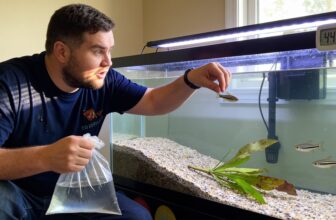
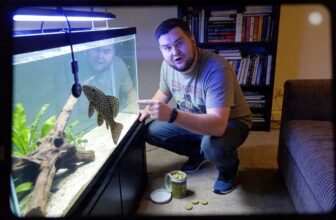
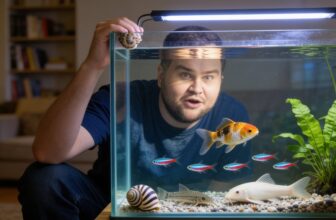
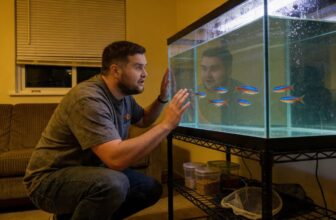
The Marina LED ($60), Fluval FLEX ($130), Tetra Complete ($45), and Penn-Plax curved glass hit four different budgets, and you’ll pick based on how much you hate ugly equipment.
Marina’s clip-on filter runs whisper-quiet—your betta won’t get thrown around like a leaf in a storm.
Flex brings three-stage filtration and curves that’ll make your Instagram followers jealous.
Tetra works if you’re pinching pennies, though “basic” is polite for what’s fundamentally a glass box with ambitions.
Penn-Plax sits in that awkward middle ground, decent glass, fussy hinges you’ll curse monthly.
All four handle gentle heaters, low-flow filters, and full-spectrum LEDs your betta’s colors actually need—none of that blue-tinted nonsense.
You’re buying time, really, since cramped tanks murder fish faster than my first attempt at sourdough.
Grab the Marina for sanity, the Flex for vanity, and keep scrolling if you want the full damage to your wallet.
At A Glance
- A 10‑gallon tank provides ample space for betta temperaments, stable heating, gentle filtration, and beginner‑friendly error margins.
- Top kits include the Marina LED for quiet aesthetics, Fluval FLEX for modern design, and Tetra Complete for budget simplicity.
- Essential add‑ons like heaters, substrate, and liquid test kits add roughly 50% to initial costs.
- Compatible companions include female guppies, ghost shrimp, and nerite snails if temperament allows.
- Weekly maintenance requires about 20 minutes plus ongoing investment in water testing and consumables.
Is a 10-Gallon Betta Tank Right for You?
If you’re staring at your desk wondering whether a 10-gallon betta tank will fit your life, the short answer is probably yes—but only if you’re ready for a commitment slightly more demanding than a houseplant and slightly less demanding than a puppy.
You’re joining a community of people who’ve uncovered that betta temperament varies wildly—some are zen monks, others are tiny aquatic drama queens who’ll flare at their own reflection. A 10-gallon gives you wiggle room to manage either personality.
A 10-gallon tank handles both zen monks and tiny aquatic drama queens with equal grace.
Lighting spectrum matters more than you’d think. Your betta’s colors pop under full-spectrum LEDs, and plants (if you’re feeling ambitious) need that 6500K sweet spot. Think of it as mood lighting for fish.
- Space for a small heater—bettas crave 78°F like you crave coffee
- Room for gentle filtration without creating a workout pool
- Buffer against rookie mistakes (we’ve all overfed)
For example, many quality kits now include a real-time temperature display to help you maintain that perfect 78°F.
Bottom line: you’ll spend maybe $60-90 upfront, 20 minutes weekly on maintenance, and gain a surprisingly engaging roommate who actually acknowledges your existence.
Best 10-Gallon Betta Kits: Filter, Shape, and Price Compared
Whether you’re battling analysis paralysis or just hate reading Amazon reviews, you’ll find four kits worth your money, each trading off filtration stealth, glass geometry, and how much cash you’ll kiss goodbye.
The Marina LED ($60ish) keeps things quiet—literally. Its clip-on filter won’t buffet your betta, and the LED aesthetics? Chef’s kiss for plant growth.
Fluval FLEX (~$130) curves into your room like modern art. That three-stage filter‘s overkill, but hey, you’ve got options.
Tetra Complete ($45) covers basics without fuss. Penn-Plax’s curved glass lands middle-ground—pretty, affordable, slightly annoying hinges.
For price comparison: cheap Tetra, mid Marina, splurge FLEX.
For vertical swimmers, the cube design offers ample swimming height without a wide footprint.
What Your 10-Gallon Betta Kit Won’t Include (Budget Accordingly)
You’ve picked your kit, mentally arranged the plants, maybe even named the fish—then reality hits. Most 10-gallon betta kits, even solid budget options, leave gaps in your setup. You’re joining a hobby where foresight separates thriving tanks from expensive mistakes.
- Heater — Crucial for 78°F stability, rarely included; expect $15–$30.
- Substrate — Gravel or sand runs $10–$25, plus root tabs for plants.
- Test kit — Liquid tests, not strips, matter for tracking ammonia, nitrite, nitrate; $20–$35 upfront, refills ongoing.
Factor maintenance costs: water conditioner, replacement filter media, occasional equipment. Smart aquarists budget 50% beyond the sticker price.
For accurate temperature monitoring, a digital floating thermometer with ±1 °C accuracy can help prevent costly equipment failure.
Companion Fish and Inverts for 10-Gallon Betta Tanks
Once you’ve got your heater humming and your test kit in hand, you’re probably eyeing that empty water column and wondering if your betta needs company—because let’s be honest, watching one fish circle the same plastic castle gets old fast, and you’re not about to explain to guests why your “aquarium” is basically a very wet solo studio apartment.
Your betta doesn’t need roommates, but your sanity might.
You’ll fit five or six small tank mates here. Female guppies work, or three ghost shrimp—cheap, transparent, and weirdly entertaining. Nerite snails handle algae without breeding everywhere. But you’ve gotta read your betta’s temperament first; some flare at anything that moves, others couldn’t care less.
Invertebrate compatibility varies. Cherry shrimp often become expensive snacks, though some bettas ignore them entirely. A small protein skimmer setup helps maintain clean, stable water for sensitive inverts like shrimp. Have a backup plan—small critter tank, willing friend—because returns get awkward fast, and nobody wants that conversation.
Stick to bottom-dwellers or slow swimmers. Fast fish stress everyone out. Final word: start with one snail, observe carefully, expand slowly.
Frequently Asked Questions
How Long Should a Filter Cycle Before Adding Fish?
You’ll want 4-6 weeks for proper filter cycling, though patience isn’t everyone’s strong suit—guilty as charged.
Your tank needs beneficial bacteria colonies establishing in the filter media to convert toxic ammonia into safer nitrites, then nitrates. That’s water stabilization in a nutshell: you’re basically building an invisible cleanup crew before your fish moves in.
Test weekly with liquid test kits (strips lie, sorry). You’re aiming for 0 ppm ammonia, 0 nitrites, and some nitrates before adding your betta—anything less, and you’re gambling with fish health.
Can Live Plants Reduce Water Change Frequency?
Live plants won’t eliminate water changes, mate, but they’ll stretch them like a last-minute excuse.
You boost plant density—think 3-4 compact stems or a carpet—which sucks up nitrates, that waste chemical that builds up. Your substrate choice matters too; nutrient-rich gravel feeds roots, fast-growing stems like anarchis work harder than slow divas like anubias. You’ll still swap 20% weekly in a 10-gallon—plants just buy you breathing room if you don’t overstock. Skip ’em, and you’re basically changing water in a bucket with a fish in it, no thanks.
Bottom line: plant heavy, choose fast growers, and you’ll nab an extra day’s grace between changes, not a free pass.
Is Curved Glass More Prone to Algae Growth?
Curved glass doesn’t inherently grow more algae. You’re dealing with the same light intensity, water, and nutrients either way.
Nevertheless, that bowed surface texture can create odd reflections, and you’ll swear you’re seeing more gunk—it’s just optics playing tricks.
You clean it less easily, since magnetic scrubbers slip and scrape awkwardly, so algae sits longer.
It’s not prone, it’s just annoying.
Should I Cover All Sides of the Tank?
Cover the top, skip the sides—you’re not building a bunker, just a home.
You’ll prevent leaks from spirited jumps (bettas are secret acrobats), and you’ll stop household dust from seasoning the water.
Leave sides bare for viewing pleasure, and honestly, your fish appreciates natural light cycles—total darkness confuses their tiny circadian rhythm.
A mesh or glass lid suffices; no need to wrap this thing like leftover lasagna.
Bottom line: top on, sides open, everyone’s happier.
How Do I Acclimate a Betta to New Tank Mates?
Acclimating a betta to new tank mates requires patience, like easing into a cold pool one toe at a time.
Direct verdict: Quarantine newcomers first, then introduce them in a breeder box or tank divider for 24–48 hours—watch for flaring, chasing, or fin-nipping. Tank compatibility depends heavily on betta temperament; some individuals tolerate neighbors, others claim the whole tank as their personal fortress of solitude.
Practical steps:
- Dim lights during introductions—reduces stress, like sunglasses for stage fright.
- Rearrange decorations before adding friends; this breaks territorial claims your betta’s already staked.
- Start with snail or shrimp “test dummies” (ghost shrimp, $1–$3 each) before risking flashier fish.
- Have a backup tank ready—because sometimes Cupid’s arrow misses, and someone’s sleeping on the couch.
Bottom line: Slow introductions respect betta temperament, maximize tank compatibility, and keep your aquatic soap opera watchable rather than tragic.
Rounding Up
You’ve got four solid options now, each with its own personality. Pick the Aqueon kit if you’re budget-smart but patient, or splurge on the Fluval Flex when you want that curved-glass wow factor—my buddy Dave did exactly that, spent three hours aquascaping it, and now stares at his Veil Tail instead of watching TV. (He calls it “meditation.” I call it “avoiding chores.”) Your betta doesn’t care about brand names, but you’ll care about that quiet filter at 2 a.m., so choose accordingly.