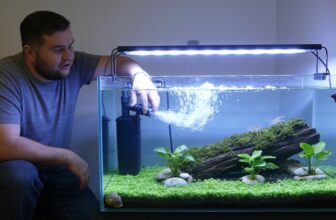
You need a 10‑gallon horizontal tank (~$40), a hang‑on‑back filter (~$25), and a 25‑watt heater (~$15) to keep your water at 74–82°F with pH 6.8–7.8.
plus test weekly with liquid kits—not flimsy strips.
Guppies forgive missed water changes, breed every 25–35 days whether you’re ready or not, and cost $2–$4 each in colors that outshine pricier fish.
Skip the 5‑gallon “beginner” trap; it crashes fast, wastes $29.99, and turns your fish into casualties.
Feed 35–45% protein, change 25% water if ammonia hits 0.25 ppm, and quarantine newcomers for two weeks.
Pick peaceful tank mates under 2 inches—neon tetras, corydoras—or watch fins get nipped.
Pregnant females show a dark gravid spot; separate fry into a nursery with Java moss, or adults eat them.
Treat fin rot fast, dose ich meds precisely, and rinsing filter media in old tank water keeps bacteria alive.
Stable parameters beat expensive gadgets every time.
Stick around, and you’ll spot the tricks that separate thriving tanks from soggy regret.
At A Glance
- Provide a minimum 10-gallon horizontal tank with sponge filter, 25-watt heater, and simple LED lighting.
- Maintain water at 74–82 °F, pH 6.8–7.8, and under 20 ppm nitrate with weekly testing.
- Feed 35–45% protein daily, removing uneaten food immediately to prevent ammonia spikes.
- Keep 2:1 female-to-male ratio, dense plants for fry cover, and separate nursery tanks when needed.
- Quarantine new fish two weeks, treat diseases promptly, and rinse filter media in old tank water monthly.
Why Guppies Are the Easiest Beginner Fish
If you’ve ever stared at a wall of aquarium fish feeling like you need a PhD just to keep something alive, you’ll appreciate that guppies practically take care of themselves.
- Hardiness: They’ll forgive you for forgetting that water change
- Breeding: You’ll have fry before you know what hit you
- Guppy history: These little survivors have been charming hobbyists since 1866
- Color genetics: Breeders have turned them into living rainbows through selective pairing
Females can store sperm to produce multiple litters from a single mating, spaced roughly 25‑35 days apart.
You don’t need fancy gadgets or chemistry degrees. Guppies adapt, they thrive, they multiply. They’re the gateway drug of fishkeeping—cheap, cheerful, and surprisingly forgiving of your rookie mistakes.
Bottom line: Start here, succeed here.
Your Guppy Starter Kit: Tank, Filter, and Heater
Three pieces of gear stand between you and guppy parenthood: a tank, a filter, and a heater.
Grab a 10‑gallon tank minimum—your future fish gang needs room to zoom. Horizontal beats vertical; guppies cruise, they don’t climb.
Horizontal tanks beat tall ones—guppies cruise, they don’t climb. Give your fish gang room to zoom with 10 gallons minimum.
Your filter? Sponge or hang‑on‑back, rated for your tank size. Filter maintenance keeps ammonia from crashing the party—rinse media in old tank water monthly, never tap. Trust me, chlorine kills good bacteria faster than my dad jokes kill conversations. Look for models with sponge filters moving 50 L/h for gentle flow that won’t stress your guppies.
A 25‑watt heater locks 74‑82°F. Guppy lighting? Simple LED, 8‑10 hours daily—enough to show off those colors, not start a reef tank.
Skip the 5‑gallon “beginner” trap. You’ll upgrade in weeks.
Bottom line: 10 gallons, reliable filter, steady heater, modest light. Your guppies thrive, and you join the club.
Water Conditions Guppies Actually Need
So what’s the real deal with guppy water? You’ll want 74–82°F, pH 6.8–7.8, and water hardness between 4–12 dGH—that’s moderate, nothing fancy. Think of dGH as dissolved minerals; too soft, your guppies flop, too hard, they sulk.
Keep nitrate levels under 20 ppm, ideally hitting weekly water changes before they creep up—test kits run about $10, cheap insurance against sleepy, stressed fish. For quick results, 7‑in‑1 test kits can check multiple parameters in about 30 seconds.
Strip heaters work, certainly, but a preset 25W keeps temps steady without you babysitting. Your fish aren’t divas, just consistent. Mess with stability, though, and you’ll learn fast—they’re hardy, not indestructible.
Bottom line: stable beats perfect every time.
Sand, Plants, and Hiding Spots Guppies Love
While you might picture guppies zipping through open water, give them bare glass and watch their colors dull—they need something to do, places to dart behind, textures to investigate. You’re building them a home, not a parking lot.
| Element | Purpose | Your Move |
|---|---|---|
| substr substrate | anchors roots, hosts bacteria | dark sand, 2-3 inches deep inches |
| leaf litter | tannins, microbe buffet | Indian almond leaves, $5/pack |
| driftwood décor | biofilm grazing, territory marks | small pieces, boil first |
| rock caves | fry refuge, male standoffs | smooth river stones |
Add aquatic moss, moss carpet, floating logs for surface cover. Arrange pebble maze, sand ripple patterns, dense plant stems. They’ll reward you with bolder colors, frantic dancing, that guppy confidence you crave. To maintain stable pH and clear water, choose pH-neutral, non-toxic coated gravels like Special Turquoise Aquarium Gravel. You’re not just keeping fish—you’re curating their world.
Male or Female? How to Choose Your First Guppies
You’ve got the tank scaped, the sand settles like a dark bed, and now you’re staring at the fish shop display—tails flashing like tiny signal flags.
Pick males for Breppy coloration that pops, or lean into genderppy genetics with females for a sustainable colony. Males carry the gonopodium—a rod-shaped fin for breeding—while females sport rounder bellies and subtler hues. Grab two ladies per gent, minimum, or you’ll witness aquatic chaos. Keep a larger group of 15+ if adding other peaceful species like Harlequin Rasboras to enhance their iridescence and reduce stress.
- Males: flashy fins, smaller frames, endless drama
- Females: larger, calmer, pregnancy surprise included
Start with three to five. Watch them school, feel the tank come alive, and welcome to the club—you’re one of us now.
Tank Mates That Won’t Bully or Eat Your Guppies
Where exactly do you stash a fish that won’t turn your guppies into expensive snacks?
You pick peaceful community swimmers, that’s where. Neon tetras shimmer under your lighting styles, cories scavenge the bottom without fuss, and platies mind their own business.
Your tank decoration matters here—dense plants, driftwood caves, broken sight lines stop squabbles before they start.
Dense plants and driftwood caves break sight lines, stopping squabbles before they start.
You stick with fish topping out at two inches, mouths too small for guppy-sized meals.
Harlequin rasboras? Perfect roommates. Bettas? Roll the dice, some are jerks.
You’ve built a haven, not a wrestling ring. Choose wisely, and everyone’s fins stay intact.
Ensure driftwood pieces are secured to prevent collapse and form safe hiding spots for all tank inhabitants.
Java Fern to Hornwort: Best Plants for Guppy Tanks
Since your guppies need more than open water to thrive, plants turn a glass box into a neighborhood they’ll actually want to live in.
Java Fern anchors to driftwood—no buried roots, no drama. Anubias tolerates your “maybe I’ll water change Sunday” schedule. Hornwort? Toss it in, watch it explode, filter nitrates like a champ.
Lighting intensity matters. Low light suits Java Fern and Anubias; crank it higher for Amazon Sword or Water Wisteria. Smart plant placement creates hideouts—dense corners for fry, open swimming lanes for showoffs.
Bottom line: start with Java Fern and Hornwort. They’re cheap, forgiving, and make you look like you know what you’re doing.
For guppy tanks, artificial options like silk leaf compact plants offer fin-friendly soft edges and easy cleaning.
What to Feed Guppies (And How Often)
Guppies aren’t picky, but they’re similarly not garbage disposals with fins—they’ll eat themselves sick if you let them.
Guppies will eat themselves sick if you let them—portion control is everything.
Lock down a guppy feeding schedule: twice daily, morning and evening, flakes they finish in two minutes flat. No grazing all day—that’s how you get bloated fish and nasty water.
Your nutrient rich diet starts with quality tropical flakes or micro-pellets (roughly $5-8 for a month’s supply), 35-45% protein minimum. Think of it like your morning coffee—skip it, and nobody’s thriving.
Remove uneaten bits immediately. Rotting food spikes ammonia, and you’ll be doing emergency water changes at midnight.
Bottom line: feed small, feed consistent, and your guppies reward you with color that pops.
For additional immune support and color enhancement, look for options like TetraColor Tropical Food that include antioxidants and prebiotics.
Brine Shrimp, Veggies, and Other Healthy Treats
Three foods separate decent guppies from the ones that glow like neon signs, and two of them aren’t even fish food.
- Brine shrimp—live or frozen—deliver protein that makes fins flare like tiny sails. 99% freeze-dried? Skip it, it’s popcorn nutrition.
- Blanched veggies: zucchini, spinach, peas (deskinned, nobody wants a constipated fish). Gut-load ’em with vitamins.
- Seasonal feeding shifts—more protein in summer, lighter veg-load in cooler months—mimics wild rhythms.
Nutrient enrichment isn’t fancy talk; it’s the difference between surviving and thriving.
Bottom line: Rotate treats twice weekly. You’ll see the difference, and so will your fellow hobbyists.
Maintaining a 3:1 calcium-to-phosphorus balance supports shell and bone health in aquatic turtles, a principle that also benefits guppy growth.
How to Breed Guppies: Ratios and Setup
Breeding guppies isn’t rocket science, though you’ll feel like a genius when your tank suddenly has dozens of fry darting between the plants.
You’ll want a 10-gallon breeding tank, a gentle sponge filter, and dense plants like Java moss for cover—think of it as a guppy maternity ward with privacy curtains.
- Stick to a 2:1 female-to-male ratio, or the boys will harass each other into exhaustion
- Breeding cycles repeat every 4-6 weeks, so prepare for regular fry arrivals
- Breppy genetics get wild—expect surprise color combos you didn’t plan for
- Separate tanks prevent adults from snacking on their offspring
- A suitable stand should support 220 lb top and include adjustable feet for stable placement on uneven floors.
Is Your Guppy Pregnant? Signs to Watch For
How can you tell if your guppy’s about to drop fry or just hit the fish flakes a little too hard? You check the gravid spot, that dark triangle near her tail, and watch her belly turn boxy, like she swallowed a marble collection.
She’ll hide more, maybe nip at tankmates who get too curious. It’s guppy genetics doing its thing, those color morphs you picked out—sunset reds, electric blues—now passing to the next generation. You’re basically a fish midwife now, congrats.
No fancy gear needed. Just patience, a sharp eye, and maybe stop feeding her for a day. She’ll thank you later.
Saving Guppy Fry From Becoming Snacks
Your guppies just had babies, and now you’re running a daycare where everyone’s on the menu. Welcome to the club, we’ve all been there.
- Set up a 5‑gallon nursery tank ($15‑25) with a sponge filter and dense plants like Java moss
- Use dim tank lighting—bright lights stress fry, and stressed fry make easy targets
- Float a breeder box ($8‑12) for immediate rescue when mom drops fry
- Study guppy genetics so you’ll know which babies to save for your next generation
Bottom line: act fast, hide the kids, and you’ll graduate from fish grandparent to guppy dynasty builder.
Fin Rot, Ich, and Other Common Guppy Diseases
Even the best guppy grandparent can’t prevent every sniffle. Fin rot—those ragged, receding fins—usually means bacterial infection or nipping tankmates.
Ich looks like someone’s sprinkling salt on your fish; it’s a parasite, and it spreads fast. Velvet‘s the gold-dust cousin, trickier to spot.
Here’s your quarantine protocol: new fish go solo for two weeks, minimum, in a bare tank with a sponge filter. Sick fish, too—move them before you’re hosting an underwater plague.
Medication dosage? Follow the label like it’s a tax form—no eyeballing. Underdose, you’re breeding superbugs; overdose, you’re the villain. Treat the whole tank if ich hits everyone.
Bottom line: isolation saves schools, precision beats panic.
Fixing Ammonia Spikes and Temperature Swings
Ammonia spikes and temperature swings are the twin gremlins that’ll turn your guppy paradise into a fishy funeral, fast.
- Test your water weekly with a liquid test kit—strips lie like a cheap rug
- Perform 25% water changes immediately when ammonia hits 0.25 ppm; your fish’ll thank you
- Schedule monthly filter cleaning—rinse media in old tank water, never tap (chlorine kills good bacteria, and that’s bad juju)
- Grab a reliable heater with a thermostat; 25 watts per 10 gallons keeps things steady, no sweat
You’re building a community here, not just a tank. Nail these basics, and your guppies’ll thrive alongside you.
Frequently Asked Questions
Do Guppies Need an Air Pump?
You don’t strictly need an air pump pump if your filtration breaks the surface properly, but you’ll probably want one anyway.
Guppies thrive with gentle water movement—that’s where the pump pump earns its keep. Your tank décor traps debris in corners, and breeding cycles demand stable oxygen for both frantic adults and vulnerable fry. A cheap $10-15 bubbler does the job fine, running whisper-quiet as your sponge filter handles the heavy lifting.
Skip it in planted tanks with strong filtration. Add it for crowded community setups, fry rearing, or just watching those bubbles—cheap therapy, honestly.
How Many Guppies per Gallon Is Safe?
Stock one inch of guppy per gallon—so five adults max in a 10-gallon tank, though you’ll want wiggle room.
Think of each gallon like a studio apartment: cozy at first, but Breeding cycles turn it into a clown car fast—females drop fry monthly, and suddenly you’re counting fish like a sleep-deprived parent sneaking cookies at midnight.
Tank size matters double for harmony; these guys school, they squabble, they need escape routes. Shrimp tanks? No problem. Full communities? Bump to 20 gallons, you’ll thank yourself.
- 5-gallon: 2-3 guppies, lonely but lean
- 10-gallon: 5 adults, manageable chaos
- 20-gallon: 10-12, breathing room for generations
Skip the air pump stress—you asked earlier—just don’t cram them like sardines, if you enjoy explaining to guests why your living room sounds like a bubble bath factory.
Bottom line: start with 10 gallons, adopt the multiplying, and remember—you’re the landlord, not the roommate.
Can Guppies Change Color Over Time?
Yes, guppies change color over time, and you’ll notice it’s pretty normal.
Stress, aging, and water conditions shift their hues, sometimes dulling bright males or bringing out hidden patterns you didn’t expect.
Diet adaptation plays a real role—feed quality flakes with carotenoids and you’ll see reds and yellows pop like a cheap TV upgrade.
Color genetics additionally matter; even siblings from the same batch can end up looking like distant cousins.
Keep parameters stable, don’t overfeed, and you’ll maximize their natural palette without chasing rainbows.
It’s not rocket science, just decent husbandry.
How Long Do Guppies Sleep?
Your guppies don’t really sleep like you do—they rest in short bursts.
You’re looking at sleep cycles lasting seconds to minutes, mostly when the lights go out.
Yeah, there’s some nighttime activity; they’re not exactly party animals, but they twitch and drift.
Think of it as a fishy power nap.
Bottom line: give them 6-8 hours of darkness, don’t stress the schedule, and they’ll figure it out.
You’ve got bigger worries, trust me.
Do Guppies Recognize Their Owners?
Yes, you’ll get owner recognition over time.
Your guppies associate you with food, learning your silhouette and feeding cues—movement, footsteps, maybe that ridiculous shimmy you do at the tank.
They don’t love you; they’re hungry. But that counts, right? Bright colors flare when you approach, fins fan out.
It’s basic pattern recognition, not devotion. Still feels nice. Keep showing up, they’ll keep noticing.
Rounding Up
You have got this. Guppies reward the imperfect keeper who shows up, tests the water, and remembers to feed them—sometimes even that last part slips your mind, and they forgive you anyway. Start with ten gallons, a decent filter, and a small school of mixed genders. Watch them multiply. Fix your mistakes. Repeat. Your thriving colony awaits.