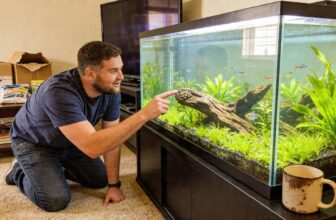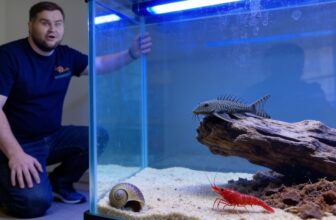
Driftwood transforms your betta tank from plastic box to actual habitat, not aquarium purgatory.
You’ll want Malaysian or Mopani for tannins that soften water and calm jumpy fish, though Mopani’s $15-25 price tag stings less than your betta’s attitude.
Scrub it, bleach-soak 15 minutes, then pre-soak 1-4 weeks depending on type—cholla’s fastest at 3-7 days, rosewood drags at 2-3 weeks.
Test pH daily first two weeks; crash below 6.0 and you’ll need crushed coral stat.
Java moss anchors easy, Anubias needs cotton thread, and that brown water?
Totally normal, like your morning coffee but for fish.
Keep going if you want the full prep checklist.
At A Glance
- Choose smooth, aquarium-safe driftwood like Malaysian, Mopani, Cholla, or Rosewood to suit your tank’s aesthetic and chemistry needs.
- Sand sharp edges and verify wood type impacts pH before placing to protect delicate betta fins.
- Soak driftwood for days to weeks depending on type, changing water until clear to prevent excessive tannin release.
- Monitor pH daily initially, using activated carbon or limestone to balance chemistry if tannins lower pH too far.
- Anchor Java moss or Anubias to driftwood cavities using thread, spacing plants to create soft edges and hiding spots.
Why Betta Keepers Use Driftwood (Benefits Beyond Decoration)
Since driftwood looks like a chunk of tree someone fished out of a swamp, you might wonder why serious betta keepers bother—and honestly, that’s fair.
You’re not here for decoration; you’re here for what actually works. Driftwood creates hiding spots that calm jumpy bettas (yes, even yours), anchors java moss that prevents algae by outcompeting it for nutrients, and grows beneficial bacteria that break down ammonia.
Driftwood calms jumpy bettas, anchors algae-fighting moss, and hosts bacteria that break down ammonia—function over form.
Plus, tannins from driftwood drift gently into water, lowering pH naturally and shielding fish from harmful bacteria—blackwater aesthetics as a bonus, not the point.
It’s functional refuge disguised as décor, and your betta knows the difference. This natural setup creates a gill‑ty pleasure for your fish, as the wordplay of shared smiles requires no translation.
Bottom line: Skip the plastic castle, grab driftwood.
Before You Buy: Safety Checks for Betta-Safe Driftwood
Don’t grab just any driftwood, champ—that’s how you end up with shredded fins and a tank full of regret.
You need smooth edges, period. Run your thumb along every inch; if you feel snags, skip it or plan to carpet that spot in java moss, which—let’s be honest—you’ll probably forget to do.
Check your budget choice against your tank’s reality. That bargain find won’t save you when your betta’s gasping in pH crash territory.
Different woods tweak water parameters differently. Malaysian and Mopani mess with pH; rosewood plays it safer.
If you need to cover a gap around equipment, consider a high light transmission magnetic mesh lid that allows ventilation while keeping your betta from jumping.
Bottom line: inspect relentlessly, know your wood’s chemistry, and buy smart.
How to Clean, Sterilize, and Dechlorinate New Driftwood
You’ve got your hands on a promising piece of driftwood, perhaps that Malaysian branch you debated over for twenty minutes in the pet store aisle, and now you’re itching to chuck it straight into the tank—except you absolutely won’t, as you’re smarter than that.
Scrub it first, hard, with a stiff brush—think spring cleaning, but for fish furniture.
Attack that driftwood like you’re scrubbing a decade of grime off your mother-in-law’s vintage cabinets—merciless, thorough, slightly desperate.
Then hit it with a 5% bleach bath, fifteen minutes only, no naptime shortcuts.
Rinse like your life depends on it.
Soak in dechlorinated water weeks to nuke bleach traces, speeding tannin drift you’re actually after.
Boiling? Optional, but you’re not lazy.
Algae prevention starts here, friend; skip sterilizing, and you’ve invited a green furry roommate nobody wants.
For the final rinse and fill, consider using a water-pressure powered device like the GADFISH 50‑ft gravel vacuum to efficiently remove any lingering debris without needing a bucket.
Pre-Soak Timeline: How Long Until Driftwood Is Tank-Ready?
Your driftwood is scrubbed, bleached, and rinsed, definitely, but don’t kid yourself—it’s still not tank‑ready, not by a long shot. You’ve got to soak it now, and patience isn’t optional here, friend.
| Driftwood Type | Soak Time | What You’re Waiting For |
|---|---|---|
| Malaysian | 2–4 weeks | Tannins to mellow, water to clear |
| Mopani | 1–2 weeks | Minimal leaching, quick sink |
| Cholla | 3–7 days | Lightweight, porous, fast prep |
| Rosewood | 2–3 weeks | Dense grain, slow release |
Smart driftwood sourcing saves you weeks—ask sellers if it’s pre‑soaked. Change water every few days, test with your aquarium lighting on; you’ll spot lingering cloudiness or that stubborn tea‑stain tint. When water stays clear for 48 hours, you’re in the club. This same patience applies when preparing driftwood for a hillstream loach tank, where continuous moderate current keeps wood from accumulating waste.
Will Tannins Harm Your Betta? Managing Brown Water Effects
If you’re aiming for a crystal-clear show tank, that brown tint isn’t your enemy—it’s just tannins doing their thing, and honestly, your betta might appreciate the mood lighting more than you’d expect.
Tannin impact? Minimal headache, actual benefits. You get mild acidity that mirrors your betta’s natural habitat, plus tannins carry mild antibacterial properties. Brown water also limits light penetration, which helps with algae control—less scrubbing for you.
If the tea look bugs you, toss in activated carbon or Purigen. Water changes dilute it too. Test pH weekly; drops below 6.0 need attention. Your fish? Thriving. You? Maybe embracing the amber life. For tanks with strong light, using a magnetic mesh cover can help reduce evaporation while still allowing some tannin-stained light through.
Sharp Edge Removal: Protecting Delicate Betta Fins From Damage
Since betta fins are basically silk scarves attached to a fish, you a fish, you’ll want to inspect every driftwood piece like you’re checking for splinters before a handshake.
Run your fingers along every ridge and point. Sand down offenders with fine-grit paper, or drape java moss over trouble spots—it’s nature’s bandage, and frankly, prettier than driftwood coloration alone. Fin protection isn’t fussy, it’s fundamental. Using curved tweezers helps position moss precisely over sharp edges without disturbing the surrounding substrate.
| Problem Spot | Quick Fix |
|---|---|
| Jagged branch tips | Sand until smooth |
| Splintered bark | Peel and scrub |
| Sharp root forks | Wrap in moss |
| Cracked hollows | File edges round |
| Rough texture | Boil, then sand |
Your betta’s flowing fins deserve better than a cheese grater. Smooth it out, sleep better.
Choosing Your Driftwood: Four Betta-Safe Types Compared
Not all driftwood plays nice with bettas, even after you’ve sanded the edges smooth. You’ve got four solid options here, and each brings something different to your tank.
Rosewood Roots form natural tunnels when placed face-down, perfect for your betta to investigate.
Cholla Wood—that lightweight cactus skeleton—creates dramatic driftwood lighting effects through its many holes, plus it’s shrimp-safe.
Mopani Wood stays tall and textured, and the sandblasted stuff won’t mess with your water chemistry or seasonal coloration goals.
Malaysian Driftwood? We’ll save that conversation for later.
Bottom line: match the wood to your tank’s vibe, not just your wallet.
For precise placement without disturbing your setup, consider using stainless steel aquarium tweezers to maneuver the wood into position.
Malaysian Driftwood: Dark Aquarium Wood for Blackwater Betta Tanks
Since you’re chasing that moody, tea‑stained aesthetic without dumping food coloring into your tank, Malaysian driftwood delivers—though you’ll pay for the privilege, and you’ll definitely need to explain the brown water to confused visitors.
This dark, intricately branched wood nails blackwater aesthetics while cycling tannins for weeks. You’ll want patience: that amber tint means your water’s softening, your betta’s feeling secure, and you’re officially part of the tannin‑appreciating club.
| What You Get | What You’re Signing Up For |
|---|---|
| $15–40 per piece, typically 6–10 inches | Weeks of brown water, guaranteed |
| Natural pH buffering, no chemicals needed | Frequent water testing required |
| Dense hiding spots, fin‑safe edges | Pre‑soaking mandatory—no shortcuts |
| Perfect anchor for java moss | Higher price than basic bogwood |
| Instant community credibility | Visitor education included free |
If you need to secure driftwood to rocks or glass, aquarium epoxy putty provides a safe, permanent bond underwater.
Bottom line: buy once, soak twice, adopt the stain.
Mopani Wood: pH-Stable Driftwood for Alkaline Betta Setups
If your tap water runs high on the pH scale and you’re tired of fighting chemistry battles every water change, Mopani wood might be your new best friend—or at least your most cooperative décor.
Fluval’s sandblasted version gives you that rugged, two-toned look without the usual tannin chaos. You’ll get alkaline stability, not another chemistry project, and your pH stays put where your betta needs it.
The selling points:
- Sinks immediately, no waiting, no waterlogging drama
- 6–8 inch pieces, two per pack, perfect for 5–10 gallon setups
- Zoo Med sells them affordable, roughly $15–$20
Mopani aesthetics bring sculptural texture, those gnarled African hardwood vibes, without turning your tank into tea. You skip the pre-soak marathon, the brown water phase, the “is this rotting?” anxiety.
One catch: steer clear of reptile-grade pieces. They’re not cured for aquariums, and you’ll invite trouble you don’t want.
Bottom line: Want driftwood presence without pH acrobatics? Grab sandblasted Mopani. Your alkaline tap water finally gets along with something natural. For a complete setup, consider pairing with a quiet HOB skimmer to keep the water pristine and reduce maintenance.
Cholla Wood: Lightweight Tunnels for Shy Bettas and Plant Anchors
Every shy betta secretly dreams of a tunnel system, and cholla wood delivers exactly that—a hollow, skeletal cactus branch full of holes you’d think Swiss cheese would envy.
Your timid fish finally gets the tunnel design they’ve been begging for, zipping through chambers like they own the place.
You’ll love moss anchoring here: java moss grips those honeycomb holes without fuss, no thread needed.
- 6″×3″ hollow tubes, lighter than your regrets
- Shrimp-safe, plant-ready, pesticide-free
- Floats until waterlogged; pre-soak or weigh it down
It’s the most-reviewed product among driftwood options for aquariums, trusted by hobbyists for its reliable performance.
One piece transforms your tank into a sunken desert hideaway. Your betta’s confidence thanks you.
Rosewood Roots: Creating Betta Caves and Moss Attachment Points
While cholla gives you tunnels, rosewood roots hand you something your betta might actually crawl inside—caves, not just passageways. You’ll spot these by their copper coloration, that warm reddish-brown glow that pops against dark gravel or green plants like nobody’s business.
Flip them face-down, and boom—instant cave city. Your betta gets security, you get flow dynamics that don’t dead-end in stagnant corners. Smart.
| Feature | Why It Matters |
|---|---|
| Dense texture | Stays put, won’t float away on you |
| 3-piece clusters | Break apart or cluster, your call |
| Pockets and holes | Perfect for java moss, no glue needed |
| 60L sizing | One pack covers your space |
| That copper coloration | Matches literally everything |
Pre-soak them though. They’re tannin-happy, and your pH will nosedive if you’re not watching. Anchor moss in those crevices, and you’ve built a neighborhood your betta actually wants to live in.
Pairing Driftwood With Java Moss and Anubias: Plant Anchoring Guide
Both are *epiphytes*—plants that grow on surfaces instead of dirt, like nature’s couch surfers.
You attach them with cotton thread or fishing line, nothing fancy.
Mind your moss spacing, or you’ll get a shaggy blob instead of a tidy carpet.
For anubias propagation, split the rhizome carefully—one plant becomes two, like magic you barely earned.
- Driftwood holds roots without burying them, preventing rot
- Java moss fills gaps, softening edges for your betta’s fins
- Anubias adds leafy structure where light’s scarce
- Together, they create territory your fish claims as home
Tie loosely. Check weekly. You’re building a neighborhood, not a plant prison.
Water Testing Schedule After Adding New Driftwood
Once you’ve lowered that driftwood into your betta’s domain, you’ll need to become part scientist, part paranoid fish parent. Tannin fluctuations will mess with your water chemistry, so grab that test kit and stay vigilant.
| Week | Testing Focus | Filtration Maintenance |
|---|---|---|
| 1-2 | Daily pH, ammonia, nitrite checks | Rinse mechanical media gently |
| 3-4 | Every other day, watch for tannin spikes | Replace carbon if you’re stripping tannins |
| 5+ | Weekly routine, stable parameters | Standard schedule resumes |
You’re not alone in this, fellow driftwood addict. That bizarre brown water? Normal. Your betta’s probably thrilled, hiding in those tea-stained shadows like a tiny, grumpy ninja. Just don’t slack on filtration maintenance, or you’ll join the “why are my fish gasping at 3 AM” club.
Fixing pH Crashes and Stopping Runaway Tannin Leaching
- Boil smaller pieces for 2-3 hours, since nobody asked for tea-colored everything.
- Pair driftwood with limestone or crushed coral, balancing chemistry like a seesaw.
- Run activated carbon in your filter until the water clears—patience, friend.
- Test twice weekly, since guessing tank parameters is like guessing your partner’s mood: doomed.
Your tank’s a shared ecosystem. Own the maintenance, reap the calm.
Frequently Asked Questions
Can I Reuse Driftwood From an Old Tank?
Yes, you can reuse driftwood from an old tank, but you shouldn’t toss it straight in.
First, scrub it hard, then do a proper driftwood sterilization—bleach soak, long rinse, maybe a boil.
Old tanks hide nasties: parasites, algae, weird chemistry.
Your tank aesthetics depend on clean, safe pieces, so don’t skip steps.
Test water after, watch your betta, and you’re set.
Does Driftwood Expire or Degrade Over Time?
Driftwood doesn’t really expire, but you’ll face material breakdown over years—softening, crumbling, that sad driftwood longevity we all dread.
- Budget pick: Cholla wood ($8-12 for 6″) collapses fastest, maybe 2-3 years
- Workhorse: Malaysian driftwood ($15-25) holds 5+ years easily
- Premium: Mopani ($20-30 two-pack) nearly indestructible
You’re watching for squishy spots, black slime that won’t scrub off, or weird smells—retire it then. Boiling extends life, though you can’t fight entropy forever, haha.
Bottom line: Plan on 3-5 years for most pieces, test by poking with a fingernail yearly, and keep a backup piece rotating in quarantine.
Why Is White Fuzz Growing on My New Driftwood?
- It feeds on sugars, not your betta
- Shrimp and snails love munching it
- It clears up in 2–4 weeks on its own
You can scrub it off, or let nature run its course—your call, you’re the boss here.
Can Driftwood Cause Betta Fin Rot?
Driftwood doesn’t directly rot fins, but it rolls out the welcome mat for trouble.
Watch those driftwood tannins; they crash pH, stress your betta, and invite fin‑damage bacteria. Sharp edges slice fins—hello, infection. Boil that sucker 15 minutes, scrub fuzz weekly, add java moss as a bumper.
Skip the bleach bath; your fish, your wallet ($15 for Malaysian wood), and your dignity will survive.
How Do I Remove Algae From Driftwood Without Bleach?
Grab your driftwood, give it a good algae scrub with a stiff brush—brown gunk begone.
Still stubborn? Try a vinegar soak: mix one part white vinegar with three parts water, submerge for 10–15 minutes, scrub again, rinse thoroughly.
No bleach needed, your hands stay dry-ish, and your betta keeps his home chemical-free.
Boiling works too, if you’re patient.
Tannins might follow, but that’s just tea-time ambiance.
Rounding Up
You’ll nail this driftwood thing, even if your first attempt ends up looking like a sunken toothbrush.
Verdict: Driftwood’s non-negotiable for betta welfare—hiding spots, biofilm buffets, and that Instagram-worthy blackwater vibe. Just prep it right, or you’re brewing tea nobody asked for.
- The reality check: Yes, tannins brown your water—that’s the *point*, and bettas evolved in it. Your fish won’t mind; your in-laws might.
- The actual hassle: Weekly water testing for a month, pH strips running maybe $12, and that patience you swore you had.
Skip the shortcuts, adopt the amber glow, and your betta will strut like royalty in a kingdom you built.