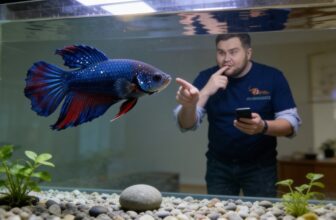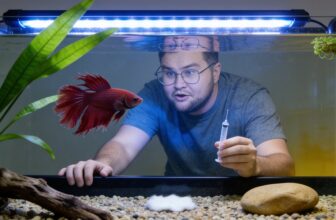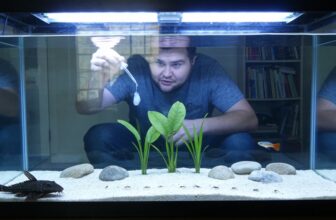
You’ll beat algae by cutting light to 8–10 hours with a $15 digital timer, blocking window sun with blackout curtains, and upgrading your filter flow to 4–6 tank volumes hourly.
Feed 25% less, vacuum weekly, and test phosphates—keep them under 0.5 ppm.
Add Nerite snails ($4) and fast-growing plants like Hornwort to outcompete the green stuff.
If that fails, grab a $60 UV sterilizer before touching chemicals.
The full playbook’s just ahead.
At A Glance
- Limit light to 8–10 hours daily with a timer and position tanks away from direct sunlight.
- Upgrade filtration to remove phosphates and nitrates, cleaning media monthly in old tank water.
- Reduce feed portions by 25% and remove uneaten food immediately to cut nutrient sources.
- Introduce Nerite snails, Amano shrimp, or Siamese algae eaters to graze algae continuously.
- Plant fast-growing species like Hornwort to outcompete algae for nutrients and light.
Set Your Aquarium Timer to 8–10 Hours of Light Daily
Since algae are basically tiny solar-powered invaders, you’ve got to cut their power supply.
You’re aiming for 8–10 hours daily, max. Anything beyond that? You’re just running an algae buffet.
Timer calibration matters more than you’d think. A $15 digital timer beats your memory every time, trust me. Set it, forget it, stay consistent.
A $15 timer beats your memory every time. Set it, forget it, stay consistent.
Now, light spectrum—here’s the quick version. Algae love blue-heavy LEDs, whereas your plants want balanced full-spectrum bulbs (6500K works great). If you’re running cheap strip lights, you’re probably feeding algae, not plants.
- 8–10 hours prevents overgrowth
- Timers cost $12–20
- 6500K bulbs run $8–15
Bottom line: control the light, control the algae.
Brands like DEWENWILS offer digital timers with three-month schedule memory to keep your lighting consistent even after a power outage.
Move Your Tank Away From Windows and Direct Sunlight
While your fish might enjoy a sunbeam as much as any cat napping on the windowsill, that extra light is basically a free all-you-can-eat buffet for algae. Sunlight avoidance isn’t just a suggestion—it’s your first line of defense.
Move your tank to an interior wall, away from windows. Can’t relocate? Window shading works wonders: blackout curtains ($15–30), adjustable blinds, or even a strategically placed bookshelf block that algae-fueling glare.
Direct sun spikes your tank’s temperature and triggers explosive algae blooms. You’ve got enough to manage without fighting a solar-powered green invasion. Shade it, move it, solve it. Using a non‑phosphate formula can also help prevent algae blooms when adjusting water chemistry.
Upgrade Your Filter to Remove Algae-Fueling Waste
Here’s your filter, chugging along like a 2003 laptop running Zoom—technically working, mostly just warming the room.
Weak flow lets nitrates and phosphates pile up, and algae throws itself a buffet. You’re hanging out in tanks where the water’s basically soup, and nobody invited you to that party.
- Swap in quality filter media media, not those sad pink pads from 2019
- Aim for 4–6 times tank volume per hour—yes, math, sorry
- Clean monthly in old tank water, not bleach, you’re not a monster
Boost your algae filtration efficiency, join the clear-water club, and finally see your fish doing fish things.
For example, using NSF certified replacement cartridges ensures safe, effective removal of algae-fueling waste.
Feed Less: Uneaten Food Becomes Algae Fertilizer
You’re probably overfeeding, and your algae definitely. And your algae definitely appreciates the tip. That excess food decomposes fast, releasing ammonia, nitrates, and phosphates—basically an all-you-can-eat buffet for algae, causing those frustrating nutrient spikes everyone’s fighting. Poor water quality from these spikes can also disrupt your protein skimmer’s performance, as precise height matching reduces water turbulence and improves foam quality.
Establish a tight feeding schedule. Serve what your fish devour in two to three minutes, tops. Missed a spot? Siphon it out immediately. Your wallet—and your tank—will thank you.
- Cut portions by 25%, watch aggression stay flat
- Skip “just in case” handfuls; fish aren’t snacking between meals
- Use an auto-feeder ($15-30) for consistency if you’re forgetful
Bottom line: Feed less, starve algae, keep your fish lean and your water clean.
Reduce Fish Stocking to Control Ammonia and Nitrate Overload
If you’ve got a crystal ball for your filter’s breaking point, you’re probably pushing your tank past its limit.
Overstocking—shoving too many fish into your water box—cranks up ammonia faster than your bacteria can handle, and those nitrates pile up like unpaid bills.
- Stocking density matters: one inch of fish per gallon is the old rule, but bulky goldfish count double
- More fish, more poop, more algae fertilizer—simple math, really
- Nitrate control starts with fewer mouths to feed
Bottom line: rehome a few fish, or upgrade that tank.
Your algae problem? It’ll shrink faster than your patience at a fish store on Saturday morning.
For goldfish, stick to a minimum of 20 gallons per fish to avoid overcrowding that fuels algae growth.
Change 25% of Your Water Weekly to Starve Algae Growth
Even perfect stocking won’t save you if you’re swimming in yesterday’s fish soup. You’re breaking the Algae‑phosphate cycle, plain and simple.
- Siphons out dissolved waste before it fuels green invaders
- Dilutes phosphate spikes that algae crave
- Keeps your Light‑intensity threshold manageable by reducing murk
- Costs you maybe fifteen minutes, some dechlorinator, and zero regret
Old water’s algae food. You’re removing the buffet.
Bottom line: skip the water change, and you’re just brewing fertilizer. Do it weekly, 25%, like clockwork. Your fish won’t thank you—they’re fish—but they’ll breathe easier. So will you. Regular testing with a reliable kit confirms your nitrate remains below the freshwater nitrate target of 20 ppm, starving algae of its main fuel.
Test pH, Phosphate, and Nitrate Levels Every Seven Days
Since algae thrives when you’re flying blind chemically, weekly testing isn’t paranoia—it’s basic hygiene. Grab a liquid test kit—API Master runs about $25—and spend five minutes each Sunday playing detective.
pH testing keeps you ahead of swings that stress fish and invite algae. Aim for steady—7.0 suits most community tanks.
Nitrate monitoring matters more than you’d think. Keep those below 20 ppm, or you’re basically running a fertilizer factory. Phosphates? Under 0.5 ppm, no exceptions.
Log results in a notebook like the responsible adult you’re pretending to be. Patterns emerge, trust me. For reliable results, consider using a kit like API GHKH Lab-Accurate Certified Kit that provides 7-way testing with certified accuracy. Skip it, and you’re just guessing.
Scrape Algae Off Glass and Vacuum Gravel During Changes
Numbers on paper won’t scrub a green wall. You’ve tested your water—now grab that scraper and get to work.
Roll up your sleeves. Scrape glass weekly with a magnetic or handheld scraper (about $8–15). Vacuum gravel during water changes to suck up trapped gunk and spores. Move slowly, work methodically.
Roll up your sleeves. Scrape glass weekly, vacuum gravel during water changes. Move slowly, work methodically. Your tank belongs to you, not the algae.
Here’s your battle plan:
- Scrape glass before water changes so debris floats free
- Vacuum gravel in sections—don’t strip it bare
- Use a gravel vacuum tube, 2-inch diameter works best
- Angle the tube, don’t bury it; you’re siphoning, not mining
Stay consistent. For additional protection against debris, consider using a magnetic aquarium lid to prevent airborne contaminants from settling into the water. Your tank belongs to you, not the algae.
Recruit the Right Algae Eaters: Nerites, Amano Shrimp, and Siamese Algae Eaters
You can’t scrub forever, and your arm’s getting tired. Let nature do the heavy lifting.
Nerite Snails are your glass‑cruising workhorses—they’ve got tiny teeth that scrape algae off hard surfaces, won’t breed in freshwater, and cost about $3‑5 each.
Pair them with Amano Shrimp, the undisputed champions of hair algae control; these translucent troopers (around $4‑6) work your plants like tiny gardeners.
Add a Siamese Algae Eater fish for stubborn thread algae—just one per 20 gallons, since they get territorial with their own kind. These algae eaters are peaceful tank mates that won’t harass your neon tetras.
Bottom line: spend $15‑25, build your cleanup crew, and reclaim your weekends.
Outcompete Algae With Fast-Growing Plants Like Hornwort and Vallisneria
Once you start losing the battle against algae, your tank can start looking like a swamp rather than an aquarium, and that’s where fast-growing plants come in clutch. Hornwort and Vallisneria outcompete algae by guzzling the same nutrients—basically starving the green gunk out. Hornwort provides oxygenation and biological filtration while Vallisneria thrives under full sun to fuel its rapid growth.
- Plant spacing matters: leave gaps so light reaches lower leaves, preventing dead zones where algae loves lurking
- Dense growth creates natural light diffusion, shading algae-prone areas without blacking out your fish
- Snip overgrowth weekly, it keeps plants hungry and nutrient-absorbing
- Anchor stems loosely; cramped roots rot, and rotting plants feed—you guessed it—more algae
Bottom line: jungle beats swamp. Plant smart, space smarter.
Install a UV Sterilizer to Kill Floating Algae Spores
If you’re still seeing that hazy, pea-soup water although your best scrubbing efforts, a UV sterilizer might be the hard switch your tank needs.
Think of it as a tanning bed for algae—except, you know, instantly fatal.
This gadget blasts free‑floating spores with ultraviolet light, stopping algae spore elimination before they ever grab hold.
For proper UV sterilizer placement, tuck it inline with your canister filter or hang‑on pump; flow rate matters—too fast, and spores dodge the death ray.
- Runs $40–$150 for hobbyist models
- 8–10 watts handles 50 gallons
- Bulbs fade yearly, so mark your calendar
It won’t fix your overfeeding habit, but it’ll buy you clarity while you sort that out.
Check Your Fertilizers for Hidden Algae Fuel (Phosphates)
Even when you’re doing everything else right, your fancy plant fertilizer might be sneak-feeding the very algae you’re fighting, and that’s just rude.
Phosphates—basically algae’s favorite snack—hide in many plant supplements. You need fertilizer testing to catch them. Grab a phosphate detection kit (about $8–$12) and check your bottle’s label, or better yet, your tank water. Zero in, zero out, right?
Here’s how to outsmart the sneaks:
- Read every ingredient list like it’s a contract you’re signing
- Switch to phosphate-free formulas when numbers climb above 0.5 ppm
- Test weekly, since algae never sleeps
- Dose half-strength; your plants won’t judge you
Stop feeding the enemy.
Spot the Warning Signs Algae Is Killing Your Fish
How do you know when that green gunk has crossed the line from ugly to actually dangerous?
Watch your fish gasping at the surface—that’s oxygen crash, usually at dawn when algae flips from oxygen-making to oxygen-stealing mode. Luck hasn’t run out yet, but fish mortality looms if you notice labored breathing, erratic swimming, or fins clamped tight.
Algae toxicity creeps in through decaying blooms, releasing ammonia that burns gills and overloads your filter.
Test water daily during outbreaks. Sunken bellies, faded colors, hiding in corners—these aren’t quirks, they’re distress signals. Your tank’s sending an SOS. Ignore it, and you’re hosting a funeral instead of a community.
Bottom line: algae’s deadly when fish behavior changes; act fast.
Deploy Chemical Treatments Only After These Steps Fail
You’ve spotted the warning signs, maybe even lost a fish or two to algae’s nighttime oxygen heists, and you’re itching for the nuclear option. Algae inhibitors—chemicals that poison the little green invaders—work, they’re the tank world’s version of calling a plumber, effective but embarrassing.
Before you pour, exhaust these first:
- Drop your light to six hours daily and relocate that tank away from windows
- Vacuum gravel like you mean it, half the battle hides in the muck
- Stuff the tank with fast-growing plants that out-hungry the algae
- Add a cleanup crew—snails, shrimp, maybe a hungry pleco
Dosage timing matters enormously: half-strength beats double-dead fish. Apply after water changes, never during, when your filter’s working fresh. Read that label twice, measure like you’re baking, not guessing, since you’ll live with the mistakes.
Bottom line: chemicals rescue tanks you’ve nearly abandoned, but pride, and healthier fish, come from fixing the root cause first.
Frequently Asked Questions
Can Algae Harm Fish Directly or Just Indirectly?
Algae won’t bite your fish, but it’s a menace anyway.
You’ve got indirect impact, mainly—algae blooms suck oxygen at night, spike ammonia, and stress your tank’s chemistry until your fish stress hits the roof.
Direct harm? Rare, except when we’re talking suffocation or toxic blue-green nasties (technically cyanobacteria, not true algae).
Your move: control light, cut nutrients, add cleanup crew.
Bottom line—algae’s a symptom, not the disease, so fix your water before chasing symptoms.
- Algae scraper: $8–$15
- Nerite snails: $3–$5 each
- UV sterilizer: $40–$80 (worth it for green water nightmares)
Don’t panic, but don’t ignore it either.
What Causes Sudden Algae Blooms Overnight?
Sudden algae blooms hit like a surprise houseguest who eats everything in your fridge.
You’re dealing with nutrient spikes—think leftover fish food or over-fertilizing—and temperature fluctuations, which stress your tank’s balance.
These two troublemakers, combined with excess light, create an algae buffet overnight.
Test your water, cut the light, and you’ll starve that green invader before it takes over your underwater living room.
Is Green Water Algae Dangerous for Aquarium Health?
Green water algae isn’t toxic, but it’s a headache you don’t need.
It’ll crash your oxygen at night, stress your fish, and block your view like a fogged windshield.
You’re basically running a pea-soup aquarium nobody asked for.
Fix it with blackout periods, UV sterilizers ($30–80), or water changes.
It’s algae toxicity in the sense that it suffocates your tank’s vibe—and your fish, literally.
How Long Does It Take to Fully Eliminate Algae?
You’ll eliminate algae in 2–6 weeks, depending on severity and your consistency.
The algae lifespan—how long those stubborn cells cling to life—means you’re battling survivors, not just surface growth.
Your cleanup timeline shortens when you combine light reduction, water changes, and algae eaters.
Skip steps, and you’re resetting the clock.
Stay patient, test weekly, and you’ll win this slow-motion duel against green invaders.
Can Dead Algae Spike Ammonia Levels Dangerously?
Yes, dead algae can spike ammonia levels dangerously.
When algae die, they decompose, releasing ammonia—a toxic compound that burns fish gills and stresses your tank.
This algal toxicity compounds quickly if you’ve got a heavy bloom collapsing all at once.
You’ll want to remove dead algae immediately, test your water, and maybe do a partial water change.
Your filter’s working overtime now, so don’t skip that maintenance.
Rounding Up
Forget perfection—you’ll never banish every last speck of algae, and that’s okay. But if you ignore the basics—8 hours of light, less food, hungry plants—you’re basically running a algae nightclub, open 24/7. Do the work now, or watch your tank become a green swamp that even your mother-in-law won’t comment on. Your fish deserve better, and frankly, so does your ego.