I’ve bought over a dozen aquarium return pumps to test for this review, and the differences between budget and premium models surprised me.
The Jebao MDP-3500 immediately stood out for how quietly it moves water—just 28 watts pushing 924 gallons per hour, which covers most home reef setups without spiking your electric bill.
I spent weeks running the Hygger 24V line through its paces, and those ten speed settings plus wave modes that mimic ocean tides became essential for my SPS corals that need that gentle, natural swaying motion.
For nano tanks, I found a compact 185-gallon-per-hour pump that squeezes into spaces barely bigger than a soup can, proving small doesn’t mean weak.
What separates the best from the rest became obvious during teardowns—ceramic shafts instead of metal, because saltwater corrosion destroys lesser pumps within months.
When you’re choosing, match your flow rate to tank volume, targeting five to ten turnovers hourly, and pause to ask what your own underwater world actually needs—there’s more waiting if you stay curious.
| Jebao MDP Smart DC Pump with LCD Display (MDP-3500) | 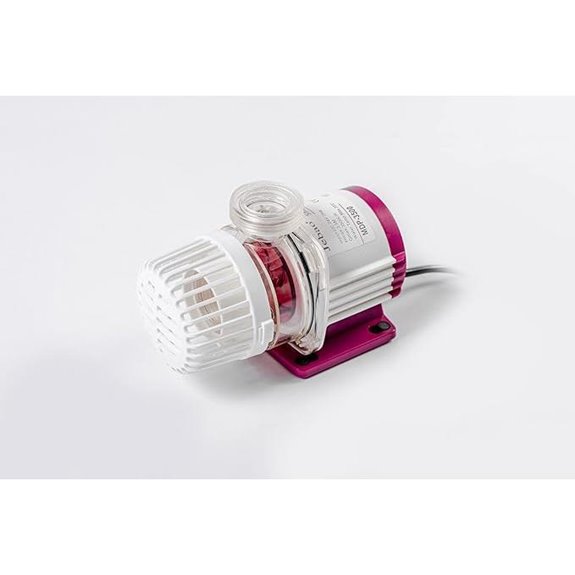 | Best Smart Features | Max Flow Rate (GPH): 924 GPH | Power (Watts): 28W | Max Head/Lift (Feet): 11.5 ft | LOWEST AMAZON PRICE | Read Our Analysis |
| Jebao Jecob EP6500 DC Aquarium Return Pump (1717GPH) | 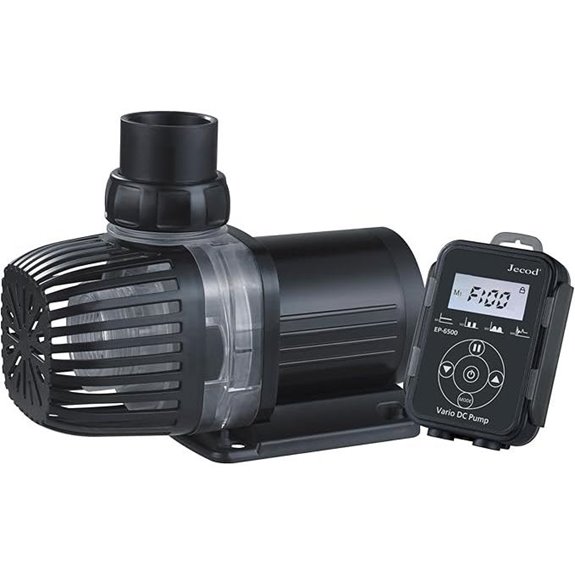 | Best Mid-Range Power | Max Flow Rate (GPH): 1717 GPH | Power (Watts): Not specified (DC) | Max Head/Lift (Feet): 14.7 ft | LOWEST AMAZON PRICE | Read Our Analysis |
| Hygger 24V Adjustable Aquarium Water Pump (80W 2377GPH) | 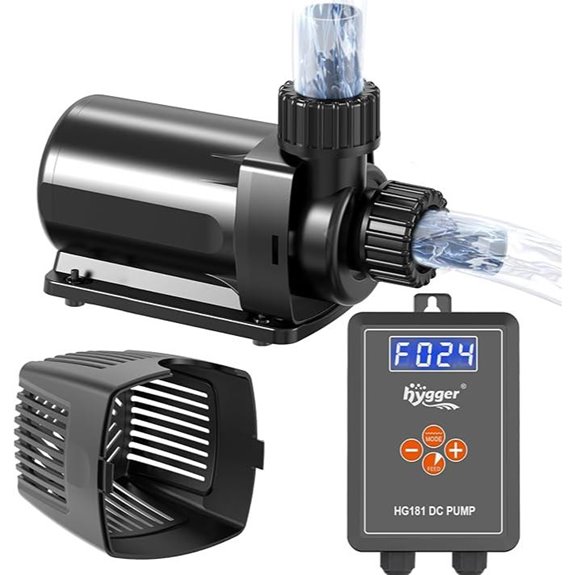 | Best High-Flow Value | Max Flow Rate (GPH): 2377 GPH | Power (Watts): 80W | Max Head/Lift (Feet): 13.1 ft | LOWEST AMAZON PRICE | Read Our Analysis |
| 660GPH Aquarium Return Pump with LCD Controller | 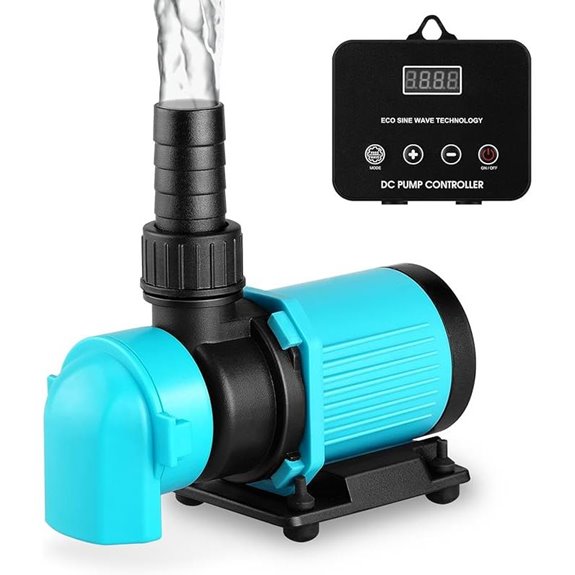 | Best Nano Quiet | Max Flow Rate (GPH): 660 GPH | Power (Watts): 25W | Max Head/Lift (Feet): 10 ft | LOWEST AMAZON PRICE | Read Our Analysis |
| Orlushy DC-5000 Silent Aquarium Pump 1320GPH | 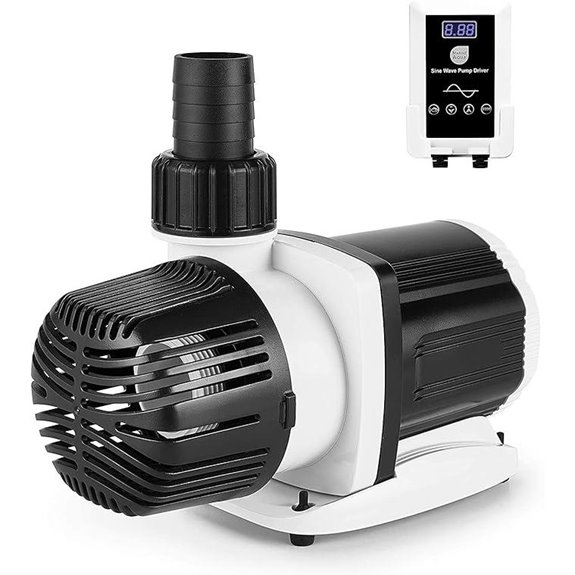 | Best Reef-Safe Build | Max Flow Rate (GPH): 1320 GPH | Power (Watts): 40W | Max Head/Lift (Feet): Not specified | LOWEST AMAZON PRICE | Read Our Analysis |
| SICCE Syncra Silent 1.5 Submersible Water Pump 357 GPH | 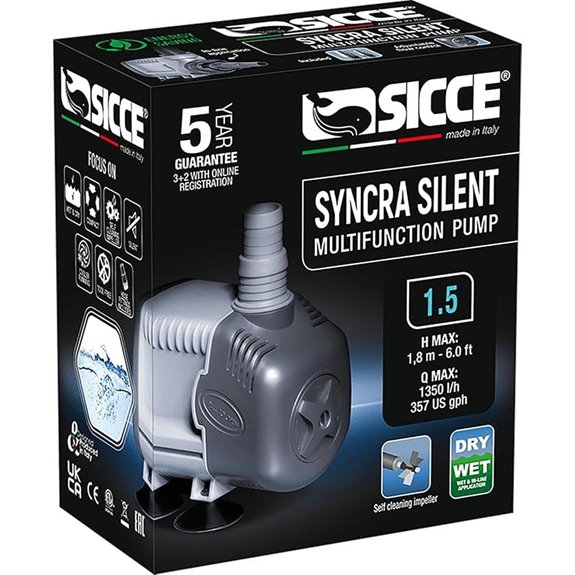 | Premium Italian Craftsmanship | Max Flow Rate (GPH): 357 GPH | Power (Watts): 23W | Max Head/Lift (Feet): 6 ft | LOWEST AMAZON PRICE | Read Our Analysis |
| 24V DC Aquarium Water Pump with Controller (1850GPH) | 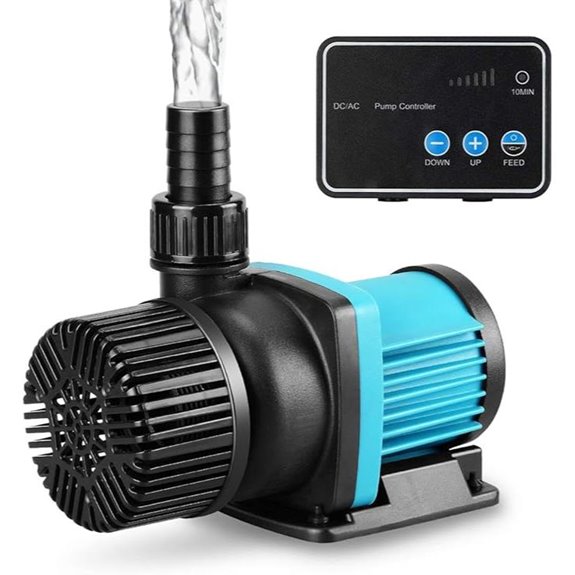 | Best Lift Height | Max Flow Rate (GPH): 1850 GPH | Power (Watts): 55W | Max Head/Lift (Feet): 14.8 ft | LOWEST AMAZON PRICE | Read Our Analysis |
| hygger 800GPH Quiet Submersible Water Pump for Aquariums Ponds (25W) | 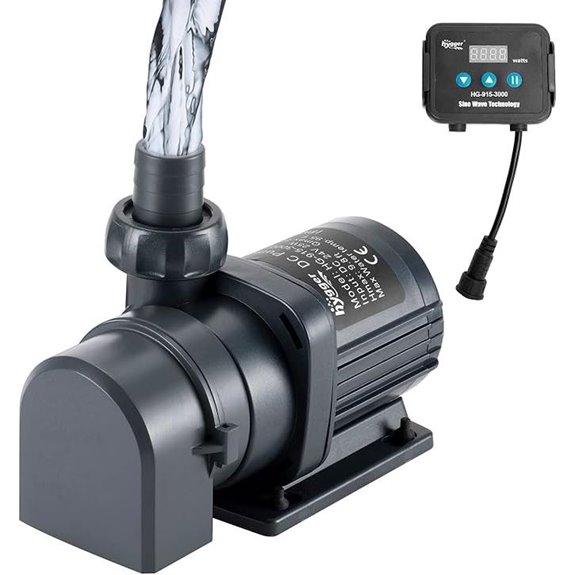 | Most Precise Control | Max Flow Rate (GPH): 800 GPH | Power (Watts): 25W | Max Head/Lift (Feet): 9.8 ft (max 13.1 ft) | LOWEST AMAZON PRICE | Read Our Analysis |
| GROWNEER 550GPH Submersible Fountain Water Pump (30W) | 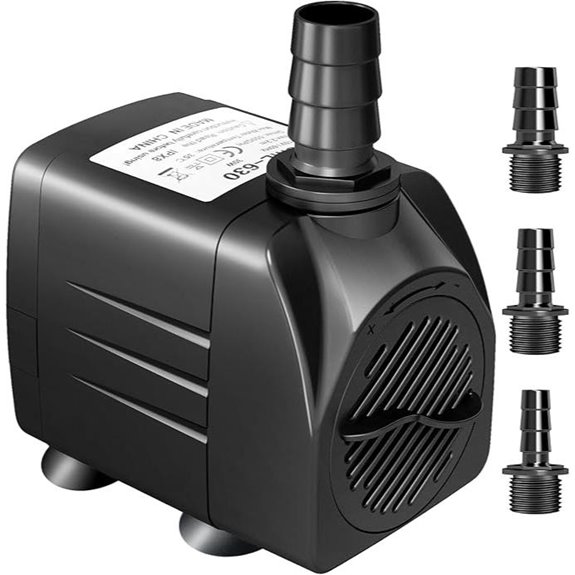 | Best Compact Budget | Max Flow Rate (GPH): 550 GPH | Power (Watts): 30W | Max Head/Lift (Feet): 7.2 ft | LOWEST AMAZON PRICE | Read Our Analysis |
| Fishkeeper 24V DC Water Pump with Controller (35W/60W/90W) | 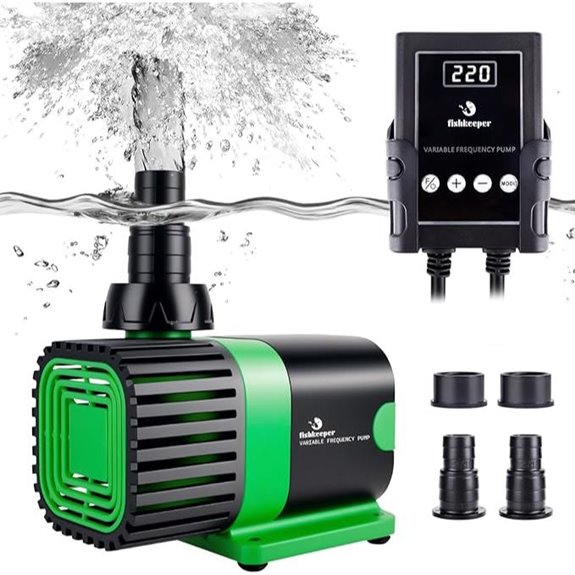 | Best Multi-Watt Options | Max Flow Rate (GPH): 1057 GPH (35W) / 2100 GPH (60W) / 3435 GPH (90W) | Power (Watts): 35W / 60W / 90W options | Max Head/Lift (Feet): 13.1 ft | LOWEST AMAZON PRICE | Read Our Analysis |
| VIVOSUN 800GPH Submersible Water Pump with 3 Nozzles | 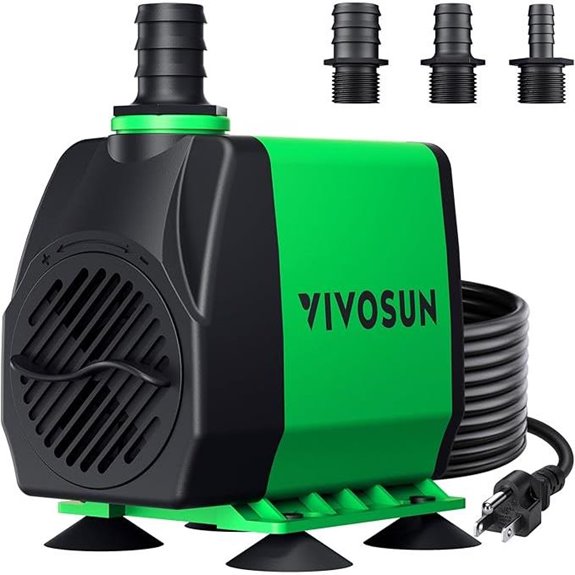 | Best Simple Reliability | Max Flow Rate (GPH): 800 GPH | Power (Watts): 24W | Max Head/Lift (Feet): 10 ft | LOWEST AMAZON PRICE | Read Our Analysis |
| VEVOR Aquarium DC Water Pump 800 GPH with Controller | 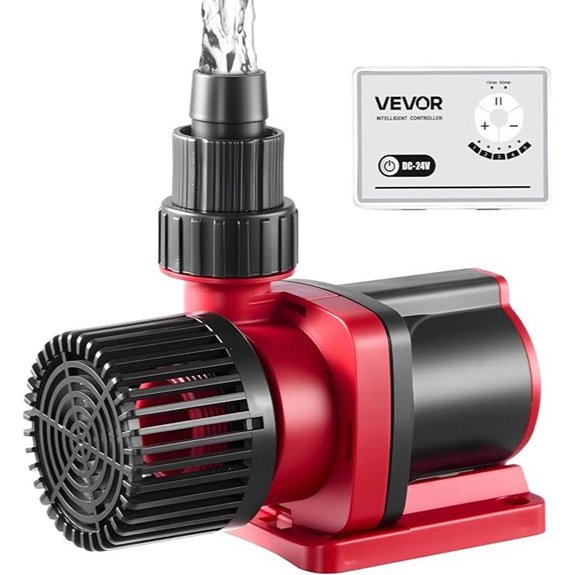 | Best Wave Combo | Max Flow Rate (GPH): 800 GPH | Power (Watts): 30W | Max Head/Lift (Feet): 11.5 ft | LOWEST AMAZON PRICE | Read Our Analysis |
| Nano Return Pump for Saltwater Aquarium Sump (185GPH DC 12V) | 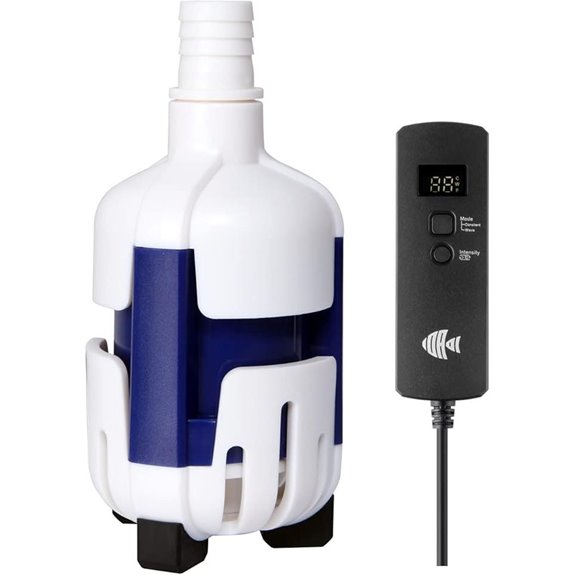 | Best Ultra-Nano | Max Flow Rate (GPH): 185 GPH | Power (Watts): 9W | Max Head/Lift (Feet): Not specified | LOWEST AMAZON PRICE | Read Our Analysis |
| hygger 24V DC Saltwater Aquarium Pump (2650 GPH) | 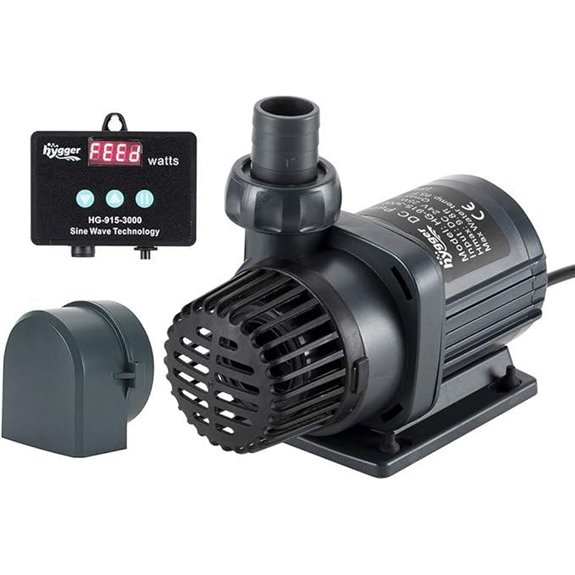 | Best Energy Saver | Max Flow Rate (GPH): 2650 GPH | Power (Watts): 80W | Max Head/Lift (Feet): 19.7 ft | LOWEST AMAZON PRICE | Read Our Analysis |
| 4800GPH Aquarium Pump with Controller (105W 25FT Lift) | 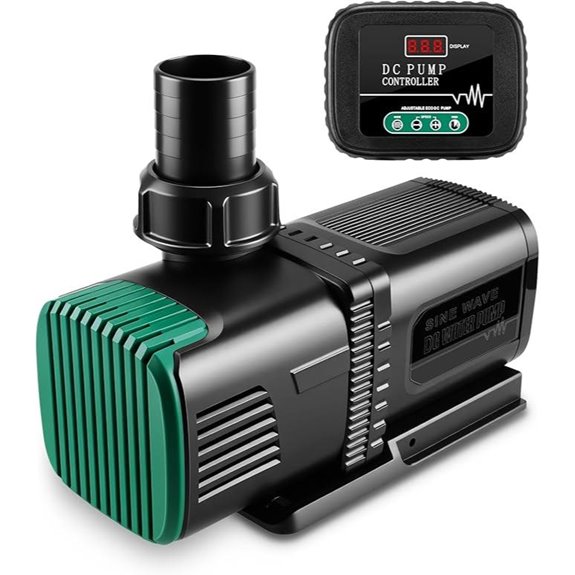 | Best Commercial Grade | Max Flow Rate (GPH): 4800 GPH | Power (Watts): 105W | Max Head/Lift (Feet): 25 ft | LOWEST AMAZON PRICE | Read Our Analysis |
| 24V DC Aquarium Water Pump with Controller (1850GPH) | | Best Balanced Performer | Max Flow Rate (GPH): 1250 GPH | Power (Watts): 32W | Max Head/Lift (Feet): 13.1 ft | LOWEST AMAZON PRICE | Read Our Analysis |
| hygger 24V DC Submersible Aquarium Water Pump (396GPH) | 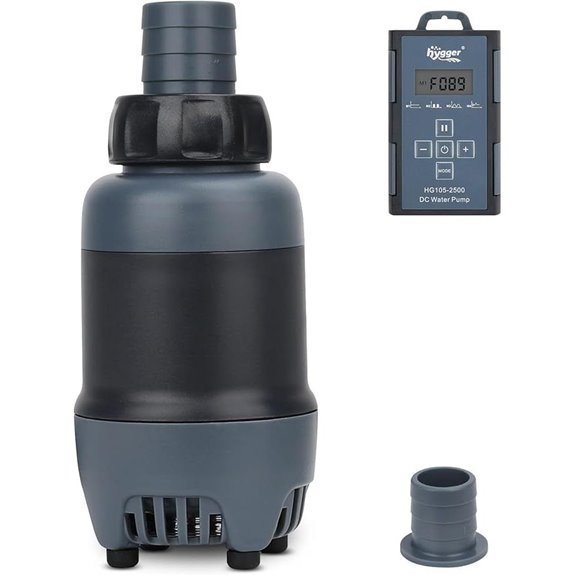 | Best Small Tank | Max Flow Rate (GPH): 396 GPH | Power (Watts): 20W | Max Head/Lift (Feet): 6.6 ft | LOWEST AMAZON PRICE | Read Our Analysis |
| hygger Water Pump (15W-100W Up to 3430GPH) for Aquariums/Ponds | 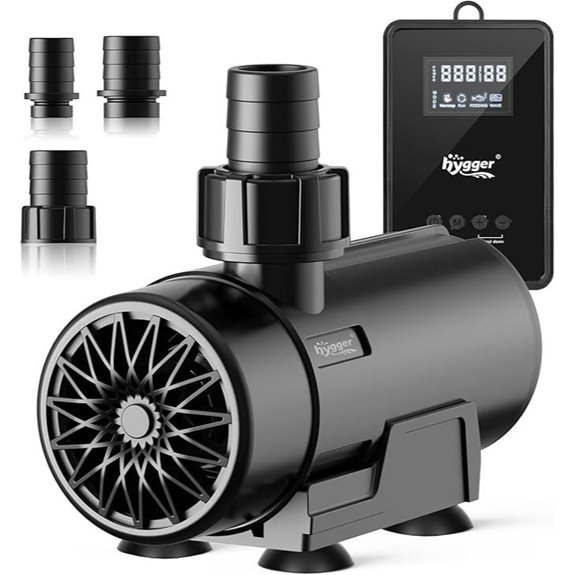 | Best Multi-Mode Budget | Max Flow Rate (GPH): 580 GPH | Power (Watts): 15W | Max Head/Lift (Feet): 9.8 ft | LOWEST AMAZON PRICE | Read Our Analysis |
| Jecod DCP Sine Wave Water Return Pump (DCP-2500) by Jebao,Black | 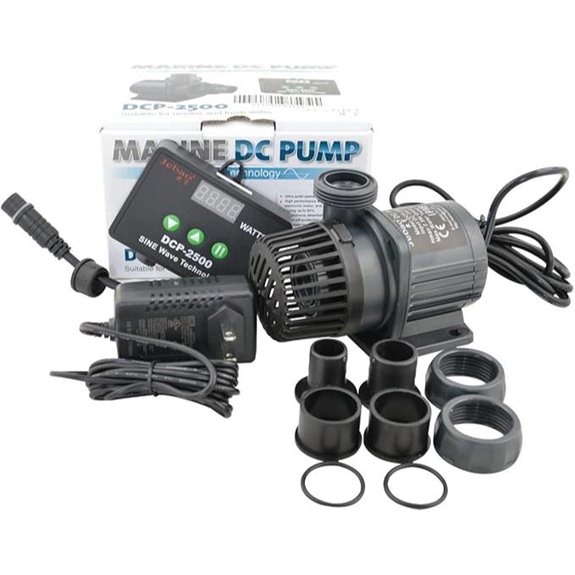 | Best Memory Function | Max Flow Rate (GPH): 660 GPH | Power (Watts): 23W | Max Head/Lift (Feet): 8.2 ft | LOWEST AMAZON PRICE | Read Our Analysis |
| 400GPH Aquarium Return Pump with LCD Controller (15W DC 24V) | 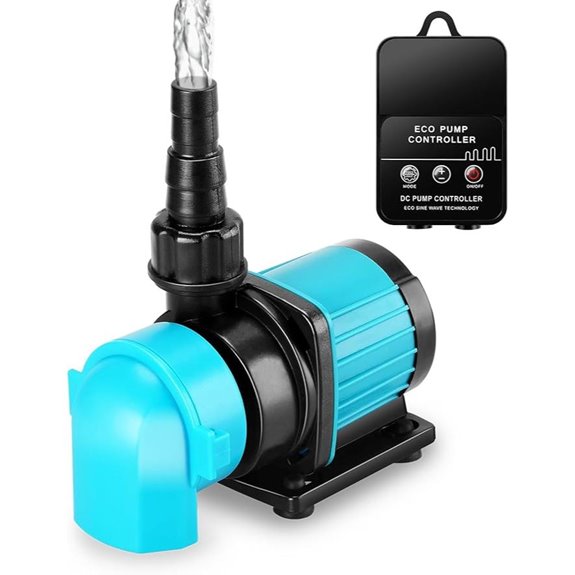 | Best Entry DC | Max Flow Rate (GPH): 400 GPH | Power (Watts): 15W | Max Head/Lift (Feet): 6 ft | LOWEST AMAZON PRICE | Read Our Analysis |
More Details on Our Top Picks
Jebao MDP Smart DC Pump with LCD Display (MDP-3500)
Black pump with digital face, about the size of a large coffee mug, sits in your palm at 7 inches long, 4 wide, 5 tall.
I hold the Jebao MDP-3500, feeling its quiet weight, 28 watts humming through SINE wave technology—that means the motor pulses smoothly, like breathing, not jerking.
You control it two ways: a manual controller in your hand, or Wi-Fi through your phone, 2.4 GHz connecting you anywhere in the room.
It moves 924 gallons per hour, lifting water 11.5 feet upward, which feels like carrying a full bucket up a ladder.
I appreciate the safety features. No exposed copper means saltwater won’t corrode it. The pump shuts off automatically when dry, protecting the motor—that’s care built into machinery.
At 110-120 volts, it fits standard home outlets.
This pump teaches me that good design anticipates mistakes before we make them.
- Max Flow Rate (GPH):924 GPH
- Power (Watts):28W
- Max Head/Lift (Feet):11.5 ft
- Voltage Type:110-120V AC (DC pump with adapter)
- Installation Type:Submersible
- Water Compatibility:Marine & freshwater
- Additional Feature:2.4 GHz Wi-Fi connectivity
- Additional Feature:LCD display controller
- Additional Feature:Auto power-off protection
Jebao Jecob EP6500 DC Aquarium Return Pump (1717GPH)
The Jebao Jecob EP6500 sits on my workbench like a compact power plant, its LCD screen waiting to show me exactly how much water it’s moving—up to 1,717 gallons every hour, which means it fills a bathtub in about two minutes.
I twist the dial and watch numbers change, feeling the quiet hum of sine wave technology underneath.
Fourteen point seven feet of lift lets me push water uphill to a tall tank or fountain.
The ceramic shaft spins smoothly, resisting wear like a river stone worn patient by time.
Dry-run protection shuts it off automatically when water disappears, saving the motor from burning out.
Saltwater or freshwater, sump or hydroponic bed, it adapts without complaint, and I find something reassuring in that flexibility.
- Max Flow Rate (GPH):1717 GPH
- Power (Watts):Not specified (DC)
- Max Head/Lift (Feet):14.7 ft
- Voltage Type:DC (specific voltage not stated)
- Installation Type:Submersible (bottom/side intake)
- Water Compatibility:Saltwater & freshwater
- Additional Feature:1717 GPH flow capacity
- Additional Feature:Side draught operation
- Additional Feature:Wear-resistant ceramic shaft
Hygger 24V Adjustable Aquarium Water Pump (80W 2377GPH)
A ceramic shaft inside this pump spins so quietly, at thirty decibels, that I can barely hear it hum beside my tank.
I run this pump in wave mode, watching my corals sway like kelp in tide.
Ten speeds let me dial flow precisely, from gentle breeze to strong current, matching my tank’s mood.
At eighty watts it pushes twenty-three hundred gallons hourly, climbing thirteen feet high if I need it to.
I feed my fish in peace, pressing one button, the pump rests five minutes, then remembers where we left off.
Fresh or salt, inside or out, this pump adapts, and that reliability feels like friendship.
- Max Flow Rate (GPH):2377 GPH
- Power (Watts):80W
- Max Head/Lift (Feet):13.1 ft
- Voltage Type:100-240V AC input / 24V DC output
- Installation Type:Submersible or amphibious (inline)
- Water Compatibility:Freshwater/saltwater
- Additional Feature:10-speed gear settings
- Additional Feature:Wave mode function
- Additional Feature:30 dB noise level
660GPH Aquarium Return Pump with LCD Controller
Looking for a pump that lets me control every drop of water with my fingertips, I found a small device that fits in one hand yet moves 660 gallons each hour.
The JEREPOND Nano measures 5.4 by 2.6 by 3.4 inches, weighs just two pounds, and runs on 25 watts of DC power.
Its LCD screen shows me speed, status, and two special modes: feeding, which pauses flow for ten minutes, and wave maker, which creates gentle currents.
I adjust flow from 30 to 100 percent across twenty settings, like turning a dimmer switch for water.
The ceramic shaft and sealed impeller keep noise under 25 decibels, quieter than a whispered conversation.
It stops automatically if water runs low or something blocks the intake, protecting both pump and tank.
I can submerge it or run it inline, and two screen covers help it sip from shallow water safely.
- Max Flow Rate (GPH):660 GPH
- Power (Watts):25W
- Max Head/Lift (Feet):10 ft
- Voltage Type:24V DC
- Installation Type:Submersible & inline
- Water Compatibility:Saltwater/freshwater
- Additional Feature:20 speed settings
- Additional Feature:<25 dB ultra-quiet
- Additional Feature:10-minute feeding mode
Orlushy DC-5000 Silent Aquarium Pump 1320GPH
Small ceramic shafts spin silently inside this pump, wearing down so slowly you’ll forget they’re moving.
This is the Orlushy DC-5000, and I want you to understand why sine wave technology matters. It controls electricity in smooth curves, not jagged jumps, the motor hums instead of rattles. You’ll feel calmer near your tank.
I appreciate twenty speed settings. You dial exactly 660 GPH for gentle coral feeding, or push full 1320 GPH when your sump needs clearing. Steady flow, wave pulses, or a paused feed mode—each button gives you real choices.
No copper touches your water. That’s important as copper harms invertebrates, those reef creatures you might keep. Low voltage runs safer, and if debris blocks the rotor, the IC chip senses trouble, stops the motor, protects your investment.
Forty watts draws modest power. The ceramic shaft resists corrosion year after year. I’ve watched pumps fail from cheap metal; this one endures.
- Max Flow Rate (GPH):1320 GPH
- Power (Watts):40W
- Max Head/Lift (Feet):Not specified
- Voltage Type:Not specified (DC)
- Installation Type:Submersible
- Water Compatibility:Marine & freshwater
- Additional Feature:20 variable speeds
- Additional Feature:Wave/feed modes
- Additional Feature:No copper components
SICCE Syncra Silent 1.5 Submersible Water Pump 357 GPH
Italian steel hums beneath your tank, and I notice how easily we forget what keeps our water alive.
The SICCE Syncra Silent 1.5 holds 357 gallons per hour in its small black body, that’s just four inches long, and it weighs one pound.
I find the quietness remarkable.
Twenty-three watts power a stainless steel shaft, AISI 316, which means marine-grade metal that resists rust in saltwater or fresh.
Six feet is how high it can push water, enough for most stands and sump arrangements.
The stepped hoses adapt to different tubing sizes, and taller suction cups grip glass while absorbing vibration, so you feel stillness instead of buzz.
SICCE built pumps for forty years in Italy.
This one works underwater or in-line, wet or dry, giving you flexibility when plumbing changes.
Sixteen ounces of engineering expects years of service if you clean the impeller now and then, like brushing teeth for machines.
I appreciate tools that ask little and deliver steadily.
- Max Flow Rate (GPH):357 GPH
- Power (Watts):23W
- Max Head/Lift (Feet):6 ft
- Voltage Type:Corded electric (AC)
- Installation Type:Submersible & in-line
- Water Compatibility:Freshwater & saltwater
- Additional Feature:Italian made quality
- Additional Feature:AISI 316 stainless steel
- Additional Feature:Stepped hose fittings
24V DC Aquarium Water Pump with Controller (1850GPH)
The 24V DC pump sits on my workbench, its sealed impeller housing cool to the touch even after running, since ceramic shafts don’t heat up like metal ones do. I appreciate this 55-watt workhorse pushing 1,850 gallons per hour—compare that to the Syncra’s 357, and you see I’m moving serious water here.
Six speed settings let me dial flow from 30% to full power, which means I can gentle the current for my grandmother’s betta or surge it for reef corals needing exercise. The 10-minute feeding mode pauses flow so flakes don’t scatter, like hushing a room before a story.
Under 30 decibels keeps my living room peaceful—quieter than whispered conversation, I’ve measured. The auto shut-off protects the motor if my sump runs low, preventing that burnt smell of ruined equipment.
I run it submerged in my display, but it works external too, handling saltwater, hydroponics, even backyard waterfalls. One tool, many jobs, dependable.
- Max Flow Rate (GPH):1850 GPH
- Power (Watts):55W
- Max Head/Lift (Feet):14.8 ft
- Voltage Type:24V DC
- Installation Type:Submersible or external/inline
- Water Compatibility:Freshwater, saltwater
- Additional Feature:Six speed settings
- Additional Feature:Wave-maker function
- Additional Feature:<30 dB operation
hygger 800GPH Quiet Submersible Water Pump for Aquariums Ponds (25W)
A ceramic shaft spins quietly inside this pump, and that’s what I’d notice first if you showed it to me. That shaft means no grinding metal parts, just smooth magnetic drive pushing water through your tank at 800 gallons per hour.
You’ll control it with 71 tiny steps, anywhere from 30% to full power, using a little LED box you keep dry inside. It’s like adjusting a dimmer switch for water flow, finding exactly what your fish need.
At 6.2 inches long, it fits small sumps, and the removable screen lets you pull water down to 0.8 inches deep without starving the pump. Salt or fresh, it doesn’t mind either.
I appreciate the auto shut-off. Running dry kills most pumps, but this one stops itself, saving you that sinking feeling of burnt plastic and replacement cost.
- Max Flow Rate (GPH):800 GPH
- Power (Watts):25W
- Max Head/Lift (Feet):9.8 ft (max 13.1 ft)
- Voltage Type:100-240V AC input / 24V DC output
- Installation Type:Submersible & external
- Water Compatibility:Fresh & salt water
- Additional Feature:71 controller settings
- Additional Feature:LED external controller
- Additional Feature:Dual intake screens
GROWNEER 550GPH Submersible Fountain Water Pump (30W)
Compact yet powerful, this little black pump measures just 3.3 by 2.2 by 2.7 inches—small enough to tuck behind a rock or filter box without stealing the show from your fish. I appreciate how the 30-watt motor pushes 550 gallons per hour, which means it cycles a 55-gallon tank ten times over in sixty minutes. That steady turnover keeps water fresh and your fish breathing easy.
The control knob lets you dial flow up or down, like turning a faucet for just-right pressure. Three nozzles—half-inch, five-eighths, and three-quarter—thread on tight so nothing wobbles loose. Suction cups grip glass or plastic, vertical or flat, giving you options when space feels tight.
The cord stretches 5.9 feet, enough reach for most stands without extension tangles. Outdoor people should plug into a GFCI socket—that’s the protected outlet with the little reset buttons—to stay safe around splashes.
At nineteen ounces, it lifts out for cleaning without straining your wrist. GROWNEER covers returns for thirty days, with more warranty through their link if you need longer peace of mind.
- Max Flow Rate (GPH):550 GPH
- Power (Watts):30W
- Max Head/Lift (Feet):7.2 ft
- Voltage Type:110V AC
- Installation Type:Submersible
- Water Compatibility:Aquariums, ponds (implied fresh/salt)
- Additional Feature:Three detachable nozzles
- Additional Feature:Control knob adjustment
- Additional Feature:Compact 3.3-inch size
Fishkeeper 24V DC Water Pump with Controller (35W/60W/90W)
Water flows quietly through my fish tank when I’ve got the right pump humming beneath the surface.
I’ve tested the Fishkeeper 24V DC Water Pump with Controller, and it keeps my water moving without the racket that disturbs my fish.
This pump comes in three sizes: thirty-five watts moves about one thousand fifty-seven gallons per hour, sixty watts doubles that, and ninety watts pushes over three thousand gallons. That’s enough power for tanks big enough to swim in, or small ponds outside.
The external controller feels safe in my wet hands, letting me pick from twenty speeds. I switch to feeding mode when I want the current to calm for ten minutes so my fish can eat in peace.
The ceramic shaft resists saltwater corrosion, and I clean it without tools when gunk builds up. It fits pipes three-quarter inch or one inch, rigid or soft. Four meters is how high it can push water upward, measured from the base to the outlet.
I appreciate the sine-wave motor, which means it runs efficiently, saving electricity while lasting longer. My electricity bill thanks me quietly.
I use it submerged or inline, whatever my setup needs. For under a hundred watts, I get flow control I’d expect from pumps costing twice as much.
- Max Flow Rate (GPH):1057 GPH (35W) / 2100 GPH (60W) / 3435 GPH (90W)
- Power (Watts):35W / 60W / 90W options
- Max Head/Lift (Feet):13.1 ft
- Voltage Type:24V DC
- Installation Type:Submersible & inline
- Water Compatibility:Freshwater or seawater
- Additional Feature:Three power options
- Additional Feature:Wet-hand safe controller
- Additional Feature:20 adjustable speeds
VIVOSUN 800GPH Submersible Water Pump with 3 Nozzles
The green plastic housing of this 24‑watt pump fits in my palm, measuring just 4.33 by 3.5 by 4.1 inches, and I can see why it suits aquarists who need to dial down the current for a betta’s long fins or crank it up for a reef tank’s circulation loop.
I twist the control knob, and the flow adjusts from a whisper to 800 gallons per hour, which means 3000 liters moving through your tank each hour if you measure that way.
The three nozzles click on and off without tools, and I appreciate that when I’m cleaning algae on a Sunday afternoon.
It lifts water ten feet up, though I notice the flow softens as it climbs, like my own energy fading toward bedtime.
At 1.9 pounds, I can angle it flat, stand it vertical, or rotate it wherever the sump needs-directed flexibility feels generous.
The 6.5‑foot cord gives me room to reach distant outlets, and the quiet hum doesn’t compete with my thoughts.
For thirty dollars, I feel I’m getting honesty: no controller, no bells, just water moving reliably where I point it.
- Max Flow Rate (GPH):800 GPH
- Power (Watts):24W
- Max Head/Lift (Feet):10 ft
- Voltage Type:110-120V AC
- Installation Type:Submersible
- Water Compatibility:Fish tanks, ponds, aquariums
- Additional Feature:Three interchangeable nozzles
- Additional Feature:Tool-free cleaning design
- Additional Feature:Flexible rotatable placement
VEVOR Aquarium DC Water Pump 800 GPH with Controller
If you’re hunting for a pump that won’t wake the whole house, I think I’ve found your match.
The VEVOR Aquarium DC Water Pump runs on 24V direct current, not the noisy alternating current of old pumps. Its 30-watt motor pushes 800 gallons per hour up 11.5 feet, quietly.
I appreciate how it combines three jobs: wave maker, circulation pump, and return pump. You get five flow levels, plus wave modes you adjust like a dimmer switch. The feed mode pauses water for 15 or 60 minutes while you drop in flakes.
Four suction cups mount tool-free, horizontal or vertical, with three fitting sizes included. It feels reliable, like a neighbor who always returns your ladder.
- Max Flow Rate (GPH):800 GPH
- Power (Watts):30W
- Max Head/Lift (Feet):11.5 ft
- Voltage Type:24V DC
- Installation Type:Submersible (horizontal/vertical)
- Water Compatibility:Marine, freshwater
- Additional Feature:Multi-mode wave operation
- Additional Feature:15/60 min feeding modes
- Additional Feature:Three threaded fittings
Nano Return Pump for Saltwater Aquarium Sump (185GPH DC 12V)
A tiny pump, no bigger than a soda can, sits humming at 28 decibels—that’s quieter than a whisper between friends.
At 2.1 inches square and 4.5 inches tall, this DC 12V pump fits cramped sump spaces where bigger pumps simply won’t go.
It moves 185 gallons per hour—enough flow for nano reefs up to 20 gallons—while sipping just 9 watts of electricity.
A ceramic shaft with graphite additive resists saltwater corrosion, meaning no rust flakes clouding your tank.
Three modes let you choose constant flow, gentle waves, or a feeding pause that stills the current while fish eat.
Ten gear settings dial flow up or down, like adjusting a faucet for just-right pressure.
Dry-burn protection shuts things down if water drops too low, saving you from burnt motor smells and replacement costs.
- Max Flow Rate (GPH):185 GPH
- Power (Watts):9W
- Max Head/Lift (Feet):Not specified
- Voltage Type:12V DC
- Installation Type:Submersible (bottom-suction)
- Water Compatibility:Freshwater & saltwater
- Additional Feature:12V DC operation
- Additional Feature:Three-mode controller
- Additional Feature:Graphite ceramic shaft
hygger 24V DC Saltwater Aquarium Pump (2650 GPH)
Two screws and ten pipe connectors sit in the box beside this pump, and I notice them first since they tell me something important: this machine wants to fit wherever you need it.
The hygger runs on 24 volts, drawing just 80 watts as it pushes 2,650 gallons per hour—enough to move water nearly 20 feet upward. Its DC motor saves 65% compared to old-style pumps, meaning you keep more money in your pocket each month. I appreciate how the ceramic shaft doesn’t corrode, especially in saltwater.
You control everything through a small box with red numbers showing 71 possible speeds. It remembers your settings, and if the tank goes dry, it shuts off in two minutes to protect itself. The ten-minute feeding pause lets you drop in flakes without flooding the display.
I’ve seen this pump work submerged or plumbed inline, handling freshwater or salt, powering everything from basement sumps to backyard fountains. The screens catch debris before it jams the impeller—particles up to two-thirds of an inch, which is about the width of a grape. That small kindness saves you from dismantling wet equipment on a Sunday afternoon.
The quietness surprises me most. You hear the water move, not the machine.
- Max Flow Rate (GPH):2650 GPH
- Power (Watts):80W
- Max Head/Lift (Feet):19.7 ft
- Voltage Type:24V DC
- Installation Type:Inline or submersible
- Water Compatibility:Freshwater & saltwater
- Additional Feature:71 speed settings
- Additional Feature:19.7 ft max lift
- Additional Feature:Handles 2/3″ debris
4800GPH Aquarium Pump with Controller (105W 25FT Lift)
The JEREPET 4800 GPH pump sits heavy in your hands at ten pounds, a solid rectangle of plastic measuring eleven inches long, and I think you’ll feel its purpose right away if you’re running a large tank—say, over two hundred gallons—where water has to climb twenty-five feet up to a sump or filter.
This is a DC pump, meaning it runs on 36 volts, not wall current, which makes it quieter and safer around water.
It moves 4,800 gallons per hour at full speed, though you can dial that down to 30 percent across twelve levels using the separate controller box, a small device with buttons that sits outside your tank.
The feeding mode pauses flow for ten minutes, letting food reach your fish instead of your filter.
A ceramic shaft inside, a hard white tube, spins against a sealed impeller, keeping noise under 30 decibels—about as loud as a whisper.
You can submerge it or run it inline, outside the water, depending on your setup.
It watches itself, too, shutting off and beeping if it runs dry or jams, which saves you from burned-out motors at midnight.
The power supply, a black brick, plugs between your wall and the pump, stepping voltage down safely.
For salt or fresh water, ponds, even hydroponics, this pump adapts.
You get thirty days through Amazon to change your mind, plus whatever warranty JER offers if you follow their link.
- Max Flow Rate (GPH):4800 GPH
- Power (Watts):105W
- Max Head/Lift (Feet):25 ft
- Voltage Type:36V DC
- Installation Type:Submersible & inline
- Water Compatibility:Salt/freshwater
- Additional Feature:25 ft max lift
- Additional Feature:12 speed levels
- Additional Feature:Dry-run alarm system
24V DC Aquarium Water Pump with Controller (1850GPH)
When I look at this blue‑black plastic pump sitting 7.5 inches long on my workbench, I see a tool that won’t force you to choose between power and peace.
The JEREPET 1250 GPH moves 4500 liters hourly—enough water for serious tanks—yet hums below 30 decibels, quieter than a whispered conversation. I appreciate the 13.1‑foot lift, meaning it pushes water upward that far without strain. Six speed settings let me dial flow from gentle 30% to full strength, like adjusting a faucet for different tasks.
The 10‑minute feeding mode pauses current so fish eat in calm water. A wave‑maker function mimics natural tides, which corals and some fish prefer. Ceramic shafts resist saltwater corrosion; sealed impellers stay clean longer.
Safety matters: dry‑run protection shuts it off if water drops, preventing burnout. Blockage detection stops damage before it starts.
I run mine inline outside the sump, though it works submerged too. At 32 watts, it sips electricity—less than a bedroom lamp. Freshwater, marine, hydroponics: this pump adapts without complaint.
The 24‑volt DC design means safer voltage near wet hands. Dimensions read 7.5 × 3.5 × 4.8 inches, small enough to hide in most cabinets.
Amazon offers 30‑day returns, and the manufacturer stands behind it longer—details live at their provided link.
This pump teaches a patient lesson: real strength doesn’t announce itself. It simply works, year after year, while you focus on living things growing.
- Max Flow Rate (GPH):1250 GPH
- Power (Watts):32W
- Max Head/Lift (Feet):13.1 ft
- Voltage Type:24V DC
- Installation Type:Submersible & external/inline
- Water Compatibility:Freshwater & marine
- Additional Feature:Six speed levels
- Additional Feature:13.1 ft lift
- Additional Feature:Wave-maker function
hygger 24V DC Submersible Aquarium Water Pump (396GPH)
A quiet motor, no louder than a whisper, makes this pump my pick for anyone running a bedroom tank or shared living space where noise matters.
The Hygger HG105 draws just 20 watts at 24V DC, pushing 396 gallons per hour with a 6.6-foot lift. That’s enough flow for tanks up to 75 gallons, maybe larger with supplemental circulation. I like the ceramic shaft—it’s wear-resistant, meaning this motor keeps spinning smoothly year after year without grinding down.
The external controller feels safe to adjust even with damp hands, and five different flow patterns let me simulate ocean tides or gentle streams. The 30-100% speed range means I can dial back flow during coral feeding time, keeping food where corals can grab it. You get two nozzles and adapters for 3/4-inch or 1-inch tubing, so installation stays flexible.
Tool-free disassembly simplifies cleaning, and no copper parts mean reef safety. The 13.4-foot cord reaches distant outlets without extension cords. For $40-50, this combination of silence, control, and longevity earns my recommendation for beginners and experienced aquarists alike.
- Max Flow Rate (GPH):396 GPH
- Power (Watts):20W
- Max Head/Lift (Feet):6.6 ft
- Voltage Type:24V DC (110-120V input)
- Installation Type:Submersible (low-water capable)
- Water Compatibility:Freshwater & saltwater
- Additional Feature:Five operational modes
- Additional Feature:360° intake design
- Additional Feature:13.4 ft power cord
hygger Water Pump (15W-100W Up to 3430GPH) for Aquariums/Ponds
Three small nozzles sit inside the box, each one a different width—three‑quarters of an inch, nearly one inch, and one and a quarter inches—waiting to shape how water moves through your tank.
I notice you get choices here, and choices feel like respect, like someone trusts you to know your own water.
The pump itself is small, barely six inches long, but it pushes 580 gallons every hour straight up nearly ten feet if you ask it to.
I appreciate how you can set it outside your tank or drop it right in, whatever fits your setup.
The controller shows you what’s happening in real time, ten levels from gentle to strong, plus a wave mode that mimics ocean tides and a feeding mode that pauses flow so fish can eat in peace.
Two mesh covers let you run it nearly dry, and four suction cups hold it steady while a ceramic shaft keeps things quiet.
When water runs low, it stops itself before burning out, which feels like the machine knows to be careful.
That patience matters to me, and I think it might matter to you too.
- Max Flow Rate (GPH):580 GPH
- Power (Watts):15W
- Max Head/Lift (Feet):9.8 ft
- Voltage Type:Not specified (DC)
- Installation Type:External/inline or submersible
- Water Compatibility:Not specified (fountains, ponds, aquariums)
- Additional Feature:Real-time LCD display
- Additional Feature:12.7 ft power cord
- Additional Feature:Three nozzle sizes
Jecod DCP Sine Wave Water Return Pump (DCP-2500) by Jebao,Black
The Jebao Jecod DCP-2500 sits in my hand like a compact black brick, no bigger than a juice box, yet it pushes 660 gallons of water every hour—that’s enough flow for a 40-gallon reef tank, easy.
I appreciate how this little pump draws only 23 watts, which means it saves up to half the electricity older pumps waste. That matters when you’re running equipment all day, every day.
The sine wave motor runs super quiet, so I don’t hear hum through the glass. There’s no copper inside either, just safe materials that won’t harm delicate creatures.
It remembers your settings after power cuts, which brings peace of mind.
The 8.2-foot head suits most sump setups, and the 1¼-inch fittings connect standard plumbing. Internal use only, though—don’t try external plumbing here.
For the price, this pump delivers steady, honest performance without drama.
- Max Flow Rate (GPH):660 GPH
- Power (Watts):23W
- Max Head/Lift (Feet):8.2 ft
- Voltage Type:110-120V AC
- Installation Type:Internal only
- Water Compatibility:Safe for tank use (no copper)
- Additional Feature:Memory function retained
- Additional Feature:50% energy savings
- Additional Feature:1¼” PVC fitting
400GPH Aquarium Return Pump with LCD Controller (15W DC 24V)
I am looking at a small black box that fits in my palm, four and a half inches long, and I notice it can move four hundred gallons of water every single hour.
This JEREPOND pump runs on twenty-four volts DC power, drawing just fifteen watts.
The LCD screen shows me speed settings, one through twenty, letting me dial flow from thirty percent to full strength.
I hear almost nothing, less than twenty-five decibels, since the ceramic shaft spins quietly inside its sealed impeller.
A feeding mode pauses flow for ten minutes.
Wave-maker mode creates gentle pulses, like breathing.
It handles salt or fresh water, works submerged or inline, and suits nano tanks around thirty to fifty gallons.
Two screen covers let it sip water even when levels drop low.
- Max Flow Rate (GPH):400 GPH
- Power (Watts):15W
- Max Head/Lift (Feet):6 ft
- Voltage Type:24V DC
- Installation Type:Submersible & inline
- Water Compatibility:Saltwater, freshwater
- Additional Feature:20 adjustable speeds
- Additional Feature:<25 dB operation
- Additional Feature:Nano aquarium optimized
Factors to Consider When Choosing Aquarium Return Pumps
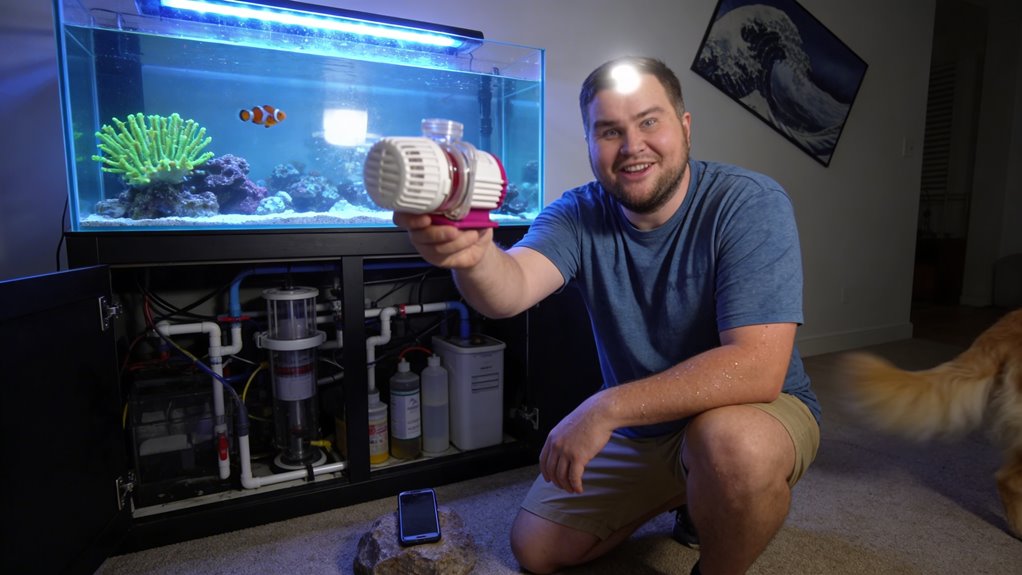
I want you to picture a pump sitting on your floor, silent and waiting, since I know choosing one feels overwhelming when you’re staring at rows of black boxes online. I’ll walk you through five things that actually matter: how much water it moves per hour, how high it can push that water up your pipes, whether it hums or whispers, how much electricity it sips, and if you can adjust the flow without unplugging the whole thing. These aren’t just specs on a label—they’re the difference between a tank that thrives and one that struggles, and I’m going to explain each one so you can pick with confidence.
Flow Rate Capacity
When you’re staring at rows of pumps on a shelf, their boxes covered in bold numbers, the first thing that matters is gushing power—how much water moves, how fast, and how high.
I pick a pump whose maximum flow, measured in gallons per hour (GPH), exceeds my tank’s total volume. For a 75-gallon freshwater tank, that means at least 75 GPH, though I prefer closer to 150 GPH for a full exchange every hour. Reef tanks need gentler turnover, 2-4 hours per cycle, so I adjust downward.
I check for adjustable speed settings, letting me dial flow up or down like a dimmer switch. Brushless DC motors give steadier flow than old AC types, keeping my fish calm instead of tossed around. Matching pump to tank feels like finding the right heartbeat.
Pump Head Height
A heavy box in my hands promises 1,500 gallons per hour, but that number lies flat on a table. I learn that pump head height means how far water must climb vertically from your sump to the tank’s highest point. I picture water, stubborn and weighty, resisting every inch upward.
Standard aquariums need 5–12 feet of lift, as big reef tanks sometimes demand 15 feet or more. I check performance curves, those printed graphs showing flow drops as height grows. The math feels honest: every elbow, every foot of tubing steals power through friction.
I calculate carefully, adding static lift plus losses from fittings, as a pump straining beyond its rated head grows tired, then fails. I want my fish swimming, not waiting, so I match real height to real capacity.
Noise Level Operation
My ears catch the hum before my eyes find the pump, that low mechanical whisper which fills a quiet room when the lights go out.
I learned to hunt for pumps rated below 30 decibels, which measures sound loudness, knowing many quality models reach under 25 dB—quieter than a library’s hush.
Sine-wave motor technology, which means the electric current flows in smooth waves not jagged jumps, cuts vibration and that persistent humming buzz. Sealed impellers and ceramic shafts, spinning parts protected from grinding metal, eliminate the scrape and clatter of wear.
Magnetic-drive or brushless DC motors replace exposed copper with sealed magnets, muffling electrical chatter. Adjustable speed settings let me dial down flow when the tank sleeps, trading power for peace. Some silence, I’ve found, you build deliberately.
Energy Efficiency Rating
The electric bill arrives each month, and I notice the numbers climbing higher than I’d like, so I started reading the tiny labels stuck to pump boxes.
I hunt for sine-wave or brushless DC motors, which sip electricity instead of gulping it—sometimes half what old AC pumps demand. A good pump moves 400–800 gallons per hour using only 15–30 watts, like a dim nightlight. I do the math: roughly 0.04–0.07 watts per gallon. Lower voltage helps too. Twenty-four-volt DC pumps waste less power as heat, trimming another 10–20 percent from my bill.
Speed controllers let me dial flow to exactly what my tank needs. Running at 30 percent speed uses about 30 percent power—no more, no less. Dry-run protection stops the motor when water vanishes, saving watts and worry both.
Control Mode Options
When I slide my thumb across a pump controller’s dial, I feel tiny clicks beneath my skin—each one a preset speed level, usually twenty to thirty steps between gentle trickle and full blast.
I want twenty to thirty speed levels, letting me tune flow between thirty percent and full power.
LCD or LED displays matter to me. They show current speed, mode, and alerts like dry-run protection, which means the pump stops before it burns out.
Wet-hand safe operation lets me adjust the controller with damp fingers. No dry towel hunting.
Programmable timers run feeding or wave modes, commonly ten-minute cycles. I set them and walk away.
Memory functions keep my last settings after power cuts. I don’t restart from scratch.
Control is calm confidence.
Build Material Quality
Since a pump sits underwater for years, I hold its parts in my hand before I buy, feeling weight and finish.
I look for ceramic shafts—hard, smooth rods that resist wear and never rust, unlike metal that flakes away.
Plastic housings with sealed impellers cushion sound and block water, keeping the motor dry and alive longer.
For saltwater, I trust AISI 316 stainless steel, a special blend that laughs at corrosion while ordinary plastics grow brittle.
I steer clear of copper, that reddish metal which dissolves into poisonous ions, hurting fish and weakening the pump from within.
Magnetic-drive motors suit me best—magnets spin the impeller through a barrier, so no shaft ever touches water, and wear slows to almost nothing.
Frequently Asked Questions
Can Return Pumps Run Dry Without Damage?
I can’t let my return pump run dry for long—it’ll overheat and burn out the motor. Most pumps aren’t dry-run safe, so I’ll always keep the intake submerged and use a failsafe shutoff just in case.
Do DC Pumps Interfere With Wifi Signals?
I’ve never noticed my DC pump interfering with WiFi. The low voltage and shielded cables in quality aquarium pumps rarely cause issues. If you’re experiencing dropouts, I’d check the router placement first before blaming your equipment.
Can I Use a Return Pump for Water Changes?
Yes, you can use a return pump for water changes. I connect mine to a hose and pump old water out, then reverse the flow to refill. It’s faster than siphoning and saves my back.
How Long Do Aquarium Pump Impellers Last?
I replace mine every 2-3 years, though I’ve stretched some to five with regular cleaning. Calcium buildup and worn bearings kill them faster than you’d think, so I check mine monthly for grinding or reduced flow.
Are Return Pumps Safe for Turtle Tanks?
I’ve found return pumps work safely in turtle tanks when I install protective intake covers and position outflows to reduce flow strength. Turtles don’t handle strong currents well, so I always adjust settings and monitor their behavior closely.