I’ve bought more pond test kits than I care to admit, and after years of squinting at color charts and dunking strips into murky water, I’ve learned what actually works.
The Aquarium Test Strips come in a thin cardboard cylinder packed with 150 paper strips—enough to last seasons of weekly checks.
They test pH, hardness, chlorine, and more with just a thirty-second dip, making them my go-to for quick snapshots of water health.
The API Pond 5-in-1 keeps things simpler with twenty-five strips in a snap-tight tube, pocket-light enough that I toss it in my kit without a second thought.
For weekly checks, it’s reliable without overwhelming you with data you won’t use.
Then there’s the Digital Aquarium 10-in-1, which finally ended my endless debates about whether a color matched peach or coral—your phone camera reads the shades and delivers actual numbers.
The 5Strands Blue-Green Algae kit operates differently entirely, detecting dangerous toxins in fifteen minutes with two simple lines on a white slide.
I keep one ready whenever my water turns suspiciously green after summer heat.
The Coliform Bacteria kit demands more patience, waiting forty-eight hours to warn you about unseen threats in well water or camping spots.
Each tool serves a purpose, like choosing a screwdriver or a hammer for the job at hand.
I’ve learned that matching the kit to your water type—fresh or salt—matters more than buying the biggest pack or the flashiest app.
| Aquarium Test Strips 7-Way Water Test Kit (150 ct) | 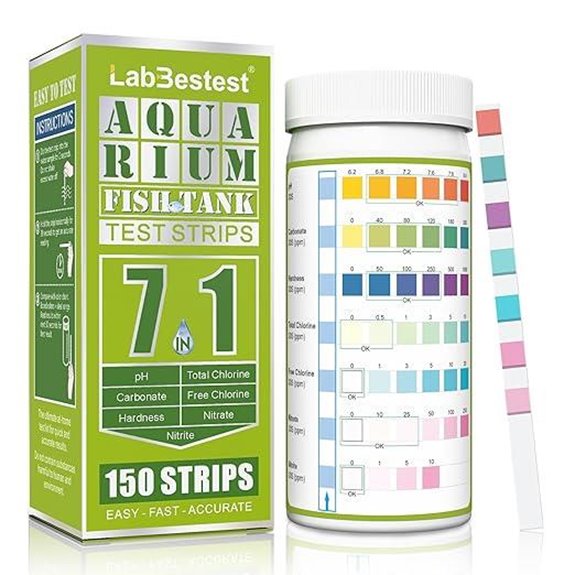 | Best High-Capacity Value | Test Format: Test strips | Parameters Measured Count: 7-way | Total Test Capacity: 150 tests | LOWEST AMAZON PRICE | Read Our Analysis |
| API POND 5 IN 1 POND TEST STRIPS Pond Water Test Strips 25-Count | 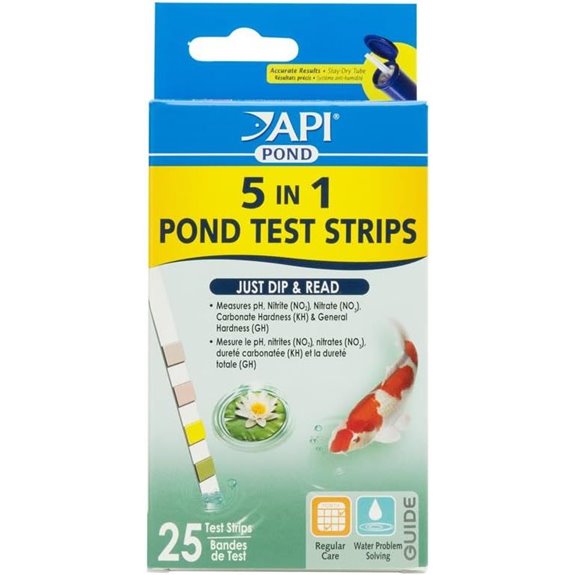 | Best Pond-Specific Classic | Test Format: Test strips | Parameters Measured Count: 5-in-1 | Total Test Capacity: 25 tests | LOWEST AMAZON PRICE | Read Our Analysis |
| 5Strands Blue Green Algae Water Test Kit (2-Pack) | 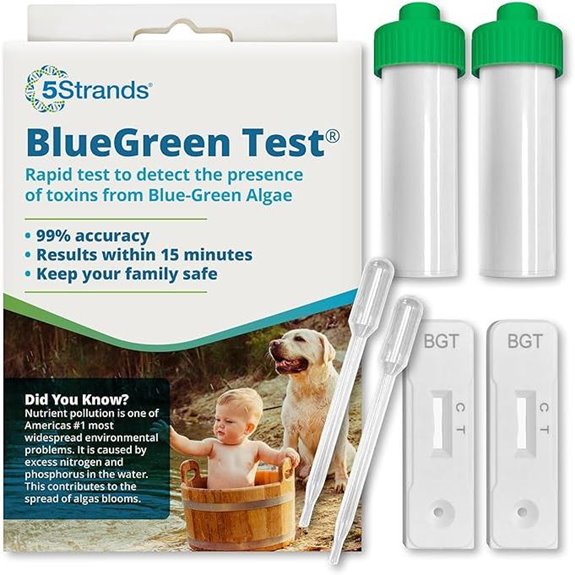 | Best for Algae Detection | Test Format: Slide/drop test kit | Parameters Measured Count: 1 (algae only) | Total Test Capacity: 2 tests | LOWEST AMAZON PRICE | Read Our Analysis |
| Coliform Bacteria Water Test Kit (12-Pack) | 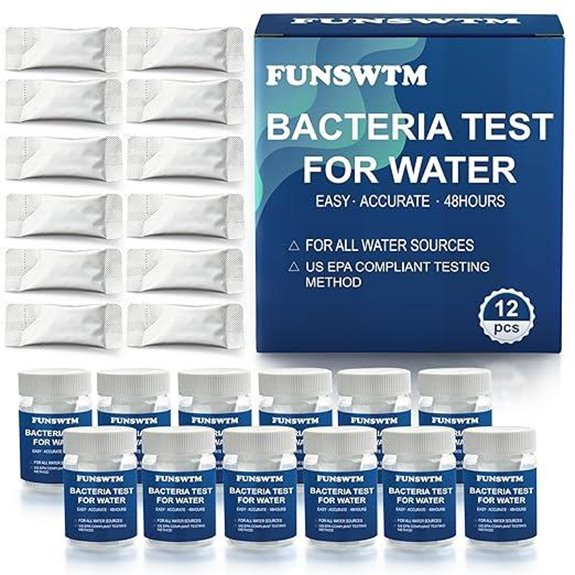 | Best for Bacteria Testing | Test Format: Cartridge test kit | Parameters Measured Count: 1 (coliform bacteria) | Total Test Capacity: 12 tests | LOWEST AMAZON PRICE | Read Our Analysis |
| Digital Aquarium 10-in-1 Water Test Kit | 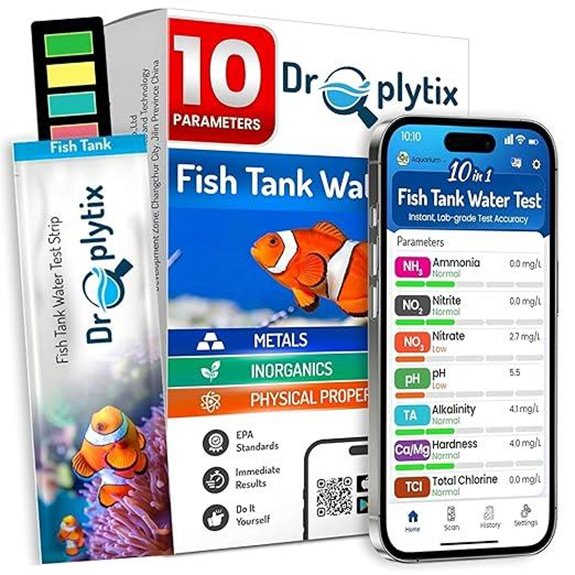 | Best Digital Innovation | Test Format: Digital/app-enabled strips | Parameters Measured Count: 10-in-1 | Total Test Capacity: 10 tests | LOWEST AMAZON PRICE | Read Our Analysis |
| 7-in-1 Pond Water Test Kit (50 Strips) | 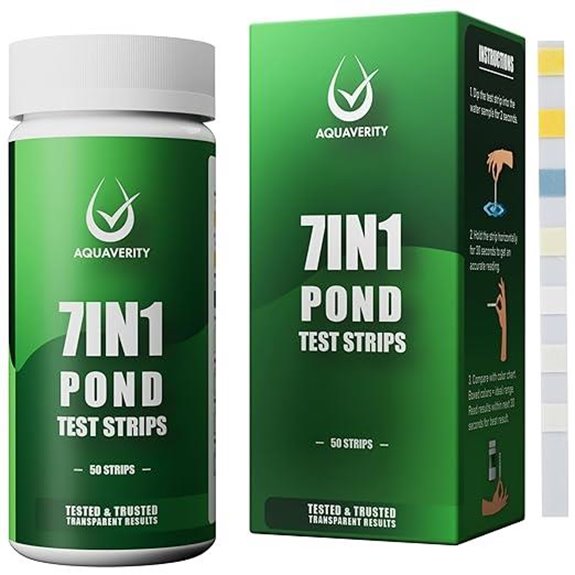 | Best All-Purpose Pond Kit | Test Format: Test strips | Parameters Measured Count: 7-in-1 | Total Test Capacity: 50 tests | LOWEST AMAZON PRICE | Read Our Analysis |
| JNW Direct Pond Test Strips 7-in-1 Water Testing Kit | 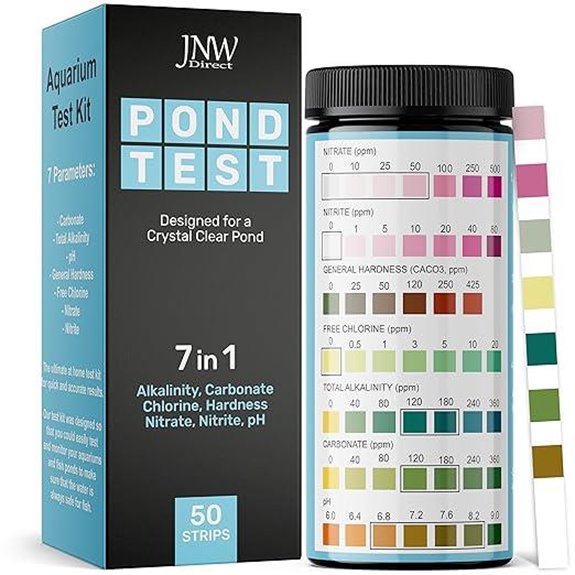 | Most Educational | Test Format: Test strips | Parameters Measured Count: 7-in-1 | Total Test Capacity: 50 tests | LOWEST AMAZON PRICE | Read Our Analysis |
| Aqueon 7-in-1 Aquarium Test Strips 50 Count | 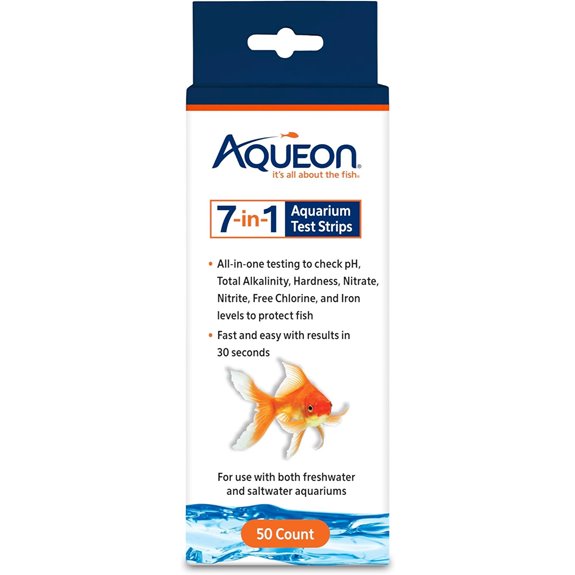 | Best for Iron Detection | Test Format: Test strips | Parameters Measured Count: 7-in-1 | Total Test Capacity: 50 tests | LOWEST AMAZON PRICE | Read Our Analysis |
| API POND WIDE RANGE pH TEST KIT 160-Test Pond Water Test Kit | 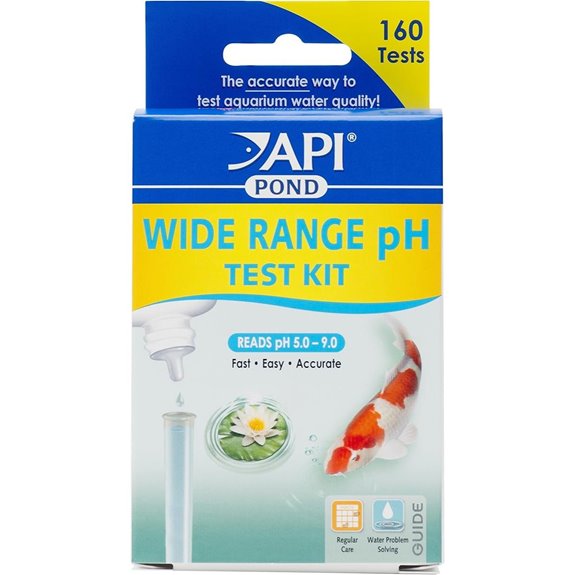 | Best pH Specialist | Test Format: Liquid solution test kit | Parameters Measured Count: 1 (pH only) | Total Test Capacity: 160 tests | LOWEST AMAZON PRICE | Read Our Analysis |
| 950-Test Aquarium Water Test Strips with Thermometer | 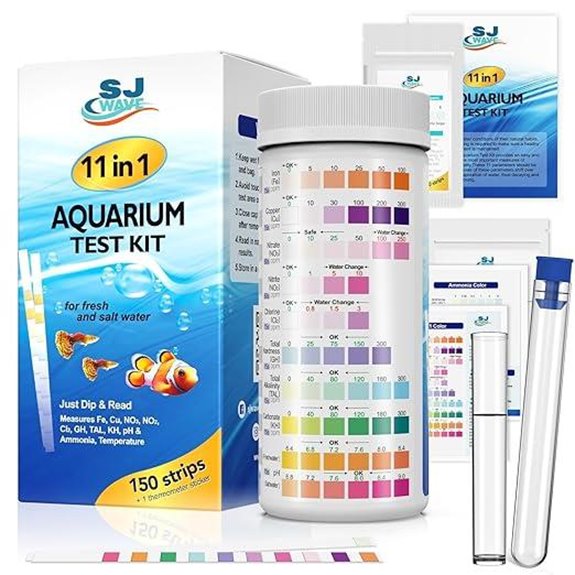 | Ultimate Test Volume | Test Format: Test strips | Parameters Measured Count: 11-in-1 | Total Test Capacity: 950 tests | LOWEST AMAZON PRICE | Read Our Analysis |
| Fritz 6 in 1 Aquarium Test Strips (100 Count) | 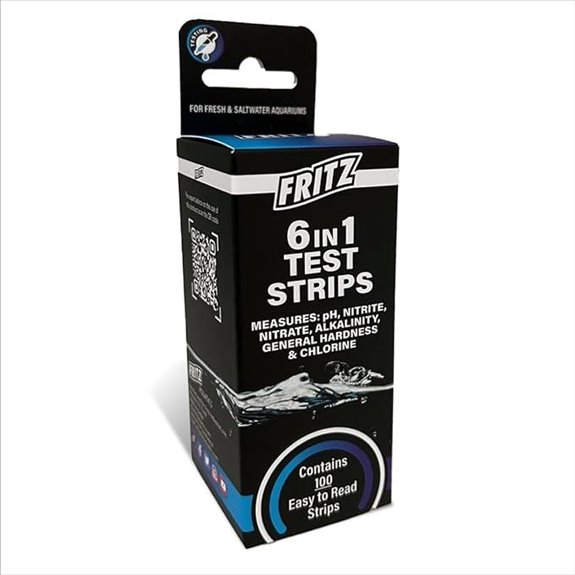 | Top-Rated Newcomer | Test Format: Test strips | Parameters Measured Count: 6-in-1 | Total Test Capacity: 100 tests | LOWEST AMAZON PRICE | Read Our Analysis |
| Half Off Ponds 4-in-1 Water Test Kit (215 Tests) | 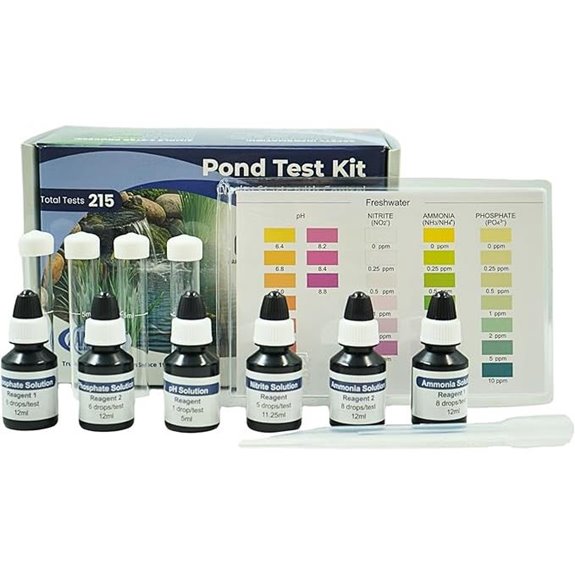 | Best Liquid Test Method | Test Format: Liquid drop test kit | Parameters Measured Count: 4-in-1 | Total Test Capacity: 215 tests | LOWEST AMAZON PRICE | Read Our Analysis |
| Aquarium Water Test Kit 9-in-1 150 Strips for Fresh and Salt Water | 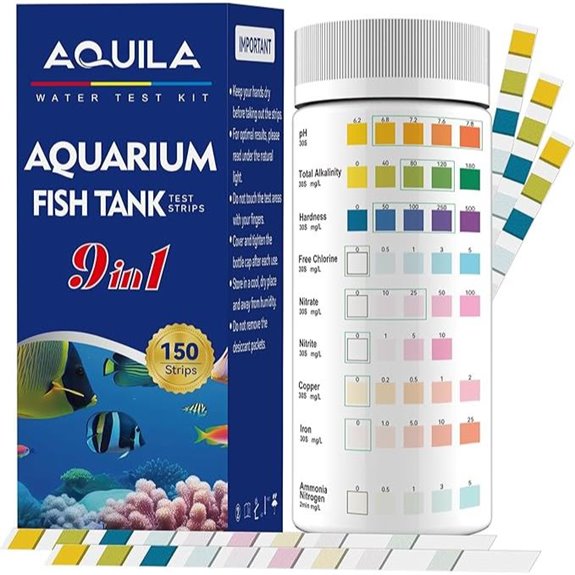 | Best Copper & Sulfate Testing | Test Format: Test strips | Parameters Measured Count: 9-in-1 | Total Test Capacity: 150 tests | LOWEST AMAZON PRICE | Read Our Analysis |
| AAwipes 8-in-1 Aquarium Test Kit for Fish Tanks (K02-50) | 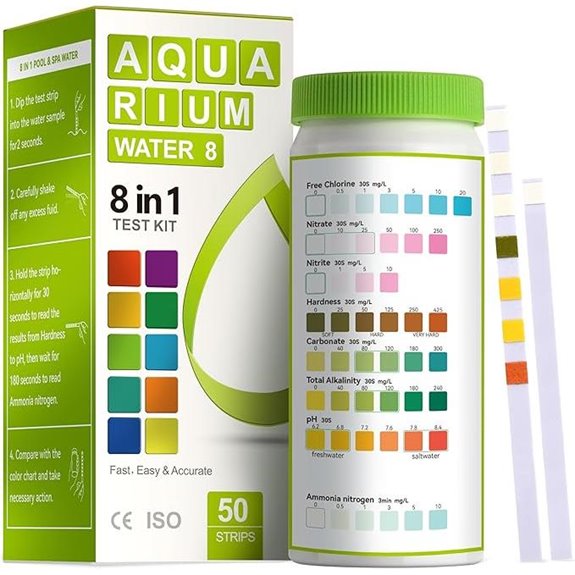 | Best Reviewed Accuracy | Test Format: Test strips | Parameters Measured Count: 8-in-1 | Total Test Capacity: 50 tests | LOWEST AMAZON PRICE | Read Our Analysis |
| DIPSTIK 7-Way Aquarium Test Strips (100 Strips) | 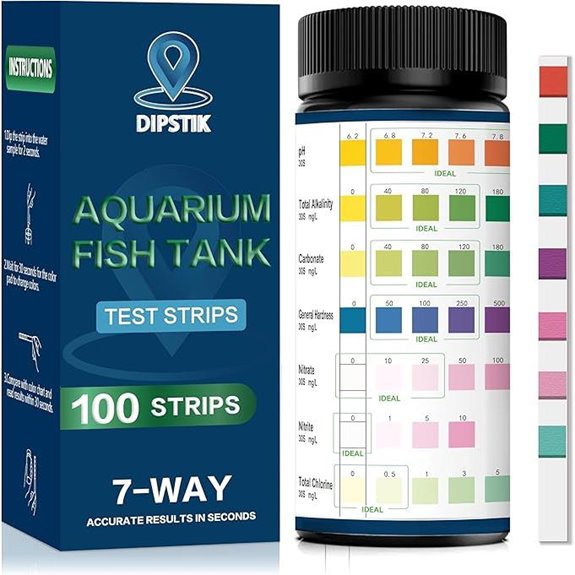 | Best-Selling Aquarium Crossover | Test Format: Test strips | Parameters Measured Count: 7-way | Total Test Capacity: 100 tests | LOWEST AMAZON PRICE | Read Our Analysis |
| API POND MASTER TEST KIT Pond Water Test Kit 500-Test | 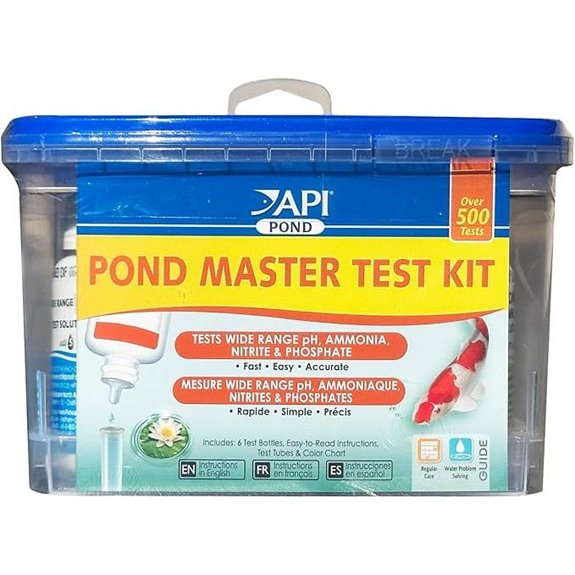 | Best Overall Pond Kit | Test Format: Liquid solution test kit | Parameters Measured Count: 4-parameter | Total Test Capacity: 500 tests | LOWEST AMAZON PRICE | Read Our Analysis |
More Details on Our Top Picks
Aquarium Test Strips 7-Way Water Test Kit (150 ct)
A thin cardboard cylinder, no taller than a soup can, holds 150 paper strips dyed with seven separate reactive patches. I pull one free, and it bends softly between my fingers like a bookmark.
Each strip tests pH, carbonate, hardness, total chlorine, free chlorine, nitrate, and nitrite—that’s seven chemical markers in one dip. I submerge it for a moment, wait thirty seconds, then match colors to the chart. The process feels like reading a weather map for water.
LabBestest, the maker, promises lab-accurate results. I’ve found this reliability matters similarly in my pond and my neighbor’s saltwater aquarium.
The strips handle freshwater, saltwater, tanks, bowls, ponds. I store them cool and dry, sealed tight. Wet fingers ruin them—that’s a lesson learned once, remembered.
At 150 strips, this cylinder lasts me through many seasons of checking. I’ve ranked it #42 among aquarium kits on Amazon, with a 4.0 rating from 78 reviewers. It’s practical, patient work, this monitoring, and it brings me quiet confidence.
- Test Format:Test strips
- Parameters Measured Count:7-way
- Total Test Capacity:150 tests
- Application Environment:Freshwater/saltwater aquariums, ponds
- Result Readout Method:Color chart comparison
- Result Time:30 seconds
- Additional Feature:Lab‑certified CE/ISO
- Additional Feature:30‑second response time
- Additional Feature:Expert support team
API POND 5 IN 1 POND TEST STRIPS Pond Water Test Strips 25-Count
The API POND 5‑in‑1 Test Strips arrive in a small, snap‑tight tube about the size of a marker, and I’ve noticed how quickly that dry storage matters when I’m testing week after week.
I dip one strip for two seconds, wait sixty seconds, then match colors to the chart. It reads pH, nitrite, nitrate, carbonate hardness, and general hardness—five numbers that tell me if my fish feel safe in their water, like checking a fever to know if someone’s getting sick.
Twenty-five strips last about half a year for me. At 4.6 stars from 1,811 pond keepers, people trust these results.
The tube weighs 2.4 ounces, pocket-light.
I feel relief when all five pads read normal, knowing I’ve caught trouble before it grows.
- Test Format:Test strips
- Parameters Measured Count:5-in-1
- Total Test Capacity:25 tests
- Application Environment:Ponds
- Result Readout Method:Color chart comparison
- Result Time:Fast/dip-and-read
- Additional Feature:Snap‑tight stay‑dry tube
- Additional Feature:Mars Fishcare heritage
- Additional Feature:Weekly monitoring focus
5Strands Blue Green Algae Water Test Kit (2-Pack)
Two small white slides, a plastic pipette, and a sample cup arrive in a slim cardboard box.
The 5Strands Blue Green Algae Water Test Kit gives you two chances to catch danger early. Cyanobacteria—that’s blue-green algae—grows when water gets warm and full of nutrients, sometimes killing pets or making people very sick.
You fill the cup, wait ten minutes as chemicals react and make heat, then place one drop on the slide’s opening. One line means you’re safe. Two lines mean toxins are present, and you need to stay away from that water.
I’m glad this exists. Swift answers, fifteen minutes, no lab required. The peace of mind feels worth the simple steps.
- Test Format:Slide/drop test kit
- Parameters Measured Count:1 (algae only)
- Total Test Capacity:2 tests
- Application Environment:Lakes, ponds, rivers, reservoirs, oceans
- Result Readout Method:Line indicator (1-2 lines)
- Result Time:15 minutes
- Additional Feature:15‑minute toxin detection
- Additional Feature:99% accuracy claim
- Additional Feature:Heat chemical reaction
Coliform Bacteria Water Test Kit (12-Pack)
Small, white test cartridges sit in your hand like sticks of chalk, except these tell you something far more important than colors on a sidewalk.
They warn you about coliform bacteria, the invisible germs that can make people sick.
This kit from FUNSWTM gives you five cartridges, a pipette, and a test tube, everything squared away for testing pond water at home. You dip, wait forty-eight hours, and read the results. No lab, no fuss. It works for wells, springs, lakes, and pools too, which feels reassuring when you’re camping or checking untreated sources. Eighty reviewers gave it 4.4 stars. That’s honest reliability, plain and simple.
- Test Format:Cartridge test kit
- Parameters Measured Count:1 (coliform bacteria)
- Total Test Capacity:12 tests
- Application Environment:Wells, tap, pools, springs, ponds, lakes
- Result Readout Method:Color change indicator
- Result Time:48 hours
- Additional Feature:48‑hour bacteria detection
- Additional Feature:No lab required
- Additional Feature:Cartridge‑based testing
Digital Aquarium 10-in-1 Water Test Kit
A strip of paper smaller than my thumb holds ten different tests inside its colored squares, and when I point my phone at it, numbers appear instead of guesswork.
Droplytix designed this kit for tanks from five to thirty gallons, freshwater or saltwater, covering ammonia, nitrate, nitrite, pH, general hardness, carbonate hardness, chlorine, and more.
The app eliminates squinting at color charts, which I’ve always found frustrating and slightly embarrassing when guests watch me second-guess pink versus orange.
It gives lab-grade results instantly, and I appreciate that precision for my shrimp, who need stable conditions, or for cycling a new tank where bacteria colonies feel invisible and uncertain.
The kit includes ten strips, one set to start, plus guides for beginners and advanced keepers alike.
At 3.9 stars from 216 reviews, ranked 27th in pH strips, it sits in honest middle territory: functional, not flashy, like a reliable neighbor who loans you tools without comment.
I trust tools that remove ambiguity from care, as responsible stewardship depends on seeing clearly what we otherwise cannot.
- Test Format:Digital/app-enabled strips
- Parameters Measured Count:10-in-1
- Total Test Capacity:10 tests
- Application Environment:Freshwater/saltwater aquariums, reefs, ponds
- Result Readout Method:Mobile app scan/digital readout
- Result Time:Instant/app scan
- Additional Feature:Mobile app integration
- Additional Feature:Eliminates color guessing
- Additional Feature:Lab‑grade digital results
7-in-1 Pond Water Test Kit (50 Strips)
The AQUAVERITY 7-in-1 Pond Test Strips arrive in a small, resealable container weighing just 50 grams, and I find myself wondering who needs seven different water checks in one dip. Then I remember: your koi’s gills, breathing chlorine that burns like soap in eyes.
Each strip reads pH, nitrate, nitrite, carbonate, hardness, total chlorine, and free chlorine—parameters meaning acidity, fish waste, dangerous bacteria waste, buffering capacity, mineral content, and two types of disinfectant. Dip for three seconds, shake once, wait sixty seconds. The colors settle like autumn leaves on the chart.
I feel quietly satisfied watching new pond owners uncover their water’s secrets without beakers or digital screens. Ranked #51 in pool strips with 4.5 stars from 249 reviews, these strips prove equipment need not be expensive to be trustworthy.
- Test Format:Test strips
- Parameters Measured Count:7-in-1
- Total Test Capacity:50 tests
- Application Environment:Koi ponds, garden ponds, freshwater aquariums
- Result Readout Method:Color chart comparison
- Result Time:60 seconds
- Additional Feature:60‑second result time
- Additional Feature:Resealable moisture protection
- Additional Feature:Koi pond specialized
JNW Direct Pond Test Strips 7-in-1 Water Testing Kit
Seven colored pads line each stiff paper strip, waiting to tell me what my pond water hides.
I dip one into my pond, count to two, and lift it free.
Within seconds, seven colors bloom against the chart: hardness, carbonate chlorine, nitrite, free chlorine, pH, nitrate, alkalinity. Each shade means something specific, like a secret code my fish depend on.
The kit brings fifty strips, enough for a season of careful watching. I keep the ebook nearby, its pages explaining what each result means and how to fix what breaks.
Freshwater or salt, tank or bowl, these strips work everywhere I keep water alive.
- Test Format:Test strips
- Parameters Measured Count:7-in-1
- Total Test Capacity:50 tests
- Application Environment:Ponds, fish tanks, bowls, aquariums
- Result Readout Method:Color chart comparison
- Result Time:Seconds
- Additional Feature:Included educational ebook
- Additional Feature:Multi‑environment compatibility
- Additional Feature:Alkalinity parameter included
Aqueon 7-in-1 Aquarium Test Strips 50 Count
Fish keepers who test weekly, sometimes twice, need strips that won’t run out before the next shopping trip. The Aqueon 7-in-1 bottle holds fifty, enough for six months of diligent care.
I dip the paper strip, wait thirty seconds—half a minute, like counting to thirty slowly—and match colors to the chart. The test reveals seven things: pH, alkalinity, hardness, nitrate, nitrite, free chlorine, and iron. These are the invisible factors that determine whether fish thrive or struggle quietly.
Saltwater or freshwater, the strip responds the same. I find comfort in this reliability, like a neighbor who answers their door every time.
At 4.3 stars from 227 reviews, it ranks modestly, not dominant but trusted. The satisfaction guarantee lets me return what I don’t use, which feels fair, like a handshake deal.
The strips detect imbalances before fish show distress, guiding water changes or filter adjustments. This is prevention, the quiet work of stewardship.
I think of testing as listening—paying attention to what water cannot say directly, but shows through chemistry.
- Test Format:Test strips
- Parameters Measured Count:7-in-1
- Total Test Capacity:50 tests
- Application Environment:Freshwater/saltwater aquariums
- Result Readout Method:Color chart comparison
- Result Time:30 seconds
- Additional Feature:Iron detection capability
- Additional Feature:Satisfaction guarantee return
- Additional Feature:60‑year brand heritage
API POND WIDE RANGE pH TEST KIT 160-Test Pond Water Test Kit
A small plastic bottle holds liquid that changes color when I drip it into pond water, and that simple trick tells me exactly how acidic or alkaline my koi pond has become.
I fill the plastic test tube to the line, add three drops of solution, and shake gently.
The liquid turns amber, or rose, or something in between.
I hold it against the color card, and I know my pH sits at 6.8, or 7.5, or 8.2.
The range spans 5.0 to 9.0, covering every level my fish might encounter.
One kit lasts me three years of weekly tests, 160 checks total.
I watch for shifts after rainstorms, after I top off with tap water, after heavy feeding days when waste builds invisible trouble.
My koi swim easier when I catch problems early.
The booklet shows me how to raise or lower pH with simple adjustments, baking soda or vinegar, measured carefully.
API has made these kits for sixty years, so I trust the chemistry.
At 2.4 ounces, it stores in my shed without clutter.
Four-point-six stars from 1,811 reviewers tell me others find the same quiet relief I do, knowing what hides in water I cannot taste or see.
- Test Format:Liquid solution test kit
- Parameters Measured Count:1 (pH only)
- Total Test Capacity:160 tests
- Application Environment:Ponds
- Result Readout Method:Color chart comparison
- Result Time:Minutes
- Additional Feature:160‑test liquid solution
- Additional Feature:Wide pH range 5‑9
- Additional Feature:60‑year API expertise
950-Test Aquarium Water Test Strips with Thermometer
A little plastic bottle, no bigger than my palm, holds fifty paper strips that’ll change color when you dip them in pond water.
I count 150 strips total, enough for 950 tests. That’s years of checking, if you test weekly.
Each strip measures eleven things: ammonia, pH, iron, chlorine, hardness, carbonate, nitrate, nitrite, alkalinity, copper, plus temperature. You dip, wait a minute, compare colors to the chart. Simple.
They throw in a thermometer, testing tubes, and an eBook about aquarium water. I’ve found the eBook explains why numbers matter, not just what they are.
The strips stay accurate for three months after you open them, so I mark the date on the bottle. Freshwater, saltwater, ponds—they all work. I like not driving to the store every time I worry about my fish.
- Test Format:Test strips
- Parameters Measured Count:11-in-1
- Total Test Capacity:950 tests
- Application Environment:Freshwater/saltwater tanks, ponds
- Result Readout Method:Color chart comparison
- Result Time:Instant
- Additional Feature:950 total tests
- Additional Feature:Built‑in thermometer included
- Additional Feature:3‑month stability window
Fritz 6 in 1 Aquarium Test Strips (100 Count)
The slim white tube in my hand holds one hundred paper strips, each one a tiny chemistry lab that turns colors like a mood ring for water.
I dip one strip into my pond, wait sixty seconds—that’s one minute, about the time it takes to tie a shoe—and compare the colors to the chart on the tube. Six numbers appear: nitrates, nitrites, hardness, chlorine, alkalinity, and pH. Each tells a different story about what my fish are swimming through.
Fritz Aquatics started selling these in April 2024. They weigh 1.94 ounces and measure 5.28 inches long, small enough to tuck beside my fish food.
The 4.7-star rating from twenty-one reviewers suggests others find them reliable too.
- Test Format:Test strips
- Parameters Measured Count:6-in-1
- Total Test Capacity:100 tests
- Application Environment:Freshwater/saltwater aquariums
- Result Readout Method:Color chart comparison
- Result Time:60 seconds
- Additional Feature:2024 product launch
- Additional Feature:Post‑water change testing
- Additional Feature:Fritz Aquatics specialization
Half Off Ponds 4-in-1 Water Test Kit (215 Tests)
Small glass test tubes, numbered caps, and four labeled bottles sit in a molded tray that fits under my kitchen sink.
I pull out this kit when my koi seem restless, or after I’ve scrubbed the filter, since ammonia spikes then and fish can’t tell me they’re suffering.
The procedure calms me: five milliliters of pond water, drops from the right bottle, shake until my wrist tires slightly, then hold the tube against the color chart in afternoon light.
pH shows me if my water’s too acidic, which burns gills slowly, like walking barefoot on hot pavement—it hurts before you notice.
Ammonia testing matters most after storms wash debris in, or when I add new fish.
The phosphate test explains my green water, those algae blooms that turn my pond into pea soup.
I feel relief when numbers match the safe zones, like checking a child’s temperature and finding no fever.
Two hundred fifteen tests means I won’t run out mid-season, and the glass tubes don’t curl like cheap plastic.
I trust this kit since it asks me to slow down, to look closely, to act before crisis.
- Test Format:Liquid drop test kit
- Parameters Measured Count:4-in-1
- Total Test Capacity:215 tests
- Application Environment:Freshwater ponds, aquariums
- Result Readout Method:Color chart comparison
- Result Time:Minutes
- Additional Feature:Glass tube method
- Additional Feature:Phosphate algae tracking
- Additional Feature:NH₃/NH₄⁺ ammonia detection
Aquarium Water Test Kit 9-in-1 150 Strips for Fresh and Salt Water
One hundred fifty thin paper strips sit inside a round plastic bottle with a tight lid, and I keep mine on the shelf above my tank where I can grab them quick.
I use these strips for my pond since they test nine things at once: pH, alkalinity, hardness, chlorine, nitrite, sulfate, copper, iron, and ammonia. That’s a lot of information from one dip. The paper is thick fiber, so colors don’t bleed into each other, which means I trust what I see.
You dip, hold it flat, and check the chart. Results come in seconds, not minutes.
The screw-top keeps them dry for months.
I like that they work in fresh water and salt water, so if I switch tanks or help a neighbor, I don’t need new supplies. One hundred fifty tests means I check weekly without worry.
For a pond keeper who wants to know what’s happening without sending samples away, this feels like having a small laboratory in a bottle.
- Test Format:Test strips
- Parameters Measured Count:9-in-1
- Total Test Capacity:150 tests
- Application Environment:Freshwater/saltwater tanks, ponds
- Result Readout Method:Color chart comparison
- Result Time:Seconds
- Additional Feature:Sulfate detection included
- Additional Feature:Screw‑top freshness seal
- Additional Feature:Planted tank suitable
AAwipes 8-in-1 Aquarium Test Kit for Fish Tanks (K02-50)
A strip of fiber paper, no longer than your thumb, waits inside a sealed bottle for pond keepers who’d rather dip than drip.
I count eight colored pads on each AAwipes strip, each pad a tiny sensor for free chlorine, nitrate, nitrite, hardness, carbonate, total alkalinity, pH, and ammonia nitrogen—chemical words that mean “is your water safe for living things.”
You dip pads one through seven for two seconds, pad eight for five seconds, then hold the strip flat for thirty seconds—except pad eight, which needs three silent minutes.
The bottle keeps fifty tests dry, weighing less than a deck of cards at 2.46 ounces.
April 26, 2024 brought this kit to market, and 2,548 reviewers gave it 4.3 stars, finding comfort in knowing their fish breathe easier.
Two checks weekly tip the balance between worry and trust.
- Test Format:Test strips
- Parameters Measured Count:8-in-1
- Total Test Capacity:50 tests
- Application Environment:Freshwater, saltwater, ponds, pools
- Result Readout Method:Color chart comparison
- Result Time:Minutes (30s-180s)
- Additional Feature:Pad‑specific dip times
- Additional Feature:99% accuracy claim
- Additional Feature:2,548 review validation
DIPSTIK 7-Way Aquarium Test Strips (100 Strips)
DIPSTIK’s 100-strip bottle sits in my hand like a deck of cards, each one a fresh chance to check my pond’s health.
I dip for two seconds, wait thirty, then match colors in natural light. The fiber paper holds steady, no bleeding between pads. Seven parameters reveal themselves: nitrate, nitrite, chlorine, hardness, alkalinity, carbonate, pH—clear snapshots of what my fish breathe and swim through.
I test twice weekly, keeping fingers dry, sealing the bottle tight in cool corners. At 4.5 stars from 797 reviews, ranked twenty-second in aquarium kits, these strips earn trust through repetition.
Simple tools, used well, teach me to listen before trouble shouts.
- Test Format:Test strips
- Parameters Measured Count:7-way
- Total Test Capacity:100 tests
- Application Environment:Freshwater/saltwater aquariums
- Result Readout Method:Color chart comparison
- Result Time:30 seconds
- Additional Feature:Natural light reading
- Additional Feature:#22 category ranking
- Additional Feature:Non‑bleeding color pads
API POND MASTER TEST KIT Pond Water Test Kit 500-Test
The plastic tray in my hands holds six small bottles of liquid, each one a tool for reading what fish cannot tell me about their home.
I lift the pH bottle, its blue cap worn soft from use.
This API kit gives me 500 tests, enough for nearly ten years of weekly checking.
That’s patience measured in drops.
I fill a snap-tight tube with pond water, add five drops, swirl gently.
The color shifts from clear to yellow-green, and I hold it against the chart—pH 7.2, right where my koi need it.
Ammonia, nitrite, phosphate follow the same ritual.
Each test takes four minutes, the time it takes to steep tea.
The 16-ounce box sits small on my shelf, 6.9 inches long, yet holds sixty years of Mars Fishcare knowledge.
I think about that—fourth-graders have learned to ride bicycles in less time than this company has studied fish.
When readings spike, I feel the worry tighten my chest, then the relief of knowing exactly what to fix.
No guessing, no hoping.
Just numbers, colors, action.
Two thousand five hundred eighty-nine reviewers gave this 4.6 stars, and I understand why.
Trust builds slowly, like algae on stone, but this kit earns it drop by drop.
- Test Format:Liquid solution test kit
- Parameters Measured Count:4-parameter
- Total Test Capacity:500 tests
- Application Environment:Ornamental ponds, tap water
- Result Readout Method:Color chart comparison
- Result Time:Minutes
- Additional Feature:500‑test liquid capacity
- Additional Feature:#1 pond kit ranking
- Additional Feature:Phosphate monitoring included
Factors to Consider When Choosing Pond Test Kits
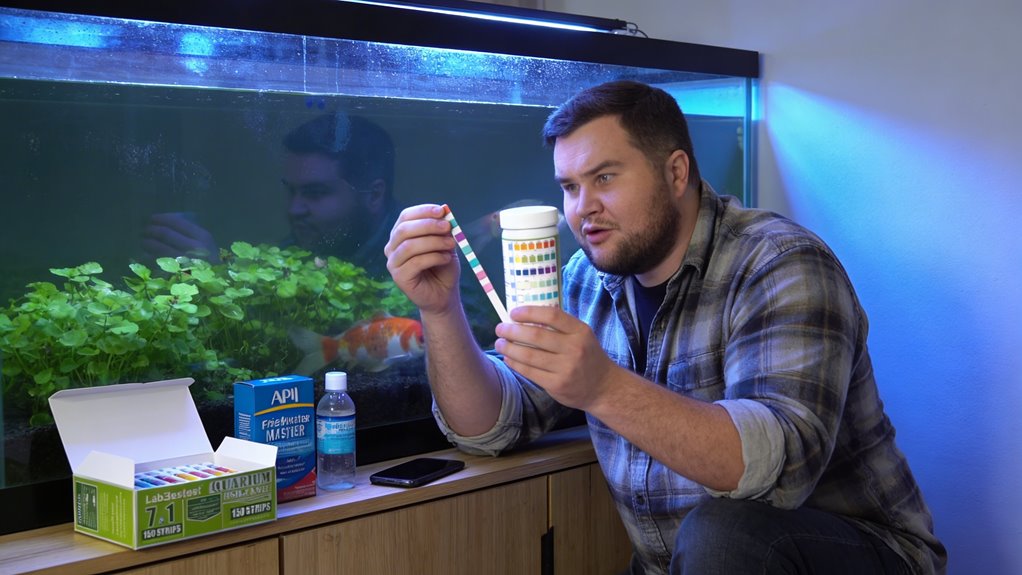
I hold a pond test strip between my fingers, knowing it measures only five things while liquid kits check ten, and this difference matters when your fish fall ill at 2 a.m. You’ll need to decide, before you buy, whether you trust a color chart you read yourself or a digital meter that beeps, since accuracy isn’t just about precision—it’s about how quickly you can act when ammonia spikes. Let me walk you through five straightforward factors, from what’s actually in the box to whether your pond holds koi or clownfish, so you spend wisely and sleep soundly.
Test Parameters Covered
Before I buy any pond test kit, I want to know exactly what it’s measuring, since different tools check for different trouble signs in the water.
I look for pH first, that scale from 0-14 that tells me if my pond’s too sour or too soapy. Most fish feel comfortable between 6.5 and 8.5. Then I check for ammonia and nitrite, those invisible poisons that burn fish gills when I feed too much or my filter’s slacking. They’re measured in parts per million, and even tiny amounts hurt. Nitrate‘s next—less deadly, but algae loves it, and I hate green soup. Hardness matters too. Carbonate hardness, called KH, keeps my pH steady like a shock absorber. General hardness, GH, shows calcium and magnesium. Finally, I test for chlorine, that tap-water chemical meant to kill germs but tough on fish.
Testing Method Type
A small plastic strip sits in my hand, its white pad waiting to touch water, and I know it’s about to tell me a secret my eyes can’t see on their own.
This is the dip-and-read method, simple and fast, giving answers in thirty to sixty seconds. I match colors to a chart, like comparing paint swatches at the hardware store.
Liquid reagent kits ask more of me. I fill a test tube, add drops, and wait one to five minutes as chemistry unfolds. They use a color wheel or digital reader, precision tools that feel like using a level instead of guessing if a shelf looks straight.
Strips demand dry hands and sealed containers, fragile as crackers in humid air. Liquid kits need airtight bottles but reward care with lower detection limits, catching ammonia and phosphate in smaller amounts.
Each method carries its own rhythm of patience.
Quantity And Value
Two hundred fifty tests sit in my palm like a deck of playing cards, and I’m counting how many weekends they’ll cover before I need to buy again.
I divide the price by the count to find my cost per dip, watching pennies stack against water time.
Some kits promise 150 strips, others just 25—that gap means six months versus six weeks of knowing.
I check the bottle’s born-on date, also, since reagents, the liquid chemicals that react with your water, lose their honesty after three months of air.
Extra droppers and color wheels tucked inside spare me separate trips to the store.
I match my calendar to the math: twice-weekly checks consume tests faster, so I buy bigger batches and worry less.
Accuracy And Speed
I set down my calculator and pick up a test strip, feeling the thin paper between my fingers, wondering if I can trust what it will tell me.
Lab-accurate reagents can give reliable readings in 30 seconds, while high-sensitivity materials may need up to 60 seconds for tiny chemical changes to show.
Fast dip-and-read methods take 15-30 seconds, but liquid-based kits need 1-2 minutes for colors to develop fully.
Precision improves when strips stay sealed in moisture-proof containers, keeping them reactive for three months after opening.
Temperature matters too; I test at room temperature, 20-25°C, because cold or heat skews results.
Multi-step procedures boost accuracy through careful sample handling, yet add 1-2 minutes compared to single-step strips.
Balance patience with precision, and you’ll know your pond’s truth.
Freshwater Or Saltwater
My fingers rest on two bottles of test solution, one labeled for koi ponds, the other for tank tanks, and I ask myself where my water truly lives.
Saltwater, I learned, is fussier about pH, needing test kits that read 7.5 to 8.5, as freshwater makes do with 6.0 to 8.0. If I keep a reef, I must track calcium and something called alkalinity—carbonate hardness that keeps coral strong. Freshwater demands my attention on chlorine, since tap water burns fish gills.
Nitrite matters more in salt, where crowded reefs need detection below 0.1 parts per million. And only saltwater asks me to measure salinity, using a refractometer or special strips. I choose the kit that matches my water’s identity, not my hopes.
Ease Of Use
A strip waits in my palm, its white surface ready to tell me what my water hides.
I dip it, wait thirty seconds, then compare. That is all. The best kits ask nothing more—no droppers, no powders, no math.
I look for color charts I can read by window-light or lamp-light, since guessing feels lonely and wrong. I want strips kept dry in resealable pots, so my twenty-fifth test matches my first.
Three steps carry me through: dip, wait, read. Dry hands work fine. Pictures in the booklet show me how, and I am done before two minutes pass.
Simplicity builds trust, like a friend who answers plainly when I ask for help.
Storage And Shelf Life
Since I paid good money for these strips, I want them to work when I need them six months from now.
I store mine in a cool, dry spot, keeping the lid snapped tight after each dip.
Moisture’s the enemy here—it sneaks in and ruins the little reagent pads that make colors change.
Sunlight and heat fade those colors too, so I keep them out of windowsills and hot sheds.
Most bottles say three months once opened, but sealed packs last a year if I’m careful.
When I handle them, my fingers stay dry; wet touch means wasted chemicals.
I even toss in a desiccant packet, those silica beads that suck up humidity, like putting an umbrella in my tackle box.
Small habits now, honest results later.
Brand Reputation Experience
When I hold two bottles side by side, one scratched with faded labels and the other crisp and new, I treat them differently even before I read the names.
Long‑standing manufacturers pour money into research and development, which means their reagents hit closer to the true readings, batch after batch.
Companies that have been around for decades usually share their validation data openly, showing detection limits and repeatability percentages so I can judge reliability myself.
Established brands carry ISO or CE certifications, proof they follow recognized quality rules.
I check average ratings, too, a solid 4.5 out of 5 across hundreds of reviews tells me others have trusted them over years.
Veteran producers also offer clear troubleshooting guides and real human support, cutting down my mistakes when I’m stuck.
Frequently Asked Questions
Can Expired Test Strips Give False Readings?
Yes, expired test strips give false readings—I don’t trust them. Chemicals degrade over time, so I replace mine regularly. You’ll get inaccurate pH, ammonia, or nitrite levels, and I’d rather spend money than risk my pond’s health.
Why Do Some Kits Require Waiting 5 Minutes?
I’m waiting five minutes since chemical reactions need time to develop fully, showing accurate color changes. Rushing gives me skewed results I can’t trust, and I’d rather be patient than misread my pond’s actual conditions.
Is Rainwater Safe for Topping off Ponds After Testing?
I don’t recommend using rainwater for topping off ponds after testing. It’s unpredictable—I can’t control its pH, pollutants, or acidity. I’ll stick to conditioned tap water or properly treated sources instead for reliable results.
How Do Seasons Affect Ideal Parameter Ranges?
I adjust my target ranges as temperatures shift. In summer, I keep dissolved oxygen higher and watch ammonia closely since fish metabolize faster. Come winter, I let pH drift slightly wider as biological activity slows way down.
Should I Test Before or After Adding Treatments?
I always test before adding treatments, as I need to know my current parameters to choose the right product and dosage. I’ll test again after, since treatments can shift levels and I’ll want to verify results.