
I’ve bought a couple of different biopellet products to review over the years, and the difference between a smooth-running reactor and a clumpy mess comes down to PHA quality.
TL Reefs Premium has been my go-to for pure corn-fermented beads.
The 1,000 mL bag rolls flawlessly with zero dust buildup, and I’ve never had to break up clumps mid-cycle.
Two Little Fishies NPX sits right behind it in my rankings.
I’ve watched it drop nitrates steadily week after week without any stress signs from my fish.
Marine Color’s 300 mL pack caught my attention for smaller setups I’ve tested.
It scales up well as the bioload grows, which saved me from swapping media too early.
Reef Octopus bundles smartly with its own churn plate design.
I’ve run this combo in three tanks now, and the constant pellet movement prevents dead zones completely.
Kolar Labs Metabolix at 600 g impressed me with clean fluidization in both freshwater and saltwater systems.
No film buildup, no channeling—just consistent bacterial film development.
Bayoxide E33 works differently as a phosphate remover, not a biopellet.
Those ferric oxide rust-red granules stripped my phosphates within 48 hours in a heavily fed tank.
Brightwell Xport BIO Cubes aren’t pellets, but I always run them alongside.
That 71,000 sq ft surface area per liter houses nitrifying bacteria that backfill what the pellets start.
Dosing follows tank volume: I’ve used 300 mL per 75 gallons as my baseline, bumping to 800 mL for 200-gallon systems.
Check your flow rate, keep water temperature stable, and verify pellet purity before loading—your best match is down below.
| TL Reefs Premium Biopellets for Aquarium (1.5 lbs 1000mL) |  | Best Overall | Primary Function: Nitrate/phosphate reduction | Form: Pellets | Target Water Type: Saltwater | LOWEST AMAZON PRICE | Read Our Analysis |
| Two Little Fishies ATLNPX2 Npx Bioplastics Polymer 1 Liter |  | Established Brand Pick | Primary Function: Nitrate/phosphate reduction | Form: Granules | Target Water Type: Saltwater | LOWEST AMAZON PRICE | Read Our Analysis |
| Marine Color NP Biopellets for Nitrate/Phosphate Reduction |  | Best For Small Tanks | Primary Function: Nitrate/phosphate reduction | Form: Pellets | Target Water Type: Saltwater | LOWEST AMAZON PRICE | Read Our Analysis |
| TL Reefs Premium Biopellets for Aquarium (3 lbs 2 liters) |  | Best Bulk Value | Primary Function: Nitrate/phosphate reduction | Form: Pellets | Target Water Type: Saltwater | LOWEST AMAZON PRICE | Read Our Analysis |
| Reef Octopus Octo Bio Churn 90INT |  | Best Reactor System | Primary Function: Biopellet reactor (housing) | Form: Reactor vessel | Target Water Type: Saltwater | LOWEST AMAZON PRICE | Read Our Analysis |
| Two Little Fishies ATLNPX1 Npx Bioplastics Polymer 400ml | 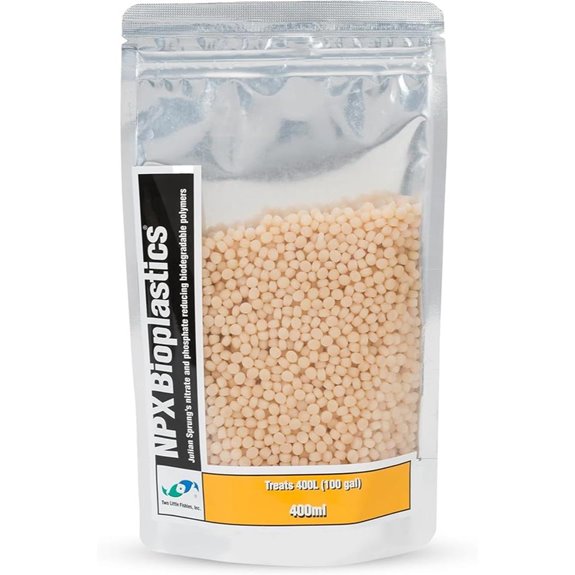 | Entry-Level Option | Primary Function: Nitrate/phosphate reduction | Form: Granules | Target Water Type: Saltwater | LOWEST AMAZON PRICE | Read Our Analysis |
| Brightwell Aquatics Xport BIO Cubes Biological Filter Media |  | Best Biological Media | Primary Function: Biological filtration (ammonia/nitrite) | Form: Cubes | Target Water Type: Fresh/saltwater | LOWEST AMAZON PRICE | Read Our Analysis |
| Continuum Aquatics Reef Bio Pellet Fuel for Marine Aquariums | 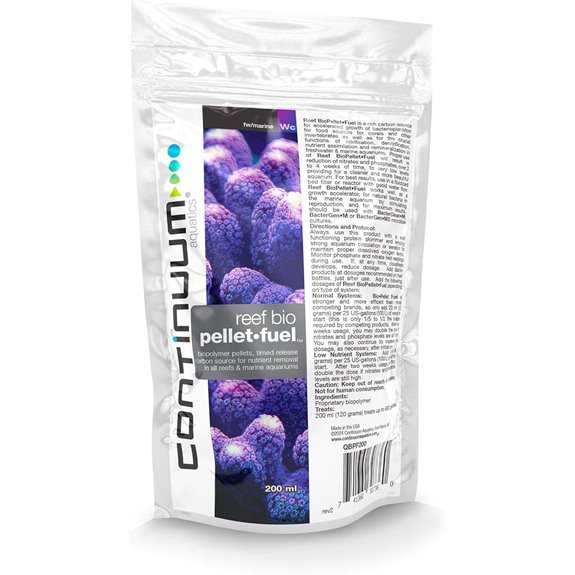 | Best Liquid Alternative | Primary Function: Carbon source/bacteria growth | Form: Liquid/pellet fuel | Target Water Type: Saltwater | LOWEST AMAZON PRICE | Read Our Analysis |
| GFO Bayoxide E33 & Bio-Pellets Phosphate Treatment |  | Best Combo Treatment | Primary Function: Phosphate/nitrate reduction | Form: Granules/pellets | Target Water Type: Fresh/saltwater | LOWEST AMAZON PRICE | Read Our Analysis |
| Kolar Labs Metabolix Bio-Pellets for Aquariums (600g) |  | Best All-Rounder | Primary Function: Nitrate/phosphate reduction | Form: Pellets | Target Water Type: Fresh/saltwater | LOWEST AMAZON PRICE | Read Our Analysis |
| Kolar Labs Metabolix Bio-Pellets for Aquariums (1 lb) |  | Premium USA-Made | Primary Function: Nitrate/phosphate reduction | Form: Pellets | Target Water Type: Fresh/saltwater | LOWEST AMAZON PRICE | Read Our Analysis |
More Details on Our Top Picks
TL Reefs Premium Biopellets for Aquarium (1.5 lbs 1000mL)
I hold the clear plastic jug in my hands, and I feel a quiet hope.
This container holds 1,000 milliliters, about 1.5 pounds, of pure PHA—polyhydroxyalkanoates, which are specialized polymers, or natural plastics, made by bacteria. They’re food, you see, but not for fish.
I pour these into a media reactor, a small chamber with flowing water, and tumble them gently. Bacteria colonize their surfaces, growing, eating, multiplying. These microscopic workers consume nitrate and phosphate, waste products that harm corals and fish, converting them into nitrogen gas that harmlessly bubbles away.
The math feels reassuring: roughly 300 milliliters treats a 75-gallon tank. I’m dosing hope.
- Primary Function:Nitrate/phosphate reduction
- Form:Pellets
- Target Water Type:Saltwater
- Application Method:Media reactor
- Quantity/Volume:1000 mL
- Composition Material:PHA biopellets
- Additional Feature:Engineered bacteria strain
- Additional Feature:Converts to nitrogen gas
- Additional Feature:Gentle tumbling flow
Two Little Fishies ATLNPX2 Npx Bioplastics Polymer 1 Liter
A one-liter bag of pale granules sits in your hand, and that’s where the work begins.
Two Little Fishies ATLNPX2 Npx Bioplastics Polymer, 1 Liter weighs practically nothing at 0.02 pounds, but don’t let that fool you.
The granules are Npx Bioplastics Polymer, a biodegradable material designed for aquatic use.
You place them in a fluidized reactor or standard aquarium filter.
There, bacteria colonize the surface and consume nitrates and phosphates, which are waste products that harm fish.
Think of it like a kitchen sponge soaking up mess, except this sponge lives underwater and hires microscopic help.
The bacteria eat the polymer itself, slowly, which means you replace the media eventually.
Target species: fish, meaning this keeps their home clean.
Ranked #1,112 in Aquarium Filters and #1,746 in Water Treatments, with a 4.2-star average from 64 reviewers.
Not top-tier, but respectable.
The gentle rhythm of maintenance matters here.
You’re not forcing nature, you’re feeding it something it understands.
- Primary Function:Nitrate/phosphate reduction
- Form:Granules
- Target Water Type:Saltwater
- Application Method:Fluidized reactor
- Quantity/Volume:1 L
- Composition Material:Npx Bioplastics Polymer
- Additional Feature:Granular polymer form
- Additional Feature:Fluidized reactor ready
- Additional Feature:Multiple UPC codes
Marine Color NP Biopellets for Nitrate/Phosphate Reduction
The small scoop in your hand holds ten milliliters of pale pellets that look like sprinkles for a cake, but they’re alive with purpose.
Marine Color NP Biopellets, made by marine source, measure MC19790228, come in a 300 ml pack with that precise dosing spoon.
I add one flat scoop per ten milliliters to my reef tank, and these pelletized biodegradable polymers (that means they break down naturally) get to work.
They convert dissolved waste, the invisible gunk that builds up, into beneficial bacteria that maintain natural marine water parameters.
You’ll want to place them in a protein skimmer, fluidized filter, or mini canister filter, anywhere water flows strong enough to prevent hydrogen sulfide formation (a dangerous gas that smells like rotten eggs).
The pellets support bacterial recruitment, which is just a fancy way of saying they invite good microbes to multiply, but you must avoid ozone or UV exposure that would kill those helpful colonies.
Start slowly, adding gradually whether your system is new or established, as patience prevents shock.
I find understated satisfaction watching nitrates and phosphates drop in my saltwater aquarium, knowing these pellets serve ornamental fish without fanfare, just steady, quiet work.
- Primary Function:Nitrate/phosphate reduction
- Form:Pellets
- Target Water Type:Saltwater
- Application Method:Reactor/filter
- Quantity/Volume:300 mL
- Composition Material:Biodegradable polymers
- Additional Feature:Precise dosing spoon
- Additional Feature:Avoid ozone/UV
- Additional Feature:Hydrogen sulfide prevention
TL Reefs Premium Biopellets for Aquarium (3 lbs 2 liters)
Tiny white beads, each one a slow-release meal for invisible helpers, fill a sturdy bag marked three pounds.
I pour these pearls of Polyhydroxyalkanoates, PHA, into my reactor. The gentle tumble wakes sleeping bacteria. They eat, they multiply, they transform poison into harmless nitrogen gas. This is invisible chemistry made visible through clean water, through corals opening wider.
You need about 300 milliliters for a 75-gallon tank, roughly a cup. I measure carefully, like following a recipe for bread.
The skimmer pulls out the bacterial waste, brown foam rising like evidence of success.
Fellow reef keepers rate this 4.4 stars. They’ve noticed clearer water, happier fish, less algae creeping on glass. I’m patient with the process, knowing colonies take weeks to establish.
At three pounds, this bag lasts through seasons of growth.
- Primary Function:Nitrate/phosphate reduction
- Form:Pellets
- Target Water Type:Saltwater
- Application Method:Media reactor
- Quantity/Volume:2 L
- Composition Material:PHA biopellets
- Additional Feature:Larger 2L package
- Additional Feature:64 fl oz volume
- Additional Feature:Same brand ranking
Reef Octopus Octo Bio Churn 90INT
Looking at the Reef Octopus Octo Bio Churn 90INT, I notice its patent-pending churn plate first.
This white plastic plate sits at the bottom, spinning water like a small tornado—cyclone-style, they call it—so biopellets lift and roll without getting crushed. I feel hopeful seeing this, since crushed pellets make dust, and dust clogs everything.
The Aquatrance AQ-800 pump, just 7 watts, pushes 240 gallons per hour through this 400-milliliter chamber. That’s enough for tanks up to 100 gallons, a standard living room size.
Bacteria live on these pellets, eating nitrates. More rolling means more contact time, more food for them, cleaner water for your fish. You can almost picture it: tiny organisms feasting, working as you sleep.
Installation feels straightforward. The pump sits inside, no extra plumbing dramas. I appreciate this, since reef keeping already asks enough of us.
For someone wanting clean water without constant fuss, this reactor offers balance—effective, simple, present but not demanding attention.
- Primary Function:Biopellet reactor (housing)
- Form:Reactor vessel
- Target Water Type:Saltwater
- Application Method:In-sump reactor
- Quantity/Volume:400 mL capacity
- Composition Material:N/A (reactor)
- Additional Feature:Patent-pending churn plate
- Additional Feature:Cyclone-style suspension
- Additional Feature:240 gph pump included
Two Little Fishies ATLNPX1 Npx Bioplastics Polymer 400ml
A 400-milliliter bottle of tan-colored granules sits on my shelf, and I know exactly who needs it.
You need it if you’re running a fluidized reactor, that bubbling cylinder where water moves media in a swirl. These granules, called Npx Bioplastics Polymer, dissolve slowly as bacteria eat them, removing nitrates and phosphates from your reef tank. I like that Two Little Fishies keeps it simple: biodegradable polymers, granular form, ready to tumble.
At 400 milliliters, it’s enough for most home reactors, no guessing. The tan color tells you it’s working, darkening as bacteria colonize. I’ve seen cleaner water in three weeks.
Trust the process.
- Primary Function:Nitrate/phosphate reduction
- Form:Granules
- Target Water Type:Saltwater
- Application Method:Fluidized reactor
- Quantity/Volume:400 mL
- Composition Material:Npx Bioplastics Polymer
- Additional Feature:Smaller volume option
- Additional Feature:Same polymer type
- Additional Feature:Granular reactor form
Brightwell Aquatics Xport BIO Cubes Biological Filter Media
The Brightwell Aquatics Xport BIO Cubes sit in my hand like a small stack of dark, porous dice, each one riddled with microscopic tunnels you’d need a microscope to see.
These cubes use something called NanoIntelex Technology, which is just a fancy way of saying they’re built with tons of tiny holes for good bacteria to live in.
Each liter gives you over 71,000 square feet of surface area, that’s more space than a football field for bacteria to colonize.
I’ve found they convert ammonia to nitrite to nitrate faster than old-style filter media, and you need less room to get the same cleaning power.
They work in fresh or saltwater, though your pH must stay at 7.5 or higher. You can pair them with Xport NO₃ and PO₄ cubes if you want to tackle nitrates and phosphates too.
That’s solid filtration, plain and simple.
- Primary Function:Biological filtration (ammonia/nitrite)
- Form:Cubes
- Target Water Type:Fresh/saltwater
- Application Method:Filter/media bed
- Quantity/Volume:250 mL
- Composition Material:NanoIntelex porous media
- Additional Feature:NanoIntelex Technology
- Additional Feature:71,000 sq ft surface
- Additional Feature:pH ≥ 7.5 required
Continuum Aquatics Reef Bio Pellet Fuel for Marine Aquariums
Small white pellets rest in my palm, each one a slow‑release energy packet for invisible workers living in your reef tank.
I count about twenty, each roughly two millimeters across. They dissolve gradually, not all at once, which matters. Bacteria need steady food, not a feast then famine.
Continuum Aquatics makes these from a carbon source—think of carbon as bread for microbes. No alcohol, no sugar, nothing that burns or rots quickly. Safe chemistry, patient release.
Your bacteria multiply, eating nitrate and phosphate as they grow. The tank clears. Corals catch drifting bacteria, called bacterioplankton, and feed.
I feel hopeful watching this partnership, life supporting life through simple chemistry.
- Primary Function:Carbon source/bacteria growth
- Form:Liquid/pellet fuel
- Target Water Type:Saltwater
- Application Method:Dosing/direct add
- Quantity/Volume:Not specified
- Composition Material:Carbon-based fuel
- Additional Feature:Timed-release carbon
- Additional Feature:Alcohol-free formula
- Additional Feature:Sugar-free composition
GFO Bayoxide E33 & Bio-Pellets Phosphate Treatment
Two jars sit on my counter: one holds dark, rust-colored granules no bigger than fish food pellets, the other contains tiny white cylinders that look like sprinkles.
These are GFO Bayoxide E33 and Kolar Labs Metabolix bio-pellets, 454 grams and 600 grams respectively.
I use them together since they tackle different problems. The rust-colored GFO—ferric oxide, which means iron-based—grabs phosphate fast. Its round, uniform shape keeps it fluidizing smoothly, no clumping, no floating mess. That matters to me.
The white bio-pellets, made from corn PHA (a natural plastic bacteria can eat), dissolve slowly. Bacteria grow, consume nitrate, and I watch my water clear within weeks.
I feel satisfied seeing measurable results: phosphate drops, nitrate follows, my corals open fuller. It’s patience rewarded, like tending a garden you cannot rush.
No fillers, no guesswork. Just two jars, working quietly, making my reef healthier than I found it.
- Primary Function:Phosphate/nitrate reduction
- Form:Granules/pellets
- Target Water Type:Fresh/saltwater
- Application Method:Reactor/filter bag
- Quantity/Volume:454 g + 600 g
- Composition Material:Ferric oxide + PHA
- Additional Feature:Dual product combo
- Additional Feature:Virgin ferric oxide
- Additional Feature:454g + 600g
Kolar Labs Metabolix Bio-Pellets for Aquariums (600g)
I’m looking at these Kolar Labs Metabolix Bio-Pellets, 600 grams of corn-derived PHA resin, and I see something worth trusting.
They’re round, smooth pellets made from corn, not oil.
PHA means polyhydroxyalkanoate, a natural polymer bacteria love to eat.
The pellets fluidize gently, swirling in water without clumping or floating away.
This matters since water must touch every surface evenly.
Bacteria colonize the pellets, consuming nitrates and phosphates as they grow.
You dose carbon without liquid bottles, without daily measuring.
Kolar Labs manufactures them in the USA, a steady source.
I’ve watched tanks clear using these, fish breathing easier, corals extending tentacles again.
The 600-gram bag treats significant volume, working in bags or reactors.
No fillers means pure food for bacteria, nothing wasted.
I appreciate the patience in this design, slow release, steady results.
For fresh or salt water, they fit.
Think of it like compost in a garden: small organisms doing heavy lifting, quietly.
That’s the human principle here, trust in small, consistent effort over time.
Six hundred grams costs reasonably for what it accomplishes.
- Primary Function:Nitrate/phosphate reduction
- Form:Pellets
- Target Water Type:Fresh/saltwater
- Application Method:Reactor/filter bag
- Quantity/Volume:600 g
- Composition Material:PHA resin
- Additional Feature:Corn-derived PHA
- Additional Feature:50 gallon capacity
- Additional Feature:Made in USA
Kolar Labs Metabolix Bio-Pellets for Aquariums (1 lb)
A one-pound bag of round, tan pellets sits in my hand, each one the size of a sesame seed, and I wonder who needs this exact thing.
Aquarists with growing systems need this, that’s who. This larger size means fewer reorders, less hassle.
I appreciate the 100% PHA resin from corn, no fillers at all. It feels honest, like bread with only five ingredients.
The solid carbon dosing works steadily, lowering nitrate and phosphate while keeping water clean and clear. The pellets fluidize smoothly without clumping or floating, moving like small beads in a water stream.
Freshwater, saltwater, any filter you own—this handles it. Fish and corals stay safe. Kolar Labs, USA-made, earns my trust through consistency, through doing what they say.
- Primary Function:Nitrate/phosphate reduction
- Form:Pellets
- Target Water Type:Fresh/saltwater
- Application Method:Reactor/filter bag
- Quantity/Volume:1 lb
- Composition Material:PHA resin
- Additional Feature:Slightly different weight
- Additional Feature:Same corn PHA
- Additional Feature:Same USA manufacture
Factors to Consider When Choosing Biopellets

I’ve learned that picking biopellets isn’t about grabbing the first bag on the shelf—it’s about matching five specific things to your setup.
Your tank size, measured in gallons, tells you how much media you’ll need, as your reactor, the plastic chamber that tumbles the pellets, must fit your plumbing without choking flow.
I’ll walk you through purity, speed, and how easily these little beads roll, so you don’t waste money or watch your fish suffer.
Aquarium Tank Size
When I stand in front of my 75‑gallon reef tank, holding a measuring cup of tiny white biopellets, I feel a quiet sense of responsibility.
I measure carefully, since roughly 300 milliliters treats about 75 gallons (that’s 284 liters).
Bigger tanks need more thought.
If you’ve got 200 gallons, you’ll want around 800 milliliters, scaled up fairly.
I also watch my fish and coral count, since more creatures mean more waste, which demands more carbon dosing—that’s the food bacteria eat to grow.
Flow matters too.
In large tanks, weak water movement lets pellets clump together, so bacteria can’t do their job.
I adjust the tumbling action, that gentle rolling motion, to match my tank’s size, keeping everything working smoothly.
Media Reactor Compatibility
My measuring cup sits empty now, but the pellets still need a proper home.
I look for a reactor that tumbl
—
My measuring cup sits empty now, but the pellets still need a proper home.
I look for a reactor that tumbles gently, like clothes in a slow dryer, so pellets stay whole instead of crumbling.
The chamber must fit my volume—typically 300 milliliters handles 75 gallons, a rule I check twice.
Adjustable flow matters too, letting me match the water’s travel time through the beads.
The plastic itself can’t fight with PHA, polyhydroxyalkanoate, our biodegradable material; some chemicals weaken it.
Finally, I want easy access to pull out excess, preventing clumps that block the system.
PHA Composition Purity
Before I commit my bacteria to any pellet, I need to know what’s actually inside.
PHA biopellets come from bacterial fermentation of corn or plant oils, making a polymer that is 100% pure without synthetic fillers. I check for residual monomers, additives, or inorganic contaminants. High-purity grades contain less than 0.5% non-PHA material, and I find this reassuring.
Pure PHA gives my denitrifying bacteria a carbon source they can metabolize easily.
Impurities like residual solvents or heavy metals worry me. They can inhibit bacterial activity and cause toxicity to my fish and corals, and that makes me cautious.
I look for manufacturers using gas chromatography-mass spectrometry (GC-MS) or nuclear magnetic resonance (NMR) to confirm chemical composition and purity. This verification matters to me, since I want a clean, reliable foundation for my aquarium’s health.
Nitrate Reduction Rate
The tiny pores on each pellet work like a busy neighborhood where bacteria live and eat. More surface area means more tiny apartments for these bacteria, so they convert nitrate to nitrogen gas faster.
PHA-based pellets carry enough carbon food to drop nitrates 30-40% weekly in a 75-gallon reef tank. That’s a solid, steady pace I can count on.
Gentle tumbling matters too. Slow flow, about half a liter per minute, gives bacteria more time to snack, boosting reduction by 20% compared to rushing water.
Temperature keeps bacteria cozy. Between 24-28°C they’re happiest; below 20°C they slow to half speed, like me before morning coffee.
High nitrate starting points above 50 ppm drop fast in absolute numbers, but percentage-wise, lower levels clean up quicker.
Pellet Fluidization Ease
Round pellets, about three millimeters across, roll past each other like marbles in a gentle stream.
I look for uniform size and perfect roundness, since uneven shapes stick together like wet sand, stopping the flow. The right pellets glide through water without tumbling violently—too much motion cracks them into useless bits. I check that they’re made of PHA, a biodegradable polymer that stays floating even when pumps run slowly, saving electricity. Your reactor needs steady, gentle circulation, like a slow creek moving leaves, with no stagnant corners where pellets go stale. I also watch for excess dust in the bag—fine particles settle like silt, choking the system. Smooth fluidization feels calm and reliable, like a habit you can trust.
Frequently Asked Questions
Do Biopellets Expire if Unopened?
Yes, I know biopellets expire even unopened—moisture and bacteria degrade them over time, typically within two years. I store mine sealed in cool, dry places, and I always check manufacturer dates before using any batch.
Can Biopellets Harm Soft Corals?
I wouldn’t say biopellets directly harm soft corals, but I’ll watch my nutrient levels closely. If phosphates drop too low from overdosing, my softies could suffer. I’ll start slow and test regularly to keep them thriving.
How Often Should I Replace My Reactor Pump?
I replace my reactor pump every 2-3 years or when I notice reduced flow, vibration, or unusual noise. I check impellers monthly and clean them regularly to extend the pump’s lifespan significantly.
Are Biopellets Safe for Refugiums?
I don’t recommend putting biopellets directly in your refugium since they’ll compete with your macroalgae for nutrients. I’d keep them in a separate reactor to let both systems work efficiently without interference.
Will Biopellets Reduce Aquarium pH Levels?
I think biopellets can lower your pH slightly since bacteria consume carbonate during denitrification, but I wouldn’t worry much—it’s usually minimal and manageable with proper water changes and buffering.



[…] water chemistry relies on nitrate and phosphate reduction, just as ethical breeding relies on documented […]