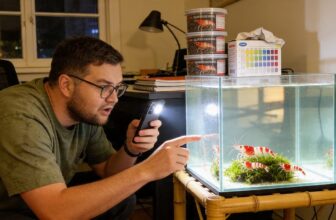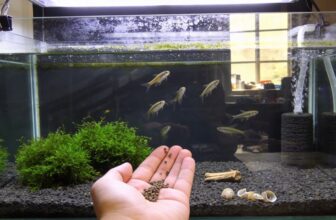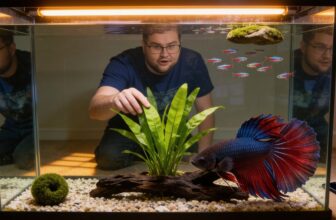
Your ten-gallon tank sits on the desk, glass still smudged from the store. You’ll fill it with water, five gallons minimum, since cramped guppies hide and fade. They need room to flash their colors, like you need space to breathe easy. The filter hums, gentle, not roaring. You’ll test the pH, aiming for 7.5, slightly basic, meaning a touch of alkaline, not sour like vinegar. Temperature settles at 78 degrees, steady, no surprises. You’ve got six weeks before they breed, maybe sooner. But first, you must choose who lives together, and that choice shapes everything that follows.
At A Glance
- Maintain stable water parameters and gentle filtration for stress-free, colorful fish.
- Feed high-quality flakes twice daily with protein treats twice weekly.
- Keep groups of six or more with a 1:2 male-to-female ratio.
- Quarantine new fish for two to four weeks before introducing to main tank.
- Record daily health observations to catch early signs of disease.
Pick the Right Guppy Tank Size From Day One
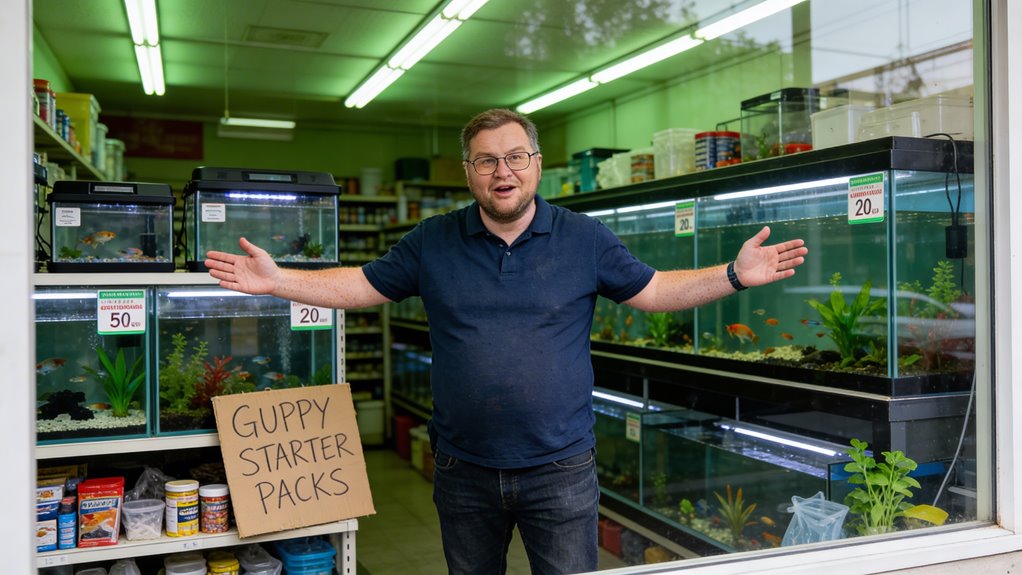
A five-gallon glass box is the smallest home you can offer three guppies, though ten gallons gives them room to stretch their fins and feel safe.
You’ll want gentle Guppy tank décor, soft leaves and rounded stones, nothing sharp that tears long tails.
Your filter’s Filtration flow rate matters—gentle currents, not a raging river, so these small swimmers don’t exhaust themselves fighting the push. Aim for water cycling four to five times each hour.
Gentle currents let small swimmers glide, not struggle—flow soft, cycle four to five times hourly.
You’re building community here, a place where every resident belongs. Measure twice. Choose kindness in every gallon.
Set Water Temperature and pH for Healthy Guppies
Once your tank sits ready with its soft plants and gentle hum of filtration, you’re faced with numbers that matter more than decoration. You’re seeking pH stability, that steady ground where guppies feel safe enough to belong. Aim for 7.5 to 8.0, a touch alkaline like their native streams. Check with your test kit weekly, watching for drift that signals trouble. Keep temperature between 74 and 82 degrees Fahrenheit, avoiding the temperature decay adjustment that shocks their small bodies. You’re building trust through consistency, showing up with reliable warmth. Your attention to these numbers speaks care before words.
Choose Fine Sand and Plants Your Guppies Need
When you’re ready to fill the empty tank, start with what’s beneath everything else. Spread fine sand two inches deep across the bottom, choosing a substrate grain small enough to pass harmlessly through adult guppies’ mouths if they nibble while digging. Your plant selection matters as much as the gravel. Anchor tall Cryptocoryne or Vallisneria along the back, tuck Cryptocoryne between, and dot the front with Cryptocoryne parva or dwarf hairgrass. Leave the middle open. This creates safe hiding spots for shy fish and fry, whereas preserving swimming space. These choices make your guppies feel secure, and you belong among keepers who understand that comfort begins below the surface.
Feed Guppies Twice Daily: Here’s How Much
The sand is settled, the plants have rooted, and now your guppies look up at you with those quick, bright eyes.
They trust you’ll feed them right, and that trust matters.
Guppies eat twice daily, morning and evening, and you’ll give only what they finish in one minute. This keeps their water clean and their bellies happy.
Here’s how you portion their meals:
- Morning: Pinch of high‑quality flakes, about the size of your guppies’ eyes combined
- Evening: Matching portion, no more, no less
- Skip every seventh day to clear their digestion
You’ll see why this matters. Steady meals support genetic variation in your tank, since well‑fed fish pass stronger traits to their young. Color genetics need fuel, too—balanced nutrition brings out the cobra patterns, the tuxedo blacks, the sunset oranges you chose.
Watch them eat. Adjust if food sinks.
Add High‑Protein Foods for Brighter Fins
Flakes keep your guppies alive, but protein makes them glow.
You want your guppies to feel like they belong in your tank, and you want them to show it.
Add Protein-rich treats twice weekly—bloodworms, brine shrimp, or mosquito larvae, frozen or live. These foods contain pigments called carotenoids, which your fish store in their skin and fins. You will see Color improvement within two to four weeks, especially in males.
Feed only what disappears in two minutes, or you will cloud the water.
Your guppies will flash their colors, and you will feel proud.
Expect 2–5 Years With Proper Guppy Care
A healthy guppy grows slowly, like a seed becoming a flower, and you’re the gardener who decides how long it lives.
Your choices shape its lifespan factors, turning months into years through steady attention.
Your steady attention turns months into years—small choices that become a guppy’s whole life.
- Watch your water: Test weekly, keep pH steady at 7.5–8.0, temperature in the mid‑70s°F.
- Feed with care: Twice daily, small bites, never more than they eat in sixty seconds.
- Notice their bodies: Bright fins signal health; dullness warns you to act.
Even colorppy genetics need your help to shine. You’re raising living color, and that belonging feels like home.
House Guppies in Groups of Six or More
Pick out a clear glass bowl, the kind you might see on a kitchen counter, and picture six small fish tracing circles inside it instead of three.
You’ll notice the difference immediately. Six guppies create what aquarists call a breppy personality—a lively, confident energy that three simply cannot match. Their color genetics shine brighter in groups, each fish intensifying the others’ hues through visual stimulation. You’re building a tiny community where belonging matters.
| Group Size | Stress Level | Color Display |
|---|---|---|
| 2–3 fish | Higher, timid behavior | Dull, hidden |
| 4–5 fish | Moderate improvement | Some flickers of brilliance |
| 6+ fish | Low, confident schooling | Full, radiant expression |
| 12+ fish | Minimal, thriving colony | Spectacular genetic variety on view |
Watch them weave together, and you’ll understand why six forms the threshold where guppies truly flourish.
Balance Males and Females to Stop Harassment
When you watch a single male guppy chase a lone female around the tank, you’ll notice her exhaustion, her faded colors, her hiding in corners.
You’re seeing color aggression, where males fixate on females’ drabber hues meant to hide them.
Males chase drab hues meant to conceal, turning camouflage into a target.
Here’s how you restore peace:
- Keep two or three females for every male, so no single female bears constant pursuit.
- Select fish with varied color genetics, mixing patterns so males distribute attention.
- Watch their bodies daily, seeing plump females and active males as signs your ratio works.
You’re building a community where everyone belongs, swims freely, and shows their best colors.
Breed Guppies in a Separate Fry‑Safe Tank
Once you’ve settled the peace between your males and females, you’ll notice something else happening. Tiny fry appear, and your community tank becomes a snack bar. You want these babies to live. Move expectant mothers to a breeding genetic fry tank, a separate ten-gallon home with moss and sponge filter. The babies drop, scatter, hide. They grow safe from hungry mouths. Return mom after birth; she’s done her part. You feel proud, like watching a secret garden bloom where only you know the path. Each fry that survives carries your care forward, a small victory you share with fellow keepers who understand.
Check Fins and Scales Weekly for Ich and Fin Rot
Since your guppies can’t tell you when they feel sick, you’ve got to be their eyes.
You’re part of a community that notices small things, and that care keeps your fish thriving. Weekly checks build trust between you and your swimmers.
- Scan fins for daily rot prevention—look for ragged edges, white fuzz, or shrinking webbing that signals bacterial trouble.
- Watch for scale discoloration—healthy scales gleam like coins; dull patches or white specks mean Ich parasites may be feeding.
- Track changes in a small notebook—dates help you spot patterns before disease spreads.
Your attention creates safety they can feel.
Quarantine New Fish Before Adding Them to Your Tank
A small plastic tub with a gentle filter sits on your counter, holding water that looks just like your main tank but stands apart, and this separation is how you keep every fish you’ve already cared for safe from invisible trouble.
Your quarantine protocol asks you to wait two to four weeks, watching every morning and evening for spots, clamped fins, or lazy swimming. Disease monitoring means you become a detective of small changes, noting what you see in a simple notebook. This patience protects your community, every guppy you’ve already learned to recognize by their bright tails and brave personalities.
Frequently Asked Questions
Can Guppies Live With Betta Fish?
You can keep guppies with betta fish, but you’ll need careful planning. Your betta might see those bright, flowing male guppy tails as rivals—you know, like another betta waving flags. Success depends on your tank size, hiding spots, and each fish’s personality. A 20-gallon setup with dense plants gives everyone escape routes. Watch for chasing, and have a backup plan ready. Peace is possible, but never guaranteed.
Do Guppies Need an Air Pump?
Your guppies don’t strictly need an air pump, but you’ll want one.
They breathe surface air, gulping oxygen from the top, yet stagnant water steals their comfort.
An air pump, bubbling gently, keeps water moving, spreads warmth evenly, and prevents algae film from blocking their breathing space.
A simple pump, costing perhaps fifteen dollars, mimics the stream currents their ancestors knew in Brazil since the 1860s.
You’re giving them home.
How Often Should I Clean the Filter?
You should clean your filter every two to four weeks, depending on your tank’s bioload. Rinse the filter media in removed aquarium water, never tap water, to preserve beneficial bacteria—those microscopic helpers that keep your water safe. Your cleaning schedule protects both your filter’s function and your guppies’ health. Filter maintenance feels like brushing a pet’s fur: regular, gentle attention prevents bigger problems later.
Why Do My Guppies Stay at the Top?
Your guppies linger at the surface since they’re gasping for oxygen, drawn by light attraction, or following food during surface feeding.
Check your tank: you’ll notice them there when water gets stale, warm, or low in oxygen. Guppies breathe air when dissolved levels drop below what their gills can grab.
They’re telling you something’s off, like a friend tugging your sleeve. Test your water, adjust temperature to 74–78°F, and add gentle surface movement. They’ll swim freely again when you listen.
Can Guppies Change Gender?
No, your guppies can’t change gender. Once a guppy develops male or female parts, they stay that way. Gender plasticity, the ability to switch sexes, doesn’t happen in these fish. Some young males look female at first, which tricks breeders during breeding cycles, but they’re always boys underneath. You’re seeing late-blooming males, not actual转变. Check the fin shape—males get longer, flashier tails as they grow.
Rounding Up
You’ve got the tools now: a ten-gallon tank, warm water at 78 degrees, soft sand, and twice-daily flakes the size of your fish’s eye. You’ll watch their fins daily, quarantine newcomers for fourteen days, and keep two females for every male so no one gets chased too hard. Care like this builds calm routine, and calm routine builds trust—between you and your fish, you and yourself. Start today.