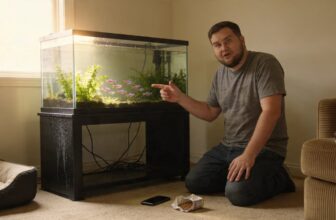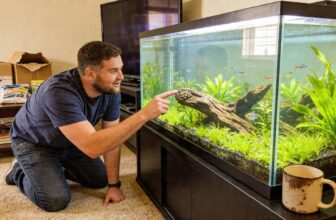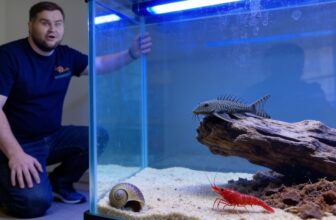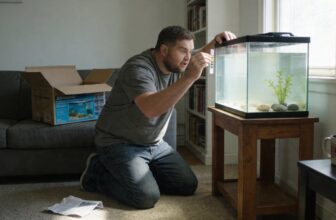
A sturdy glass tank, at least 75 gallons long and wide, sits empty on its stand. This vessel will hold a fish that grows to 15 inches and fights like it owns every inch. The Red Devil cichlid glows in crimson and black, beautiful but demanding, like fire that warms yet burns. New keepers often feel uncertain, worried they might fail this creature. They won’t know if they’re ready until they understand what “territorial” truly means in a living room aquarium.
At A Glance
- Red Devil cichlids reach 15 inches and require minimum 75-gallon tanks with horizontal floor space.
- They demand powerful filtration doubled to standard capacity due to heavy bioload and digging habits.
- Aggressive temperament necessitates solitary housing or 200+ gallon community attempts with visual barriers.
- Males display fierce beauty through nuchal humps, elongated fins, and deep red coloration compared to females.
- Proper diet of quality pellets, frozen foods, and spirulina prevents Hole-in-the-Head disease and maintains vibrant health.
Red Devil Cichlid Aggression: What Owners Must Know
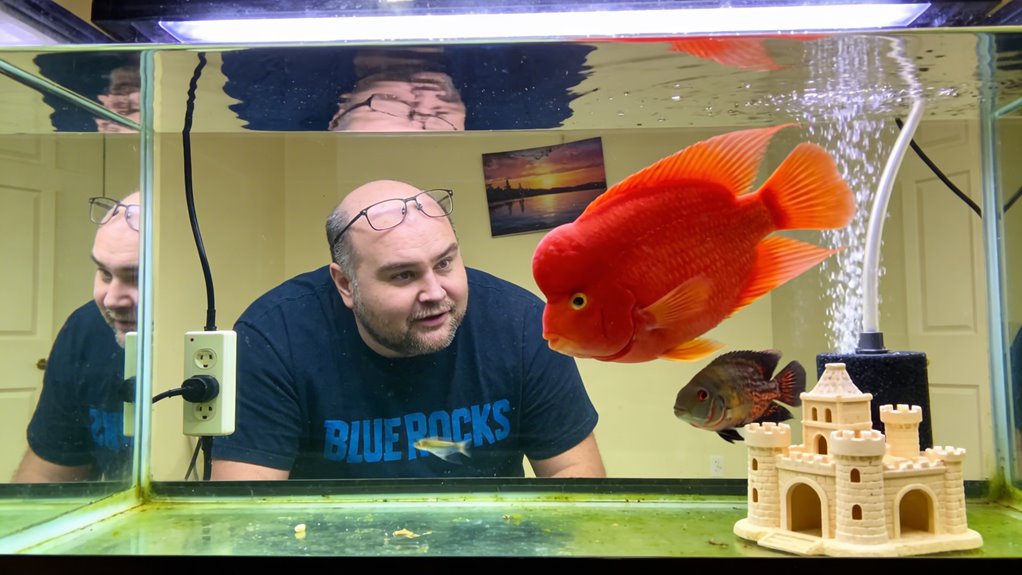
A heavy clay flowerpot sits at the bottom of the aquarium, and the Red Devil Cichlid bites it until the rim cracks clean through. This fish, named *Amphilophus labiatus*, shows what terrors one creature can hold.
Their breeding behavior turns gentle pairs into fierce guards. When eggs come, both parents patrol, biting anything that moves. Color genetics matter too; brighter reds often mean bolder fish, more willing to fight.
Owners feel worried, watching tank mates scatter. They learn fast: this fish doesn’t share. Space, respect, and careful choices keep peace, barely.
Do You Have Room for a Full-Grown Red Devil?
Before a single splash of water fills the glass, a would-be owner must face the numbers.
A Red Devil grows fifteen inches long, roughly the length of a standard ruler. They reach this size at three years old, their Red Devil coloration deepening from juvenile orange to mature scarlet or pearl gray.
Lifespan expectations demand commitment: ten to twelve years stretch ahead, sometimes longer with devoted care. That decade will see them recognize faces, rearrange furniture, and claim territory with certainty.
Space means more than gallons. It means decades of shared days, of watching a living flame grow bold and old beside you.
Red Devil Cichlid Tank Size Requirements
Water holds limits you can’t see, and a Red Devil will teach you exactly where they are.
A single adult needs fifty-five gallons minimum, though more space brings calmer waters. Breeding behavior demands room—pairs require one hundred twenty-five gallons or aggression turns inward, destroying tank décor and each other.
Consider these boundaries carefully:
- Fifty-five gallons: one fish, solitary life, manageable territory
- One hundred twenty-five gallons: breeding pair, flat rocks for egg laying, divided sight lines
- Two hundred gallons plus: community attempts, though success remains uncertain
- Depth matters less than floor space; they patrol horizontally, not vertically
Underestimate, and you’ll watch a magnificent fish suffer in invisible chains.
Building a Red Devil-Proof Tank Setup
Glass walls alone won’t hold a fish that redecorates with its teeth, so builders must outthink an animal capable of moving rocks and cracking heaters.
Start with fine sand, two to three inches deep, since gravel injures digging mouths.
Anchor every stone, stacking downward like a pyramid so the fish can’t topple towers onto glass.
Hide equipment behind barriers, as cichlid genetics drive relentless investigation of anything new.
Current tank décor trends favor natural caves and driftwood, but secure each piece with aquarium-safe epoxy.
Build for strength, and you’ll feel the quiet pride of creating a home that lasts.
Red Devil Cichlid Water Parameters
Once the rocks sit firm and the heater hides behind its stone wall, a new kind of work begins. The keeper tests the water chemistry, that invisible balance of acids and bases, warmth and minerals, which lets this fierce beauty thrive.
Invisible chemistry, fierce beauty: the keeper’s quiet science begins where stone and water meet.
- Temperature holds steady at 75–79°F, like a lake in late spring.
- pH settles between 6.5 and 7.5, neither sharp nor flat.
- Hardness ranges 6–25 dGH, soft enough for comfort, firm enough for health.
- Filtration runs powerful and constant, clearing what the fish disturb.
Together, these conditions create belonging. The fish knows it. So does the keeper watching.
What to Feed Your Red Devil (and What to Avoid)
Since this fish’s jaw works like a tool built for tearing, the keeper must choose food that matches its nature. Red Devils thrive on protein-rich pellets, krill, earthworms, and bloodworms, with spirulina rounding out their needs. Breeders notice breeding variations in appetite, some pairs eating more heavily before spawning. Nutrient deficiencies invite hole-in-the-head disease, so variety matters. Skip mammal meats and low-quality flakes filled with fillers.
| What to Feed | What to Avoid |
|---|---|
| High-quality cichlid pellets | Generic fish flakes with fillers |
| Frozen krill and bloodworms | Raw chicken or beef (too fatty) |
| Earthworms and crickets | Bread and processed human foods |
| Spirulina-based supplements | Overfeeding (pollutes water fast) |
| Multiple small meals daily | Single large daily portions |
Feed them well, and they’ll show their colors.
Managing Red Devil Aggression With Tank Layout
A tank isn’t just water in a box—it’s a house where your Red Devil feels safe, or threatened.
Smart tank behavior starts with substrate choice—fine sand lets them dig without injury, satisfying those predator instincts. Add lighting effects that dim corners, creating territorial markers where fish establish social hierarchy without constant fighting. Breeding cues emerge when flat rocks sit securely, signaling safe spaces for pairs.
- Place sturdy rocks first, then add sand, so burrowing won’t topple structures
- Use driftwood to break sightlines, reducing aggression through visual barriers
- Install dimmable lights, adjusting brightness to lower stress indicators
- Anchor all décor with PVC bases, preventing shifts that spark territorial wars
Can You Keep Red Devils With Other Fish?
Most fish keepers hold out hope for a peaceful community tank, but Red Devils force a harder question—who survives when one fish sees the entire aquarium as its territory?
The answer feels lonely.
A single Red Devil needs 55 gallons, minimum.
A pair needs 125 gallons.
Even then, breeding compatibility demands careful planning, since two Devils together will claim every corner.
Their bright bre tank color—orange, red, sometimes golden—belongs to a fighter, not a friend.
Tank mates must match their size, their nerve, their willingness to defend space.
Most keepers choose solitude.
The fish accepts this.
How to Sex Red Devils Before Breeding
Choosing one fish or two shifts attention toward a quieter puzzle—telling the boy fish from the girl fish before any eggs appear. Maturity timing marks the first real clue, as differences sharpen around the three-year mark when these fish reach adulthood. Color differentiation then becomes your reliable friend, brightening the path forward.
Choosing one fish or two shifts attention toward a quieter puzzle—telling the boy fish from the girl fish before any eggs appear, with maturity timing marking the first real clue around the three-year mark.
Observe these signs together:
- Size comparison — males stretch toward fifteen inches, females stay slightly smaller
- Forehead profile — males develop a noticeable bump, called a nuchal hump, above the eyes
- Fin stretching — male dorsal and anal fins elongate, flowing like fabric ribbons
- Shade intensity — males often burn deeper red, while females glow softer, sometimes showing dark lateral stripes
Patience rewards the watcher.
Red Devil Diseases: Warning Signs and Treatments
Even the hardiest fish can fall ill when water conditions slip or stress takes hold, so watching a Red Devil‘s daily habits offers the first line of defense against disease.
White spots signal Ich, a tiny parasite spreading fast through tanks. Raising heat to 86°F for three days often clears it, though copper-based medication provides backup treatment.
Hole-in-the-Head disease brings visible pits to the face, a nutrition disease tied to missing vitamins and poor water quality. Treatment demands both diet correction and pristine conditions.
Environmental disease strikes when ammonia climbs or filters fail. Weekly water changes, measured at twenty-five percent, prevent most troubles before they start. Treatment works best when owners notice early, act calmly, and recall that clean water heals better than any medicine bottle.
Equipment and Experience Checklist for Red Devil Owners
At the heart of keeping a Red Devil lies a simple truth: this fish demands respect through preparation, not just good intentions.
Seasoned aquarists understand that robust equipment separates thriving fish from suffering ones.
Consider this checklist before committing:
- A 75-gallon minimum tank, measured corner to corner, giving this fifteen-inch athlete room to sprint and claim territory without constant collision
- Filtration upgrades doubling standard capacity, since Red Devils generate waste like freight trains and suffocate in their own pollution
- Bretailing techniques learned through years of handling aggressive cichlids, meaning you’ve been bitten, outsmarted, and humbled already
- Backup power for oxygenation, as this fish remembers who rescued it during darkness
Patience matters more than money here.
Frequently Asked Questions
Do Red Devils Recognize Their Owners?
Yes, they do. Red Devil Cichlids recognize their owners through consistent daily interactions and distinct physical cues.
These fish don’t see faces clearly; instead, they learn vibration patterns, feeding schedules, and silhouette movements. The owner bonding develops when someone approaches the tank at regular times, offers food, or performs maintenance. The fish responds with brightened colors, eager swimming, and surface-greeting behavior.
Temperament cues reveal this recognition clearly. A calm, confident Red Devil greets its familiar person but hides or darkens when strangers appear. They’ve got good memories for routine, remembering who brings food versus who taps the glass. It’s not love exactly, more learned trust built through repeated safe encounters, much like a child recognizing a neighbor’s familiar knock.
How Often Should I Feed Juvenile Red Devils?
Juvenile red devils need multiple small meals daily, usually three to four times. This feeding frequency fuels their rapid growth rate, helping them reach adult size around three years. Each portion should fit in their mouths in two minutes, no more. Regular, protein-rich food builds strong bodies and prevents stunting. They’re hungry, growing fish, and frequent meals keep them healthy, active, and developing properly during these essential early months.
What Substrate Depth Do Red Devils Need for Digging?
Red Devil cichlids need four to six inches of fine sand substrate for their digging behavior. Coarse substrate granularity damages their sensitive barbels and invites infection. Soft sand lets them excavate comfortably, creating pits they’ll defend. Water flow shouldn’t stir the substrate excessively, or they’ll exhaust themselves rebuilding. Deeper sand—up to six inches—satisfies their instinct, reducing stress they’ll otherwise direct at tankmates. They’ll flourish with this foundation.
Can Red Devils Jump Out of Open-Top Tanks?
Yes, Red Devils can jump from open-top tanks.
A sturdy lid protects these energetic fish, they’re powerful swimmers who’ll leap when startled or chasing prey. Tank tank safety means covering every gap, even small openings invite trouble. Water flow control helps too, strong currents near the surface encourage jumping behavior. Fine mesh or solid covers work best, secured tight so curiosity doesn’t become catastrophe. They’ll test boundaries, it’s their nature.
Do Red Devils Need Special Lighting for Color Enhancement?
They don’t need special lights, but a balanced color spectrum brings out their reds and oranges beautifully. A simple LED fixture works fine. Keep a consistent lighting schedule, about 10-12 hours daily, so they feel secure. Too much bright light stresses them, too little dims their glow. Think of it like sunrise and sunset, predictable and gentle. These fish notice changes, and steady routines help them trust their home.
Rounding Up
A sturdy 75‑gallon tank, that’s your foundation, like a solid house for a growing family. Fine sand, dim lights, and stable water—75–79°F, pH 6.5–7.5—keep these fierce fish calm, just as routines comfort anxious hearts. Check that nuchal hump to spot males, feed quality pellets, and watch for ich. Patience and preparation turn aggression into awe. You’ve got this.