You’ve got this lacy, bright-green plant in your hands, and you’re wondering if it belongs floating on top or tucked into the gravel. Water Sprite, additionally called *Ceratopteris thalictroides*, gives you that choice, and the option you pick changes how it grows, how fast it cleans your water, and even where your fish hide. Some aquarists swear by the floating method for quick nutrient absorption—that’s pulling nitrogen and phosphorus right out of the water column—while others root it down for a midground forest their tetras can dart through. But here’s the thing: either way, you’ll need to trim it, or it’ll crowd your tank in weeks. The scissors matter, the timing matters, and if you ignore those brown spots creeping in, you’ll learn why patience alone won’t save a melting leaf. Let’s walk through what actually works.
At A Glance
- Water Sprite thrives in temperatures 68‑82 °F with soft water KH 3‑8 and moderate lighting.
- Floating placement enables rapid nutrient uptake, easy relocation, and natural surface light capture.
- Rooted placement anchors phosphorus and nitrogen, stabilizes substrate, and creates midground shelter.
- Trim every 2‑3 weeks, removing no more than one‑third of foliage with sharp clean scissors.
- Yellow or brown leaves indicate nutrient deficiencies; adjust iron, nitrogen, or magnesium and test water weekly.
Why Water Sprite Works in Almost Any Tank
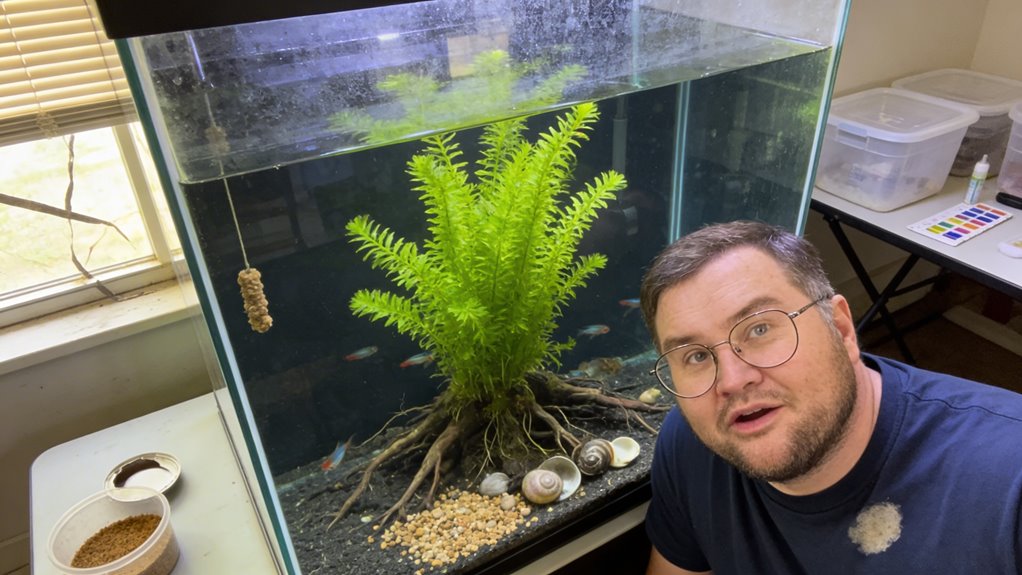
Since water sprite grows as easily as a dandelion in a sidewalk crack, you’ll find it fits nearly every tank tank you might set up.
Water sprite grows like a dandelion in a sidewalk crack—effortless, adaptable, ready to thrive wherever you plant it.
You can pop this plant into a 10-gallon beginner setup or a sprawling community aquarium, and it’ll settle right in, making you feel like you’ve found your place in the hobby.
Its roots wrap around nutrients—phosphorus and nitrogen—that would otherwise cloud your water, so you’re helping nutrient cycling without even trying.
Watching those light green fronds unfurl feels like belonging to something alive, something you tend.
There’s room here for you, and for the fish hiding beneath those gentle leaves.
Floating vs. Rooted: Which Setup Should You Choose?
How do you decide whether to let your water sprite drift at the surface or anchor it down below? You weigh what your tank family needs most.
| Setup | Rooted benefits | Floating aesthetics |
|---|---|---|
| Rooted | Anchors nutrients, stabilizes substrate, creates midground shelter | Structured, garden-like appearance |
| Floating | Rapid nutrient uptake, easy relocation | Soft, dappled light, dreamy surface cover |
You feel calm seeing roots weave through gravel, knowing you’ve built something lasting. You feel wonder watching leaves catch bubbles at the surface, like tiny green boats. Both choices welcome you into the hobby.
Water Conditions Your Water Sprite Actually Needs
A thermometer, a test strip, and your own two eyes—these three tools tell you everything your water sprite needs you to know.
Keep your water between 68 and 82 degrees Fahrenheit, since cold shocks the roots and heat steals oxygen from the leaves. Watch your p hardness stay soft, between 3 and 8 KH, so the fronds don’t grow brittle and brown at the edges. Test for ammonia, nitrites, and nitrates weekly. Your plant thrives when you maintain steady nutrient balance, not too much, not too little. Yellowing leaves whisper that something’s off. You belong to a community that listens.
How Much Light for Fast, Healthy Growth?
Floating sprites catch more light naturally; rooted ones need you to position them thoughtfully, closer to your lamp.
Adjust slowly, watch leaf color, and you’ll find your rhythm together.
How Fast Does Water Sprite Grow?
Plants shoot up faster than you’d guess, sometimes adding an inch or two each week when conditions line up right.
Your water sprite runs through growth cycles like a clock, speeding through p growth when warmth and light balance together. You’ll notice nutrient uptake pulling nitrates from the water, which helps algae control, keeping your glass clearer and your fish happier.
Water sprite accelerates through growth cycles when warmth and light harmonize, pulling nitrates from the water to starve algae and brighten your tank.
Watch leaf coloration shift from pale to lively green; that’s your plant talking. Rising plant density improves tank aesthetics, turning sparse corners into lush shelters.
Growth patterns change with water chemistry, softening or hardening as needed. Substrate preference matters little; roots grip gravel, sand, or simply hang free, drinking from the flow above.
When to Trim Your Water Sprite: and How Often
Once your water sprite reaches the water’s surface or spreads to cover half the swimming space, you’ll know it’s time to get out your scissors.
Your tuning frequency depends on growth speed, usually every two to three weeks. Seasonal timing matters too—plants slow in cooler months, so you’ll trim less often then. Watch your calendar, but trust your eyes more. Overgrowth steals light from neighbors, and crowded fish feel anxious. You’re tending a shared home.
- Snip when leaves block your view of the back glass
- Notice fish hiding more—that’s your cue
- Count fourteen days between trims in summer
- Wait three weeks when temperatures drop below 72°F
- Celebrate small cuts, they keep your tank community balanced
How to Prune Without Damaging the Plant
A pair of sharp scissors rests on your towel, and that’s where careful work begins.
Pruning timing matters most when leaves turn brown or yellow, usually every two to three weeks. You’ll spot tired leaves first by their faded color, a clear sign of poor leaf health. Snip these gently at the base, never tug. Leave the strong, green center alone—that’s the heart of your plant.
Cut secondary stems to shape your sprite, removing no more than one-third at once. You’re helping your plant breathe, giving light to lower leaves. Clean your scissors between cuts. Drop trimmings out immediately; they rot fast. Your careful hands keep this fern thriving, and that steadiness belongs here.
Propagating New Plants From Cuttings and Plantlets
Take a jar of clean water and set it near your tank, since you’re about to become a plant parent many times over. Water sprite grows tiny plantlets along its leaves, baby copies waiting to begin their own lives. You’ll spot them by their feathery leaf morphology, miniature versions of the mother plant. When roots reach half an inch, gently pinch them free. Drop them in your jar, add a drop of aquarium fertilization, and watch them strengthen. In two weeks, they’re ready for their new home. You’re not just growing plants; you’re building a living community that welcomes everyone.
- Sharing cuttings connects you to aquarists worldwide, one plantlet at a time
- Each propagation honors the cycle of growth and gentle letting go
- Your tank becomes a sanctuary where new life finds shelter
- Patience in rooting mirrors how we all need time to settle somewhere new
- Every plant you gift carries a piece of your care into another’s hands
Keeping Water Sprite From Taking Over Your Tank
Your jar of rooted plantlets sits on the counter, full of promise, and that is exactly when you need to remember: generosity without boundaries becomes a problem.
You prune every two weeks, snipping plantlets before they crowd your aquarium layout. You remove trimmings immediately, keeping water clean. You watch roots tangle, catch debris, and you feel the quiet tension of too much growth. Controlled shade helps algae control by limiting light, but unchecked sprite blocks everything. You balance giving and guarding. You shape the tank, you shape your care. Boundaries, you learn, are how love lasts.
What Water Sprite’s Yellow or Brown Leaves Mean
When you notice a leaf turning butter-yellow at its edges, you’re seeing the plant’s first whisper of trouble.
You’re witnessing nutrient deficiency stealing vitality from your water sprite, a silent signal that something’s missing in your shared water home.
Leaf decay spreads like worry when conditions slip, browning fronds telling you the plant feels unmoored, untended, alone in its struggle. You feel a small tug, don’t you, when life entrusted to you begins to fade?
- Iron-poor water starves the chlorophyll that makes leaves green, like hunger without bread.
- Nitrogen gaps yellow older leaves first, echoing how neglect reaches deepest roots.
- Magnesium lack threads darkness between leaf veins, showing isolation’s pattern.
- Too-strong light burns tender tissue, a reminder that even love can overwhelm.
- Your attention bridges plant and keeper, building the belonging you both need.
Fixing Slow Growth, Melting Leaves, and Root Rot
The yellow edges you’ve learned to read can deepen into something harder to watch.
Your water sprite stalls, its once-lively fronds turning soft, then slim, then gone—this melting means a nutrient deficiency starving the cells. Check your water, add a complete fertilizer, and watch new growth within two weeks. You might altern need CO₂ supplementation, tiny bubbles feeding the plant’s hunger for carbon. Root rot smells sour, feels squishy; trim the brown, keep the firm white.
| Problem | Sign | Fix |
|---|---|---|
| Slow growth | Stunted, pale leaves | Add fertilizer weekly |
| Melting | Translucent, dissolving tissue | Check nutrient deficiency, reduce light |
| Root rot | Brown, mushy roots | Trim damage, improve flow |
| Weak stems | Sagging, breaking | Begin CO₂ supplementation |
| Stalled recovery | No new growth in 14 days | Test water, adjust dosing |
You’re learning to heal together.
Frequently Asked Questions
Can Water Sprite Grow Emersed Above Water?
Yes, you’ll find water sprite adapts beautifully to emersed growth. Its emmersed adaptation transforms the plant completely—leaf density increases dramatically, and leaves become broader, tougher, like tiny green spoons catching light. You can grow it in humid conditions, roots in water, foliage rising into air. Mist it daily, keep temperatures above 70°F, and you’ll watch it thrive as a terrarium centerpiece or paludarium accent.
Is Water Sprite Safe for Turtle Tanks?
Water sprite isn’t ideal for turtle tanks. Turtles uproot plants, shred leaves, and may eat tender growth, creating debris that fouls water chemistry. Hardy alternatives like anubias or java fern attached to rocks survive better. You’ll need robust filtration, as turtles produce heavy waste. If you’re set on greenery, place water sprite in a protected corner or separate sump where turtles can’t reach—monitor ammonia weekly, keeping levels below 0.5 ppm.
Do Shrimp Eat Water Sprite Leaves?
Shrimp feeding doesn’t include eating healthy water sprite leaves, though they’ll graze on algae growing there.
You’ll see Cherry and Amano shrimp scavenging your plant’s surfaces, but true leaf consumption only happens when leaves are already dying or decomposing. They’re nature’s tiny cleanup crew, not plant destroyers.
Your shrimp feel safer among those dangling roots, and you can relax knowing your water sprite stays intact as they do their helpful work.
Can Water Sprite Survive in Brackish Water?
You’ll want to keep your water sprite in freshwater, as it lacks true brackish tolerance although its hardy nature.
Its salinity tolerance stays very low, roughly 0.5 parts per thousand salt at most, which barely dips into brackish territory. You’re looking at genuine brackish conditions starting around 5 ppt, ten times higher than this plant handles.
While fading leaves signal stress, sudden osmotic shock from salt actually bursts cell walls—much like you’d feel overwhelmed joining a group where nobody shares your language.
Your water sprite belongs in community tanks with guppies, shrimp, or tetras, not brackish setups with mollies pushing into saltier water. If you’re drawn to estuary-style habitats, consider Java fern or Anubias instead, since those build genuine resilience through gradual adaptation.
Stick to soft, freshwater homes between 68–82°F, and your sprite rewards you with shelter for fry, nutrient absorption, and that gentle green presence that makes a tank feel complete.
Will Water Sprite Melt After Transplanting?
Your water sprite might wilt slightly after moving, but it won’t truly melt.
You’ll notice some transplant shock—soft leaves drooping, maybe a few turning brown. That’s normal stress, not death.
Watch for leaf rot, which means mushy, smelly tissue spreading fast. That’s bad, so snip it immediately.
Give your plant two weeks, keep the water clean, and you’ll see new green shoots pushing up. You’re helping it settle in, like tucking a friend into a new home.
Rounding Up
You’ve got this. Your Water Sprite, with its feathery fronds spreading like tiny green hands, will thrive when you give it soft water, steady light, and a trim every few weeks. Whether you float it or root it, you’re building a living filter that feeds your fish and quiets your tank. Keep watching, keep snipping, and you’ll feel proud when new growth unfurls. Plants teach patience, and you’re learning it well.