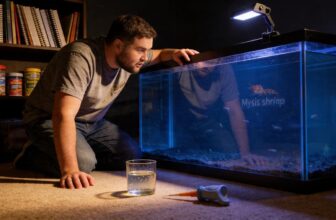
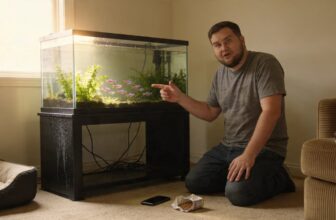
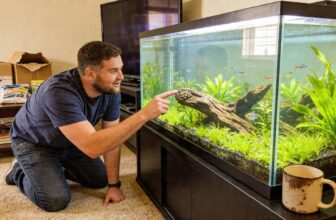
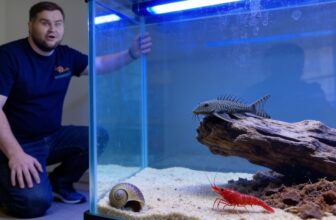
A fifty-gallon glass box holds one adult vampire pleco, a dark fish with white spots that glow like stars. Water moves gently, not fast, since these fish breathe best in slow streams. They hide in caves made from clay pots, feeling safe in shadows. Many people buy them for beauty, then feel confused when the fish grows large, or stops eating, or hides for days. The reasons matter, and they start with something simple: understanding what this creature actually needs.
At A Glance
- Provide minimum 50-gallon tanks with two hide spots per fish to prevent territorial stress.
- Maintain 76–78 °F temperature, pH 5.6–7.0, and moderate 4–6 inch/second current.
- Offer sinking meat-based pellets, frozen bloodworms, and weekly algae wafers for fiber.
- Use fine gravel or smooth sand substrate with driftwood tunnels and overturned ceramic pot caves.
- Dim corners with floating plants or rock overhangs encourage natural exploration behaviors.
Vampire Pleco Basics: Size, Appearance, and What Makes Them Unique
What draws the eye first?
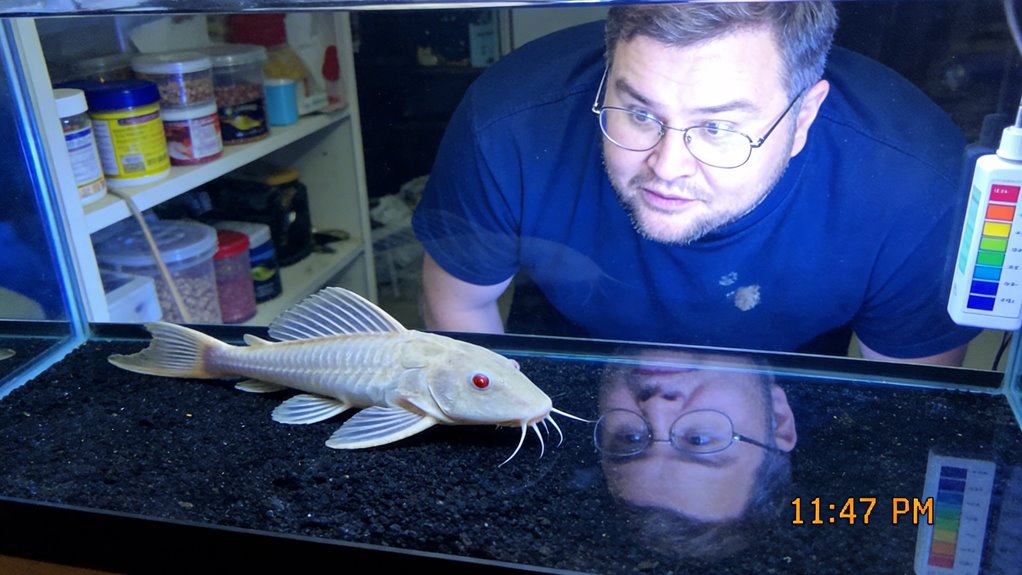
The starscape speckled across dark hide commands attention immediately. The Vampire Pleco, known scientifically as *Leporacanthicus cf. galaxias*, carries its mythic origins in that very name—galaxy rendered as living flesh. Native to turbulent gal ecology of the Orinoco drainage, this fish belongs to a community that understands patience, observation, quiet dedication. The dots of white or yellow dotting black fin and flank catch aquarium light like distant suns. That under-turned mouth, flattened belly, tall dorsal fin folding flat against the back—these structures speak of adaptation mastered across millennia. One recognizes kinship here. The keeper sees something of themselves reflected.
How Big Do Vampire Plecos Get? (And Why Tank Size Matters More Than You Think)
A ruler placed beside the glass tells the story before the fish finishes growing.
Adult Vampire Plecos reach approximately ten inches, their dark bodies scattered with pale stars that seem to multiply as color size intensifies with maturity. The tank size importance becomes undeniable when considering their lifespan stretches fifteen years.
Vampire Plecos grow to ten inches, their star-scattered darkness deepening with years—fifteen, if given room enough to thrive.
Three truths guide the keeper:
- Fifty gallons forms the absolute floor for one adult, though seventy-five allows the fish to claim territory without anxiety
- Juveniles under three inches may temporarily occupy thirty gallons, yet growth demands prompt expansion
- Color size reaches its potential only when swimming room permits natural behavior without stress
Crowded fish hide, sicken, fade. Space matters more than ornaments.
Vampire Pleco Tank Setup: Water Flow, Hiding Spots, and the Right Substrate
Three elements separate a surviving tank from a thriving one: water that moves like a river, shadows deep enough to disappear inside, and ground soft enough to brush without scrape.
Water flow matters most. A pump creating moderate current, about four to six inches per second, lets the pleco anchor with its mouth, then rest. Too still, and they grow anxious; too fierce, and they exhaust.
Lighting design shapes their courage. Dim corners, created by floating plants or rock overhangs, invite exploration. Bright open spaces leave them exposed, afraid.
Substrate selection protects tender bellies. Fine gravel, two to three millimeters, or smooth sand lets them sift without wound. Rough stone scrapes, invites infection, shortens life.
Hideaways complete the home. Driftwood tunnels, overturned ceramic pots, stacked slate caves—each needs one entrance, one exit, darkness within. Two such spots per fish prevents quarrel.
These choices say: you belong here, you are safe, you may stay.
Ideal Water Parameters: Keeping Your Vampire Pleco in the 76-78°F Sweet Spot
The heater clicks on at dawn, and water begins its slow shift toward warmth.
For these fish, 76-78°F marks their temperature niche, the narrow range where digestion hums and fins stay strong. Stray too cool, and they grow sluggish. Too hot, and stress follows like a shadow.
Three guards keep this balance true:
- A reliable heater sized for the tank, checked monthly with a separate thermometer.
- Weekly parameter tests, pH held between 5.6 and 7.0, hardness steady at 8-12 KH.
- Moderate water flow swirling clean, which aids algae control on surfaces without stripping the tank bare.
Stability, above all, builds trust.
What Do Vampire Plecos Eat? A Carnivore’s Diet Decoded
Several kinds of food sink through the water, and the Vampire Pleco notices each one. This fish is a carnivore, which means it eats meat, not plants like some plecos do. Its diet needs protein, the building block that helps it grow strong fins and a healthy body.
Good keepers offer dietavory variations: sinking pellets made for meat-eaters, frozen bloodworms, and brine shrimp, which are tiny aquatic animals. A small piece of market shrimp, about the size of the fish’s eye, works well too.
Algae supplementation matters, though sparingly. An occasional algae wafer, once weekly, provides fiber that aids digestion, like vegetables do for people. Blanched zucchini, softened in hot water, offers variety.
Feed once daily, enough consumed in two minutes. Hunger shows as searching behavior, but overfeeding fouls the water. Observation builds trust between keeper and fish.
Is Your Vampire Pleco Stressed? Signs of Aggression and What Triggers It
Glass walls hold water, but they similarly hold clues.
Glass walls hold water, but they similarly hold clues—watch closely, and the silent signals reveal themselves.
A Vampire Pleco speaks through movement, not sound. Stress triggers hide in plain sight: cramped quarters, bare floors, sudden lights. Aggression cues appear as flattened fins, chasing, or hiding for days. The fish feels unsafe, cornered, alone.
Watch for these signals:
- Pinned fins pressed tight against the body, like folded hands in worry.
- Territorial lunging at tankmates, claiming caves too small to share.
- Faded spots where galaxy patterns dim, a quiet plea for calm water and shadow.
Peace returns with space, flow, and places to disappear.
Vampire Pleco Tank Mates: Who Gets Along With This Bottom Dweller
A tank holds water, but it also holds relationships that must be chosen with care.
The Vampire Pleco, a bottom dweller reaching ten inches, needs space below. Compatible cotton—soft, unaggressive fish—swim above without conflict. Tetras, rasboras, and gouramis occupy middle waters, leaving algae and territory untouched below. Criteria compatibility means avoiding other bottom-feeders like corydoras or loaches, who compete for caves and food. Community dynamics shift when space shrinks; aggression rises, stress follows. A 75-gallon tank minimum allows peaceful coexistence. Driftwood and rocks create boundaries, reducing tension. The right neighbors bring calm, turning isolation into quiet companionship.
Common Vampire Pleco Diseases: Copper Risks and Fungal Infections
How does a fish tell us it feels unwell?
A Vampire Pleco speaks through quiet signs, like faded spots, clamped fins, or stillness where once it moved.
Three warnings deserve attention:
- Copper toxicity threatens these catfish gravely, their scaleless bodies absorbing metal fast, so medications must be read twice, dosed with care.
- Fungal treatment calls for baths in gentle solutions, malachite green or related compounds, never rushed, always measured.
- Cottony growths on fins or gills signal infection spreading, needing isolation soon.
Watchfulness builds trust between keeper and kept, turning strangers into companions who share one water, one home.
Vampire Pleco Lifespan: How to Reach 15 Years With Consistent Care
What does it take for a spotted catfish to outlast a decade?
Dedication, mostly. Consistent water changes, stable temperature between 72-82°F, and quality food build the foundation. Breeding genetics matter too—fish from healthy parent stock start stronger, live longer.
Aquarium lighting deserves attention. Dim, natural rhythms reduce stress, support modest algae growth for occasional grazing, and mirror their shaded Orinoco home. Too bright, they hide; too dark, plants fail.
Strong filtration, gentle handling, and peaceful tank mates complete the circle. Members of this hobby know patience rewards you with fifteen years of quiet, spotted companionship.
| Factor | Target Range | Purpose |
|---|---|---|
| Temperature | 72-82°F (ideal 76-78°F) | Metabolic stability |
| Breeding genetics | Healthy parent lineage | Disease resistance |
| Aquarium lighting | Dim, natural cycle | Stress reduction |
Breeding Vampire Plecos: Simulating the Dry Season to Trigger Spawning
Three overturned flower pots, each wide enough for a curled adult, rest on the tank bottom like small caves waiting in darkness.
- Seasonal water simulation cools the tank by two degrees, mimicking the Orinoco’s dry season retreat.
- Egg incubation timing spans five to seven days before fry emerge, patient as seeds underground.
- Cave selection determines success, for females seek enclosed safety like quiet rooms where secrets stay.
The keeper watches, steady-handed and hopeful. Water chemistry shifts slowly, a whispered invitation. Males guard chosen pots. Spawning follows trust—earned, not rushed—binding aquarist to fish through careful, shared ritual.
Raising Fry: Feeding and Water Flow for the First Seven Days
A small cloud of powdered food drifts through the current, each particle sized fine enough to fit between a newborn fry’s lips.
Fry nutrition begins once the egg sac disappears, usually day five to seven.
Water flow timing matters immensely.
Current must stay gentle but steady, like a slow brook, not a rushing stream.
Too strong, and fry exhaust themselves fighting.
Too weak, and waste fouls the water they breathe.
Feed four to six times daily, tiny amounts, always consumed in two minutes.
This rhythm builds their strength.
Patience now rewards the keeper with school after school of healthy young.
Frequently Asked Questions
Do Vampire Plecos Need Driftwood to Survive?
Driftwood offers naturalitat enrichment, creating hiding spaces that reduce stress in these bottom-dwellers. Although not strictly required for survival, driftwood promotes algae control by providing surfaces for biofilm growth, a supplemental food source. Tank-raised specimens adapt to its absence if rocks and caves substitute adequately. Wild-caught fish, nevertheless, may struggle without familiar structures. Stability matters most: secure conditions nurture the calm confidence these fish need to thrive.
Can Vampire Plecos Change Color With Mood?
Yes, Vampire Plecos display subtle mood color dynamics. Their dark bodies with white or yellow spots may appear duller or more vivid depending on their emotional state. Stress pigmentation shifts occur when they feel unsafe, causing colors to fade. Content fish show brighter, crisper patterns. These changes happen within minutes, like a mood ring reacting to temperature. The fish cannot control this; it simply reflects their inner calm or worry.
Are Vampire Plecos Nocturnal or Active During Day?
Vampire plecos favor nocturnal activity, emerging after dusk to patrol tank floors, though they will engage in daytime foraging when the aquarium stays dim or when they learn feeding schedules. Their dark, dotted skin—like a star map against black paper—helps them blend into shadowy corners, making evening observation feel like uncovering a secret constellation that belongs only to those who wait quietly with patience.
How Often Should Vampire Pleco Caves Be Cleaned?
Caves require light substrate cleaning every two weeks alongside routine filtration maintenance to preserve water quality inside hiding spaces. Gentle siphoning removes debris without disturbing territorial fish who feel safe in dark retreats. Clean surfaces mean healthier plecos, and healthy plecos display brighter confidence, much like a tidy room soothes a worried mind. Stability matters more than spotlessness in these careful rhythms of shared caretaking.
Do Vampire Plecos Eat Snails in Aquariums?
Vampire plecos rarely include snails in their snail diet, preferring meaty foods instead.
Their algae preference remains secondary to protein, though they may graze occasionally.
Owners seeking tank harmony find comfort knowing these fish coexist peacefully with most snails, neither hunting nor avoiding them.
The calm certainty of watching both species share space builds quiet satisfaction, like neighbors sharing a garden fence without need for conversation.
Simple cohabitation, clearly understood, brings steady contentment.
Rounding Up
A fifty-gallon glass box, filled with dim light and soft sand, holds one quiet fish with a big appetite. Watch the thermometer, clean the water, feed small bites daily. Patience brings fifteen years of calm companionship. The vampire pleco asks little: space, steady warmth, places to hide. Give these things, and you will feel the steady peace of caring well for something that needs you. That is enough.